
- Published on
What Is Nifaq in Islam — The Hypocrisy We Fear Finding in Ourselves
- Authors

- Name
- Ahmad
- Role
- Senior Marketing Manager, Islamic education • Deen Back
بِسْمِ اللهِ الرَّحْمٰنِ الرَّحِيْمِ
In the name of God, the Most Gracious, the Most Merciful.
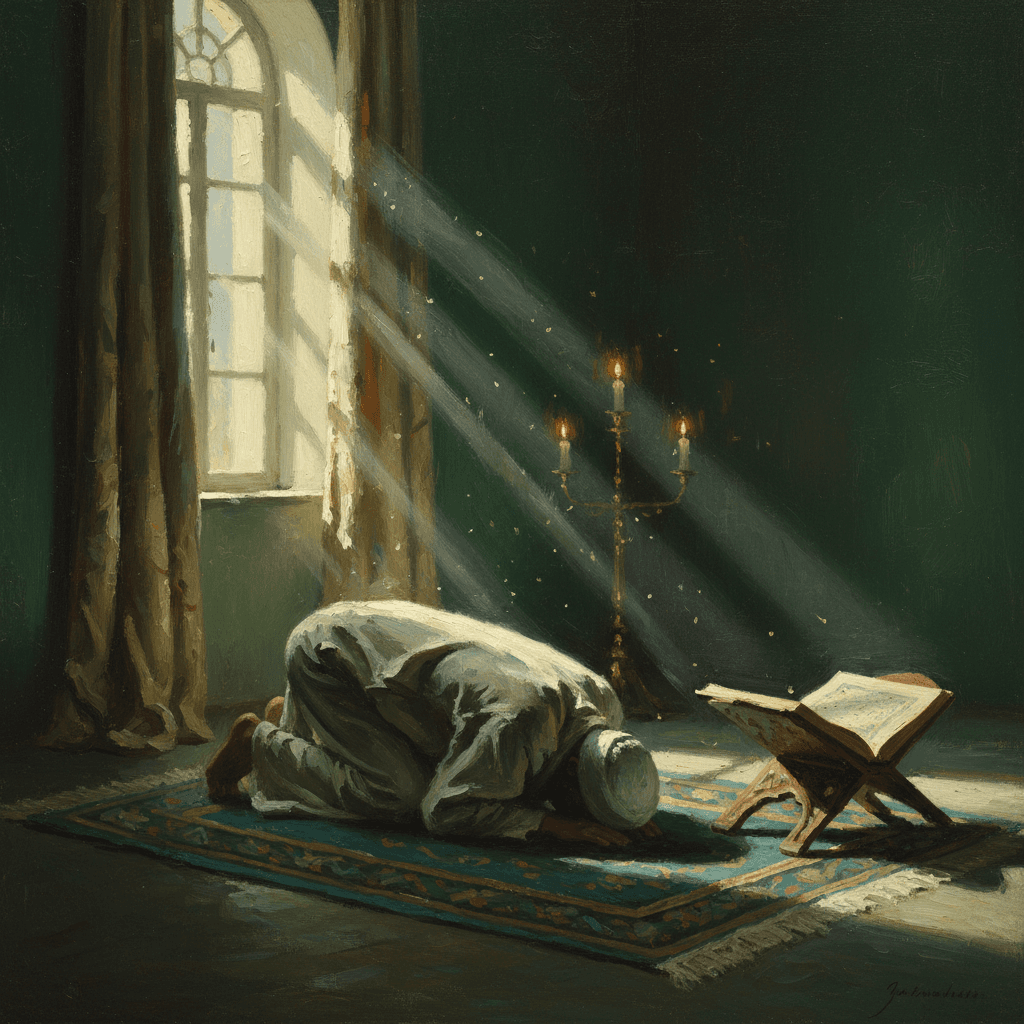
Hanzalah al-Usaydi ran to Abu Bakr in a state of panic. "Hanzalah has become a hypocrite!" he said. His reason: when he was with the Prophet ﷺ, he felt spiritually alive, present, aware of Allah. But when he went home and engaged with his family and life, that feeling faded. He could not maintain the same level constantly. He was convinced this fluctuation was nifaq.
When they brought this concern to the Prophet ﷺ, he smiled and said: "By Him in Whose hand my soul is, if you were always in the state you are in when you are with me and in remembrance of Allah, the angels would shake hands with you on your roads..." (Sahih Muslim 2750)
The fact that the best generation feared nifaq in themselves tells us something important: nifaq is not a label we should throw casually at others. It is something we should examine, seriously and honestly, in ourselves.
What Nifaq Actually Means
Nifaq (نفاق) comes from the Arabic root related to the jerboa's burrow — a creature that has two exits, so that when a predator enters one, it escapes through the other. The hypocrite is like that burrow: one face for believers, another for himself or his real masters.
There are two types of nifaq in Islamic scholarship:
Major nifaq (nifaq akbar or nifaq i'tiqadi): outwardly claiming Islam while inwardly rejecting it. This is the form the Quran addresses extensively — entire chapters and dozens of verses describe the Munafiqun of Madinah who prayed in the masjid, gave pledges, and fought in battles while their hearts were with the enemies of Islam. This nifaq places a person outside the fold of Islam.
Minor nifaq (nifaq 'amali or behavioral nifaq): maintaining belief but exhibiting specific behaviors the Prophet ﷺ described as signs of hypocrisy. This is the form most relevant to practicing Muslims today.
The Prophet ﷺ described its signs:
آيَةُ الْمُنَافِقِ ثَلَاثٌ: إِذَا حَدَّثَ كَذَبَ، وَإِذَا وَعَدَ أَخْلَفَ، وَإِذَا اؤْتُمِنَ خَانَ
Ayatu al-munafiq thalath: idha haddatha kadhab, wa idha wa'ada akhlaf, wa idha u'tumina khan
"The signs of a hypocrite are three: when he speaks, he lies; when he makes a promise, he breaks it; and when he is trusted, he betrays the trust."
— (Sahih Bukhari 33, sunnah.com)
And in a longer narration, he added a fourth: when he disputes, he acts treacherously.
Why Modern Muslims Struggle With Nifaq
The gap between public religion and private religion is wider than ever for many Muslims. We live in environments where religious identity is performed digitally — where the version of yourself that others see can be crafted, filtered, and optimized for approval. Meanwhile, the private self — the one that speaks when no one is recording, the one that handles frustration alone — may look very different.
This gap is not necessarily major nifaq. But it is worth examining seriously. The nafs tends to widen the gap over time, not narrow it, unless we actively close it.
There are also subtler forms: the person who speaks about honesty but has a track record of bending the truth in self-interest. The person who makes promises they do not intend to keep. The person who volunteers as treasurer and takes shortcuts with the trust. These behavioral patterns, if consistent, are precisely what the Prophet ﷺ described.
Read what is tawbah in Islam — for anyone who recognizes these patterns in themselves, the path back is real and always available.
How to Close the Gap Between Inner and Outer Daily
Audit the Four Signs Regularly
The Prophet ﷺ gave us a clear checklist. Go through it honestly:
- Lying: Do I say things I know are not true to make myself look better, avoid discomfort, or get what I want?
- Breaking promises: When I say "I will," do I follow through? Or has "I'll try" become my honest answer while I say "I will" for social smoothness?
- Betraying trust: When something is given to me in confidence or in responsibility, do I handle it the way the person would want?
- Treachery in disputes: When I am in conflict, do I fight fairly — or do I twist, exaggerate, and use information as a weapon?
This kind of self-examination is the core of what is muhasabah in Islam — and doing it regularly is one of the most powerful tools against nifaq.
Make Your Private Religion Your Real Religion
The test of sincerity is what you do when no one is watching. Pray your prayers whether or not anyone will know you prayed. Give sadaqah without mentioning it. Do the acts of worship that have no audience. When private practice and public practice match — that is the opposite of nifaq.
The evening adhkar is a powerful anchor for this: a set of prayers and remembrances that you do privately, consistently, whether your day felt spiritually strong or spiritually dry.
Take Promises Seriously
One of the most practical anti-nifaq habits is treating every commitment you make as a real commitment. Stop saying yes when you mean maybe. Stop making promises you know are contingent on mood and convenience. If you are not sure you can do it, say so. If you say you will do it, do it.
This sounds simple, but consistently following through on small commitments — being where you said you would be, doing what you said you would do — builds a character that is the opposite of the munafiq's pattern.
Build the Consistent Habits That Close the Gap Between Who You Are in Public and in Private
DeenBack helps you track daily worship and habits privately — building the kind of consistent character that leaves no room for the gap nifaq lives in.


Free download. Premium features available in-app.
Dua for Protection From Nifaq
The Prophet ﷺ regularly sought Allah's protection from nifaq:
اللَّهُمَّ إِنِّي أَعُوذُ بِكَ مِنَ الشِّرْكِ وَالنِّفَاقِ
Allahumma inni a'udhu bika mina ash-shirki wa an-nifaq
"O Allah, I seek refuge in You from shirk and nifaq."
Making this dua regularly — while honestly checking yourself against the four signs — is one of the most important spiritual habits a Muslim can have.
Signs You Are Making Progress Against Nifaq
Progress against nifaq shows up as a narrowing of the gap — your private self becomes more like your public self, not the other way around. You will notice:
- You say "I will" and you mean it, and you follow through
- Lying, even small social lies, starts to feel uncomfortable and you avoid it
- Your private worship becomes as consistent as your public worship
- When you make mistakes or have faults, you can acknowledge them without extensive performance or excuse-making
This is the direction of ikhlas and tawbah working together. Read how to increase iman for the full system of building genuine faith from the inside out.
Common Questions
Is it nifaq to feel spiritually flat sometimes?
No — as the story of Hanzalah shows, fluctuation in spiritual feeling is human. Nifaq is not about feeling less present in your worship; it is about a deliberate misalignment between what you claim to believe and what you actually believe, or the four behavioral signs. The Companions felt their faith fluctuate, and they were the best generation. Use low periods as a prompt for muhasabah, not as evidence of nifaq.
What if I accidentally lied and then told the truth?
Correcting a lie is itself an act against nifaq. The person who catches themselves in a lie and corrects it — even when it costs them — is demonstrating the opposite of the munafiq pattern. The munafiq doubles down. The sincere person takes the uncomfortable step of correcting the record.
The Generation That Checked Itself
The Companions' vigilance against nifaq was a form of love — love of sincerity, love of Allah, and love of the person the Prophet ﷺ was helping them become. The same vigilance is available to us. The path is not anxiety about whether we are hypocrites; it is honest daily examination and consistent closing of the gap. And Allah's forgiveness is available for every honest person who looks at themselves clearly and turns back toward Him.
Consistency Is the Cure — Build the Habits That Make You the Same Person in Public and in Private
DeenBack helps you build daily worship habits that work privately and consistently — the exact opposite of the pattern nifaq requires.
Free download. Premium features available in-app.
Frequently Asked Questions
Am I a munafiq if I sometimes act differently in public than in private?
The Companions of the Prophet ﷺ feared nifaq so much that when Hanzalah felt he was not as spiritually engaged at home as with the Prophet ﷺ, he thought he had become a hypocrite. The Prophet ﷺ reassured him: 'If you were in the same state at all times as you are with me, the angels would shake hands with you on the roads.' This shows that variation in spiritual intensity is human and not the same as nifaq. The dangerous nifaq is a deliberate, sustained misalignment — pretending to believe while not believing, or regularly betraying trust and lying.
What is the difference between major and minor nifaq?
Major nifaq (nifaq akbar or nifaq i'tiqadi) is the nifaq of belief — outwardly claiming Islam while inwardly rejecting it. This is the nifaq described extensively in the Quran in relation to the Companions' era. Minor nifaq (nifaq 'amali or behavioral nifaq) refers to specific actions described in hadith: lying when you speak, breaking promises, betraying trust, and acting treacherously in disputes. A person can have minor nifaq while genuinely believing — and this is the type that concerns most practicing Muslims.
How do I know if I have nifaq in my heart?
The most honest test is to examine the four signs the Prophet ﷺ mentioned: Do I lie habitually? Do I break my promises? Do I betray what is entrusted to me? Do I act treacherously in disputes? If any of these are regular patterns in your life, you have behavioral nifaq that needs to be addressed. Beyond this, ask yourself: Is my private religion the same as my public religion? Do I perform acts of worship that I privately find meaningless? If there is a wide gap, that warrants serious attention.
Can someone leave nifaq once they are in it?
Yes — tawbah is available for nifaq as it is for any sin. The Quran says: 'Except those who repent and correct themselves and hold fast to Allah and are sincere in their religion for Allah.' (Surah An-Nisa, 4:146) The way out of behavioral nifaq is to repair the specific traits: commit to honesty, keep your promises, fulfill trusts, and deal fairly in disputes. For major nifaq, genuine belief must enter the heart — something that requires sincere dua and turning toward Allah with an open heart.
Why did the Companions of the Prophet fear nifaq so much?
The Companions saw the munafiqun up close — people who appeared Muslim, prayed in the masjid, and fought alongside believers, but whose hearts were elsewhere. Knowing what nifaq looked like from the inside made the Companions vigilant about any sign of it in themselves. This was healthy fear — not paranoia, but the kind of self-examination that kept their sincerity sharp. If people who lived with the Prophet ﷺ feared nifaq, it tells us this is not something to be casually dismissed.