
- Published on
What Is the Nafs in Islam — Understanding the Self You Are Always Fighting
- Authors

- Name
- Ahmad
- Role
- Senior Marketing Manager, Islamic education • Deen Back
بِسْمِ اللهِ الرَّحْمٰنِ الرَّحِيْمِ
In the name of God, the Most Gracious, the Most Merciful.
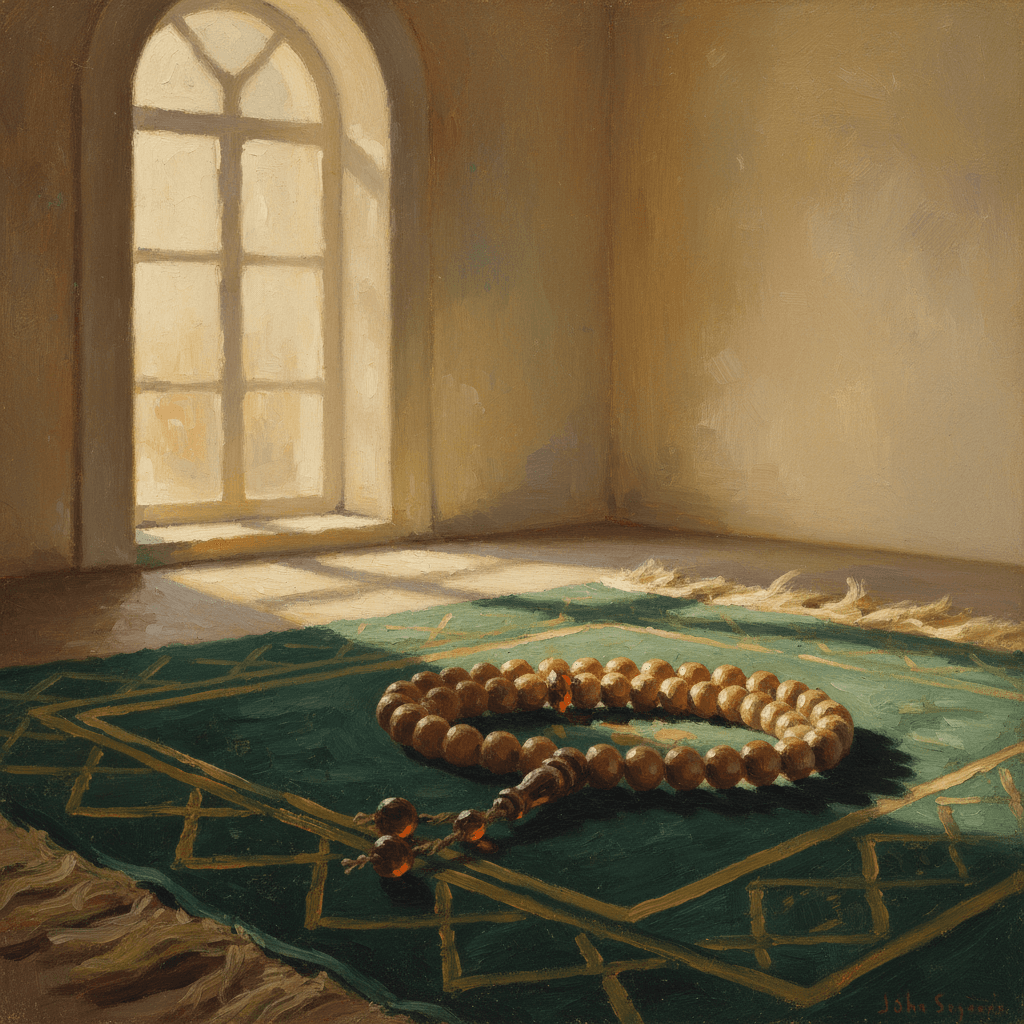
Every Muslim who has tried to change something about themselves has met it: the internal voice that says "just this once," the pull toward what you know is wrong, the rationalization that comes so quickly it sounds almost reasonable. You know what you should do. You do the other thing. Then the guilt comes.
That pattern — the pull, the choice, the guilt — is the nafs in operation. Understanding what it is and how it works is not just interesting theology. It is practical knowledge for anyone trying to grow.
What the Nafs Actually Means
Nafs (نفس) is an Arabic word that means "self" or "soul" — but in the Quran and the tradition of Islamic spiritual psychology, it specifically refers to the seat of desire, will, and ego within the human being. It is the part of you that wants things, makes choices, and either moves toward or away from Allah.
Islamic scholarship describes three stages or levels of the nafs — not entirely separate selves, but orientations the same self moves between:
1. Nafs al-Ammara bi al-Su' — The Commanding Self
إِنَّ النَّفْسَ لَأَمَّارَةٌ بِالسُّوءِ إِلَّا مَا رَحِمَ رَبِّي
"Indeed the soul (nafs) is inclined to commanding evil — except for those upon whom my Lord has mercy."
— (Surah Yusuf, 12:53)
These are the words of Prophet Yusuf (عليه السلام) after being delivered from one of the greatest temptations described in the Quran. Even he pointed to the nafs's commanding nature. This level is the nafs in its unrestrained state — following every desire, resisting correction, rationalizing every choice that serves it.
2. Nafs al-Lawwama — The Self-Reproaching Self
وَلَا أُقْسِمُ بِالنَّفْسِ اللَّوَّامَةِ
"And I swear by the self-reproaching soul."
— (Surah Al-Qiyamah, 75:2)
This is the nafs that feels the tension between what it does and what it knows is right. It falls into wrong, then reproaches itself. It is a higher state than ammara — it has developed conscience, awareness, and remorse. Most practicing Muslims oscillate in this level: sinning, feeling guilt, trying to change, falling again. The lawwama state is not comfortable, but it is not failure — it is the active battlefield of growth.
3. Nafs al-Mutmainna — The Tranquil Self
يَا أَيَّتُهَا النَّفْسُ الْمُطْمَئِنَّةُ ارْجِعِي إِلَى رَبِّكِ رَاضِيَةً مَّرْضِيَّةً
"O tranquil soul — return to your Lord, well-pleased and pleasing."
— (Surah Al-Fajr, 89:27-28)
This is the nafs at rest. Not passive — but no longer in chaos. It is secure in its trust in Allah, no longer pulled violently by desire, and moving toward Allah with genuine peace rather than forced compliance. This is the goal: not suppression of the nafs but its transformation into a willing, peaceful servant of Allah.
Why Modern Muslims Struggle With the Nafs
The nafs ammara has never had better tools to work with. Instant access to entertainment that numbs, platforms that feed comparison and desire, food that satisfies impulse without effort, relationships that can be discarded with a swipe. The modern environment is, in many ways, a sophisticated system for keeping the nafs ammara in control — offering it exactly what it wants, exactly when it wants it, with no friction.
And the nafs is strategic. It does not always announce itself as an enemy. It presents its desires as needs, its impulses as wisdom, its excuses as genuine reasoning. What is riya in Islam describes one version of this — the nafs attaching itself to good deeds. What is kibr in Islam describes another — the nafs inflating the self to feel superior to others.
How to Work With Your Nafs Daily
Name What Level You Are Operating From
Self-awareness about your nafs is the first step. Before acting — especially on impulse — ask: is this my nafs ammara pushing me? Or am I making a considered choice? Simply naming the level you are at interrupts the automatic operation the ammara state requires.
Muhasabah is the practice that develops this awareness over time — daily honest review that makes you increasingly able to see the nafs at work in real-time, not just in hindsight.
Use Sabr as the Practical Tool
Sabr — patience and self-restraint — is the practical counterpart to nafs-awareness. When the nafs pulls, sabr is what holds. Read what is sabr in Islam for the full picture. But the practical habit is this: when you feel the pull of the nafs ammara, pause for thirty seconds before acting. Make that pause a non-negotiable habit. Most impulse-driven behavior requires no thought — the pause introduces thought and gives your higher self a chance to respond.
Build a Competing Structure
The nafs ammara is strongest when there is no structure — no habit, no schedule, no commitment. Building consistent worship habits creates a structure the nafs must work against. The morning adhkar and evening adhkar are two of the most powerful structural tools: they anchor your day in remembrance of Allah, which is precisely what keeps the nafs lawwama engaged rather than collapsing back into ammara.
Give Your Nafs a Structure It Cannot Easily Overcome
Consistent daily worship builds the framework that keeps your nafs oriented toward Allah. DeenBack helps you track dhikr, dua, and Quran — the practices that move the nafs from commanding to tranquil.


Free download. Premium features available in-app.
The Dua for the Nafs
اللَّهُمَّ آتِ نَفْسِي تَقْوَاهَا وَزَكِّهَا أَنْتَ خَيْرُ مَن زَكَّاهَا أَنْتَ وَلِيُّهَا وَمَوْلَاهَا
Allahumma ati nafsi taqwaha wa zakkiha anta khayru man zakkaha anta waliyyuha wa mawlaha
"O Allah, give my soul its taqwa and purify it — You are the best to purify it. You are its Guardian and its Master."
— (Sahih Muslim 2722, sunnah.com)
This dua was taught by the Prophet ﷺ himself. It is a direct request for nafs transformation — not willpower alone, but Allah's assistance in purifying the very seat of your desires. Make it a daily prayer.
Signs Your Nafs Is Changing
When the work is taking effect, the shift from ammara toward mutmainna shows up in gradual ways:
- Impulses that used to feel overwhelming start to have a pause before them — you notice them before acting
- You recover from the ammara state faster — tawbah comes more quickly after falls
- Certain sins lose their appeal not because you are forcing yourself not to do them, but because genuine aversion has developed
- Worship feels less like an obligation fought through and more like a genuine orientation of the heart
- You feel genuine tawakkul — a resting trust in Allah that does not depend on circumstances
These are signs of the nafs lawwama deepening and the nafs mutmainna beginning to establish itself.
Common Questions
What if I feel like my nafs is too strong to fight?
You are not meant to fight it with willpower alone. The Prophet ﷺ's dua above is the starting point: ask Allah to purify your nafs, because you cannot do it unassisted. Build structural habits that constrain the ammara state. Make tawbah immediately after every fall. And read how to break bad habits as a Muslim — the nafs does not change through confrontation alone; it changes through replacement, structure, and consistent return to Allah.
Is the nafs responsible for all sin?
The nafs and shaytan work together in most sin. The nafs has the desire; shaytan provides the suggestion and the rationalization. The Quran mentions both. But the nafs is yours — it can be trained. Shaytan's suggestions only succeed when the nafs provides the ground for them. Purify the nafs and shaytan's whispers lose their purchase.
The Inner Journey That Never Ends
The work with the nafs is the central work of the Muslim life. It is what the Prophet ﷺ called "the greater jihad" — not because the outer is unimportant, but because everything in the outer life flows from the inner. What you do is eventually shaped by what you are. And what you are is the result of sustained, honest, patient work on the nafs — guided by Quran, hadith, daily practice, and the help of Allah who made this journey possible.
Move Your Nafs From Commanding to Tranquil — One Daily Practice at a Time
The nafs changes through consistent structure — not through one dramatic decision. DeenBack helps you build the daily habits that gradually reshape the self from the inside out.
Free download. Premium features available in-app.
Frequently Asked Questions
Is the nafs the same as the soul (ruh)?
Scholars distinguish between nafs and ruh, though the terms overlap in some contexts. The ruh (spirit) is described as the divine breath blown into Adam — a matter whose full nature Allah told us He kept to Himself (Quran 17:85). The nafs, in the spiritual psychology of Islam, refers more specifically to the self — the ego, the seat of desire and will. The nafs is what has the three levels (commanding, self-reproaching, tranquil). Both terms appear in the Quran, sometimes interchangeably, but when scholars of tazkiyah discuss purification, they are primarily working with the nafs.
Which level of nafs am I at?
Most people are not permanently at one level — they oscillate. You may have nafs ammara dominating in certain areas of your life (a particular sin or pattern you keep returning to) while nafs lawwama is active in others (you feel guilt and try to change). The goal is not to achieve nafs mutmainna and stay there forever — it is to spend more of your time in the lawwama state, moving toward mutmainna, and to increasingly recognize and resist the ammara state when it appears. Honest muhasabah will tell you which level is most active in each area of your life.
Does fighting the nafs mean hating yourself?
No — fighting the nafs is not self-hatred. The nafs is a part of you that has tendencies toward excess, laziness, and selfish desire. Recognizing and resisting those tendencies is not hating yourself — it is becoming a better, truer version of yourself. Think of it like physical training: the discomfort of working out is not hatred of your body; it is investment in your body. The Prophet ﷺ loved his Companions deeply and worked with them on their nafs — with warmth, not condemnation.
Why is the nafs described as commanding evil?
The Quran uses the phrase 'ammara bi al-su' — commanding toward evil — to describe the nafs in its unrestrained state. This does not mean the nafs is irredeemably evil. It means that without guidance, discipline, and the restraint of taqwa, the nafs gravitates toward what is immediately pleasurable, easy, or self-serving — regardless of whether it is good or harmful. The comparison in Islamic literature is like a horse: powerful, but needing a rider. Without a rider (reason, faith, taqwa), the horse runs wherever it wants.
Can the nafs be fully tamed?
The scholars are careful here. They say the nafs can be trained, disciplined, and increasingly oriented toward good — but it remains in need of watching throughout life. Even the most pious people maintained vigilance over their nafs until their final moments. The Prophet ﷺ, whose nafs was the most refined of all humans, still regularly sought forgiveness and refuge from his own weaknesses. The goal is not to 'win' against the nafs permanently but to maintain the relationship of muhasabah and discipline throughout your life.