
- Published on
What Is Muhasabah in Islam — The Self-Audit That Transforms Your Character
- Authors

- Name
- Ahmad
- Role
- Senior Marketing Manager, Islamic education • Deen Back
بِسْمِ اللهِ الرَّحْمٰنِ الرَّحِيْمِ
In the name of God, the Most Gracious, the Most Merciful.
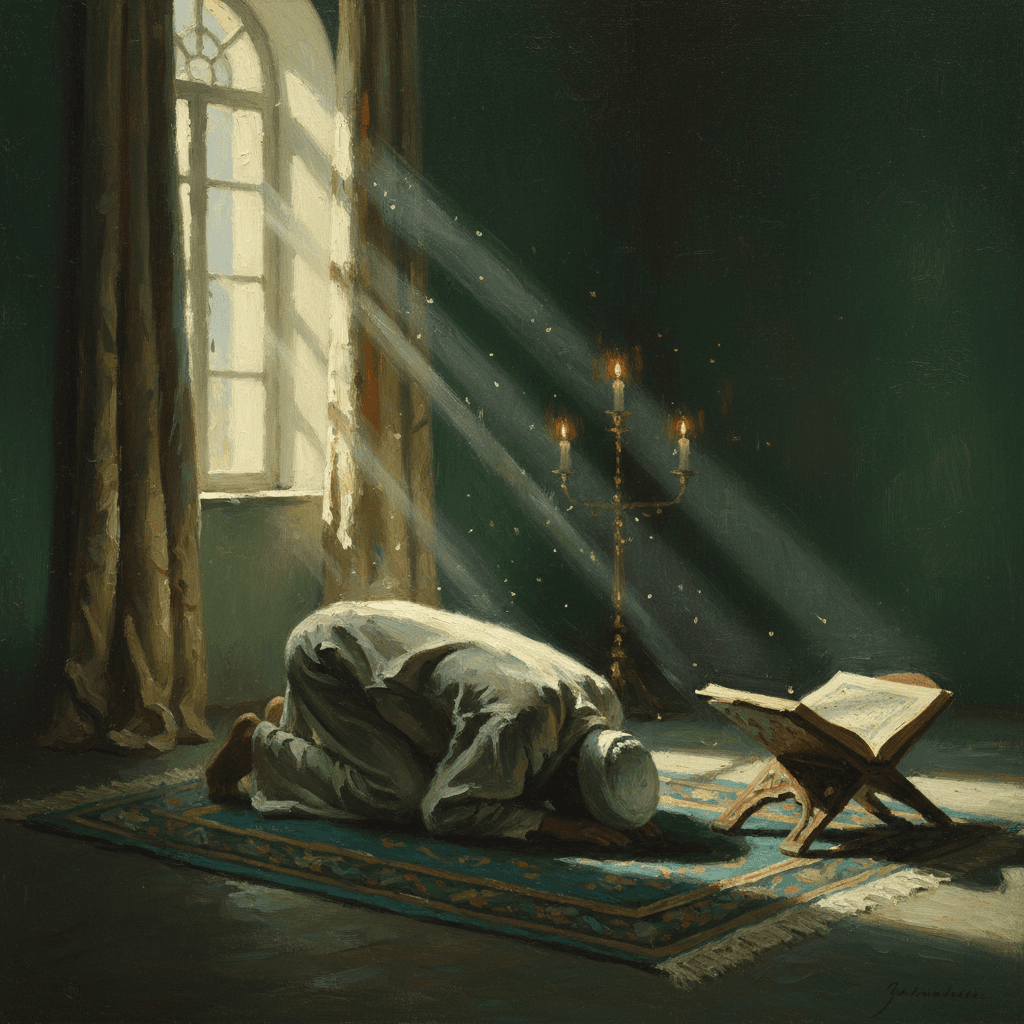
Umar ibn al-Khattab, one of the greatest figures in Islamic history, said something that has been quoted in Islamic literature for 1,400 years:
"Hold yourselves accountable before you are held accountable. Weigh your deeds before they are weighed for you."
This is muhasabah in one sentence. The practice of auditing yourself — your actions, intentions, and character — before Allah audits you on a day when no account can be changed.
If the second caliph of Islam — a man whom the Prophet ﷺ said shaytan would change paths to avoid — considered this practice essential, it demands our attention.
What Muhasabah Actually Means
Muhasabah (محاسبة) comes from the Arabic root hasaba — to account, to reckon, to settle a score. The same root gives us hisab — the reckoning of the Day of Judgment. Muhasabah is essentially bringing that reckoning forward into your daily life, so that you are regularly reviewing and correcting, rather than arriving at the final account unprepared.
The Quran points directly to this:
يَا أَيُّهَا الَّذِينَ آمَنُوا اتَّقُوا اللَّهَ وَلْتَنظُرْ نَفْسٌ مَّا قَدَّمَتْ لِغَدٍ
Ya ayyuha alladhina amanu attaqu Allaha waltanzur nafsun ma qaddamat lighad
"O you who believe, fear Allah. And let every soul look to what it has put forward for tomorrow."
— (Surah Al-Hashr, 59:18)
"Let every soul look" — this is not passive. It is a command to examine, to scrutinize, to actively review what you are sending ahead of yourself toward the Day of Judgment.
Imam Al-Ghazali described muhasabah as a three-phase process: musharata (making conditions with yourself before action — committing to certain standards), muraqabah (watchfulness during action), and muhasabah (the post-action review). The daily practice most Muslims focus on is the third phase — the honest review of how the day went.
Why Modern Muslims Struggle With Muhasabah
There is a reason most people do not do this: it is uncomfortable. Honest self-examination means confronting things about yourself that are easier to ignore. The nafs actively resists muhasabah because muhasabah threatens the comfortable stories the nafs tells about itself.
We also live in a culture that outsources self-knowledge to data — tracking apps, personality assessments, mood journals — while avoiding the deeper question: "What kind of person am I actually becoming?" Tools are useful, but muhasabah goes deeper than measurement. It asks about character, intention, and direction.
Finally, many Muslims confuse muhasabah with guilt-spiraling. They start to examine themselves and end up drowning in shame without any path forward. Real muhasabah always ends with tawbah and intention — not with open-ended self-punishment. Read what is tawbah in Islam to understand how repentance and self-accountability work together.
How to Practice Muhasabah Daily
The Evening Review
Set aside five to ten minutes before sleep — after the evening adhkar, ideally. Go through the day honestly:
What good did I do? Acknowledge the genuine goods: the prayer you prayed with presence, the kind word, the honest choice, the patience you showed. Not to feed pride, but to strengthen those patterns and thank Allah for enabling them.
Where did I fall short? Be specific. Not "I wasn't a good Muslim today" — that is vague and unhelpful. Specific: "I lied to avoid an awkward conversation." "I got angry at my child over something small." "I missed the afternoon prayer." Specific examination leads to specific change.
What were my intentions today? This is the deepest level of muhasabah and the hardest. Did the things you did today happen because of Allah — because you wanted His pleasure — or were other motives at work? Riya (showing off), self-interest, desire for approval? The examination of intention is where real tazkiyah happens.
What will I do differently tomorrow? End with a concrete intention. Not a vague "I'll be better," but a specific next action. This is what separates muhasabah from rumination.
Build the Habit of In-Moment Pause
Before significant decisions, before posting something, before responding to someone in conflict — pause briefly. One breath. "What am I about to do and why?" This micro-muhasabah, done consistently, interrupts the automatic pilot the nafs runs on and introduces conscious choice.
The morning adhkar is a good anchor for this: starting the day with dhikr creates a baseline of consciousness that makes in-moment pauses more natural throughout the day.
Build the Daily Self-Accounting Habit That Transforms Your Character Over Time
DeenBack helps you track your daily worship and build the consistent review habits that muhasabah requires — turning honest self-examination into a daily practice, not an occasional resolution.


Free download. Premium features available in-app.
Make Tawbah the Closing Act of Every Muhasabah Session
Every honest review will find something to repent for. End each muhasabah with sincere istighfar — not a mechanical phrase, but a genuine turning to Allah with what you found. This is what makes muhasabah spiritually generative rather than psychologically exhausting: you examine, you find, you turn back, you move forward. The dua for repentance is a powerful companion to this practice.
أَسْتَغْفِرُ اللهَ الَّذِي لَا إِلَهَ إِلَّا هُوَ الْحَيُّ الْقَيُّومُ وَأَتُوبُ إِلَيْهِ
Astaghfirullaha alladhi la ilaha illa huwa al-Hayyu al-Qayyum wa atubu ilayh
"I seek forgiveness from Allah, other than whom there is no god, the Ever-Living, the Eternal, and I turn to Him in repentance."
Say this three times at the end of your muhasabah and let it be a genuine closing — not a ritual stamp.
Signs You Are Making Progress Through Muhasabah
Regular muhasabah does something remarkable over time: it closes the gap between who you want to be and who you actually are. Signs of real progress:
- You catch yourself in patterns you used to miss entirely — dishonesty, arrogance, impatience — because muhasabah has sharpened your self-awareness
- Small sins trouble you more than they used to, not from anxiety but from a growing sensitivity to what disrupts your relationship with Allah
- You are less surprised by your own failures — you see the patterns clearly enough to anticipate them
- Tawbah becomes a natural response to failure rather than something you delay out of shame
Read how to break bad habits as a Muslim alongside muhasabah — the self-knowledge muhasabah gives you is the necessary input for targeted habit change.
Common Questions
What if muhasabah makes me feel hopeless?
If muhasabah is generating despair rather than renewal, something has gone wrong. The problem is usually one of two things: focusing only on failures without pairing it with tawbah and trust in Allah's mercy, or setting unrealistic standards that make any failure feel catastrophic. Muhasabah is meant to produce the clarity of the evening adhkar: a clear-eyed review, a genuine return, and peace. If yours is producing something else, bring tawbah and gratitude into the process and recalibrate.
What if I find the same problem every single day for weeks?
Then the muhasabah is working — you have clearly identified the pattern. Now the work is targeted habit change, not more examination. Bring in specific practices for the issue you keep finding. Persistent patterns need more than awareness; they need structured intervention — specific replacement habits, triggers, and accountability.
The Account That Cannot Be Delayed
There is coming a day when every soul will be shown its record — and will wish it had more time to correct it. Muhasabah is that correction, available right now, every evening, before the final account. The mercy in this is extraordinary: we get to audit and amend throughout our lives, so that when we meet Allah, we have been working on ourselves for years — not arriving unprepared.
The Daily Habit of Self-Accounting Starts Tonight — Build It With DeenBack
Five minutes each evening with genuine reflection and istighfar can transform your character over years. DeenBack helps you make this practice consistent and measurable.
Free download. Premium features available in-app.
Frequently Asked Questions
How often should I do muhasabah?
Most scholars recommend daily muhasabah — ideally at the end of each day, before sleep. Some recommend a brief pause even within the day: a moment at midday to check how the morning went. The key is regularity over intensity. A brief, honest five-minute review each evening is more valuable than an occasional deep session done rarely. Consistency builds the habit of honest self-examination that eventually becomes a second nature.
What exactly should I examine during muhasabah?
Scholars typically suggest examining: your obligatory acts of worship (were they performed properly, with presence?), your speech and interactions (any lying, backbiting, harsh words, broken promises?), your intentions (were you doing things for Allah or for other reasons?), and specific character traits you are working on (did anger, pride, or envy show up today?). Also: what good did you do and how can you do more of it? Muhasabah is not only about finding fault — it also reinforces what went well.
What is the difference between muhasabah and anxiety or rumination?
Muhasabah is honest, structured, forward-looking examination — you identify what happened, evaluate it, make tawbah where needed, and decide what to do differently. It ends with action or intention, not with lingering in guilt. Anxiety and rumination, by contrast, loop without resolution: replaying events without learning from them, feeling bad without moving toward change. If your self-examination leaves you paralyzed, ashamed, and hopeless, it has become rumination. The cure is to bring Allah into the process — genuine tawbah releases the weight that rumination tries to carry forever.
Did the Prophet or his Companions practice muhasabah?
Yes — the Prophet ﷺ sought forgiveness and engaged in self-reflection constantly. Umar ibn al-Khattab is the Companion most associated with muhasabah — he explicitly described holding himself to account before Allah would hold him to account. The scholars of tazkiyah, from Imam Al-Ghazali to Ibn al-Qayyim, all placed muhasabah as one of the central tools of soul purification. It has a long, grounded history in Islamic practice.
Can muhasabah be harmful if done incorrectly?
Done incorrectly, muhasabah can tip into scrupulosity (waswas) or depression if it focuses only on failures without tawbah, or if it sets impossibly high standards. The protection is: always pair the examination of faults with tawbah and trust in Allah's mercy, examine both failures and successes, and keep the purpose clear — not to punish yourself but to grow closer to Allah and improve your character. If self-examination is making you more hopeless rather than more motivated, seek guidance and recalibrate.