
- Published on
What Is Riya in Islam — When Good Deeds Become a Performance
- Authors

- Name
- Ahmad
- Role
- Senior Marketing Manager, Islamic education • Deen Back
بِسْمِ اللهِ الرَّحْمٰنِ الرَّحِيْمِ
In the name of God, the Most Gracious, the Most Merciful.
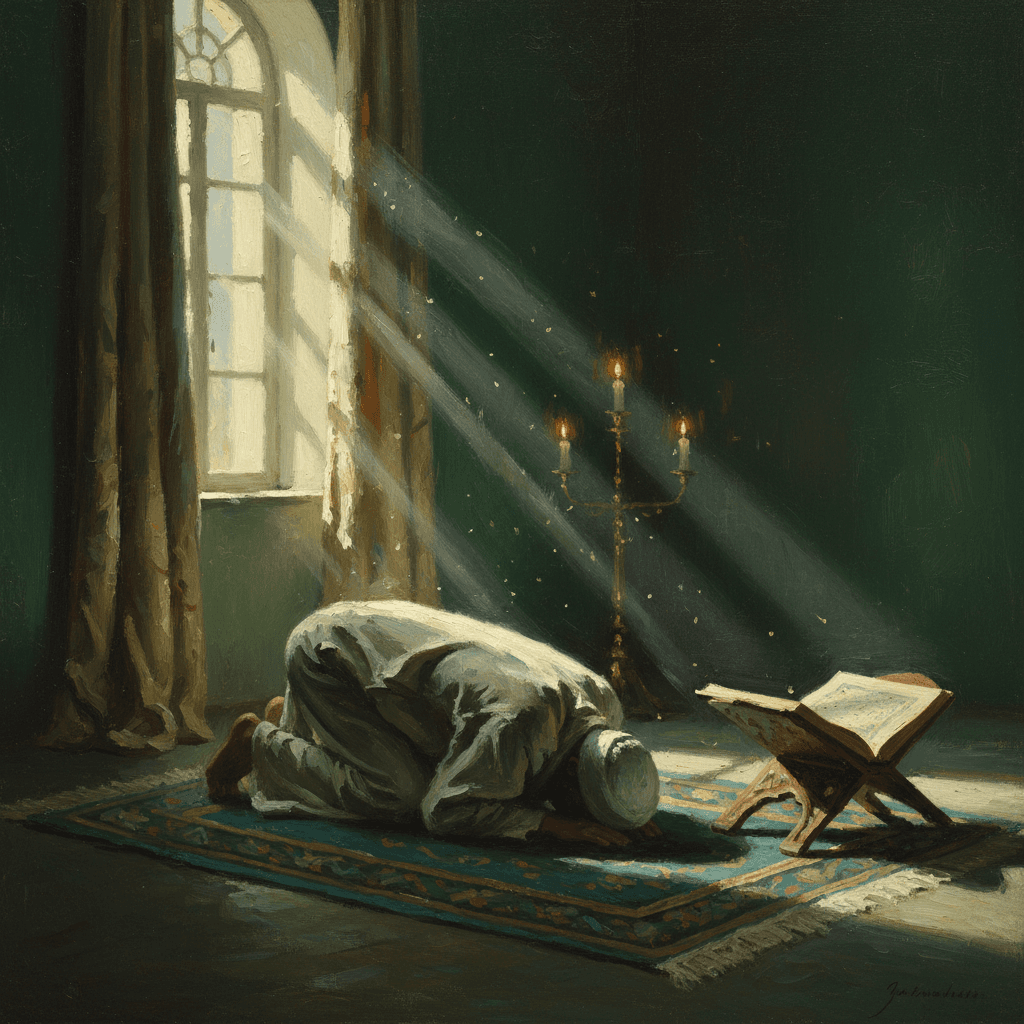
You prayed all night for Laylatul Qadr — genuinely, tearfully, alone. Then the next morning, someone asks what you did, and you mention it. And in the telling, something subtle shifts: you notice yourself adding details, watching for their reaction, quietly pleased by the look of admiration. Nothing dramatic happened. But something has entered the space where the deed was.
That something is riya. And it is one of the most dangerous diseases of the heart precisely because it attaches itself to the best things you do.
What Riya Actually Means
Riya (رياء) comes from the Arabic root ra'a — to see, to be seen. It is the act of performing religious deeds, not purely for Allah, but for the eyes of other people. The admiration, respect, or reputation you gain becomes the real reward you are seeking.
The Prophet ﷺ called riya "the lesser shirk":
أَخْوَفُ مَا أَخَافُ عَلَيْكُمُ الشِّرْكُ الْأَصْغَرُ، قَالُوا: وَمَا الشِّرْكُ الْأَصْغَرُ يَا رَسُولَ اللَّهِ؟ قَالَ: الرِّيَاءُ
Akhwafu ma akhafu 'alaykumu ash-shirku al-asghar... ar-riya'
"The thing I fear most for you is the lesser shirk." They asked: "What is the lesser shirk, O Messenger of Allah?" He said: "Riya."
— (Musnad Ahmad 23630, authenticated by Al-Albani)
Shirk — associating partners with Allah — is the one sin the Quran says Allah does not forgive if maintained until death. The "lesser" version is not forgiven easily either. Riya places human approval alongside — or ahead of — divine acceptance. It splits the heart's direction.
The Quran describes those who pray while showing off:
فَوَيْلٌ لِّلْمُصَلِّينَ الَّذِينَ هُمْ عَن صَلَاتِهِمْ سَاهُونَ الَّذِينَ هُمْ يُرَاءُونَ
"Woe to those who pray but are heedless of their prayers — those who make a show of their deeds."
— (Surah Al-Ma'un, 107:4-6)
These are people who pray. But they pray to be seen. And the Quran uses the word waylun — a word of severe warning — for them.
Why Modern Muslims Struggle With Riya
We live inside a global attention economy. Every platform is designed to reward visible performance. The number under your post is a real-time feedback loop. When you share a religious act — a verse you memorized, a meal you cooked for someone, a moment at the masjid — the same dopamine system activates. The line between sharing your deen and performing your deen blurs fast.
Riya also hides inside genuine motivation. Most people who struggle with riya are not cynical hypocrites performing deeds they privately despise. They genuinely want to be good. They genuinely want to worship. But the nafs slips alongside, using religious motivation as a vehicle to collect approval and status. The deed starts sincere. Then the nafs gets its hands on it.
Recognizing this requires the kind of honest self-examination that what is muhasabah in Islam describes — a daily, honest accounting of what is actually driving your actions.
How to Guard Against Riya Daily
The Private Practice Test
Build a foundation of secret deeds that no one knows about. Pray two raka'at alone at night. Give sadaqah anonymously. Make dua privately that you never mention to anyone. These private deeds are the real baseline of your worship. If your spiritual life exists mostly on what people can observe, that is a warning sign worth sitting with.
The Prophet ﷺ said: "The best sadaqah is that given secretly, so that the left hand does not know what the right hand gives." (Sahih Bukhari 1421) This was not just about money — it was about the principle of worship-without-audience.
Pause Before You Share
The pause before posting or mentioning a religious act is one of the most effective guards against riya. Ask yourself honestly: "What is driving this share?" If the honest answer involves wanting to be seen as pious, wanting admiration, or wanting to be regarded as more religious than you usually are — that is riya trying to enter.
This does not mean you can never share acts of worship. It means you owe yourself an honest moment before you do.
Seek Ikhlas Actively
Ikhlas (إخلاص) — sincerity — is the antidote to riya. Read what is ikhlas in Islam for the full picture. But practically, ikhlas is cultivated through:
- Regular dua asking Allah for sincere intentions
- Starting each act of worship with a brief internal renewal of intention
- Checking whether your worship changes based on who is watching
The dua for ikhlas is simple and powerful:
اللَّهُمَّ إِنِّي أَسْأَلُكَ الإِخْلَاصَ
Allahumma inni as'aluka al-ikhlas
"O Allah, I ask You for sincerity."
Make this a habit before prayer, before giving, before any significant religious act.
Build a Foundation of Private Worship That Cannot Be Corrupted by Riya
DeenBack helps you track your private dhikr, dua, and Quran habits — worship that happens whether or not anyone sees it. That consistency is where ikhlas is built.


Free download. Premium features available in-app.
How to Handle Riya That Has Already Entered
If you start a deed with sincerity and riya enters partway through, scholars say: do not abandon the deed. Push the thought away, renew your intention for Allah, and continue. An abandoned good deed leaves you with nothing; a deed in which riya entered but was repelled leaves you with a reward and a struggle you fought through.
If, however, an entire deed was performed purely for people — no genuine intention for Allah — then that deed brings no reward, and the honest response is tawbah and doing the deed again sincerely.
The dua for ikhlas is a powerful daily reset for this. Make it a regular part of your morning routine alongside the morning adhkar.
Signs You Are Making Progress Against Riya
When the work against riya is taking hold, you will notice:
- You feel satisfied after worship even when no one knows about it
- Praise for your religious life does not give you the boost it used to
- You are less driven to mention or share acts of worship in conversation
- Correction and criticism about your religious life does not sting the way it did
These are quiet signs of ikhlas growing. Progress with riya is not dramatic — it is a gradual shift in what your heart is seeking when you bow in prayer.
Common Questions
What if I started a deed with riya? Does the whole thing not count?
If riya entered after you started — and you push it away and refocus — scholars generally say the deed remains valid. The problem is when riya becomes the sustaining fuel of the deed, from start to finish. Even then, the solution is tawbah and sincerity going forward, not giving up on worship altogether.
Is all social sharing of religious content riya?
No. The Prophet ﷺ and his Companions shared their practices, taught others, and spoke about their worship openly. The question is the why. If you share to teach, inspire, or build community around good practices, that is not riya. If you share to be seen as religious, that is riya. Check how to build khushu in salah — the same work that builds sincerity in prayer helps in all religious acts.
Worship That Belongs to Allah Alone
The Prophet ﷺ reported Allah saying in a sacred hadith: "I am the least in need of partners. Whoever does a deed and associates a partner with Me in it, I discard it and the partner." (Sahih Muslim 2985) Your deeds are too precious to give away for a few seconds of human approval. Guard them. Do them in the dark, in the quiet, when only Allah is watching. That is where the real treasure is stored.
Make Sincerity Your Daily Practice, Not Just Your Good Intention
DeenBack tracks the habits that build ikhlas over time — consistent private worship, dhikr, and reflection that keep your heart oriented toward Allah and not toward people's opinions.
Free download. Premium features available in-app.
Frequently Asked Questions
Is riya the same as showing off generally?
Riya specifically refers to performing acts of worship or religious deeds for the sake of being seen and praised by people, rather than for Allah. It is distinct from general vanity or pride in non-religious matters. A person who posts about their workout to impress others is not committing riya in the Islamic sense, though they may have other issues with the nafs. Riya is about worship and deeds that should be purely for Allah.
Does thinking about riya while doing a good deed invalidate it?
Scholars distinguish between a thought of riya entering the mind and actually allowing that thought to change the deed. If a passing thought of 'people might see this' enters while you are praying and you push it away and refocus on Allah, the deed is not invalidated. The problem is when you allow the thought to stay, feed it, and start performing the deed for the pleasure of others. Brief, unwanted intrusions of riya are common to everyone — acting on them is what corrupts the deed.
What if I feel good that people praised my good deed?
The Prophet ﷺ was asked about someone who does a good deed privately and feels happy when others happen to learn of it later. He said this is 'a hasty good news for the believer' — meaning it is allowed to feel pleased when good deeds become known, as long as the deed itself was done sincerely for Allah. The test is whether you would have done the deed if no one would ever know. If yes, the pleasure at being praised later is not riya.
How do I purify my intention before doing a good deed?
Scholars recommend a brief pause before significant acts of worship to check your intention. Ask yourself: 'If no one would ever know I did this, would I still do it?' If yes, proceed. If you hesitate, take a moment to reset your intention toward Allah alone. The dua 'Allahumma inni as'aluka al-ikhlas' — 'O Allah, I ask You for sincerity' — is a powerful companion to this practice, reminding yourself Whom you are actually doing the deed for.
Is it riya to post about going to Hajj or Umrah?
Scholars generally say that sharing acts of worship on social media is permitted if the intention is to inspire others, share gratitude, or make dua with community support — not to be seen as a pious person. The test remains: what would change about your post if you knew it would get zero likes or comments? If you would still share it as a form of gratitude or inspiration, it is less likely to be riya. If the lack of reaction would lead you to delete it or not post at all, that is a signal worth examining.