
- Published on
What Is Ikhlas in Islam — Doing Everything for Allah Alone
- Authors

- Name
- Ahmad
- Role
- Senior Marketing Manager, Islamic education • Deen Back
بِسْمِ اللهِ الرَّحْمٰنِ الرَّحِيْمِ
In the name of God, the Most Gracious, the Most Merciful.
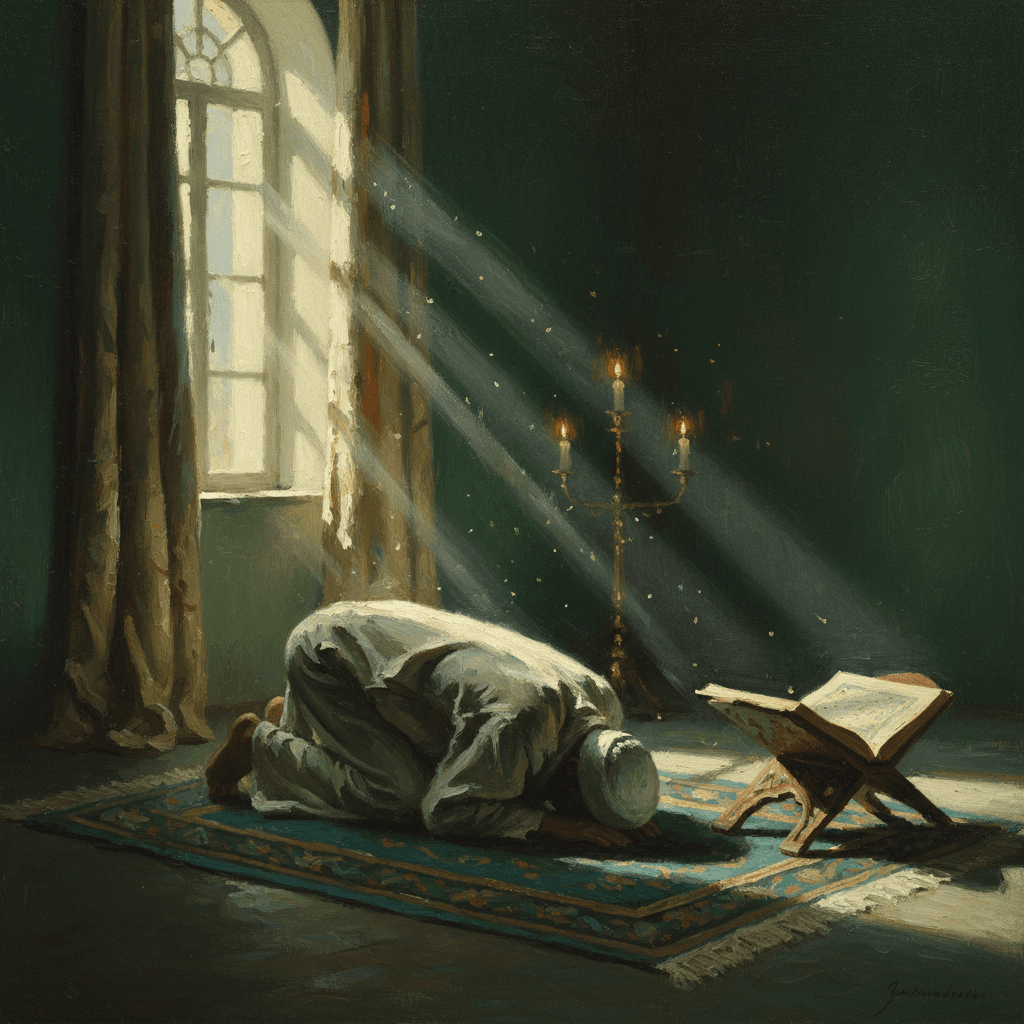
You pray, give charity, fast, read Quran. The acts are all there. And sometimes — if you are honest with yourself — you notice that part of what is driving them is wanting to be seen as a good Muslim. Wanting the reputation. Wanting the respect. That tension — between doing something for Allah and doing it to be noticed — is the territory of ikhlas.
Ikhlas is described by scholars as the purification of the intention — ensuring that the motive behind any act is genuinely and primarily for Allah. It is among the most critical conditions for any act of worship to be accepted. And it is among the hardest things to maintain consistently.
What Ikhlas Really Means
Ikhlas (إخلاص) comes from the root meaning to be pure, refined, or free of mixture. An act done with ikhlas is an act from which every other motive has been removed — so that Allah alone remains as the reason.
The Quran makes it foundational:
وَمَا أُمِرُوا إِلَّا لِيَعْبُدُوا اللَّهَ مُخْلِصِينَ لَهُ الدِّينَ
Wa ma umiru illa liya'budu Allaha mukhlisina lahu ad-din
"And they were not commanded except to worship Allah, sincere to Him in religion."
— (Surah Al-Bayyinah, 98:5)
The entire religion — all of it — is meant to be practiced with sincerity to Allah. Not to family expectations, not to community reputation, not to social media performance. The reason behind every act should ultimately be: this is for Allah.
The opposite of ikhlas is riya — performing acts of worship for the approval of others. The Prophet ﷺ called riya the "minor shirk" — a description serious enough to demand careful self-examination. (Musnad Ahmad 23630) It is minor compared to worshipping idols, but it shares the same fundamental error: directing an act of worship toward something other than Allah.
Why Ikhlas Is So Difficult
The nafs is fundamentally oriented toward self-preservation and self-promotion. It wants to look good. It wants to be respected. It wants the good deed to come with an audience who can acknowledge it.
This creates a constant internal pressure that operates below the level of conscious thought. You share a charitable act on social media without thinking deeply about why. You pray a little longer in congregation than you would alone, without examining the difference. You mention your fasting in conversation without a clear reason. None of these are necessarily wrong — but they invite the question: what exactly is motivating this?
The difficulty is compounded by the fact that riya can be subtle. Scholars describe it operating at the level of the intention behind the intention: you give charity genuinely for Allah, but then hope it gets noticed. That secondary hope, if it becomes part of the motivation, is a form of riya.
How to Cultivate Ikhlas
Start Every Act With an Explicit Intention
Before significant acts of worship, consciously direct your intention: "I am doing this for Allah." This is not a magic formula — it is a practice of orienting the heart before the act begins. Scholars taught students to say "nawayt..." (I intend...) as a deliberate pre-act orientation, because the intention set at the beginning shapes the quality of the act throughout.
Protect the Privacy of Your Good Deeds
The Prophet ﷺ praised the person whose charity is so private that the left hand does not know what the right hand gives. (Sahih Bukhari 660) Practicing private good deeds — anonymous charity, prayers no one sees, kindness that goes unacknowledged — is among the most powerful exercises for building ikhlas. When there is no audience, the only remaining reason to act is Allah.
Make the dua for ikhlas a regular practice. Asking Allah for sincerity directly acknowledges that ikhlas is not something you produce alone — it is given by Allah in response to a heart that genuinely seeks it.
Examine the Discomfort of Being Unnoticed
Here is a revealing test: do a significant good deed privately, and notice how you feel afterward. If there is genuine peace, the ikhlas is present. If there is frustration or restlessness that no one knows — that discomfort is information. It points to where the real motivation was located. Use that discomfort as a teacher, not a condemnation.
Build a Private Dua and Dhikr Practice That No One Sees — Just You and Allah
DeenBack helps you track your daily Islamic habits privately — building the internal spiritual life that is the foundation of ikhlas, and the most honest form of worship you can offer.


Free download. Premium features available in-app.
Recite Surah Al-Ikhlas Daily
The Prophet ﷺ said that Surah Al-Ikhlas is equivalent in reward to a third of the Quran. (Sahih Bukhari 5015) Its three verses affirm the absolute, undivided unity of Allah — the theological foundation of ikhlas. Reciting it daily in the morning adhkar is a consistent reminder of what all worship is directed toward.
Make Istighfar for Riya When You Notice It
When you notice riya entering an act, do not abandon the act — make istighfar and redirect. "Astaghfirullah — I seek your sincerity, Ya Allah, in what I am doing." This acknowledges the contamination without nullifying the effort. The willingness to notice and correct is itself a form of the ikhlas you are seeking.
Signs of Progress in Ikhlas
- You feel as satisfied with a private good deed as a public one
- You do not feel the need to mention your worship or charity in conversation
- When a good deed is unnoticed or unacknowledged, it does not bother you
- You find yourself more interested in the quality of your relationship with Allah than in how others perceive your Islamic practice
Common Questions
Can I mention my good deeds at all, or does that automatically void ikhlas?
Mentioning good deeds is not automatically riya. If you share an Islamic experience to encourage others, to give context, or as dawah — and the dominant intention is not to look good — that is acceptable. The question is: what is driving the disclosure? Honest self-examination is required.
How do I practice ikhlas when the act is inherently public — like praying in congregation?
By ensuring that the quality of your prayer in congregation matches what you would offer in private. Pray in congregation the same way you pray alone — same speed, same attention, same presence. If you find yourself performing a better prayer when others can see, that is the signal to work on what you bring to the private prayer. Read how to increase your iman for the broader framework of building a genuine internal faith that supports ikhlas across all contexts.
The Most Valuable Currency
Ikhlas is described by some scholars as the most valuable spiritual currency — because without it, acts of worship lose their essential value, but with it, even a small act becomes precious before Allah. A single sujood done with true ikhlas may outweigh years of externally impressive performance. That is the liberating reality of ikhlas: it levels the playing field completely. What matters is the sincerity behind the act, not its size, visibility, or complexity.
Deepen Your Internal Practice — The Acts of Worship That Are Purely Between You and Allah
DeenBack supports your private spiritual life with daily prayer tracking, dua reminders, and dhikr tools — helping you build the consistent, sincere relationship with Allah that is the heart of ikhlas.
Free download. Premium features available in-app.
Frequently Asked Questions
How do I know if I am doing something for ikhlas or for show?
A useful test: would you do this act if no one would ever know? If you would give charity anonymously, pray the same way alone as in congregation, and perform good deeds without any hope of being noticed — that is ikhlas. If the thought of no one knowing changes your motivation, riya is present.
What if I start an act with ikhlas but then feel pride creeping in?
This is normal and does not necessarily void the act. The scholars say that pride or showing-off that arises during a deed — not from the original intention — is a separate matter. The key is to notice it, dislike it, seek forgiveness for it, and reorient your intention. Do not abandon the act because of the intrusion.
Is it possible to have perfect ikhlas?
Perfect ikhlas — completely free from any trace of self — is extremely rare and perhaps only achieved by the greatest of the salihin. The goal for ordinary Muslims is not perfection but orientation: is the dominant, genuine intention directed toward Allah? Struggle for ikhlas, even if imperfect, is itself valued.
Does ikhlas mean I cannot take any worldly benefit from a good act?
No. If you pray and also feel peace of mind, that is fine. If you give charity and also feel good about yourself, that is fine — as long as the primary motivating intention was for Allah. Ikhlas does not require hating worldly benefits; it requires that they are not the reason you acted.
Why is Surah Al-Ikhlas so important in Islam?
Surah Al-Ikhlas is described as equivalent to a third of the Quran because it embodies pure tawhid — the absolute oneness and uniqueness of Allah. Reciting it is itself an act of ikhlas in the sense of affirming that Allah alone deserves worship and devotion. The Prophet ﷺ recommended it daily.