
- Published on
Dua for Thanks to Allah: How to Make Gratitude a Daily Practice
- Authors

- Name
- Ahmad
- Role
- Senior Marketing Manager, Islamic education • Deen Back
بِسْمِ اللهِ الرَّحْمٰنِ الرَّحِيْمِ
In the name of God, the Most Gracious, the Most Merciful.
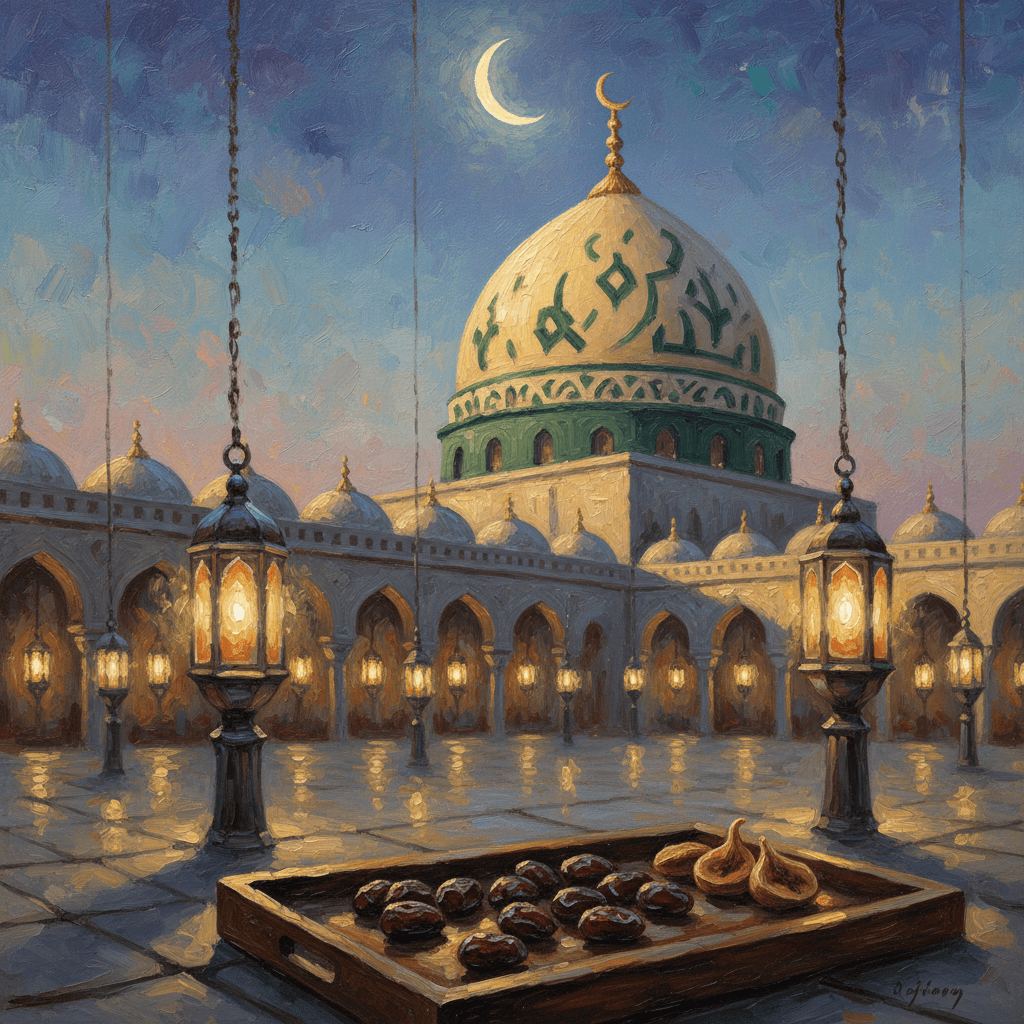
Most of us spend far more time asking Allah than thanking Him.
That is not a criticism — asking is worship. But there is a specific quality of relationship that develops when you learn to say thank you with the same sincerity and intention you bring to your supplications. The Quran is not subtle about this. Allah says directly: if you are grateful, He will increase you. If you are ungrateful, His punishment is severe. This is a spiritual law, not a suggestion.
The dua for thanking Allah is not just a polite formality. It is a practice that rewires how you perceive your life — what counts as a blessing, what counts as enough, and how you walk into every new day.
If you have been going through the motions of saying Alhamdulillah without really meaning it, this guide is for changing that.
The Duas for Thanking Allah
The dua the Prophet taught Muadh ibn Jabal — to say after every prayer:
اللَّهُمَّ أَعِنِّي عَلَى ذِكْرِكَ وَشُكْرِكَ وَحُسْنِ عِبَادَتِكَ
Allahumma a'inni ala dhikrika wa shukrika wa husni ibadatik.
"O Allah, help me to remember You, to thank You, and to worship You in the best way." — (Abu Dawud 1522)
When to say it: After every obligatory prayer, before leaving the prayer mat. The Prophet took Muadh's hand and said: "O Muadh, I love you. So do not ever forget to say after every prayer: [this dua]." That instruction — every prayer — is the scale at which this gratitude practice was intended.
The comprehensive praise — the heaviest word on the scale:
الْحَمْدُ لِلَّهِ
Alhamdulillah.
"All praise and thanks are due to Allah." — (Muslim 223)
The Prophet said: "Al-hamdu lillah fills the scales." In the same hadith, he said Subhanallah and Alhamdulillah together fill what is between the heavens and the earth. This is not a phrase you rush through. This is one of the weightiest words in the Arabic language.
The dua of Sulayman — the gratitude of one who has received:
رَبِّ أَوْزِعْنِي أَنْ أَشْكُرَ نِعْمَتَكَ الَّتِي أَنْعَمْتَ عَلَيَّ وَعَلَى وَالِدَيَّ وَأَنْ أَعْمَلَ صَالِحًا تَرْضَاهُ وَأَدْخِلْنِي بِرَحْمَتِكَ فِي عِبَادِكَ الصَّالِحِينَ
Rabbi awzi'ni an ashkura ni'mataka allati an'amta alayya wa ala walidayya wa an a'mala salihan tardah, wa adkhilni bi-rahmatika fi ibadika as-salihin.
"My Lord, enable me to be grateful for Your favor which You have bestowed upon me and upon my parents, and to do righteousness of which You approve, and admit me by Your mercy into the ranks of Your righteous servants." — (Quran 27:19)
This is the dua of the Prophet Sulayman (peace be upon him) upon hearing the ant speak — a moment of joyful awe at Allah's power. It asks not just to feel grateful but to be enabled to act on that gratitude.
The sujud ash-shukr supplication — for moments of great blessing:
When the Prophet received news of a great blessing or victory, he would prostrate in gratitude — sujud ash-shukr. In the prostration, the same words as in regular sujud apply: Subhana Rabbiyal A'la — "Glory be to my Lord, the Most High." This act is confirmed sunnah. (Abu Dawud 2774)
The Story Behind It
The hadith of Muadh ibn Jabal is one of the most personal moments in all of sunnah literature. The Prophet held Muadh's hand. He said: "I love you." And then — as the first act of that love — he gave him a dua to say after every single prayer.
This tells you something about what the Prophet considered important. He did not give Muadh a complex scholarly assignment. He gave him a sentence. A sentence to say five times a day, every day, for the rest of his life.
Allahumma a'inni ala dhikrika wa shukrika wa husni ibadatik.
Notice what the dua asks for: not gratitude itself, but help with gratitude. The Prophet understood that shukr is not automatic — it requires support from Allah. We are forgetful by nature. We are distracted by nature. Gratitude that lasts requires divine assistance.
The Quran confirms this when it records Sulayman's dua using the word awzi'ni — "inspire me" or "enable me" to be grateful. Even a prophet who had been given dominion over humans, jinn, and animals did not assume he could be grateful on his own. He asked Allah to make him capable of it.
How to Turn Gratitude Into a Daily Practice
Gratitude in Islam is not a feeling. It is a practice. You do not wait to feel grateful and then express it — you express it consistently, and the feeling deepens over time. This is exactly how habits work.
Anchor the Muadh dua to every salah:
The simplest and most powerful change you can make is this: after every salah, before you fold your prayer mat, say Allahumma a'inni ala dhikrika wa shukrika wa husni ibadatik once. That is five times a day. That is the practice the Prophet designed. It takes fifteen seconds. Start here.
Say Alhamdulillah with weight, not speed:
Most of us have heard Alhamdulillah so many times it has become automatic — a verbal tick rather than a declaration. Try this: once a day, say it slowly. Say it the way you would say it if you had just been told that a feared test result came back clear, or that someone you love recovered, or that the thing you were afraid of did not happen. That is the register of Alhamdulillah. Bring that to your daily use of it.
Establish a nightly gratitude reflection:
Before sleeping, name three specific things from that day for which you are grateful. Not general things — specific things that happened today. This practice — endorsed by modern psychology and built on the Quranic principle of counting blessings — has a documented effect on wellbeing over time. Pair it with the dua for sleeping to close the day in both gratitude and surrender.
Perform sujud ash-shukr when something good happens:
The next time you receive genuinely good news — a job, a recovery, a resolution, anything — prostrate. Put your forehead to the ground and say Subhana Rabbiyal A'la. It takes thirty seconds. It is a sunnah almost never practiced. And it does something powerful: it makes your body participate in gratitude, not just your tongue.
Connect gratitude to the morning adhkar:
The dua for morning includes the morning declaration Allahumma bika asbahna — "by You we enter the morning." This is a form of gratitude. Every morning that you wake up and acknowledge that waking up was not guaranteed is a gratitude practice. Stack the Muadh dua alongside it.
Build a Daily Gratitude Habit With DeenBack
DeenBack helps you track your daily dhikr and duas — including the post-prayer gratitude practice the Prophet gave Muadh. Build your streak and watch how gratitude changes your relationship with every day.


Free download. Premium features available in-app.
Related Duas
Dua for morning: Starting the day with the morning adhkar is one of the most powerful daily gratitude practices in Islam — saying Allahumma bika asbahna is a declaration that the morning itself is a gift.
Dua for rizq: Gratitude and provision are directly connected in Islam — Allah promises more to those who are grateful. The dua for rizq explores this connection and gives the specific supplications for asking Allah to increase your provision.
Dua for health: One of the most commonly forgotten blessings is health. The dua for health serves as both a supplication for wellbeing and a reminder to thank Allah for what most of us take for granted every day.
Common Questions
What is the difference between Alhamdulillah and shukr?
Alhamdulillah is praise — it acknowledges that all good comes from Allah and that He deserves all praise, unconditionally. Shukr (gratitude) is specifically in response to a blessing received. You say Alhamdulillah at all times, including in difficulty. Shukr is the response to favor. Both are correct uses of the phrase Alhamdulillah — in one case as pure praise, in another as gratitude for something specific.
Does Allah increase blessings when you are grateful?
This is an explicit Quranic promise. Allah says: La'in shakartum la'azidannakum wa la'in kafartum inna adhabi la-shadid — "If you are grateful, I will surely increase you in blessing; but if you are ungrateful, indeed My punishment is severe." (Quran 14:7). The increase is not always in wealth — it can be in peace, health, relationships, time, clarity, or meaning. But the promise is real and binding.
Can gratitude be expressed through action, not just words?
Yes — in fact, the Quran uses the phrase a'mal shukran (work as gratitude) in describing how the family of Dawud (peace be upon him) should respond to Allah's favor (Quran 34:13). Gratitude expressed through righteous deeds — using your health to serve others, using your wealth to give charity, using your knowledge to benefit people — is considered the highest form of shukr. The tongue, the heart, and the body all participate.
What should I say when something bad happens — can I still be grateful?
Yes. The Prophet said: "How remarkable is the case of the believer — there is good for him in everything, and this applies only to the believer. If prosperity comes his way, he expresses gratitude to Allah and that is good for him. And if adversity comes his way, he endures it patiently and that is also good for him." (Muslim 2999). Gratitude in hardship is not denial of the difficulty — it is trust that Allah's plan for you is good even when you cannot see it.
Is saying Alhamdulillah after sneezing different from saying it as gratitude?
Yes. After sneezing, Alhamdulillah is a prescribed sunnah response to a physical event. As a gratitude expression, it is a voluntary act of worship connected to a recognized blessing. Both are rewarded, but the intention and context differ. The gratitude-focused Alhamdulillah — said slowly, consciously, and sincerely — carries a different spiritual weight than the reflexive post-sneeze expression.
Closing
The Prophet (peace be upon him) once stood in prayer so long that his feet swelled. When asked why he pushed himself so hard when all his past and future sins had been forgiven, he said: "Should I not be a grateful servant?"
That is the model. Not gratitude as a transaction — thank Allah and get more. But gratitude as the natural, ongoing response of someone who has truly understood what they have been given.
You woke up today. Your heart is beating. You can read these words. You have access to the Quran, to the sunnah, to the dua of a Prophet who held his companion's hand and said: "I love you. Say this after every prayer."
That is an enormous amount to be grateful for.
Make Gratitude a Daily Practice
DeenBack makes it simple to track your post-prayer gratitude dua, build your streak, and see your relationship with Allah — and your life — transform through consistent shukr. Start today.
Free download. Premium features available in-app.
Frequently Asked Questions
What is the dua for thanking Allah?
The most well-known expression of thanks is Alhamdulillah — All praise and thanks are due to Allah. The Prophet also taught a specific dua of gratitude: Allahumma a'inni ala dhikrika wa shukrika wa husni ibadatik — O Allah, help me to remember You, to thank You, and to worship You in the best way. (Abu Dawud 1522)
What did the Prophet say about gratitude to Allah?
The Prophet (peace be upon him) said: 'He who does not thank people does not thank Allah.' (Abu Dawud 4811) He also said Alhamdulillah fills the scales of good deeds (Muslim 223) and that a grateful believer is given more, while the ungrateful loses what they have — referencing the Quranic promise in Surah Ibrahim 14:7.
How do you thank Allah in Arabic?
The primary expressions are: Alhamdulillah (All praise is for Allah), Jazakallahu khayran (May Allah reward you with good — said to people who have been good to you), and Allahumma laka al-hamd (O Allah, to You is all praise). The specific dua of gratitude taught by the Prophet to Muadh ibn Jabal is: Allahumma a'inni ala dhikrika wa shukrika wa husni ibadatik.
What is the connection between gratitude and more blessings in Islam?
Allah says in the Quran: La'in shakartum la'azidannakum — If you are grateful, I will surely increase you in blessing (14:7). This is a direct promise: gratitude brings more. The Prophet elaborated on this in many hadiths, noting that even saying Alhamdulillah after eating or drinking is shukr (gratitude) that earns reward.
When is the best time to make dua for gratitude?
After every prayer is one of the most emphasized times — the Prophet specifically instructed Muadh ibn Jabal to say the gratitude dua after every salah. Additionally, when receiving a blessing (marriage, birth of a child, good news, recovery from illness), prostrating in gratitude — sujud ash-shukr — is a confirmed sunnah.