
- Published on
Dua for New Moon: The Prophetic Supplication for the Hilal
- Authors

- Name
- Ahmad
- Role
- Senior Marketing Manager, Islamic education • Deen Back
بِسْمِ اللهِ الرَّحْمٰنِ الرَّحِيْمِ
In the name of God, the Most Gracious, the Most Merciful.
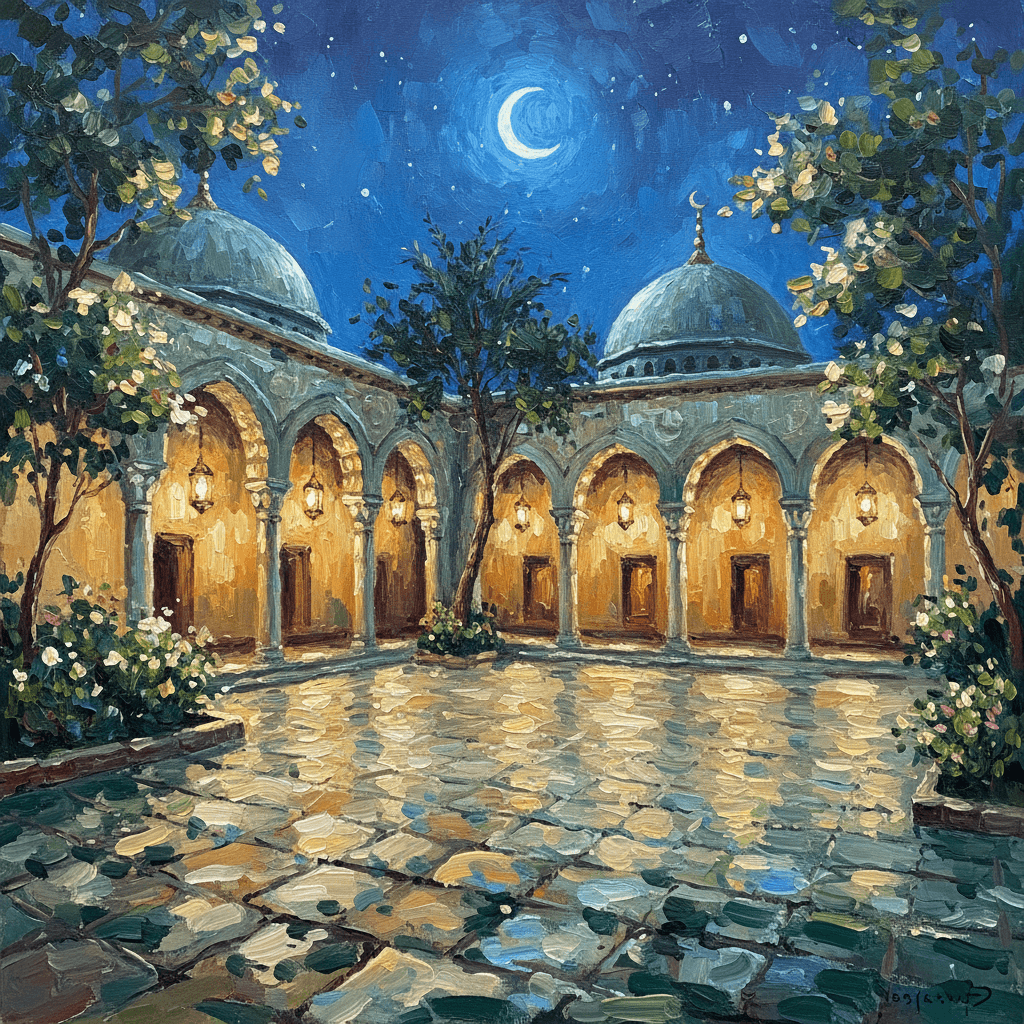
There is a thin crescent in the western sky just after Maghrib. If you are paying attention — if you actually went outside and looked — you see it. And you remember: it is the first night of a new Islamic month.
The Gregorian calendar ticks forward with no ceremony. No one stops what they are doing when a new month begins. But the Islamic calendar is built on the moon, and the moon demands you notice. The hilal — the new crescent — is a visual, physical reset. Twelve times a year, the sky announces: a new month is beginning. What will you do with it?
The Prophet (peace be upon him) had a specific response to that announcement. He made dua. He had words for this moment. Not because the moon needed anything, but because the beginning of a month is a threshold — and thresholds are for supplication.
The Dua for the New Moon
The dua said upon sighting the new crescent:
اللَّهُمَّ أَهِلَّهُ عَلَيْنَا بِالْيُمْنِ وَالإِيمَانِ، وَالسَّلاَمَةِ وَالإِسْلاَمِ، رَبِّي وَرَبُّكَ اللَّهُ
Allahumma ahillahu 'alayna bil-yumni wal-iman, was-salamati wal-Islam. Rabbi wa rabbuka Allah.
"O Allah, cause this crescent to appear over us with blessing and faith, with safety and Islam. My Lord and your Lord is Allah." — (Tirmidhi 3451, graded Hasan by Al-Albani)
This is a short dua — memorizable in a single sitting — but its density repays attention. The four things it asks for are specific:
- Yumn (يُمْن): blessing and good fortune in the coming month
- Iman (إِيمَان): that the month be one of increased faith, not decreased faith
- Salamah (سَلَامَة): safety from harm, illness, and difficulty
- Islam (إِسْلَام): that you remain in a state of surrender and obedience to Allah
The closing phrase — Rabbi wa rabbuka Allah, "My Lord and your Lord is Allah" — is addressed directly to the crescent. Some scholars note that this was a direct correction of the pre-Islamic practice of venerating the moon or treating it as auspicious in itself. You look at it and say: I know what you are. You are a created thing. We share a Lord.
The Story Behind It
The hilal sighting carried immense practical and spiritual significance in early Muslim life. It was how the ummah knew when Ramadan had begun, when Eid was coming, when the first ten days of Dhul Hijjah had started. The community could not function without someone going out to look.
The Prophet (peace be upon him) once sighted the crescent and said this dua, and then said to those with him: "This is the crescent. Faith is in the direction of the east." (Bukhari 3200) The act of sighting the moon was connected in his mind to iman — to the orientation of the heart toward what matters.
The Companions understood that the crescent was also a memento mori of sorts. Each new moon was a marker. Another month had passed. Time was moving. The Prophet (peace be upon him) said: "Two blessings in which many people suffer loss: good health and free time." (Bukhari 6412) The new moon was a built-in reminder not to waste the next allocation of time that Allah was about to give.
In the month of Ramadan, the entire Muslim world watches for the crescent. The moment it is sighted, the month begins and Ramadan enters. The practice of looking for the moon — of stopping, going outside, and making this dua — is a way of entering the month intentionally rather than by accident.
How to Make the New Moon Dua a Monthly Habit
Once a month, the sky gives you a prompt. The challenge is whether you actually respond to it. Most Muslims know that there is a dua for the new moon in theory, but few have made it a reliable practice.
Learn the Islamic calendar month transitions:
The simplest starting point is knowing when the new month begins. Install an Islamic calendar app, follow a reliable moon-sighting authority in your region, or check a resource that announces the beginning of each Hijri month. When the month begins, that is your cue.
Go outside for it:
There is something different about saying this dua while actually looking at the sky versus saying it indoors because you read it was the first of the month. The Prophet looked at the crescent when he said this dua. Going outside — even for two minutes — turns it from a recitation into an encounter. You are looking at the same crescent that Muslims across fourteen centuries have looked at and made this same supplication.
Pair it with a monthly intention:
The new moon dua naturally pairs with setting a monthly intention. After you say the dua, take a moment: what do you want from this month? What is one practice you want to build or protect? This is not a productivity exercise — it is asking yourself, in light of what you just asked Allah for, what yumn and iman look like in practical terms for the next thirty days.
Make it especially intentional at Ramadan, Dhul Hijjah, and Muharram:
Not all months are equal in Islamic time. The months of Ramadan, Dhul Hijjah, and Muharram are particularly significant. When the crescent appears for these months, the dua carries an added weight. Ramadan's crescent marks the beginning of the month in which the Quran was revealed. Dhul Hijjah's crescent begins the ten days Allah swore by. These months deserve more than a routine check-in.
Track your monthly practice:
Because this habit fires only once a month, it is easy to miss. A simple note in your phone calendar on the first of each Hijri month serves as a reminder. Over time, twelve new moons in a row — twelve months of this small intentional act — becomes its own kind of consistency.
Mark Every New Month With Intention
DeenBack helps you stay connected to the Islamic calendar — with reminders for the new moon, monthly intentions, and daily duas that keep you oriented toward what matters.


Free download. Premium features available in-app.
Related Duas
Dua for Ramadan: The most anticipated crescent of the year is the Ramadan hilal. The dua for Ramadan covers the specific supplications for entering and throughout the blessed month.
Dua for Laylatul Qadr: The most powerful night of Ramadan has its own dua. The dua for Laylatul Qadr — Allahumma innaka 'afuwwun tuhibbul 'afwa fa'fu 'anni — is one of the most important duas to know.
Dua for Arafah: Dhul Hijjah contains the Day of Arafah, the greatest day of supplication in the year. The dua for Arafah covers what to say on that day and how to prepare for it.
Dua for morning: The morning adhkar is the daily version of the same principle: marking a threshold with intentional supplication before the world rushes in.
Common Questions
What if I have never seen the new moon — is it hard to spot?
The new crescent is thin and appears in the western sky shortly after sunset, close to the horizon. You have a narrow window of about 30-60 minutes after sunset to see it before it sets. Look west, just above the horizon. It will look like a very thin arc. In cities with significant light pollution it can be hard to spot; in areas with clear skies and low horizons it is much easier. Many Muslims rely on official community announcements rather than personal sighting, which is entirely valid.
Is there a dua to say at the end of the month, not just the beginning?
There is no specific dua from the authentic Sunnah for the last night of a month. The practice is focused on the beginning — the new crescent. However, many scholars recommend taking stock at the end of a month: reviewing your deeds, your goals, and your state of iman, and making personal dua for forgiveness for what fell short.
Does this dua apply to every Islamic month or only Ramadan?
The dua applies to every new Islamic month. The text of the hadith is general — the Prophet (peace be upon him) said it for the new crescent of any month. Ramadan's crescent is obviously the most emotionally charged, but the practice is a monthly Sunnah across all twelve months.
What if I am indoors and cannot see the moon — can I still say the dua?
Yes. If the new month has been established — either by community sighting or calculation accepted by reliable scholars — you can say the dua even without seeing the moon personally. The ideal is to make the effort to look, but the dua itself is not invalidated by not being able to see the crescent directly.
Closing
The crescent moon is one of the most recognizable symbols of Islam. It appears on flags, on minarets, on prayer beads. But its deepest meaning is not decorative — it is functional. It is the clock by which Muslims mark their time, set their intentions, and enter their greatest months.
When the next new moon rises, go outside. Look at it. Say the Prophet's words. Ask for blessing, faith, safety, and Islam in the month ahead. Then walk back inside and begin.
That act — small, quiet, almost invisible — is how you keep the Islamic sense of time alive in a world that has largely forgotten what month it is by the moon.
Stay Connected to the Islamic Calendar
DeenBack keeps you anchored to Islamic time with monthly new moon reminders, daily adhkar, and a habit tracker that helps you make every month intentional.
Free download. Premium features available in-app.
Frequently Asked Questions
What is the dua for sighting the new moon in Islam?
The dua for the new moon is: Allahumma ahillahu 'alayna bil-yumni wal-iman was-salamati wal-Islam, Rabbi wa rabbuka Allah — O Allah, bring this crescent upon us with blessing, faith, safety, and Islam. My Lord and your Lord is Allah. (Tirmidhi 3451)
When is the dua for the new moon said?
The dua is said upon sighting the new crescent moon (hilal) with your own eyes, or upon being informed that the new month has begun. It can be said at the start of any Islamic month, though it is especially significant at the beginning of Ramadan, Dhul Hijjah, and Muharram.
What does the new moon dua mean?
The dua asks Allah to make the new month one of blessing (yumn), faith (iman), safety (salamah), and Islam. The final phrase — Rabbi wa rabbuka Allah — is addressed directly to the moon itself, reminding the believer that neither you nor the moon is the one in charge. Both of you are created, and both of you have the same Lord.
Is looking at the new moon sunnah?
Yes, going out to sight the new crescent moon and making dua upon seeing it is an established Sunnah. The Prophet (peace be upon him) and his Companions placed great importance on the hilal sighting because it determines the Islamic calendar — the start of months, Ramadan, Eid, and the Hajj season.
Can I say the new moon dua even if I did not see the moon myself?
Yes. If the new month has been established by official sighting in your community or region, you can say the dua at the start of that month even if you did not personally see the moon. The dua is tied to the beginning of the new Islamic month, not strictly to personal visual sighting.