
- Published on
Dua for Ramadan: Welcome the Blessed Month the Right Way
- Authors

- Name
- Ahmad
- Role
- Senior Marketing Manager, Islamic education • Deen Back
بِسْمِ اللهِ الرَّحْمٰنِ الرَّحِيْمِ
In the name of God, the Most Gracious, the Most Merciful.
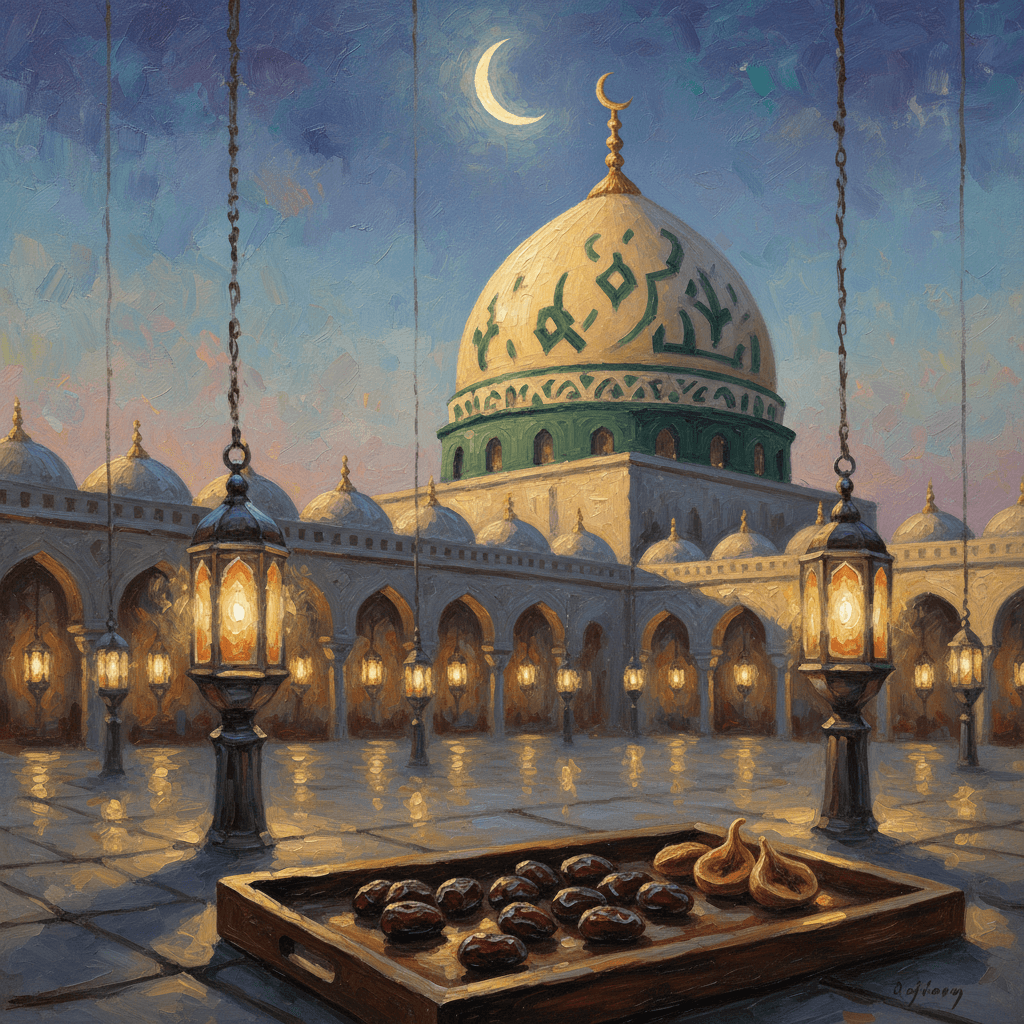
Ramadan is not just a month of fasting. It is the single most spiritually charged period in the Islamic calendar — a month where the Prophet (peace be upon him) said the gates of Paradise are opened, the gates of Hell are closed, and the devils are chained. (Sahih al-Bukhari 1899)
That context changes everything about how you should approach dua in Ramadan.
You are not asking into the void during a normal month. You are making dua in a month where Allah has explicitly prepared the conditions for mercy. The question is whether you are ready to receive it — and whether you know what to ask for.
The Dua for Ramadan
Dua When Sighting the Moon
The beginning of Ramadan is marked by the sighting of the crescent moon. The Prophet (peace be upon him) taught a specific dua for this moment:
اللَّهُمَّ أَهِلَّهُ عَلَيْنَا بِالْأَمْنِ وَالْإِيمَانِ وَالسَّلَامَةِ وَالْإِسْلَامِ رَبِّي وَرَبُّكَ اللَّهُ
Allahumma ahillahu 'alayna bil-amni wal-iman, was-salamati wal-Islam, Rabbi wa Rabbuk Allah.
"O Allah, bring this crescent upon us with security, faith, safety, and Islam. My Lord and your Lord is Allah." — (Al-Tirmidhi 3451)
This dua is said while looking at the new crescent — either physically or when news of the moon sighting reaches you. It is a conscious act of entering Ramadan intentionally, not just switching from normal days to fasting days.
Notice what it asks for: security, faith, safety, Islam. Not more food at suhoor. Not an easy fast. The priorities the Prophet (peace be upon him) set at the start of the month tell you what Ramadan is really for.
Dua for Forgiveness in Ramadan
The dua taught to Aisha (may Allah be pleased with her) for Laylatul Qadr applies throughout all of Ramadan — and it is the most important request you can make in this month:
اللَّهُمَّ إِنَّكَ عَفُوٌّ تُحِبُّ الْعَفْوَ فَاعْفُ عَنِّي
Allahumma innaka 'afuwwun tuhibbul-'afwa fa'fu 'anni.
"O Allah, You are the Pardoner and You love to pardon, so pardon me." — (Al-Tirmidhi 3513)
Say this throughout the month — in sujood, at iftar, in the quiet minutes before Fajr. It is the dua at the heart of Ramadan's purpose.
The Story Behind It
Ramadan was not designed as a diet plan or an endurance challenge. It was revealed as the month of the Quran, a period of total spiritual recalibration.
When the Prophet (peace be upon him) described what Ramadan opens up, he described a shift in the spiritual environment itself: gates of mercy open, sources of corruption bound. That is the context you are fasting inside.
The moon-sighting dua has roots in how the Prophet (peace be upon him) treated every new lunar month — with intentionality and gratitude. But Ramadan's version adds Islam and faith to the request, because this month is specifically about strengthening the foundation of who you are as a Muslim.
The forgiveness dua comes from one of the most intimate moments in prophetic tradition. Aisha — the person closest to the Prophet in daily life — specifically asked what to say on the greatest night. And the answer she received was: ask to be pardoned. Not for wealth. Not for ease. For a clean slate. That is what Ramadan is meant to give you, if you use it right.
How to Make This Dua Part of Your Daily Life
Knowing a dua and actually saying it consistently throughout thirty days are two different things. Here is a practical approach to building your Ramadan dua habit from the first crescent to the last.
Start with the moon-sighting dua as a ritual entry point
When Ramadan is confirmed — whether you see the moon yourself or learn of it — stop what you are doing and say the dua. This creates a conscious transition. You are not just adjusting your meal schedule. You are stepping into a different mode of living for the next thirty days.
Use iftar as your daily dua anchor
The Prophet (peace be upon him) said the dua of a fasting person at iftar is not rejected. (Al-Tirmidhi 2526) This is your daily guaranteed window. Before you eat — even if it is just thirty seconds — make your most important request. Make it personal. Make it about the one thing you need most from Allah this month.
Build a morning dua practice at suhoor
The last third of the night, which overlaps with suhoor time, is when Allah descends and asks: "Who is calling upon Me that I may answer?" (Sahih al-Bukhari 1145) You are already awake for suhoor. Use that time. Five minutes of dua before the meal is more valuable than five extra minutes of sleep you did not need.
Repeat the forgiveness dua in every sujood
Sujood is the closest a servant comes to Allah in prayer. In the last ten nights especially — and throughout the month — repeat Allahumma innaka 'afuwwun tuhibbul-'afwa fa'fu 'anni while in prostration. It takes ten seconds. And across thirty days of multiple daily prayers, those ten seconds compound into something significant.
Set a specific dua list for the month
Ramadan is long enough to be intentional. Write down five things you want to ask Allah for this Ramadan: one for your deen, one for your family, one for your health, one for the ummah, and one personal need. Return to this list every day. Consistency in asking is itself a form of trust in Allah's generosity.
Maximize Your Ramadan Dua Habit
DeenBack helps you build and track daily dua routines throughout Ramadan — so you never miss a moment of this blessed month's spiritual momentum.


Free download. Premium features available in-app.
Related Duas
Ramadan contains multiple specific moments that each have their own authenticated dua. These posts cover the ones you will need most:
- Dua for breaking fast — the dua to say at iftar, which falls in one of the highest-acceptance windows of the entire day
- Dua for fasting — what to say during the fast itself to maintain the spiritual intention behind it
- Dua for Laylatul Qadr — a full guide to the Night of Power, what the Prophet (peace be upon him) specifically recommended, and how to prepare for the last ten nights
- Dua for beginning fasting — the intention (niyyah) for the fast and how to frame your suhoor spiritually
- Dua for forgiveness — comprehensive duas for seeking pardon throughout the year and specifically in Ramadan
Each of these moments — from suhoor to iftar to Laylatul Qadr — has its own spiritual weight. Having the right dua ready for each one is how you turn Ramadan from a month of hunger into a month of genuine transformation.
Common Questions
Can I make dua in my own language during Ramadan?
Yes. Allah understands every language. While learning the Arabic duas is worthwhile — and reciting them in Arabic during prayer is the practice of the Prophet (peace be upon him) — making personal dua in your own language is valid and encouraged. Say the Arabic duas you know, then speak to Allah directly in whatever language allows you to be most sincere and specific.
When are duas most likely to be accepted in Ramadan?
Several windows stand out. At iftar — the moment of breaking fast — is explicitly mentioned in hadith as a time when the fasting person's dua is not rejected. (Al-Tirmidhi 2526) The last third of the night (which includes suhoor time) is another high-acceptance window. In sujood during any prayer. And throughout the last ten nights of Ramadan when Laylatul Qadr falls.
What if I cannot memorize the Arabic dua before Ramadan starts?
Start learning it now. Write it out, say it aloud, put it on your phone screen. The moon-sighting dua is one sentence. The forgiveness dua is four Arabic phrases. Both can be memorized within a few days of focused practice. While you are learning, read them from your phone or a paper card — Allah does not penalize sincerity paired with effort.
Is the Ramadan moon-sighting dua for every new moon or only Ramadan?
There is a similar dua for every new crescent moon. However, the specific phrasing that includes faith and Islam is recorded in connection with Ramadan and has a distinct spiritual significance for entering this particular month. It is worth saying for every new moon, but especially for Ramadan.
What happens if I fasted but did not make any specific duas during the day?
Your fast is still valid. Dua is not a condition of fasting — it is an opportunity that fasting creates. The Prophet (peace be upon him) said the fasting person's dua is not rejected, which means every moment of the fast is a window of elevated acceptance. Use the windows you can, when you can. Missing a window is not a failure; it is an invitation to use the next one.
Closing
Ramadan comes once a year. Thirty days. And within those thirty days, there are specific moments — the first crescent, every iftar, every suhoor, every sujood, and the last ten nights — where the door between you and Allah is wider than it is at any other point in the year.
The duas are your key to those doors. Learn them. Say them with presence. Return to them when you forget and start again without guilt.
A Ramadan spent in sincere dua — asking with trust, asking consistently, asking specifically — is a Ramadan that changes you. Not just for the month. For the year that follows.
Allahumma ahillahu 'alayna bil-amni wal-iman, was-salamati wal-Islam.
Make This Your Best Ramadan Yet
DeenBack tracks your fasting duas, dhikr streaks, and Quran reading — turning scattered Ramadan goals into consistent daily habits that stick.
Free download. Premium features available in-app.
Frequently Asked Questions
What is the dua for Ramadan?
There are two key duas for Ramadan. The first is recited when sighting the Ramadan moon: Allahumma ahillahu 'alayna bil-amni wal-iman, was-salamati wal-Islam, Rabbi wa Rabbuk Allah — O Allah, bring this crescent upon us with security, faith, safety, and Islam. My Lord and your Lord is Allah (Al-Tirmidhi 3451). The second — especially for Laylatul Qadr — is: Allahumma innaka 'afuwwun tuhibbul-'afwa fa'fu 'anni — O Allah, You are the Pardoner and You love to pardon, so pardon me (Al-Tirmidhi 3513).
When should I make dua in Ramadan?
Ramadan is filled with prime dua windows: at suhoor before Fajr, at the moment of breaking fast (iftar), during the last third of the night in Tahajjud, in sujood throughout prayers, and during the last ten nights when Laylatul Qadr falls. The Prophet (peace be upon him) said the dua of a fasting person is not rejected — so the entire month is a heightened opportunity.
What dua should I say when I see the Ramadan moon?
When you see the crescent moon marking the beginning of Ramadan, say: Allahumma ahillahu 'alayna bil-amni wal-iman, was-salamati wal-Islam, Rabbi wa Rabbuk Allah. This is recorded in Al-Tirmidhi 3451 and is the authenticated dua for welcoming the new crescent.
Is there a special dua for the last ten nights of Ramadan?
Yes. Aisha (may Allah be pleased with her) asked the Prophet (peace be upon him) what dua to make on Laylatul Qadr, and he taught her: Allahumma innaka 'afuwwun tuhibbul-'afwa fa'fu 'anni — O Allah, You are the Pardoner and You love to pardon, so pardon me. Repeat this throughout the last ten nights, especially on the odd nights (21st, 23rd, 25th, 27th, 29th).
Does dua get accepted more easily in Ramadan?
Yes. The Prophet (peace be upon him) said: 'Three supplications are not rejected: the dua of a fasting person at the time of breaking fast, the dua of a just ruler, and the dua of the oppressed.' (Al-Tirmidhi 2526). Beyond iftar, the gates of Paradise are open throughout Ramadan (Sahih al-Bukhari 1899), and Laylatul Qadr is a night better than a thousand months — making this the highest-return period for dua in the entire year.