
- Published on
Dua for Light in the Heart: The Prophet's Prayer for Inner Illumination
- Authors

- Name
- Ahmad
- Role
- Senior Marketing Manager, Islamic education • Deen Back
بِسْمِ اللهِ الرَّحْمٰنِ الرَّحِيْمِ
In the name of God, the Most Gracious, the Most Merciful.
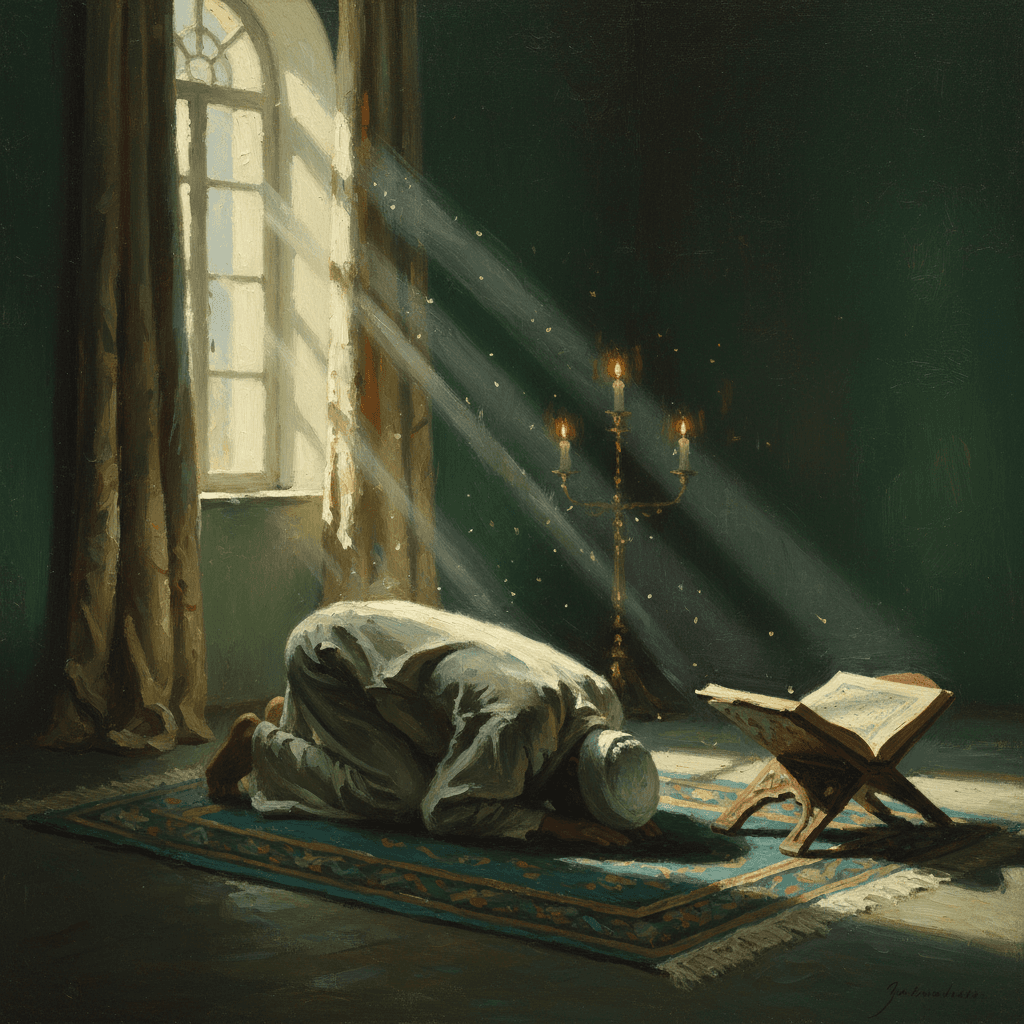
There are days when the Quran lands differently — when the verses you have heard a hundred times suddenly open up and mean something. There are salah where the words feel alive instead of routine. There are moments of clarity when you know exactly what is right and feel no pull toward the wrong.
And then there are the other days. When the heart feels clouded. When the same Quran seems distant. When you go through the motions of worship and wonder if any of it is landing.
The Prophet (peace be upon him) knew both. And he had a dua for it — one of the most comprehensive supplications in the entire Sunnah, asking Allah to place light in every single part of the human being.
The Dua for Light in the Heart
اللَّهُمَّ اجْعَلْ فِي قَلْبِي نُورًا وَفِي لِسَانِي نُورًا وَفِي سَمْعِي نُورًا وَفِي بَصَرِي نُورًا وَمِنْ فَوْقِي نُورًا وَمِنْ تَحْتِي نُورًا وَعَنْ يَمِينِي نُورًا وَعَنْ شِمَالِي نُورًا وَمِنْ أَمَامِي نُورًا وَمِنْ خَلْفِي نُورًا وَاجْعَلْ فِي نَفْسِي نُورًا وَأَعْظِمْ لِي نُورًا
Allahumma ij'al fi qalbi nuran, wa fi lisani nuran, wa fi sam'i nuran, wa fi basari nuran, wa min fawqi nuran, wa min tahti nuran, wa 'an yamini nuran, wa 'an shimali nuran, wa min amami nuran, wa min khalfi nuran, waj'al fi nafsi nuran, wa a'dhim li nuran.
"O Allah, place light in my heart, light on my tongue, light in my hearing, light in my sight, light above me, light below me, light on my right, light on my left, light in front of me, light behind me, and make my soul light, and make light for me great." — (Sahih Muslim 763)
Read through the list of what this dua covers: the heart (perception, intention, feeling), the tongue (speech, words, expression), the ears (what you allow in), the eyes (what you look at), every direction around you, and the soul itself. This dua does not ask for light in one area while leaving others dark. It asks for comprehensive illumination.
The Story Behind It
Ibn Abbas (may Allah be pleased with him) narrated that he spent a night at the home of his aunt Maymunah, the wife of the Prophet. He wanted to observe how the Prophet spent the night.
After the 'Isha prayer and some hours of sleep, the Prophet (peace be upon him) woke in the last portion of the night, went to a water skin, performed wudu, and stood for Tahajjud. Ibn Abbas stood to join him. The Prophet placed his hand on Ibn Abbas's head, held his right ear, and began to pray.
He made this comprehensive dua for light before beginning his night prayer. (Muslim 763)
The context matters. This was the Prophet, the best of creation, alone in the last third of the night — and even then, in his most intimate conversation with Allah, he asked for light. He asked for it not as someone deficient in it, but as someone who understood that noor is always a gift from Allah, not an achievement of the self.
Ibn Abbas, one of the greatest scholars the ummah produced, was there as a young boy, watching. What he saw that night shaped his entire understanding of what it means to have a relationship with Allah.
How to Make This Dua Part of Your Daily Life
The natural home for this dua is the last third of the night — the time of Tahajjud, when the Prophet himself said it. But very few people maintain consistent Tahajjud, especially at first. There are other ways to make this dua a daily practice.
Say it after Fajr as part of your morning adhkar. The dua for noor that appears in the morning adhkar overlaps with this theme. Adding Allahumma ij'al fi qalbi nuran to your post-Fajr routine is accessible and natural. Morning adhkar done consistently already change the quality of the day — adding this dua deepens the intention behind them.
Use it as a preparation before Quran recitation. Before you open the Quran, ask Allah to place light in your heart and ears so that what you read lands differently. This turns the dua into a gateway practice — something that prepares your heart to receive, rather than just exposing your eyes to text. See the dua for morning to explore how Quran recitation fits into a full morning structure.
Say it in moments of spiritual dullness. When the heart feels heavy or distant, instead of waiting for the feeling to pass on its own, address it directly with this dua. Spiritual dullness is not a verdict — it is a condition that can be changed with the right means. This dua is one of those means.
Connect it to your Tahajjud practice. Even praying two rak'at of Tahajjud once a week, with this dua before beginning, is a start. The dua for tahajjud covers how to make this night prayer a regular practice. Spiritual light tends to come most clearly in those quiet hours before the world wakes up.
Reflect on what you are asking for. The dua for light is not a formula to rush through. Each time you say it, pause at fi qalbi — in my heart. Ask yourself: what would a heart full of light do differently today? What would it say, avoid, choose? Let the request be real, not mechanical.
Make the Dua for Light Part of Your Daily Spiritual Practice
DeenBack helps you build a consistent morning routine — adhkar, dua, Quran, and the habits that invite spiritual light into your daily life.


Free download. Premium features available in-app.
Related Duas
Dua for noor: The dua for noor covers the specific supplication from the morning adhkar for spiritual light — a shorter form that complements the comprehensive dua from Sahih Muslim.
Dua for ikhlas: Spiritual light and sincerity are closely connected. A heart that is insincere — performing deeds for show rather than for Allah — cannot hold light. The dua for ikhlas clears that obstruction.
Dua for guidance: Light and guidance (hidayah) work together — light allows you to see the path, guidance keeps you on it. The dua for guidance is the natural companion to this one.
Common Questions
Does saying this dua guarantee I will feel spiritually illuminated?
Not immediately — dua does not work like a switch. What it does is orient the heart toward the right source. Over time, consistent supplication combined with consistent action (reciting Quran, praying on time, avoiding sins) creates the conditions in which spiritual light can grow. The dua is the request. The daily habits are the preparation that allows the response to take root.
What sins block spiritual light from the heart?
The Prophet (peace be upon him) described how each sin leaves a dark spot on the heart. When sins accumulate and are not met with tawbah, the heart becomes sealed (Quran 83:14). The antidotes are istighfar, tawbah, recitation of Quran, and prayers at night. The dua for light is powerful when paired with genuine repentance from whatever has clouded the heart.
Can I say this dua at any time, or only at night?
You can say it at any time. The Prophet said it before Tahajjud, which is its most powerful context — but asking Allah for light in your heart is appropriate in any moment of the day or night. Saying it after each of the five prayers is an excellent way to build it into your existing routine.
Closing
The heart does not stay illuminated automatically. It needs to be exposed to light through Quran, prayer, dhikr, and sincere dua — every single day.
What the Prophet understood, and what Ibn Abbas witnessed that night, is that the request for light is not a one-time prayer for a one-time event. It is the ongoing acknowledgment that every clarity you have comes from Allah, and every moment of spiritual dullness is an invitation to return to Him and ask again.
Say the dua tomorrow morning. Say it before you open the Quran. Say it in the moments when the heart feels heavy. Let asking for light become as natural as breathing.
Invite Light Into Every Day — Build the Habit That Makes It Possible
A consistent morning routine of adhkar and dua is how spiritual light grows. DeenBack is the tool that helps you build that routine and keep the streak alive.
Free download. Premium features available in-app.
Frequently Asked Questions
What is the dua for light in the heart?
The most comprehensive dua for light is from Sahih Muslim 763, narrated by Ibn Abbas: Allahumma ij'al fi qalbi nuran, wa fi lisani nuran, wa fi sam'i nuran, wa fi basari nuran... — O Allah, place light in my heart, light on my tongue, light in my hearing, light in my sight... This dua asks for light in every dimension of the human being.
What does 'noor' mean in Islam?
Noor (نُور) means light — both literal and spiritual. In the Islamic tradition, spiritual light (noor) refers to divine guidance, clarity of perception, the ability to see truth from falsehood, and the presence of Allah's grace in the heart and life of a believer. The Quran describes Allah as the Light of the heavens and the earth (Quran 24:35).
When did the Prophet say this dua?
Ibn Abbas (RA) narrated that he spent the night with the Prophet at the home of Maymunah. He observed the Prophet wake for Tahajjud prayer, perform wudu, and say this comprehensive dua for light before beginning his night prayer. It is best said during the night prayer or before Fajr.
How does making this dua change a person?
Consistent recitation of the dua for light builds a spiritual orientation — the habit of asking Allah to be your source of clarity and guidance in every faculty. Over time, practitioners report greater clarity in decisions, greater sensitivity to what pleases and displeases Allah, and a sense of peace that is difficult to explain but recognizable to anyone who has experienced it.
Is there a shorter version of the dua for light?
The full version is richly comprehensive, but a person can also use the concise form: Allahumma ij'al fi qalbi nuran — O Allah, place light in my heart. This shorter version captures the core request. It is also good practice to recite the dua for noor that appears in the morning adhkar.