
- Published on
99 Names of Allah With Meaning — A Practical Guide to Calling on Allah
- Authors

- Name
- Ahmad
- Role
- Senior Marketing Manager, Islamic education • Deen Back
بِسْمِ اللهِ الرَّحْمٰنِ الرَّحِيْمِ
In the name of God, the Most Gracious, the Most Merciful.
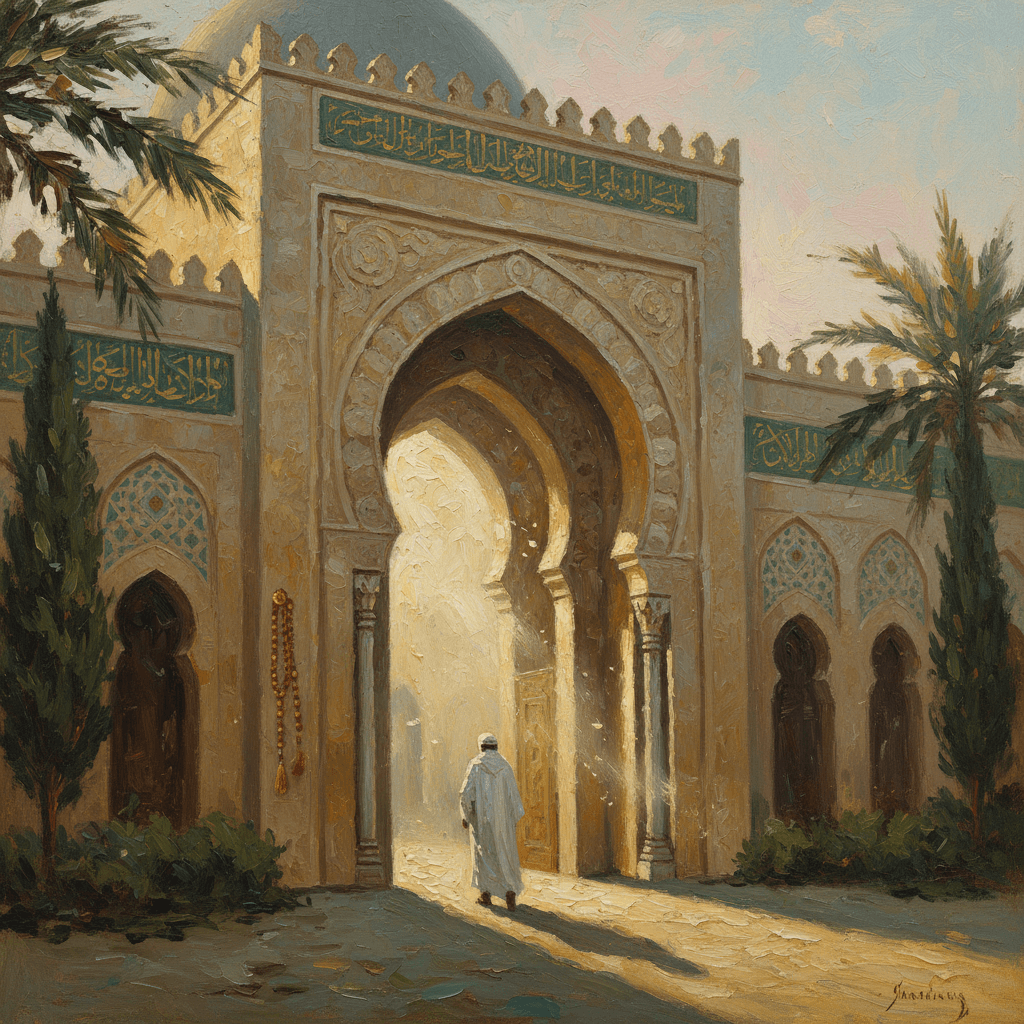
Asma ul Husna — the Most Beautiful Names. Ninety-nine names of Allah, each one a window into a different dimension of who He is. Knowing them is not just an act of learning — it is the basis of a living relationship with the divine.
The Quran commands calling on Allah by His names:
وَلِلَّهِ الْأَسْمَاءُ الْحُسْنَى فَادْعُوهُ بِهَا
"And to Allah belong the most beautiful names, so call upon Him by them."
— (Surah Al-A'raf, 7:180)
This guide goes beyond the list. It gives you the meaning of the most important names, the situations each one is most relevant to, and practical ways to use them in your daily dua and dhikr.
The Foundation Names — Who Allah Is
Allah (الله) The primary name — the Name that encompasses all others. It is not a descriptor of a single attribute; it is the proper name of the divine Being who possesses all attributes of perfection. Every other name is an elaboration of what this name contains. When you say "Ya Allah" in dua, you are calling on the One who is all of what the 99 names describe simultaneously.
Ar-Rahman (الرحمن) — The Most Merciful / The Compassionate This name describes the vast, encompassing mercy that covers all of creation — believer and disbeliever, Muslim and non-Muslim, human and animal. Ar-Rahman's mercy is broad, reaching everything Allah created. This name opens every chapter of the Quran (in Bismillah) and is so significant that the Quran uses it as an alternative to "Allah" itself (Surah Al-Isra, 17:110). Call on Ar-Rahman when you feel unworthy of mercy, when your sins feel too large, when you need the widest net of divine grace.
Ar-Raheem (الرحيم) — The Especially Merciful Where Ar-Rahman is broad, Ar-Raheem is specific. This is the particular mercy reserved for the believers, the mercy that comes as reward for faith and worship. The Prophet ﷺ is described by this name in relation to the believers (Surah At-Tawbah, 9:128). Call on Ar-Raheem when seeking specific mercy for your acts of worship, your sins, your personal relationship with Allah.
The Names of Divine Power
Al-Malik (الملك) — The King / The Sovereign Allah is the absolute sovereign — not in the way that human kings are constrained by their subjects, borders, or mortality, but in the complete, unrestricted sense. "The King of Mankind" is how Surah An-Nas opens. Calling on Al-Malik reorients you to who actually holds authority in the universe. Call on this name when you feel powerless before worldly authorities, when you need to be reminded that final sovereignty belongs to Allah.
Al-Aziz (العزيز) — The All-Mighty / The Invincible Allah's power has no equivalent and no rival. Al-Aziz also carries the meaning of the rare, the precious — a thing of tremendous value that cannot be overcome. Call on this name when facing situations that feel impossible, when your own strength is exhausted, when you need to be reminded that you are appealing to a power without limit.
Al-Qadir and Al-Qaadir (القادر) — The All-Powerful Allah has absolute power over all things. Nothing is beyond His ability. The Quran repeatedly affirms: "He is over all things competent." (Surah Al-Mulk, 67:1) Call on Al-Qadir when asking for something that seems beyond possibility — because for Allah, nothing is.
Al-Qahhar (القهار) — The Subduer / The Dominator Allah dominates over everything and everyone. No one can resist His will. This name is a comfort when you face forces that seem overwhelming — because everything is subdued before Al-Qahhar. Call on this name when asking for help against an oppressive situation, a persistent sin that you cannot overcome on your own, or an enemy of any kind.
The Names of Divine Mercy and Forgiveness
Al-Ghaffar (الغفار) — The Oft-Forgiving Allah forgives repeatedly, without limit on the number of times. The root ghafara means to cover, protect — as a helmet (mighfar) covers the head. Allah covers your sins as with a protective covering. Call on Al-Ghaffar when you return to the same sin again and again, when shame says "Allah cannot forgive this again." He can. He is Al-Ghaffar. See dua for istighfar for the specific supplications for seeking forgiveness.
Al-Ghafoor (الغفور) — The All-Forgiving Where Al-Ghaffar emphasizes the frequency of forgiveness, Al-Ghafoor emphasizes the completeness of the forgiveness — sins erased, not just covered. This name appears most often in the Quran. Call on Al-Ghafoor when making tawbah, asking for the complete removal of sin rather than just its pardon.
Al-Wadud (الودود) — The Loving / The Most Affectionate Allah loves His servants — not as a passive sentiment but as an active care that manifests in His creation of goodness, beauty, and mercy. The word wudd is a deep, sincere love. Call on Al-Wadud when you feel distant from Allah's love, when loneliness suggests you are unloved, when you need to be reminded that you are known and cared for by your Creator.
At-Tawwab (التواب) — The Ever-Returning / The Accepter of Repentance Allah continuously returns toward His servants in forgiveness and mercy. When you return to Allah in tawbah, He returns to you — and this process has no limit. The name is in the fa'al form, indicating continuous, repeated action. Call on At-Tawwab when making sincere repentance, particularly for the same sin you have returned to many times.
The Names to Call on for Specific Needs
Ar-Razzaq (الرزاق) — The Provider Allah is the sole source of all provision — food, income, opportunity, health. Every creature receives its rizq from Ar-Razzaq. Call on this name when worried about money, income, job, or sustenance of any kind. See dua for rizq for specific supplications to pair with this name.
Al-Fattah (الفتاح) — The Opener of All Gates Allah opens doors — of sustenance, of mercy, of knowledge, of opportunity. When you feel stuck, when every path seems blocked, when circumstances seem to leave no way out — Al-Fattah opens what no one else can open. Call on this name when you feel your situation has no exit. The Prophet ﷺ said: "Whatever Allah opens for mankind of mercy, none can withhold it." (Surah Fatir, 35:2)
Ash-Shafi (الشافي) — The Healer This name is established in hadith: the Prophet ﷺ said: "O Allah, Lord of mankind, remove the difficulty and bring healing, for You are the Healer." (Bukhari 5675) Call on Ash-Shafi when you or someone you love is ill — physically, mentally, or spiritually. Pair this with dua for shifa.
Al-Hadi (الهادي) — The Guide Allah guides whom He wills to the straight path. Every salah contains the request for guidance — ihdinas-siratal-mustaqeem. Call on Al-Hadi when you are lost in a decision, when you do not know which direction to take, when you need clarity that cannot come from human advice alone. Combine with dua for guidance.
Al-Lateef (اللطيف) — The Subtle / The Gentle Allah is aware of the most subtle, hidden aspects of all things and deals with His servants with a gentleness that may not be immediately obvious. Often His help arrives in ways too subtle to recognize at first. Call on Al-Lateef when you are waiting for help that has not yet appeared — knowing that Al-Lateef acts in ways too subtle to see until after.
Call on Allah by His Beautiful Names — Every Day, In Every Need
DeenBack helps you build the daily dhikr habit where the 99 names become part of your relationship with Allah. Track your practice and watch each name deepen your connection.


Free download. Premium features available in-app.
How to Deepen Your Knowledge of the Names
The Prophet's standard was ahsaha — comprehensive knowing through comprehension, not just memorization. Here is a practical approach:
One name per week. Take one of the 99 names and focus on it for a full week. Read its meaning. Look for it in the Quran. Call on it in your duas throughout the week. Notice where that attribute of Allah shows up in your life.
Call on the relevant name for each need. When you have a specific need, ask which of Allah's names is most directly connected to what you are asking for. Then call on that name explicitly: "Ya Razzaq, grant me provision" rather than the generic "O Allah, give me money."
Use the morning and evening adhkar. Many of the names appear in the prophetic remembrances. The morning adhkar and evening adhkar are efficient vehicles for regularly encountering the names in context.
Common Questions
Is Ar-Rahman or Allah the most important name?
These are two of the most comprehensive names. Allah is the proper name containing all attributes. Ar-Rahman is so comprehensive that the Quran uses it alongside "Allah" as an alternative — "Call upon Allah or call upon Ar-Rahman; whichever [name] you call, to Him belong the best names." (17:110) Both are of the highest rank.
What does it mean to say "Ya" before a name?
"Ya" (يا) is the Arabic vocative particle, equivalent to "O" — it is how you address someone directly. "Ya Rahman" means "O Most Merciful" — calling on Allah by that name in direct address. This is the proper form for dua.
Can I call on names I am not sure are among the 99?
Stick to names established in the Quran and authentic hadith. Not all names circulating in various lists are equally well-established. The core names in Sahih Bukhari (2736) and throughout the Quran are the safest foundation.
The Names Are a Relationship, Not a List
Each of the 99 names is an invitation to know Allah more specifically and more deeply. The Muslim who knows Al-Ghaffar intimately approaches sin differently. The one who knows Ar-Razzaq approaches financial worry differently. The one who knows Al-Lateef learns to look for subtle divine care in ordinary circumstances.
Begin today with one name. Call on it in your next dua. Let the knowing grow from there.
Know Allah Through His Names — Build a Daily Practice of Calling on Him
DeenBack makes it easy to build a consistent dhikr practice around the 99 names of Allah. Start your streak, call on the right name for each need, and deepen your relationship with your Creator every day.
Free download. Premium features available in-app.
Frequently Asked Questions
What are the 99 names of Allah called in Arabic?
The 99 names of Allah are called Asma ul Husna (الأسماء الحسنى), meaning 'the Most Beautiful Names.' The Quran commands: 'And to Allah belong the most beautiful names, so call upon Him by them.' (7:180)
Which is the greatest name of Allah?
The scholars differ on which single name is greatest. Al-Hayy (the Ever-Living) and Al-Qayyum (the Self-Sustaining) are among the candidates for Ism al-A'dham (the Greatest Name), based on hadiths where the Prophet mentioned that supplication using these names is answered. Allah and Ar-Rahman are also considered among the most comprehensive names.
How many names does Allah actually have?
Allah has more than 99 names. The Prophet said 'Allah has ninety-nine names — one hundred minus one — whoever comprehends them enters Paradise' but also mentioned that some of His names are kept in the knowledge of the unseen. The 99 represent the names we have been given access to and commanded to call upon.
Is there a specific time to recite the 99 names of Allah?
There is no specific mandated time. Reciting them in morning or evening adhkar, after prayers, or as part of daily dhikr are all appropriate. The key is calling on the specific name most relevant to your need in that moment, whenever that need arises.
What is the dua for learning the 99 names of Allah?
There is no specific dua for learning the names — the practice itself is the dua. Call on Allah by each name in your supplications. Study one name a week. The Prophet's encouragement was to comprehend them through use and reflection, not to recite them as a list.