
- Published on
What Is the Shahada — The Declaration That Changes Everything
- Authors

- Name
- Ahmad
- Role
- Senior Marketing Manager, Islamic education • Deen Back
بِسْمِ اللهِ الرَّحْمٰنِ الرَّحِيْمِ
In the name of God, the Most Gracious, the Most Merciful.
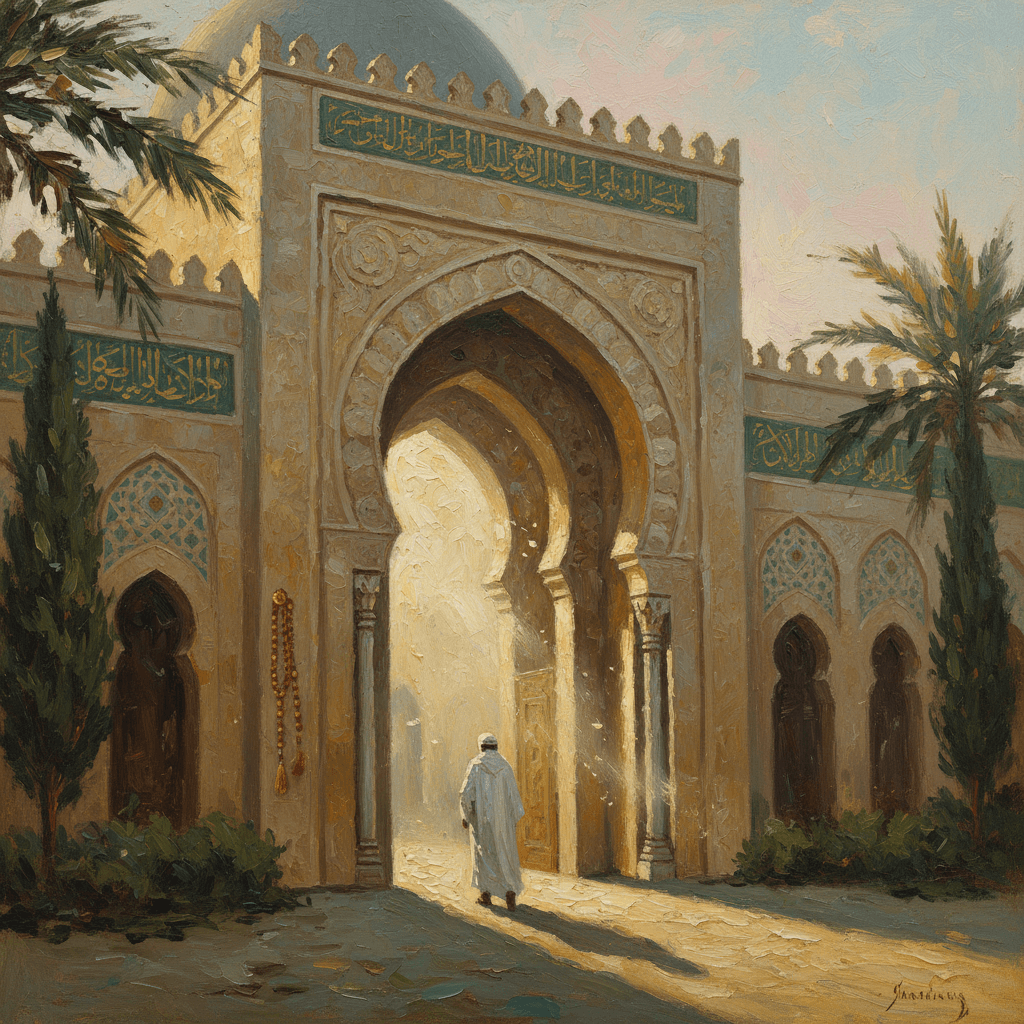
There is a moment that many converts describe in a similar way: when they said the Shahada for the first time, something shifted. Not necessarily fireworks — but a weight, a clarity, a sense that something real had just happened. For born Muslims, that moment is harder to locate. The words were heard before we could form memories of them. They became background noise.
That is worth examining. Because the Shahada is not background noise. It is the axis everything else in Islam turns on.
What the Shahada Actually Says
The Arabic declaration has two inseparable parts:
أَشْهَدُ أَنْ لَا إِلَهَ إِلَّا اللَّهُ وَأَشْهَدُ أَنَّ مُحَمَّدًا رَسُولُ اللَّهِ
Ashhadu an la ilaha ill-Allah, wa ashhadu anna Muhammadan rasul-Allah
"I bear witness that there is no god but Allah, and I bear witness that Muhammad is the Messenger of Allah."
The word shahada (شَهَادَة) comes from the root sha-hi-da, meaning to witness, to testify, to be present. This is not a passive belief — it is an active testimony. You are not just agreeing to a theological statement. You are declaring yourself a witness.
The first part — la ilaha ill-Allah — is a negation before it is an affirmation. Before saying "Allah alone," you say "no other god." This matters psychologically: you are actively clearing the board of every competing loyalty, fear, or attachment that tries to sit in the seat that belongs only to Allah.
The second part — Muhammadan rasul-Allah — commits you to a specific way of understanding and practicing that belief. The Prophet ﷺ is not merely a messenger who delivered a text; he is the living demonstration of what the first part of the Shahada looks like when walked out in a human life.
Together, they form the foundation of what is iman — the complete Islamic understanding of faith.
Why Modern Muslims Treat It as Routine
Here is the honest observation: for most born Muslims, the Shahada has been said thousands of times. In the adhan. In every prayer. At funerals, at weddings, in moments of fear. And precisely because it is said so often, it stops landing with any weight.
The nafs is strategic about this. It drains meaning through repetition until what should shake you to the core feels like a routine pronunciation.
But the spiritual consequence of a hollow Shahada is not small. What is taqwa in Islam — true God-consciousness — cannot grow in someone who has never really sat with what they are testifying to. Ikhlas — sincerity — starts with the Shahada being meant, not just said.
The struggle is not unique to you. The Companions would describe how renewed focus on the Shahada would lift their spiritual state. It has always required intentional attention.
How to Practice This Daily
The Shahada is not just a verbal badge. Here is how it becomes a living practice:
Say it with a pause before each prayer. Before you begin the opening takbir, silently recite the Shahada and ask yourself: do I actually mean this right now? The one second pause changes the quality of the prayer that follows.
Use it in moments of temptation. When the nafs pulls toward something haram, the Shahada is a reset: "I testified that only Allah deserves my obedience. Does this action match that testimony?" The first part of the Shahada is specifically a tool against shirk in any form — including the subtle shirk of obeying desire over conscience.
Learn what you are actually saying. Study la ilaha ill-Allah beyond its translation. Scholars have written volumes on its implications. Understanding it is part of what is ihsan in islam — worshipping Allah as though you see Him. You cannot worship what you do not understand.
Connect it to your identity. When you are anxious, when you fail, when you feel directionless — return to the foundation. You have already given the most fundamental testimony a human being can give. Everything else is navigation from that fixed point.
Build a Daily Practice Around the Shahada
DeenBack helps you anchor your spiritual day with dhikr that starts from la ilaha ill-Allah — building the habit of conscious faith one session at a time.


Free download. Premium features available in-app.
Signs of Progress
You know the Shahada is landing differently when:
- Temptations feel less automatic — you notice yourself pausing to consider loyalty before acting.
- Prayers feel less mechanical — the opening feels like a choice, not a routine.
- Hardships feel less catastrophic — because you have already testified who is ultimately in control.
- You start caring about consistency rather than just appearance — because the Shahada is about what you believe, not what others see.
These are quiet, internal shifts. Do not expect a dramatic transformation. Expect a gradual recalibration.
Common Questions
Is the Shahada only for people entering Islam?
No. The Shahada is the foundation of daily Muslim life. It is embedded in the adhan (the call to prayer), in every unit of prayer, and in the last words a dying Muslim tries to utter. It is an ongoing act of renewal, not a one-time onboarding ritual.
Does saying the Shahada wipe out past sins?
For someone entering Islam, the Prophet ﷺ confirmed that accepting Islam wipes out previous sins (Sahih Muslim 121). For a Muslim renewing their commitment, sincere tawbah — paired with the Shahada — is the path to spiritual clearing. See what is islam for the broader framework.
What if I say the Shahada but do not feel it?
Feeling follows action more often than it precedes it. Say the Shahada deliberately and consistently, study its meaning, and apply it in small decisions. The feeling of weight will come — not through waiting, but through living it.
How is the Shahada related to tawhid?
The Shahada is the declaration of tawhid — the oneness of Allah. La ilaha ill-Allah asserts that Allah is singular in divinity, with no partners, equals, or intermediaries. Everything else in Islamic practice flows from this single conviction.
The Words That Hold Everything
The Shahada is the most compact, powerful sentence a human being can say. It is the first thing whispered into a newborn's ear and the last thing hoped upon at death. Between those two moments, it is meant to be the axis of a whole life — not a badge on the entry door.
If the words have gone flat for you, that is not a sign of weak faith. It is an invitation to go deeper. The Shahada survived fourteen centuries of repetition because every generation that took it seriously found new depth in it.
Your generation is no different. Take it seriously.
Make the Shahada the Start of Every Day
Begin each morning with dhikr rooted in la ilaha ill-Allah. DeenBack tracks your consistency so the words stay alive, not routine.
Free download. Premium features available in-app.
Frequently Asked Questions
Do I have to say the Shahada in Arabic or can I say it in English?
For entering Islam for the first time, scholars recommend saying it in Arabic because the specific wording holds theological precision that translations can dilute. For renewing your faith daily or in reflection, any language that carries sincere meaning works. Learning the Arabic is worth the small effort.
Is saying the Shahada enough to be Muslim?
The Shahada is the entry point, but Islam is a complete way of life. Saying the words with genuine belief is what makes someone Muslim — the prayers, fasting, and other practices follow from that belief. Scholars say the tongue must match the heart for the declaration to count.
Can you say the Shahada even if you have doubts?
Doubts are part of the human condition. Saying the Shahada while working through doubts is legitimate — faith is built over time. What disqualifies the Shahada is deliberate rejection of its meaning, not honest doubt. Seek knowledge, ask questions, and let your iman grow.
How often should Muslims renew the Shahada?
There is no set requirement, but many scholars recommend beginning prayers with a conscious recitation of the Shahada in the mind — to remind yourself of the foundation of everything you are doing. Some also recommend saying it upon waking and before sleeping.
What is the full Shahada text?
The complete Shahada has two parts: 'Ashhadu an la ilaha ill-Allah' (I bear witness that there is no god but Allah) and 'wa ashhadu anna Muhammadan rasul-Allah' (and I bear witness that Muhammad is the Messenger of Allah). Both parts are essential.