
- Published on
What Is Iman in Islam — and Why It Goes Up and Down
- Authors

- Name
- Ahmad
- Role
- Senior Marketing Manager, Islamic education • Deen Back
بِسْمِ اللهِ الرَّحْمٰنِ الرَّحِيْمِ
In the name of God, the Most Gracious, the Most Merciful.
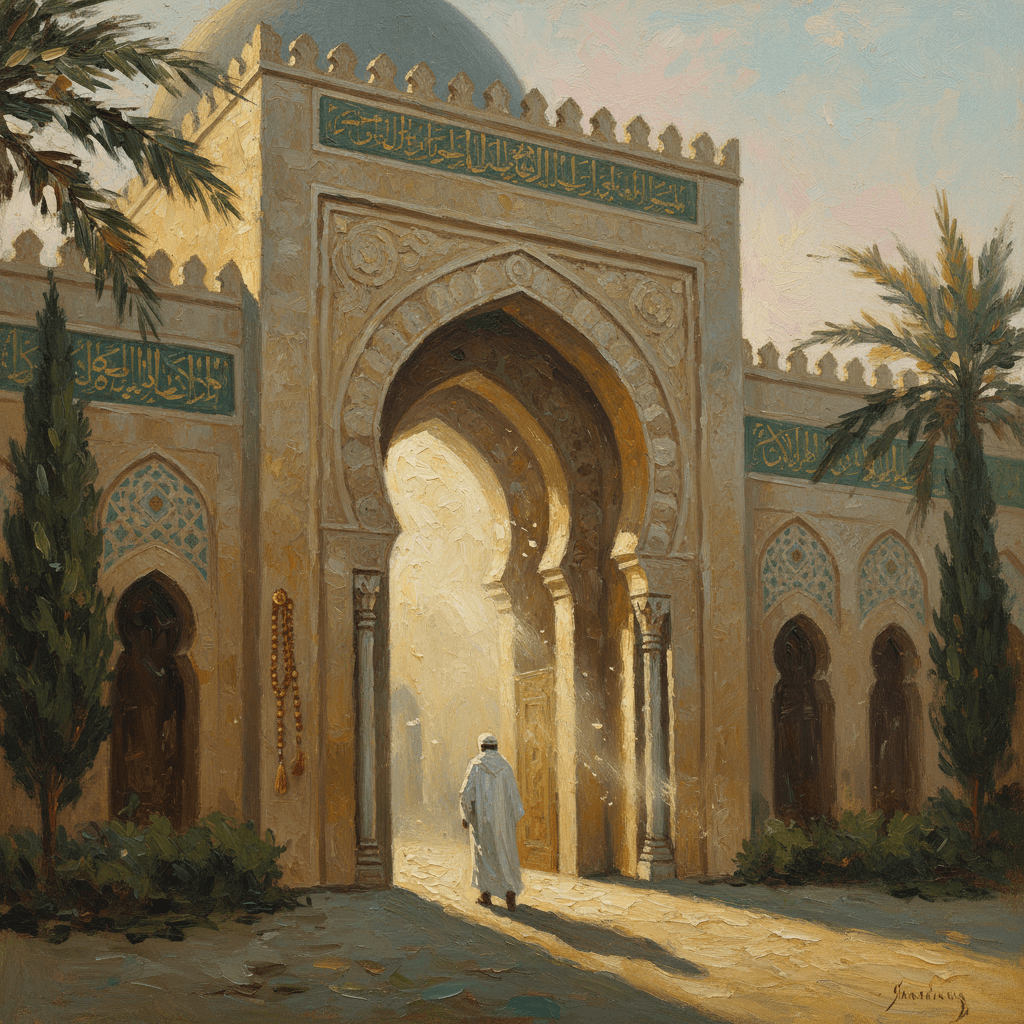
Have you ever had periods where worship felt alive — prayers had depth, the Quran moved you, you genuinely looked forward to making dua? And other times when everything felt flat, mechanical, empty?
That experience is not imagination. It is not a sign that you are a bad Muslim. It is the reality of iman — faith that is alive, which means faith that breathes in and breathes out, rises and falls. Understanding what iman actually is changes how you relate to those fluctuations — and what you do about them.
What Iman Actually Means
Iman (إيمان) comes from the Arabic root amana — to be secure, to trust, to have peace of heart through genuine belief. It is not a static intellectual proposition. It is a living reality that has texture, depth, and movement.
The classical Islamic scholars defined iman as having three inseparable dimensions:
- Tasdiq bil-qalb — Conviction of the heart. Genuine internal belief that is real, not just asserted.
- Iqrar bil-lisan — Declaration of the tongue. The shahada and the affirmation of belief in speech.
- Amal bil-jawaarih — Action of the limbs. Deeds that flow from and express the inner belief.
All three together constitute iman. You cannot separate them: genuine heart-belief without any behavioral expression raises serious questions. Empty verbal declaration with no inner conviction is hypocrisy (nifaq). Actions without belief are hollow.
This is why the Quran never just says "those who believed" in isolation. It consistently says:
الَّذِينَ آمَنُوا وَعَمِلُوا الصَّالِحَاتِ
Alladhina amanu wa 'amilu as-salihat
"Those who believed and did righteous deeds."
— (Surah Al-Baqarah, 2:25, and dozens of other places)
Belief and action are inseparable in Quranic usage. Iman is not just something you hold internally — it is something that spills out into how you live.
Why Iman Goes Up and Down
This is one of the most practically important teachings in Islam: iman is not fixed. The Quran itself describes it as something that increases:
وَإِذَا تُلِيَتْ عَلَيْهِمْ آيَاتُهُ زَادَتْهُمْ إِيمَانًا
Wa idha tuliyat 'alayhim ayatuhu zadathum imana
"And when His verses are recited to them, it increases them in faith."
— (Surah Al-Anfal, 8:2)
The Companions asked the Prophet: does iman increase and decrease? He affirmed: yes, it increases through obedience and decreases through disobedience. (Ahmad, authenticated)
This is liberating and sobering at the same time.
Liberating: a period of spiritual flatness is not permanent. It is not evidence that you were never really a believer, or that you have lost your faith, or that Allah has abandoned you. It is simply a low point in the natural fluctuation of a living thing. Plants go through seasons. So does iman.
Sobering: you cannot coast. Iman maintained without nourishment will gradually weaken. The things that deplete iman — sin, heedlessness, excessive worldly distraction — are not harmless. And the things that build iman — worship, remembrance, Quran, righteous company — are not optional.
Why Modern Muslims Struggle With Iman
There is a particular challenge facing Muslims today that did not exist in the same form in earlier centuries: quantity of distraction.
The Prophet ﷺ described the nafs as having a pull toward the lower self. The Quran describes the dunya (worldly life) as a "game and amusement" that deceives. (Surah Al-Hadid, 57:20). These realities have always been there — but in 2026, the machinery of distraction is more powerful, more immediate, and more personalized than at any point in human history.
Social media is designed by experts to maximize the time your eyes and attention spend on it. Entertainment is engineered to stimulate. The modern economy rewards productivity measured in output, not depth of character.
None of this is new in kind — the Quran addressed it fourteen centuries ago. But the scale is new. And many Muslims find their iman slowly diluted — not by dramatic apostasy, but by chronic distraction. The heart that never rests in quiet is the heart that never develops the sensitivity to feel Allah's presence.
How to Practice This Daily — Strengthening Iman Concretely
The Quran — Your Primary Iman Builder
"Those who believe and whose hearts find rest in the remembrance of Allah — indeed, in the remembrance of Allah do hearts find rest." (Surah Ar-Ra'd, 13:28).
The Quran is the most direct nourishment for iman. Not speed-reading to complete the mushaf. Sitting with verses. Reading with your heart as well as your eyes. Even five minutes of slow, attentive Quran recitation does more for iman than thirty minutes of racing through pages.
Salah — The Five Daily Anchors
Each of the five daily prayers is a iman reset. They punctuate the day with moments of genuine presence before Allah. The problem is when prayers become mechanical — words spoken without heart engagement. The cure is khushu (humility and focus in prayer) — which itself comes through slowing down, reflecting on the meanings, and approaching each salah as if it were the last.
Dhikr — The Constant Low-Level Practice
Between prayers, between tasks, between conversations — the tongue can be engaged in remembrance. Subhanallah, alhamdulillah, la ilaha illallah, Allahu Akbar. The Prophet said: "The best of deeds is the one done consistently, even if it is small." (Sahih Bukhari 6465). Five minutes of deliberate dhikr daily, sustained for months, builds iman in ways that occasional intense sessions cannot.
Righteous Company
"A man follows the religion of his close friend — so each of you should consider whom he befriends." (Abu Dawud 4833). The people around you affect your iman more than you realize. Time spent with people who remind you of Allah, who speak about the deen with knowledge and love, is an investment in your iman. Time spent in environments that normalize sin depletes it.
Build Your Daily Iman Practice
DeenBack tracks your daily Quran, prayer, and dhikr so you can see your consistency over time — because iman grows through daily action, not occasional intensity.


Free download. Premium features available in-app.
Signs of Progress
How do you know your iman is growing?
Salah begins to feel less like a checklist and more like a genuine encounter. You find yourself thinking about Allah during your day — not just during designated worship times. Sin becomes less attractive — the nafs still pulls, but the pull is weaker against a stronger foundation. You feel a quiet sense of accountability. You experience what the Companions described as halawat al-iman — the sweetness of faith.
These are not dramatic mystical experiences. They are the ordinary fruit of consistent practice. The heart that is regularly turned toward Allah gradually begins to orient naturally in that direction.
Common Questions
Is iman the same as Islam? Related but distinct. Islam refers to outward submission — the five pillars, the practices. Iman is the inner dimension — the conviction that makes those practices meaningful. Ihsan is the third level — the constant consciousness of Allah as if you see Him. Together they are the complete spiritual picture described in the hadith of Jibril.
Can iman disappear completely? Yes, through deliberate rejection of core beliefs. This is what the Quran calls kufr (disbelief). However, struggling with sin, doubt, or spiritual weakness is not kufr. The Prophet specifically distinguished between the one whose heart rejects truth and the one whose nafs is simply weak but whose heart remains oriented toward Allah.
Is it possible to have iman without feeling it? Yes, in the sense that iman can be genuine even when feelings are low. Feelings are not iman itself — iman is conviction plus declaration plus action. When feelings are absent, focus on the action: show up for prayer, make the dhikr, read the Quran. The feelings often follow the action with time.
For the inner landscape of iman, see what is taqwa in Islam and what is nafs in Islam — taqwa is where iman becomes practical, and understanding the nafs explains why iman fluctuates. The dua for steadfastness and dua for guidance are the companions for moments when iman feels low and you need Allah's help to hold on.
Iman Is a Living Thing
You do not achieve iman and then maintain it automatically. You cultivate it, every day, through choices that either nourish or deplete it.
The Companions — the best generation — regularly asked each other to sit together and "increase in iman." Not because they doubted each other's faith, but because they knew it needed continuous attention.
Your iman today is not fixed. It is going somewhere. The question is: are you nourishing it, or letting it slowly starve?
Keep Your Iman Strong Through Daily Practice
DeenBack helps you build the consistent daily habits — dhikr, Quran, prayer — that nourish iman before it gets low, not just after you feel the drought.
Free download. Premium features available in-app.
Frequently Asked Questions
What does iman mean in Islam?
Iman (إيمان) means faith or belief in Islam. It is derived from the Arabic root amana — to be secure, to trust, to believe. Islamically, iman refers to the complete conviction of heart, statement of tongue, and action of limbs in the six pillars of faith: belief in Allah, angels, scriptures, prophets, the Day of Judgment, and divine decree.
Does iman increase and decrease?
Yes. The Quran and Sunnah explicitly confirm that iman increases and decreases. Allah says: 'And when His verses are recited to them, it increases them in faith.' (Surah Al-Anfal, 8:2). Iman increases through acts of obedience, remembrance, Quran recitation, and learning. It decreases through sin, heedlessness, and neglect of worship.
What are the three components of iman?
The classical scholars defined iman as: belief in the heart (tasdiq bil-qalb), statement of the tongue (iqrar bil-lisan), and action of the limbs (amal bil-jawaarih). All three are components — true iman is not purely internal belief with no expression, nor is it empty words and action with no genuine belief.
What is the lowest level of iman?
The Prophet said: 'Whoever sees something wrong, let him change it with his hand. If he cannot, then with his tongue. If he cannot, then in his heart — and that is the weakest level of faith.' (Sahih Muslim 49). Hating wrong in your heart when you are completely unable to change it is the minimum state of iman.
How do I know if my iman is weak?
Signs of weakening iman include: feeling no sweetness in worship, hardness of heart, not feeling moved by Quran or reminders, ease in committing minor sins, lack of motivation to do good deeds, and feeling distant from Allah. These are signs to take seriously — not evidence of failure, but a call to return and rebuild.