
- Published on
What Is Islam? The Complete Answer for Seekers and Muslims Alike
- Authors

- Name
- Ahmad
- Role
- Senior Marketing Manager, Islamic education • Deen Back
بِسْمِ اللهِ الرَّحْمٰنِ الرَّحِيْمِ
In the name of God, the Most Gracious, the Most Merciful.
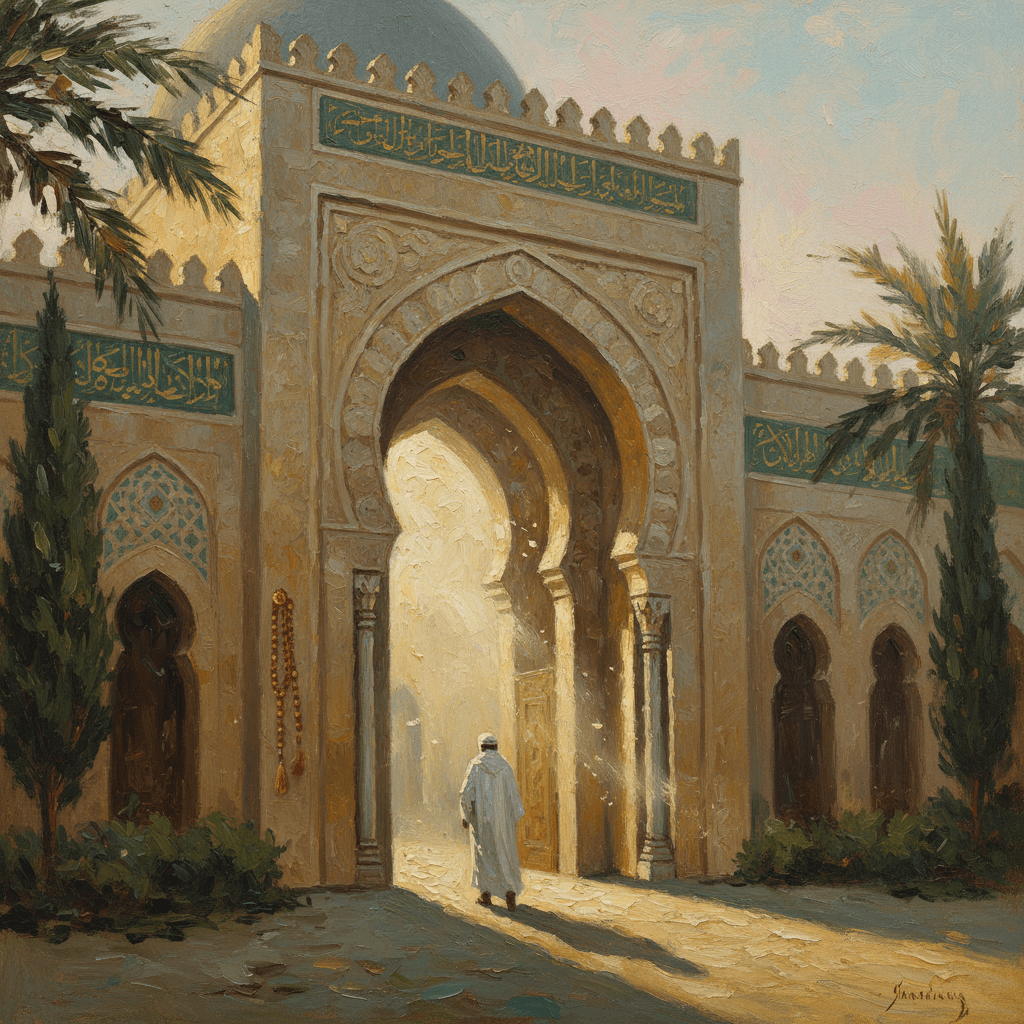
Whether you are a non-Muslim genuinely curious about the fastest-growing religion in the world, or a Muslim who has grown up saying the words without deeply examining them — this question deserves a real answer.
Not a defensive answer. Not a marketing pitch. Just: what is Islam, actually, and what does it ask of a human being?
What You Should Actually Care About
Islam is not primarily a set of rules, a cultural identity, or a political ideology — though it has dimensions of all three. At its core, Islam is a relationship between a created being and their Creator.
The word Islam comes from the Arabic root s-l-m (س ل م), which yields the words for peace (salam), safety, and submission. To be Muslim is to submit — consciously, voluntarily — to the will of Allah (the Arabic word for God, used by Arab Muslims and Christians alike).
The Quran describes this submission:
إِنَّ الدِّينَ عِنْدَ اللَّهِ الْإِسْلَامُ
Inna ad-dina indallahil Islam
"Indeed, the religion in the sight of Allah is Islam (submission)."
— (Quran, Surah Al Imran, 3:19)
This is a claim worth sitting with: Islam does not present itself as one option among many. It presents itself as the primordial human relationship with God — the same submission practiced by Ibrahim, Musa, Isa (Jesus), and all the prophets before Muhammad ﷺ.
What Islam Actually Means for Daily Life
Three concentric circles help people understand Islam:
1. Iman — what you believe. The six articles of faith:
- Belief in Allah — one God, without partners or equals
- Belief in the Angels — unseen servants of Allah
- Belief in the Divine Books — Quran (final), Torah, Injeel (Gospel), Zabur (Psalms)
- Belief in the Prophets — from Adam to Muhammad ﷺ (the last)
- Belief in the Day of Judgment — when every soul is accountable for every deed
- Belief in Divine Decree (qadar) — that everything happens within Allah's knowledge and permission
2. Islam — what you do. The Five Pillars are the practical structure:
- Shahada: saying and meaning "I testify that there is no god but Allah and Muhammad is His Messenger"
- Salah: five daily prayers, a built-in rhythm of remembrance
- Zakat: giving 2.5% of eligible savings to those in need
- Sawm: fasting from dawn to sunset throughout Ramadan
- Hajj: pilgrimage to Mecca once in a lifetime, if able
3. Ihsan — how you do it. The Prophet ﷺ defined ihsan as "to worship Allah as though you see Him; and if you cannot see Him, know that He sees you." (Sahih Muslim 8) This is the interior quality that transforms outward practice into genuine relationship.
Why Modern Muslims Struggle With This
There is a generation of Muslims who can recite the Five Pillars and six articles of faith from memory but feel spiritually hollow. They know what Islam is on paper but have not experienced it as a living reality.
This is not a knowledge problem. It is a nafs (lower self) problem.
The nafs resists submission. That is its defining characteristic. It wants to be the authority in your life — to decide what is worth following, what rules apply to it, what it can negotiate around. When Islam says "submit," the nafs says "yes, but on my terms."
The result is a kind of partial Islam: the cultural identity, the family belonging, maybe the Friday prayers — but without the interior orientation of the heart toward Allah.
The honest question every Muslim needs to ask is not "am I Muslim?" but "in what areas of my life have I genuinely submitted?" Because the answer reveals exactly where growth is possible.
How to Practice Submission Practically
Start with the prayers. Five daily prayers are not incidental to Islam — they are its structural rhythm. The Prophet ﷺ said prayer is the first thing you will be asked about on the Day of Judgment (Tirmidhi 413). If your prayers are inconsistent, start there. Not perfectly — just consistently.
Learn what you actually believe. Most Muslims repeat the Shahada without having examined what it means to live it. Read about tawhid. Understand why shirk (associating partners with Allah) is the one sin that will not be forgiven. When the foundation is clear, everything built on it is more stable.
Build one habit at a time. The nafs is defeated through small, consistent actions — not dramatic overhauls that collapse after a week. Pick one element of Islam you want to deepen and commit to it for 30 days before adding another.
Connect with the Quran. Islam's central claim is that the Quran is the direct word of Allah. If that is true, it changes everything about how you should relate to it — not as a book you read occasionally, but as daily communication from the One who created you.
Build Islamic Habits One Day at a Time
DeenBack helps you build daily prayer, dhikr, and Quran habits — taking Islam from something you know to something you actually live. Start your streak today.


Free download. Premium features available in-app.
Signs That Islam Is Becoming Real in Your Life
You know Islam is moving from concept to lived reality when:
- You feel genuinely reluctant to do something haram — not just afraid of consequences, but aware it would harm your relationship with Allah
- The Quran affects you emotionally, not just intellectually
- You turn to dua in actual difficulty, not just as a last resort after everything else fails
- Small sins bother you more than they used to — because your sensitivity to what matters is increasing
These are signs of growth, not arrival. Islam is a journey of submission that deepens across a lifetime.
Related Foundations to Explore
- What are the 5 pillars of Islam — the full breakdown of each pillar
- What are the 6 articles of faith — the belief framework in depth
- What is iman — why belief is more than what you say
- How to increase iman — practical steps to deepen your faith
- First kalima meaning — the declaration that opens the door
Common Questions
Is Islam a religion of peace? Islam teaches that peace (salam) is a primary value — it is embedded in the religion's name and in the greeting Muslims exchange. However, Islam is not passive pacifism. It permits self-defense and justice. The deeper truth is that peace in Islam comes from surrender to Allah's will — when individuals and societies submit to divine guidance, the natural result is just and peaceful relationships.
Can I convert to Islam? How? Yes. The entry into Islam is the Shahada — the sincere declaration of faith. Ideally done before witnesses at a mosque, though Allah accepts what is in the heart. See first kalima meaning for the full Shahada and its implications.
Do Muslims worship Muhammad? No. Muhammad ﷺ is the final prophet and Messenger, deeply revered, but not worshipped. Only Allah is worshipped. Muslims follow the Prophet's example (sunnah) as the most perfect human expression of Islam, but draw a clear line between following and worshipping.
The Invitation at the Heart of Islam
Islam does not promise that submission is easy. The Quran is honest: "We will surely test you with something of fear and hunger and a loss of wealth and lives and fruits, but give good tidings to the patient." (Surah Al-Baqarah, 2:155)
What Islam promises is that submission is worth it. That the One you are submitting to is worthy — all-knowing, all-powerful, and merciful beyond measure. That the structure of the Five Pillars and six articles of faith is not an arbitrary rulebook but a mercy — a framework for a life of meaning, accountability, and peace.
The question "what is Islam?" ultimately resolves into a personal one: what would it mean for you to actually submit — not culturally, not nominally, but actually — to the One who created you?
That question, taken seriously, is where Islam begins.
Take Your Practice of Islam Deeper With Daily Habits
DeenBack supports Muslims building the daily prayer, Quran, and dhikr habits that turn Islam from identity into lived reality. Join and start building today.
Free download. Premium features available in-app.
Frequently Asked Questions
What is the meaning of Islam?
Islam is an Arabic word derived from the root s-l-m, meaning peace, purity, submission, and obedience. In religious context, Islam means complete submission to the will of Allah (God). A Muslim is one who submits.
What are the core beliefs of Islam?
The six articles of faith: belief in Allah, the Angels, the Divine Books, the Prophets and Messengers, the Day of Judgment, and Divine Decree (qadar). These form the doctrinal foundation of being Muslim.
What are the Five Pillars of Islam?
The Five Pillars are: Shahada (declaration of faith), Salah (five daily prayers), Zakat (obligatory charity), Sawm (fasting Ramadan), and Hajj (pilgrimage to Mecca for those able). They are the structural framework of Muslim practice.
Is Islam a religion only for Arabs?
No. Islam is a universal message for all of humanity. The Prophet Muhammad ﷺ was Arab, and the Quran was revealed in Arabic, but Islam has always been for people of every race, nationality, and language. Approximately 80% of Muslims today are non-Arab.
How is Islam different from other religions?
Islam's defining characteristic is strict tawhid — the absolute oneness of God with no partners, equals, or intermediaries. Unlike Christianity, Islam does not believe Allah became human or has a son. Unlike polytheistic religions, there is only one God. Islam also holds that Muhammad ﷺ is the final prophet, and the Quran is the final revelation.