
- Published on
What Is Taqwa in Islam — The God-Consciousness That Changes Everything
- Authors

- Name
- Ahmad
- Role
- Senior Marketing Manager, Islamic education • Deen Back
بِسْمِ اللهِ الرَّحْمٰنِ الرَّحِيْمِ
In the name of God, the Most Gracious, the Most Merciful.
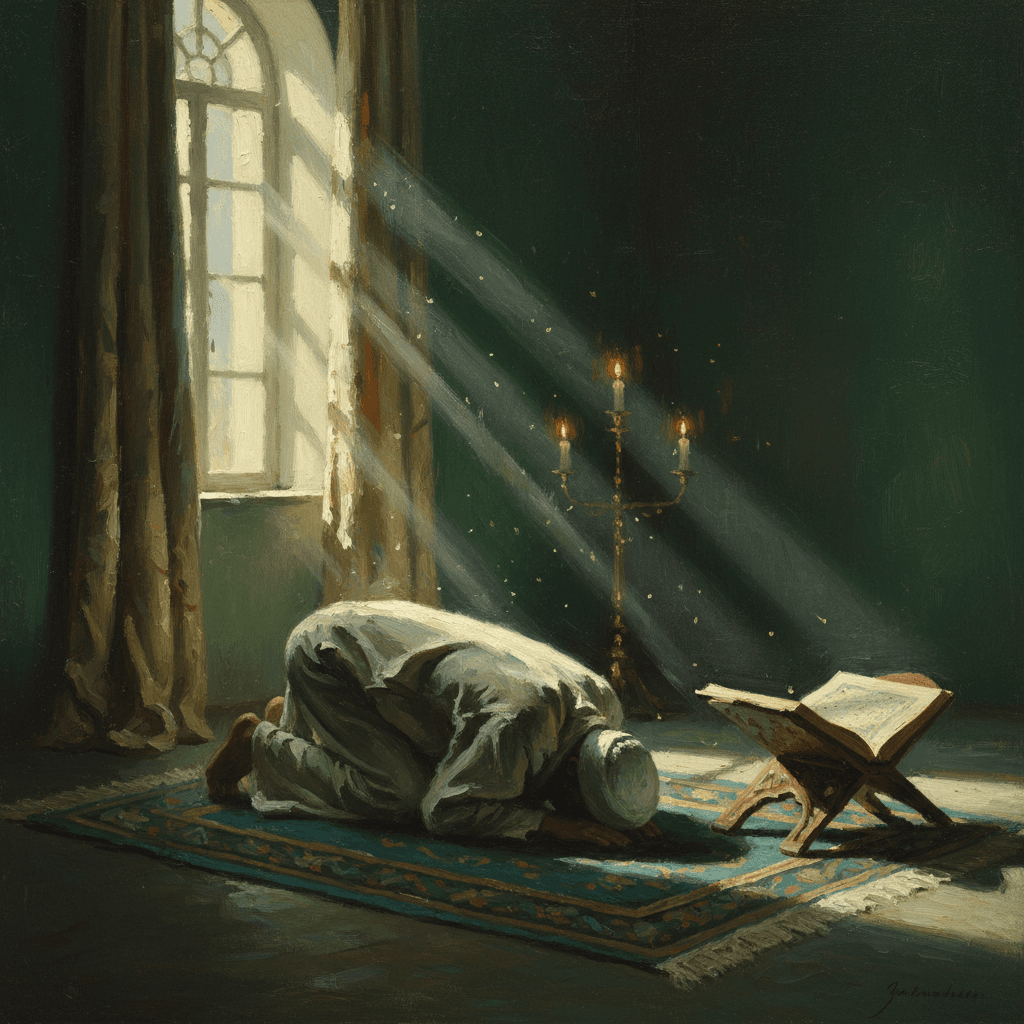
The Quran mentions it over 250 times. The Prophet ﷺ pointed to his heart to define it. The greatest Companions prayed for it, sought it, and built their lives around cultivating it. If there is one concept that runs through all of Islamic spirituality like a thread through a tapestry, it is taqwa.
And yet, for many Muslims, taqwa has become a word that floats in sermons without landing anywhere practical. "We need to have more taqwa." "Taqwa will protect you." But what does it actually feel like to have taqwa? And how do you build it in the middle of an ordinary life?
What Taqwa Actually Means
Taqwa (تقوى) comes from the Arabic root waqa — to protect, to shield. In its spiritual meaning, it is the quality of protecting yourself from Allah's displeasure through a living, constant awareness of His presence.
The Quran describes those who have taqwa — the muttaqeen — from the very first pages:
ذَلِكَ الْكِتَابُ لَا رَيْبَ فِيهِ هُدًى لِّلْمُتَّقِينَ الَّذِينَ يُؤْمِنُونَ بِالْغَيْبِ وَيُقِيمُونَ الصَّلَاةَ وَمِمَّا رَزَقْنَاهُمْ يُنفِقُونَ
"This is the Book about which there is no doubt — a guidance for those with taqwa. Those who believe in the unseen, establish prayer, and spend from what We have provided them."
— (Surah Al-Baqarah, 2:2-3)
And in one of the most famous definitions of the human condition, Allah declared:
إِنَّ أَكْرَمَكُمْ عِندَ اللَّهِ أَتْقَاكُمْ
"Indeed, the most honored of you in the sight of Allah is the most righteous (taqwa) of you."
— (Surah Al-Hujurat, 49:13)
Not the wealthiest. Not the most educated. Not the most well-connected. The most honored is the one with the deepest taqwa.
Think of taqwa like a spiritual immune system. The body's immune system does not prevent you from encountering pathogens — you will encounter them constantly. What it does is recognize threats, respond to them appropriately, and maintain the body's integrity even under attack. Taqwa does this spiritually: it does not remove you from the world's temptations and pressures, but it creates an inner orientation that recognizes threats to your soul and responds with integrity, even when the easier path is compromise.
Why Modern Muslims Struggle With Building Taqwa
Taqwa requires the one thing modern life systematically removes: sustained consciousness of something beyond the immediate and visible. Every layer of the modern world is designed to keep your attention on what can be seen, measured, consumed, and shared. The constant pull of screens and stimulation is a taqwa problem as much as anything else — it keeps the heart in a state of heedlessness (ghafla) where Allah's presence is felt only occasionally, rather than as a continuous orientation.
The second problem is understanding taqwa as a feeling rather than a practice. Many Muslims wait to "feel" taqwa before acting — waiting for a spiritual high from Ramadan or a moving khutbah to produce the state they need. But taqwa is built through consistent practice, not through feeling. The Prophet ﷺ said the best deeds are the small ones done consistently — this is not just habit advice, it is taqwa advice. Consistency builds the orientation that feeling cannot reliably produce.
How to Build Taqwa Daily
Let Every Act of Worship Be an Act of Presence
The primary vehicle of taqwa is salah. Five times a day, you stand before Allah — not in front of a general concept of God, but specifically addressing Al-Hayy, Al-Qayyum, the ever-Living Sustainer. When salah is done with presence — even partial, imperfect presence — it resets the internal compass.
Read how to build khushu in salah for the specific practices that bring consciousness back into prayer. Each prayer done with even a moment of genuine presence is a renewal of taqwa.
Practice Taqwa in Gray Areas First
The Prophet ﷺ described a key marker of taqwa as leaving matters that might be permissible but feel questionable — like the shepherd keeping the flock away from boundaries. Practically, this means: when something feels wrong even if you cannot immediately articulate why, the person with taqwa pauses rather than proceeds. This pausing in gray areas is where taqwa is actively exercised and developed.
إِنَّ الْحَلَالَ بَيِّنٌ وَإِنَّ الْحَرَامَ بَيِّنٌ وَبَيْنَهُمَا مُشْتَبِهَاتٌ
"The halal is clear and the haram is clear — and between them are doubtful matters."
— (Sahih Bukhari 52, sunnah.com)
Taqwa keeps you out of the doubtful zone — not because of rigid fear but because of genuine care for your relationship with Allah.
Build the Daily Remembrance Habits
The morning and evening adhkar are one of the most direct builders of taqwa. They begin and end the day with conscious orientation toward Allah — His names, His qualities, His protection, His presence. Over months and years, this consistent practice of remembrance builds a background consciousness that begins to filter into ordinary moments of the day.
The morning adhkar and evening adhkar give you the complete practice. Start even with three or four of the core adhkar from each set — consistency matters more than quantity.
Build the Daily Practices That Turn Taqwa From a Concept Into a Living Reality
DeenBack tracks your daily dhikr, salah, and adhkar habits — the consistent practices that build the God-consciousness the Quran commands and the Prophet ﷺ embodied.


Free download. Premium features available in-app.
Use Difficulty as a Taqwa Practice
The Quran says: "Whoever has taqwa of Allah — He will make a way out for them." (Surah At-Talaq, 65:2) Difficulty is one of the places where taqwa is most actively built — because it is in difficulty that the choice between trusting Allah and trusting the world is sharpest. When problems come, deliberately orienting toward Allah — through dua, through patience, through remembering His names — is not just comfort-seeking. It is taqwa practice.
What is tawakkul in Islam describes the closely related practice of trust in Allah. Taqwa and tawakkul develop together — consciousness of Allah naturally generates trust in Him.
The Dua for Taqwa
اللَّهُمَّ آتِ نَفْسِي تَقْوَاهَا وَزَكِّهَا أَنْتَ خَيْرُ مَن زَكَّاهَا
Allahumma ati nafsi taqwaha wa zakkiha anta khayru man zakkaha
"O Allah, give my soul its taqwa and purify it — You are the best to purify it."
— (Sahih Muslim 2722, sunnah.com)
Ask directly. Taqwa is ultimately a gift from Allah — and He responds to sincere asking.
Signs Taqwa Is Growing in You
Taqwa does not arrive in a moment of dramatic transformation — it builds gradually. Signs that it is growing:
- Sins that used to feel easy start to carry a friction — an internal resistance before committing them
- You find yourself thinking about Allah at ordinary moments — not just in formal worship
- The opinions of people matter less in your decisions; you are increasingly asking "what does Allah think of this?"
- Difficulty produces something other than panic — a reaching toward Allah rather than a collapse away from Him
- You leave gray areas more consistently, with less internal argument about it
Read what is ihsan in Islam for the next level of this practice — if taqwa is the shield of consciousness, ihsan is the full flowering of that consciousness into excellence in every act of worship.
Common Questions
I want to have taqwa but I keep falling into the same sins. Does that mean I have no taqwa?
Taqwa and sin can coexist — especially in the early stages of building it. The person with growing taqwa is not the one who never falls; it is the one who falls and feels it, turns back quickly, and keeps working on the relationship. The nafs lawwama — the self-reproaching soul — is evidence of taqwa in process. What is nafs in Islam gives the full picture. Keep making tawbah, keep building the practices, keep asking Allah for taqwa directly.
Is taqwa fear of Allah or love of Allah?
The scholars say it is both, inseparably. The Quran uses both the language of fear and the language of love in relation to Allah. Healthy taqwa is not a cowering fear of a harsh master — it is the reverent care you would have for Someone you love deeply and do not want to displease. The one who truly loves Allah and understands His greatness will naturally have both awe and love — and taqwa is the expression of both in daily action.
The Quality That Determines Everything Else
The Quran says the most honored of you is the one with the most taqwa. Not the richest, not the most learned, not the most visible. The most conscious of Allah. This is the Muslim's ultimate aspiration — not just following rules or performing worship, but genuinely living in the orientation that knows Allah is watching and cares deeply what He sees. That orientation changes everything: how you treat people, how you handle money, how you use your time, what you say and what you leave unsaid. Taqwa is the root. Everything good in a Muslim life grows from it.
Plant the Root of Taqwa Through Daily, Consistent Practice — Start Today
Every morning adhkar, every dua, every moment of dhikr plants deeper roots of taqwa. DeenBack helps you build and track the practices that turn God-consciousness from an occasional feeling into a daily reality.
Free download. Premium features available in-app.
Frequently Asked Questions
What is the best translation of taqwa in English?
There is no perfect single-word translation, which is why scholars often leave it in Arabic. The most common translations include God-consciousness, God-fearing, piety, and mindfulness of Allah. Each captures part of it. 'God-consciousness' captures the awareness dimension. 'God-fearing' captures the reverential caution. 'Piety' captures the resulting behavior. The fullest understanding combines all three: a constant, living awareness of Allah that produces reverential caution in all actions, which expresses itself in consistently righteous behavior.
Can taqwa be built, or is it a gift from Allah?
Both. Taqwa ultimately comes from Allah — the Quran tells us that Allah is the one who places taqwa in the heart. But the Quran also repeatedly commands us to 'have taqwa' — implying it is something we can cultivate and build. The relationship is like any spiritual quality: you create the conditions through practice, sincerity, and asking Allah, and He places the quality in the heart. You cannot force taqwa into existence through willpower alone, but you can make the practices that invite it a consistent part of your life.
What is the difference between taqwa and simply following the rules of Islam?
Rule-following without taqwa is compliance — you do the right things for external reasons (fear of punishment, social pressure, habit) without internal consciousness of Allah. Taqwa produces rule-following as a natural result, but from the inside: you choose rightly because you are genuinely aware of Allah's presence and care about His pleasure. The difference shows up when no one is watching, when the rule is inconvenient, and when breaking it would be easy and undetected. Taqwa keeps you oriented in all those situations; rule-following without taqwa often breaks down.
How does the Prophet describe taqwa?
The Prophet ﷺ gave one of the most powerful descriptions of taqwa by pointing to his heart three times and saying 'Taqwa is here.' (Sahih Muslim 2564) This locates taqwa precisely — not in the tongue (statements of faith), not in visible acts of worship, but in the heart. In another narration, he described a person with taqwa as one who leaves gray-area matters to avoid falling into the haram — like a shepherd who grazes his flock near private land: if he grazes too close to the boundary, some will eventually cross it. Taqwa includes proactive caution about the boundaries.
What is the relationship between taqwa and happiness?
The Quran consistently links taqwa with outcomes that translate as genuine wellbeing: 'Whoever has taqwa of Allah, He will make a way out for them and provide from where they do not expect.' (65:2-3) 'If the people of the towns had believed and had taqwa, We would have opened for them blessings from heaven and earth.' (7:96) These are not promises of wealth or ease in the conventional sense — they are descriptions of a life that has divine support, meaningful direction, and an inner peace that external circumstances cannot consistently provide or take away.