
- Published on
What Is Ihsan in Islam — The Level of Faith Beyond Compliance
- Authors

- Name
- Ahmad
- Role
- Senior Marketing Manager, Islamic education • Deen Back
بِسْمِ اللهِ الرَّحْمٰنِ الرَّحِيْمِ
In the name of God, the Most Gracious, the Most Merciful.
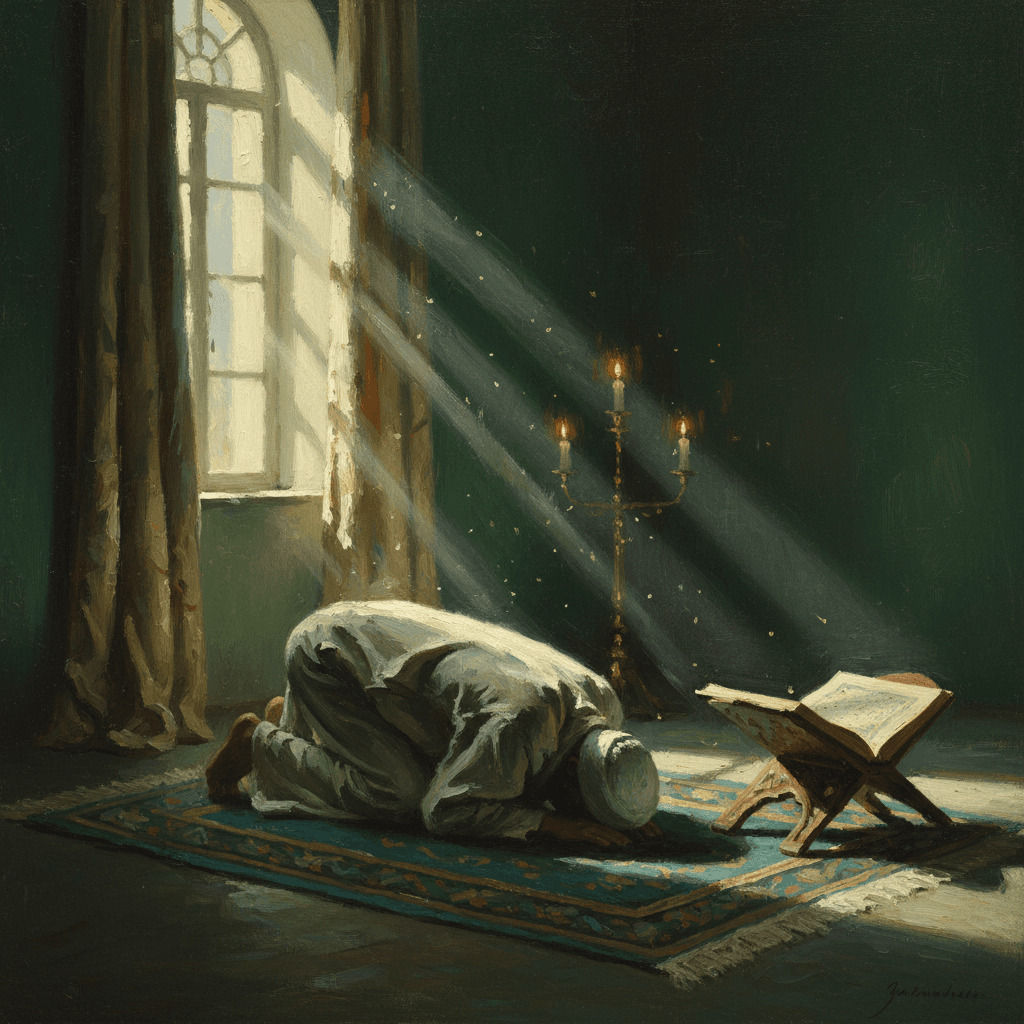
Have you ever noticed that two people can perform the exact same Islamic practice — the same salah, the same Quran recitation, the same charity — and the result feels completely different? One person is clearly somewhere else during prayer. The other is clearly present. What separates them is not knowledge or years of practice. It is the quality of attention and intention they bring. That quality has a name: ihsan.
Ihsan is the level of Islam that most Muslims hear about but few deliberately pursue. It is the territory beyond minimum compliance — where every act of worship becomes a genuine encounter with Allah.
What Ihsan Means
Ihsan (إحسان) comes from the root hasuna, meaning beauty and excellence. It means bringing beautiful, excellent quality to everything you do.
The Prophet ﷺ defined it precisely in the famous hadith of Jibril, when the angel appeared as a man and asked about the three levels of the religion:
الْإِحْسَانُ أَنْ تَعْبُدَ اللَّهَ كَأَنَّكَ تَرَاهُ فَإِنْ لَمْ تَكُنْ تَرَاهُ فَإِنَّهُ يَرَاكَ
Al-ihsanu an ta'buda Allaha ka-annaka tarahu, fa-in lam takun tarahu fa-innahu yaraka
"Ihsan is to worship Allah as if you see Him — and if you do not see Him, then know that He sees you."
— (Sahih Muslim 8)
Two levels of the same reality: the peak is to pray as if you can see Allah — with the full presence, awe, and attention you would bring if the encounter were visually real. The floor is to pray knowing that Allah sees you — which means the quality of your private practice must match what you would do in public.
Think of ihsan as the difference between a craftsman who does careful work because the customer is watching, and one who does careful work whether or not anyone ever sees it — because the quality of the work itself is what matters to them. Ihsan is the second craftsman: consistent excellence regardless of witness.
Why Ihsan Is So Rare — And So Needed
The default mode of religious practice is compliance. We do what is required to meet the minimum standard. Five prayers: checked. Ramadan: completed. Zakat paid: done. This is Islam — and it is essential. But compliance without presence is a shell.
The Prophet ﷺ warned that a person might pray and have only a fraction — a tenth, a half — recorded as spiritually real, based on how much of themselves was actually present. (Abu Dawud 796) The prayer was technically valid. The spiritual content was partial.
Modern life makes presence harder. We scroll before Fajr, rush through prayer to get to work, read Quran while thinking about something else. The external form of worship continues while the inner quality degrades. This is where ihsan gets crowded out — not by deliberate rejection but by the accumulation of distraction and hurry.
Read how to build khushu in salah for the practical dimension of ihsan in prayer specifically — the first and most important arena for developing this quality.
How to Practice Ihsan Daily
Apply It to Your Next Single Prayer
Do not start with ihsan as a lifelong project — start with the next salah. Before you begin, take 30 seconds of silence. Remind yourself: I am about to stand before Allah, who can see every thought in this prayer. Then pray as slowly as you genuinely can, understanding what you are saying. That single prayer, practiced with that intention, is ihsan in action.
Bring the Same Quality to Interactions With People
The Prophet ﷺ said:
إِنَّ اللَّهَ كَتَبَ الإِحْسَانَ عَلَى كُلِّ شَيْءٍ
Inna Allaha kataba al-ihsana 'ala kulli shay'
"Indeed, Allah has prescribed ihsan in all things."
Ihsan in conversation means giving someone your full attention — not thinking about your response while they speak. Ihsan in work means doing the job properly even when your supervisor is absent. Ihsan with family means being genuinely present rather than physically there but mentally elsewhere. This is not a vague standard — it is a specific question you can ask before any act: am I doing this as well as I genuinely can?
Align Private and Public Practice
The simplest test of ihsan is this: does your private practice look like your public one? Do you pray with the same quality alone as when others might see you? Do you treat service workers the way you treat your respected peers? Ihsan closes the gap between the observed and unobserved self — because the only observer whose opinion ultimately matters is always watching.
Bring Ihsan to Your Daily Islamic Habits — One Consistent Practice at a Time
DeenBack helps you build morning adhkar, prayer tracking, and Quran habits with the kind of daily consistency that gradually trains your heart toward the presence and quality that is ihsan.


Free download. Premium features available in-app.
Build the Supporting Habits That Enable Presence
Ihsan in prayer requires a heart that is not too cluttered to be present. Read how to do morning adhkar — the morning dhikr is one of the most powerful tools for preparing the heart for a day of ihsan. When the day begins with deliberate remembrance of Allah, a baseline of awareness carries into subsequent prayers, interactions, and decisions.
Signs of Progress in Ihsan
- You notice when your mind wanders in prayer and you return, rather than finishing the prayer without realizing you were absent
- You catch yourself doing a good deed "for show" and feel genuine discomfort — the desire for sincerity is growing
- The quality of your work, your interactions, and your worship feels more consistent — less dependent on who is watching
- You find yourself caring about the quality of small acts — a dua said with attention, a greeting given with presence
Common Questions
Can someone practice ihsan if they are still learning the basics of Islam?
Yes — ihsan is a quality applied to whatever you currently do, not a level reached after completing all other levels. Praying two rakahs with full attention and understanding is more ihsan than praying ten rakahs while mentally elsewhere. The standard is always: how well are you doing what you are doing? Apply that standard at whatever stage you are at.
Is ihsan the same as perfectionism?
No — perfectionism is about flawless output and is often self-focused. Ihsan is about the quality of your attention and intention in the process, and it is always directed toward pleasing Allah. A perfectionist is anxious when the result is imperfect. Someone practicing ihsan is at peace knowing they brought their full, genuine effort, and the outcome is in Allah's hands.
How do I practice ihsan when I am exhausted?
The dua for ikhlas is relevant here — sincerity is the soul of ihsan, and it can be present even in a tired, shortened prayer. On exhausted days, ihsan might mean: praying the fard with the best presence you can currently manage, rather than skipping to avoid an imperfect performance. The honest, tired effort of a sincere servant is already a form of excellence.
The Craftsman and the Creation
Every Muslim life is a kind of craft being shaped across years. Ihsan is the decision to take that craft seriously — to work at the quality of your inner life with the same care a craftsman brings to their finest work. The result is not perfection; it is a life of genuine, coherent, integrated spiritual effort that is recognizable for what it is. That is what ihsan produces. And it starts with the next prayer, the next interaction, the next small act — brought to the fullest quality you can genuinely give.
Build the Consistent Daily Habits That Are the Foundation of Ihsan
DeenBack supports your journey toward spiritual excellence — tracking the small consistent practices that, over time, transform compliance into genuine, present, beautiful worship.
Free download. Premium features available in-app.
Frequently Asked Questions
What is the difference between Islam, Iman, and Ihsan?
Islam is the outer submission — the five pillars performed correctly. Iman is the inner belief — conviction in Allah, His angels, books, messengers, the Last Day, and divine decree. Ihsan is the highest level — bringing beautiful excellence to both the outer and inner dimensions, worshipping Allah as if you see Him.
Is ihsan only about worship, or does it apply to all of life?
Ihsan applies to everything. The Prophet ﷺ said Allah has prescribed ihsan in all things — including how animals are slaughtered and how work is done. Any action performed with full awareness, care, and excellence is an expression of ihsan. It transforms ordinary tasks into acts of worship.
How do I know if I am practicing ihsan?
Ihsan is present when you do the right thing even when no one is watching, when your private practice matches your public one, and when you bring genuine care to actions regardless of whether they are noticed or rewarded. The internal benchmark is: would I be satisfied with this if I could see it as Allah sees it?
Can beginners in Islam practice ihsan?
Yes — ihsan is a quality applied to whatever level of practice you are at. A beginner who prays the five daily prayers with full attention and sincere presence is practicing ihsan at their level. It is not a destination reached after years — it is a standard brought to every act, at every stage.
Why does ihsan feel so difficult to maintain?
Because the nafs defaults to the minimum required to get by. Ihsan demands more — full presence, genuine intention, consistent quality of effort regardless of mood or audience. It fights the nafs's natural tendency toward shortcuts and performance. It is difficult precisely because it requires sustained inner discipline.