
- Published on
What Is Tazkiyah in Islam — The Lifelong Work of Purifying Your Soul
- Authors

- Name
- Ahmad
- Role
- Senior Marketing Manager, Islamic education • Deen Back
بِسْمِ اللهِ الرَّحْمٰنِ الرَّحِيْمِ
In the name of God, the Most Gracious, the Most Merciful.
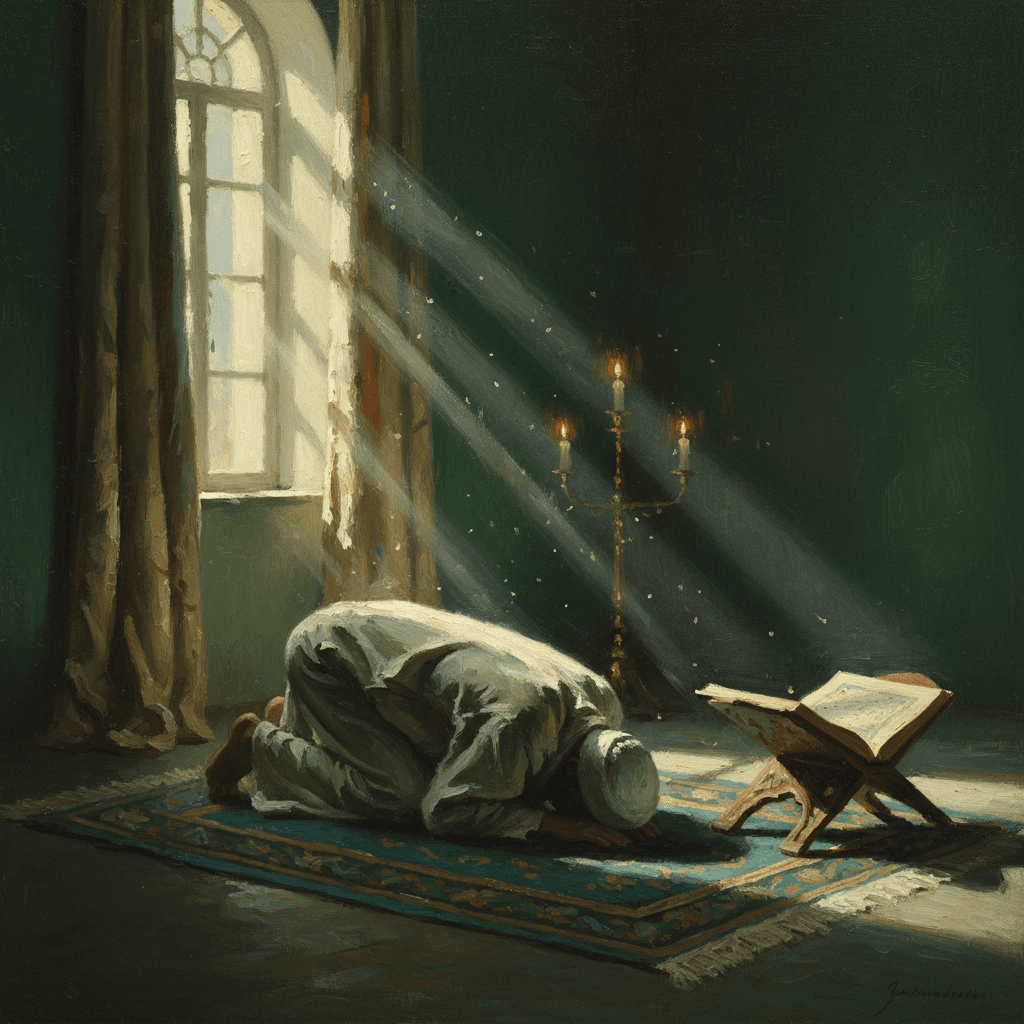
Most Muslims know that prayer, fasting, and zakat are obligatory. Fewer know that soul purification — tazkiyah — was listed by the Quran as one of the three core missions the Prophet ﷺ was sent to accomplish. Not a bonus spiritual achievement for the advanced. A mission. For everyone.
If we take that seriously, it changes how we think about our entire religious life.
What Tazkiyah Actually Means
Tazkiyah (تزكية) comes from the Arabic root zakka — meaning to grow, to purify, to increase in goodness. It refers to the purification and growth of the soul: removing blameworthy character traits and internal diseases while cultivating praiseworthy ones and drawing the heart closer to Allah.
The Quran states it as a foundational mission:
هُوَ الَّذِي بَعَثَ فِي الْأُمِّيِّينَ رَسُولًا مِّنْهُمْ يَتْلُو عَلَيْهِمْ آيَاتِهِ وَيُزَكِّيهِمْ وَيُعَلِّمُهُمُ الْكِتَابَ وَالْحِكْمَةَ
"He is the One who sent among the unlettered people a messenger from among themselves, reciting to them His verses, purifying them (yuzakkihim), and teaching them the Book and wisdom."
— (Surah Al-Jumu'ah, 62:2)
Notice the sequence: reciting the Quran, then purifying souls, then teaching the Book. Tazkiyah is central — not peripheral.
And the Quran gives tazkiyah the highest stakes:
قَدْ أَفْلَحَ مَن زَكَّاهَا وَقَدْ خَابَ مَن دَسَّاهَا
"He who purifies the soul succeeds; he who corrupts it fails."
— (Surah Ash-Shams, 91:9-10)
Success and failure — in the most comprehensive sense — hinges on this work.
Think of tazkiyah like the maintenance of a very important instrument. The heart, left unattended, accumulates rust: pride, envy, dishonesty, attachment to the wrong things. Tazkiyah is the regular work of cleaning and realigning that instrument so it can do what it was designed for — connecting with Allah, responding to goodness, and generating righteous behavior naturally.
Why Modern Muslims Struggle With Tazkiyah
Two problems make tazkiyah difficult in the modern context.
The first is the external-only religion. Many Muslims were raised with a version of Islam focused entirely on legal compliance: what is halal, what is haram, which acts are obligatory, which are forbidden. This is essential knowledge. But it misses the dimension the Prophet ﷺ spent most of his time on — transforming the internal character of his Companions. A person can be fully compliant externally and spiritually hollow internally.
The second is impatience with gradual change. We live in an environment optimized for instant results. Character transformation does not work that way. Reducing kibr (arrogance), softening a hard heart, building genuine gratitude — these are multi-year projects. The nafs wants a quick fix or it gives up. Tazkiyah requires a different relationship with time.
How to Practice Tazkiyah Daily
Tawbah as a Daily Practice, Not Just Emergency Response
The Prophet ﷺ sought forgiveness more than 70 times a day — not because he was sinful, but because he understood that regular tawbah is one of the primary tools of soul purification. It keeps the heart soft, honest, and oriented toward Allah.
Read how to make istighfar a daily habit for a practical system. Even three minutes of sincere istighfar each morning and evening creates a consistency that gradually softens and purifies the heart.
Muraqabah — Practicing Awareness of Allah
Muraqabah is the practice of genuine awareness that Allah is watching — not as a surveillance anxiety, but as a living, moment-to-moment orientation. When you are about to lie and remember Allah sees, when you are about to lose your temper and pause because of His presence, when you choose the more honest response because you are aware of being witnessed — that is muraqabah in practice.
The Prophet ﷺ described ihsan (which what is ihsan in Islam explores in detail) as "worshipping Allah as though you see Him — and if you do not see Him, knowing that He sees you." This awareness is both the core of ihsan and one of the main engines of tazkiyah.
Target Specific Character Diseases
Tazkiyah is not vague spiritual improvement — it is targeted work on specific internal diseases. Identify the primary character issue you are dealing with right now:
- Pride (kibr): Work on service, daily reflection on your dependence on Allah, receiving correction gracefully
- Showing off (riya): Build a foundation of private worship; practice ikhlas actively
- Envy (hasad): Train yourself to genuinely make dua for the people you feel envious of
- Anger: Identify your triggers, practice the anger duas, and give yourself a physical pause before responding
One disease at a time. Patience across months and years.
Track the Daily Habits That Build a Purified Soul Over Time
Tazkiyah requires consistency — the kind of daily istighfar, dhikr, and self-reflection that compounds over years. DeenBack helps you build and track exactly these habits.


Free download. Premium features available in-app.
Quran as Healer
The Quran is described explicitly as shifa — healing — for what is in the hearts (Surah Yunus, 10:57). Regular, reflective recitation — not speed-reading for reward counting — is one of the most powerful tools of tazkiyah. Read even a few verses slowly, reflecting on their meaning and what they demand of your character. This practice, done consistently, changes the internal landscape over time.
The morning adhkar provides a daily framework that incorporates Quran and dhikr together — a foundational tazkiyah practice built into the structure of the day.
Signs of Progress in Tazkiyah
Progress in tazkiyah is real, but it does not always announce itself loudly. You will notice:
- Greater sensitivity to minor sins — what used to feel insignificant now troubles you, not from anxiety but from a growing love for Allah's pleasure
- A softer heart: easier to cry in prayer, easier to feel moved by Quran
- Character traits that used to be a struggle (patience, honesty, gratitude) begin to come more naturally
- Less reactive and more deliberate in difficult situations
- The opinions of people matter less — you are increasingly oriented toward what Allah sees
These signs are the fruit of sustained work. They do not appear on a fixed schedule, and they do not arrive all at once.
Common Questions
Where do I even start with tazkiyah?
Start with tawbah — sincere, daily repentance and return to Allah. Then add muhasabah: a brief honest review of your day each evening. Identify one character trait you want to work on. Build the specific daily practice that addresses it. That is tazkiyah in practice, not theory.
Is tazkiyah the same as therapy?
There are overlaps — both involve honest self-examination and working to change patterns. But tazkiyah is fundamentally a relationship with Allah: it is purifying the soul for the sake of closeness with Him, not primarily for your own wellbeing (though wellbeing follows). Therapy can be a useful companion to tazkiyah, but it does not replace the spiritual dimension.
Can I do tazkiyah without a teacher?
Classical scholars had teachers who guided their tazkiyah work. If you have access to a knowledgeable, trustworthy teacher, that is valuable. If you do not, start with the tools available: Quran, hadith, regular tawbah and muhasabah, and seeking knowledge through reliable scholars. Many have walked far on this path without a formal teacher, guided by sincerity and consistent practice.
The Central Work
If you had to summarize Islam's purpose in one phrase, tazkiyah — the purification and growth of the soul — would be a strong candidate. The Prophet ﷺ was sent for it. The Quran was revealed to enable it. The acts of worship are structured around it. And your success or failure, in the deepest sense, depends on it. Not the success of your career or reputation — the success of your return to Allah with a heart that came home.
Start Your Tazkiyah Practice Today — One Habit, One Day at a Time
DeenBack is built for exactly this: daily dhikr, istighfar, and Quran habits that become the consistent practice tazkiyah requires. Begin the work. Allah will open the way.
Free download. Premium features available in-app.
Frequently Asked Questions
Is tazkiyah only for advanced Muslims or Sufi practitioners?
No — tazkiyah is for every Muslim. The Quran describes it as one of the Prophet's core missions for all believers. Sufi traditions have developed extensive methodologies for tazkiyah, and these can be valuable. But the foundation of tazkiyah — removing blameworthy character traits and replacing them with praiseworthy ones — is an obligation for every Muslim, not a specialty reserved for scholars or mystics. Every time you work on your honesty, your patience, or your sincerity in prayer, you are doing tazkiyah.
What is the difference between tazkiyah and simply following Islamic rules?
Following rules (fiqh) and purifying the soul (tazkiyah) are complementary but distinct. Rules tell you what to do and not do externally. Tazkiyah works on the internal state that generates your behavior — your intentions, character traits, and the orientation of your heart. You can technically follow every rule while harboring pride, resentment, and dishonesty internally. Tazkiyah is the work that brings the internal into alignment with the external, so that good behavior flows from a good character, not just from discipline and compliance.
How long does tazkiyah take?
Tazkiyah is a lifelong process. The Quran says 'he who purifies the soul succeeds' — using the present continuous sense. It is not a one-time purification event but an ongoing journey of refinement. Some character traits take years to change significantly. Others shift faster with dedicated effort. The key is consistent, patient engagement with the process — small improvements compounding over years, not a dramatic transformation expected in weeks.
What are the main tools of tazkiyah?
Classical scholars identified several primary tools: tawbah (repentance and returning to Allah), muhasabah (regular self-accounting), muraqabah (mindful awareness of Allah's presence), tafakkur (deep reflection on Allah, the Quran, and the self), and consistent acts of worship. Beyond these internal tools, practical acts like fasting, voluntary prayer, Quran recitation, and serving others all work on the soul. The key is regularity and intention — performing acts with the explicit goal of soul purification, not just ritual compliance.
Can the soul ever be fully purified in this life?
The Prophet ﷺ and the great scholars of Islam maintained ongoing istighfar and tawbah until their final moments — not because they were sinful, but because they understood that the soul's relationship with Allah is always deepening. Complete purification, in the sense of having no remaining impurities, is not claimed for any human being in this life. But increasing purity, increasing closeness to Allah, and increasing alignment between intention and action — these are fully achievable and are the genuine goal of tazkiyah.