
- Published on
How to Break Bad Habits as a Muslim — The Islamic Self-Control Method
- Authors

- Name
- Ahmad
- Role
- Senior Marketing Manager, Islamic education • Deen Back
بِسْمِ اللهِ الرَّحْمٰنِ الرَّحِيْمِ
In the name of God, the Most Gracious, the Most Merciful.
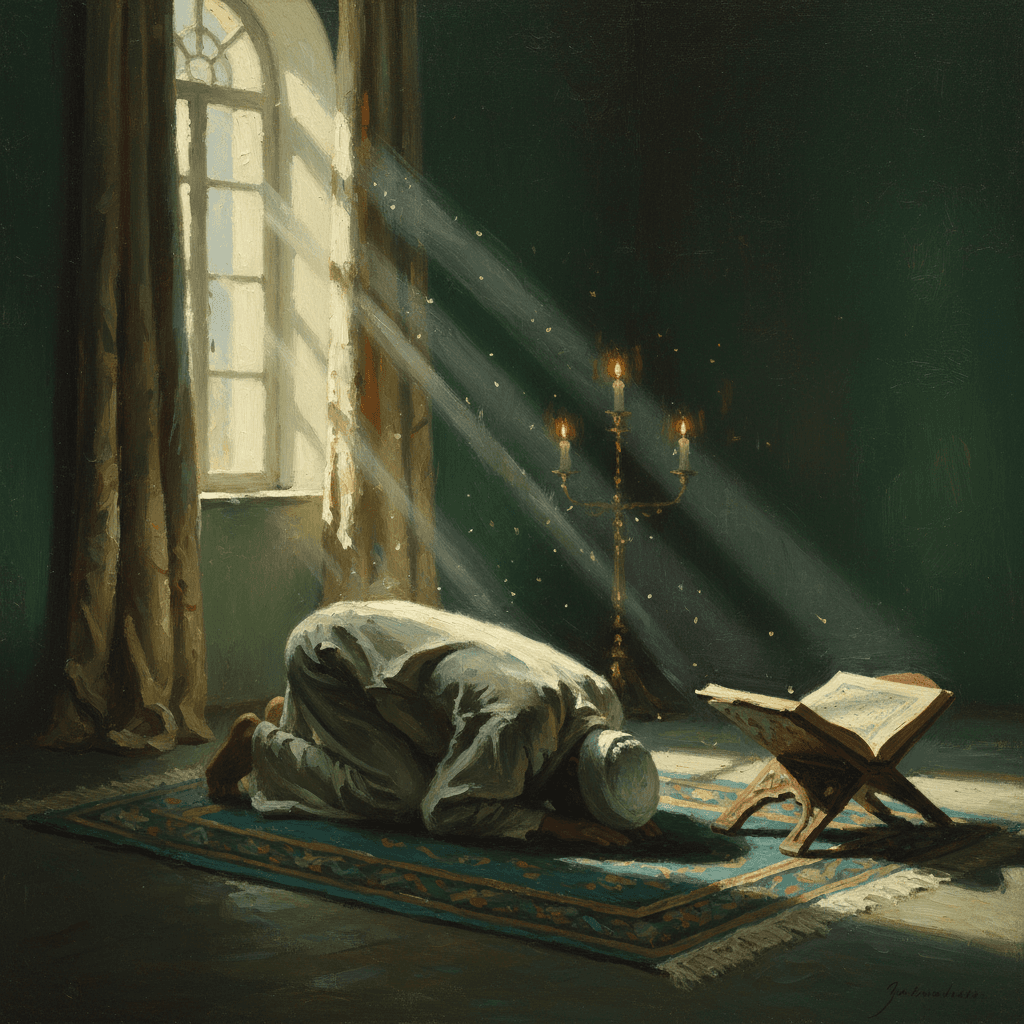
You have probably tried to quit before. Maybe many times. You made a promise to Allah, lasted a few days or weeks, then slipped. And the shame of the relapse felt worse than the habit itself — which is exactly what the nafs wants. It uses your guilt to keep you stuck.
Breaking bad habits as a Muslim is not primarily a willpower problem. It is a nafs management problem. And Islam gave us the most complete system for dealing with the nafs that exists. This guide puts that system into practical steps you can start today.
Why This Matters
The Prophet ﷺ defined the strongest person not as the physically powerful but as the one who controls themselves:
لَيْسَ الشَّدِيدُ بِالصُّرَعَةِ إِنَّمَا الشَّدِيدُ الَّذِي يَمْلِكُ نَفْسَهُ عِنْدَ الْغَضَبِ
Laysa al-shadidu bi al-sur'ati, innama al-shadidu alladhi yamliku nafsahu 'inda al-ghadab
"The strong person is not the one who can wrestle others down. The strong person is the one who controls himself when angry."
Self-mastery — dabt al-nafs — is one of the highest virtues in Islam. Every bad habit you break is not just a lifestyle improvement. It is a spiritual victory over the part of you that pulls toward everything Allah warned against. That makes this work among the most important you can do.
Step-by-Step Guide to Breaking Bad Habits Islamically
Step 1 — Name the Habit and Its True Cost
Vague intentions fail. "I want to be better" is not an intention — it is a wish. Before anything else, write down:
- The specific habit you want to break
- When it happens (the trigger: time, place, emotion, person)
- What it costs you spiritually, physically, and relationally
The act of naming the habit explicitly — especially its spiritual cost — activates the conscience in a way that vague discomfort does not. Be honest with yourself in private.
Step 2 — Make Sincere Tawbah
Tawbah is not a formality to check off. It is the turning point — the moment you genuinely reorient your heart toward Allah and away from the behavior. Tawbah has three elements that scholars consistently identify:
- Stop the behavior immediately, not gradually
- Feel genuine remorse — not embarrassment, but actual regret before Allah
- Make a firm intention not to return
Then make dua. The dua for repentance and the dua for forgiveness are starting points. Pour your own words into your sujood. Tell Allah exactly what you are struggling with and what you need.
Step 3 — Identify the Trigger and Remove It
Every bad habit has a trigger: a time, place, emotion, or social context that activates the behavior. Scrolling haram content happens most on the phone in bed at midnight. Gossiping happens most with a specific group of people. Overeating happens in front of certain entertainment.
You cannot fight the trigger in real time — your willpower is lowest exactly when the trigger hits. Instead, change the environment before the trigger arrives:
- Move the phone outside the bedroom before sleep
- Leave the group or change the conversation topic before it goes there
- Do not keep the food in the house if that is the habit
This is called environment design, and it is half the battle.
Step 4 — Replace, Do Not Just Remove
This is the step most people skip — and it is why most attempts fail. Nature abhors a vacuum. If you remove a bad habit without replacing it with something, the nafs simply returns to what it knows.
What does the habit give you? Relief from boredom? A sense of connection? Stimulation? Stress relief? Find the halal version of that outcome:
- Boredom → Dhikr, Quran, exercise
- Social connection → Attend mosque events, call a righteous friend
- Stimulation → Islamic podcasts, beneficial books
- Stress → Dua for ease, physical exercise, proper sleep
The replacement must address the same emotional need, or it will not stick.
Step 5 — Track and Protect Your Streak
Begin tracking. Not to feel superior on good days, but to see the pattern on difficult days. When does the habit try to return? What happened that day? Tracking reveals the cycle — and knowing the cycle is how you interrupt it.
Protect your first three days — they are the hardest. Then protect the first week. After two weeks of consistent replacement behavior, the neurological pathway of the new habit begins to compete with the old one. After 30 days, the new behavior is significantly easier to sustain.
Break the Cycle — Track Your Progress and Build the Habits That Last
DeenBack is built for Muslims fighting the nafs — track your daily good habits, maintain streaks, and use Islamic tools like dhikr and dua to replace what you are leaving behind.


Free download. Premium features available in-app.
Making It Stick — The Habit Science
The Prophet ﷺ said:
خُذُوا مِنَ الأَعْمَالِ مَا تُطِيقُونَ
Khudhu min al-a'mali ma tutiqun
"Take on only as much worship as you can manage consistently."
This is exact. Islam's framework for self-improvement is not the sprint — it is the consistent daily action. Start small. Replace one trigger. Protect one evening. Add dhikr to one waiting moment. Small consistent changes accumulate into lasting transformation. See how to build daily Islamic habits for the broader framework.
Common Mistakes to Avoid
Going cold turkey without a replacement. Works briefly, fails sustainably. The nafs needs something to turn toward, not just something to turn from.
Expecting linear progress. Recovery from any habit is not a straight line. Expect setbacks. What matters is whether you return to tawbah and try again, not whether you fall.
Making your identity about the sin. "I am a person who does X" is the nafs trapping you. Your identity is a Muslim who made a mistake and is returning to Allah. The mistake does not define you — your response to it does.
Not addressing the emotional trigger. Breaking the behavior without addressing what drives it only delays the return. The habit is usually managing an unmet need — identify the need and meet it with something halal.
Common Questions
What if my bad habit involves other people who are not trying to change?
Change your environment as much as possible and limit exposure to the enabling relationship. This is not unkind — it is necessary. The Prophet ﷺ warned that a person follows the religion of their close companions. (Sunan Abi Dawud 4833)
Does making dua count if I keep falling back into the same sin?
Yes. Sincerity in tawbah and dua is not measured by perfection — it is measured by the turning of the heart. Keep asking. Allah loves those who return to Him repeatedly.
How do I know if I have truly made tawbah?
True tawbah is often marked by a changed relationship with the sin — it no longer feels neutral or attractive, but carries a weight of discomfort. It is also marked by increased awareness and intention. You cannot guarantee the acceptance of tawbah, but the Prophet ﷺ taught that if you repent sincerely, Allah accepts it. That assurance is enough to keep going.
The Nafs Is Not Your Enemy Forever
The nafs that pulls you toward bad habits is the same nafs that, when trained, will pull you toward good ones. The goal is not to eliminate desire — it is to redirect it. Islam's framework for this is complete: tawbah, dhikr, environment change, community, and consistent practice.
You have fallen before. You will fall again. But every time you return — every act of tawbah, every attempt at replacement, every day you protect the new habit — you are winning the real battle. Not against people or circumstances, but against the lower self that tries to keep you from what Allah made you for.
Start Your Habit Transformation Today — One Day at a Time
DeenBack gives you the tools to replace bad habits with Islamic ones — dhikr streaks, dua reminders, and daily tracking that make self-improvement a practice rather than a promise.
Free download. Premium features available in-app.
Frequently Asked Questions
How long does it take to break a bad habit as a Muslim?
There is no fixed timeline — the popular '21 days' figure has no scientific basis. Research suggests habit formation takes anywhere from 18 to 254 days depending on the behavior and person. Islamically, what matters is sincere tawbah, consistent replacement behavior, and not giving up after relapse. Progress is nonlinear, and the direction matters more than the speed.
What is the role of tawbah in breaking bad habits?
Tawbah is the foundation, not just a one-time act. Genuine tawbah requires: stopping the sin immediately, sincere remorse, firm intention not to return, and returning to Allah with good deeds. It is not a declaration — it is a turning. For habitual sins, tawbah may need to be renewed multiple times as you rebuild. This is normal and does not diminish its validity.
What if I keep relapsing into the same bad habit?
Relapse is part of the process, not evidence of failure. The Prophet ﷺ said every child of Adam makes mistakes and the best of them are those who repent. Relapse tells you something useful: what triggered the slip, what your weak point is, what environment needs to change. Return to tawbah, update your strategy, and continue.
Can dhikr help break bad habits?
Yes — dhikr occupies the mental space that bad habits fill. Many bad habits are responses to boredom, anxiety, stress, or emptiness. Dhikr addresses the underlying state directly. The Prophet ﷺ taught specific dhikr for anxiety, temptation, and inner struggle. Building a dhikr habit creates a counter-pull that weakens the hold of bad habits over time.
Should I tell others about my bad habit to get accountability?
In Islam, concealing sins is encouraged — do not broadcast what Allah has concealed. However, telling one trusted person (not a public announcement) for the specific purpose of accountability is permitted and can be effective. Choose someone who will support without judging and check in regularly.