
- Published on
Virtues of Dhikr: Why Remembering Allah Changes Everything
- Authors

- Name
- Ahmad
- Role
- Senior Marketing Manager, Islamic education • Deen Back
بِسْمِ اللهِ الرَّحْمٰنِ الرَّحِيْمِ
In the name of God, the Most Gracious, the Most Merciful.
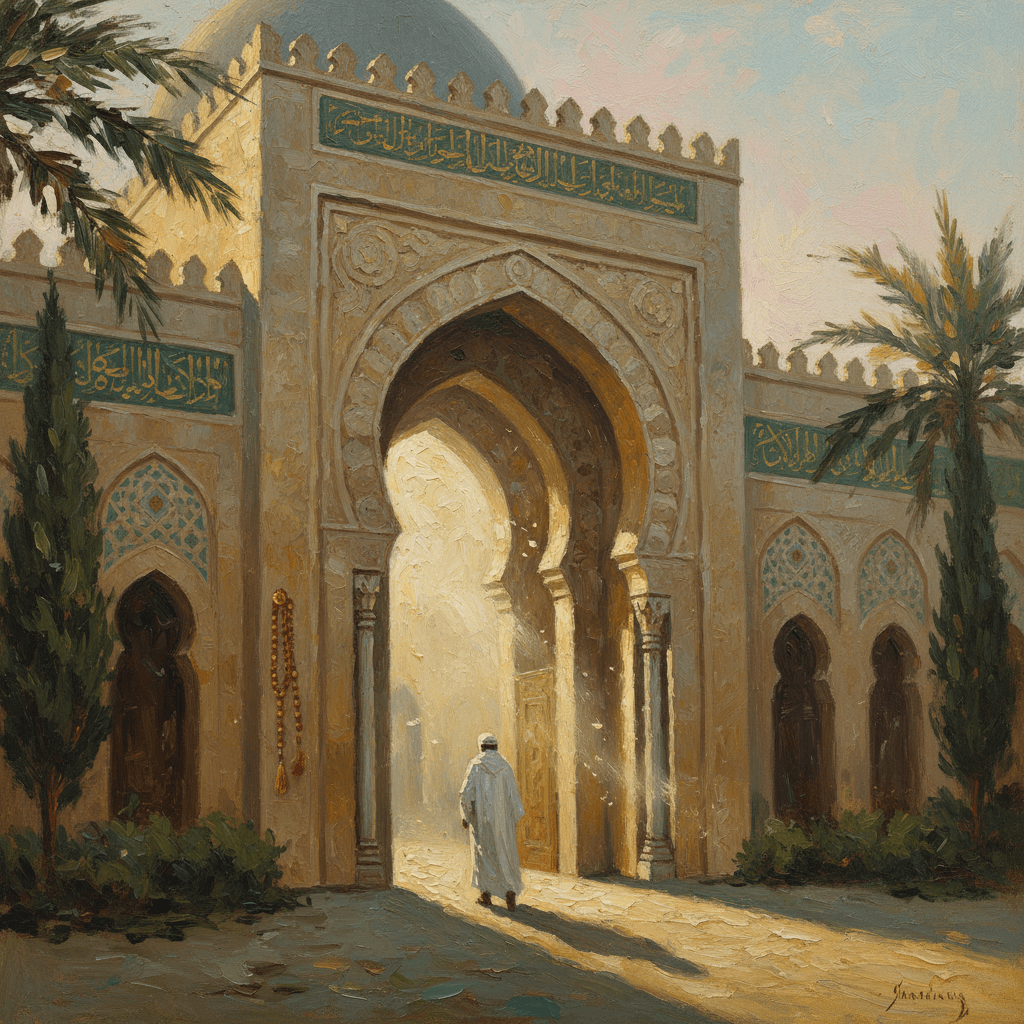
Have You Ever Gone a Full Day Without Remembering Allah?
Most of us have. Not because we wanted to forget, but because the day swallowed us whole. Work, screens, conversations, obligations — and by the time Isha comes, the tongue has barely moved in worship.
That silence has a cost. The Prophet ﷺ drew a stark picture:
مَثَلُ الَّذِي يَذْكُرُ رَبَّهُ وَالَّذِي لَا يَذْكُرُ مَثَلُ الْحَيِّ وَالْمَيِّتِ
"The example of the one who remembers his Lord and the one who does not is like the living and the dead." — (Sahih al-Bukhari 6407)
That is not metaphor. It is a description of two fundamentally different spiritual states — one alive with connection, one cut off. The virtues of dhikr are not small. They may be the single most underused tool in the Muslim's daily life.
What Dhikr Actually Is
ذِكْر (Dhikr) means remembrance — specifically, the active, intentional remembrance of Allah. It includes:
- Tasbeeh: SubhanAllah (سُبْحَانَ اللَّه) — Glory be to Allah
- Tahmeed: Alhamdulillah (الْحَمْدُ لِلَّه) — All praise is for Allah
- Tahleel: La ilaha illallah (لَا إِلَٰهَ إِلَّا اللَّه) — There is no god but Allah
- Takbeer: Allahu Akbar (اللَّهُ أَكْبَرُ) — Allah is the Greatest
- Istighfar: Astaghfirullah (أَسْتَغْفِرُ اللَّه) — I seek forgiveness from Allah
- Recitation of Quran
- The morning and evening adhkar
- Specific duas for daily situations
All of these fall under dhikr. The key element is that the heart and tongue are engaged — not mechanical repetition while your mind is elsewhere.
The Virtues of Dhikr — What the Quran and Sunnah Promise
Dhikr is the closest thing to Allah's company
فَاذْكُرُونِي أَذْكُرْكُمْ وَاشْكُرُوا لِي وَلَا تَكْفُرُونِ
"So remember Me; I will remember you. And be grateful to Me and do not deny Me." — (Surah Al-Baqarah, 2:152)
Think about what that means. When you say SubhanAllah, Allah remembers you in that moment. This is not poetry — it is a divine promise. There is no worship that creates this kind of immediate, personal response.
Dhikr gives the heart its peace
أَلَا بِذِكْرِ اللَّهِ تَطْمَئِنُّ الْقُلُوبُ
"Verily, in the remembrance of Allah do hearts find rest." — (Surah Ar-Ra'd, 13:28)
Not "might find rest." Not "could find rest." Find rest. If you have been chasing inner calm through productivity hacks, social media detoxes, or self-help books — this ayah is saying the answer was always here. The heart was built to find its rest in dhikr.
The weight of dhikr on the scales
كَلِمَتَانِ خَفِيفَتَانِ عَلَى اللِّسَانِ ثَقِيلَتَانِ فِي الْمِيزَانِ حَبِيبَتَانِ إِلَى الرَّحْمَٰنِ سُبْحَانَ اللَّهِ وَبِحَمْدِهِ سُبْحَانَ اللَّهِ الْعَظِيمِ
"Two words are light on the tongue, heavy on the scales, and beloved to the Most Merciful: SubhanAllahi wa bihamdih, SubhanAllahil Azeem." — (Sahih al-Bukhari 6406)
Light on the tongue, heavy on the scales. That ratio — the ease of saying it versus the weight of its reward — is extraordinary. If you are looking for high-return acts of worship that fit inside a busy life, dhikr is it.
Dhikr protects from Shaytan
The moment dhikr leaves a gathering, Shaytan fills the void. This is why the Prophet ﷺ warned against sitting in gatherings with no dhikr — they become a source of regret on the Day of Judgment. Dhikr is not just spiritual enhancement; it is spiritual protection.
Why We Neglect Dhikr
The nafs finds dhikr unexciting. There is no external feedback, no visible progress bar, no dopamine hit. Scrolling social media for five minutes feels more stimulating than saying Astaghfirullah 100 times.
This is precisely why the nafs fights against it. What requires no money, no special location, no timing — and yet yields the highest reward — is the thing the nafs most wants you to skip.
The modern world adds to this: constant noise means we rarely have a quiet moment where dhikr might naturally arise. We have to deliberately create those moments.
How to Build Dhikr Into Your Daily Life
Attach it to your five prayers
The best foundation for consistent dhikr is the tasbih after salah — 33x SubhanAllah, 33x Alhamdulillah, 33x Allahu Akbar, followed by La ilaha illallah wahdahu la shareeka lah. Five prayers a day gives you five anchor points. This alone is around 500 repetitions of the greatest phrases in existence.
See how to make dhikr a daily habit for a complete system.
Learn the morning and evening adhkar
The morning and evening adhkar are structured sets of dhikr with specific counts and rewards. They take 10-15 minutes and function as a spiritual shield for your day. Start with just the morning adhkar for one week. Add the evening adhkar the following week. The best dhikr to say daily breaks down the most powerful phrases with their counts.
Keep dhikr on your tongue during transitions
Walking to your car, waiting for water to boil, standing in a queue — these dead moments add up to hours over a week. Fill them with SubhanAllah, Alhamdulillah, Allahu Akbar. You are not distracted from the task; you are using otherwise empty time.
Track Your Daily Dhikr Counts
DeenBack's dhikr counter helps you hit your daily targets — morning adhkar, tasbih after salah, and personal goals — with streaks that build consistency over time.


Free download. Premium features available in-app.
Use the Tasbih of Fatimah every night
The Prophet ﷺ taught his daughter Fatimah رضي الله عنها this dhikr when she asked for a servant to help with household work: 33x SubhanAllah, 33x Alhamdulillah, 34x Allahu Akbar before sleeping. He told her it was better than a servant. For a tired person at the end of a long day, this dhikr is within reach — it takes under three minutes and carries the Prophet's own recommendation.
Signs of Progress
You know dhikr is taking root in your life when:
- Phrases of dhikr start arising spontaneously — a difficult moment, and SubhanAllah appears without effort
- You find the dead moments in your day feel empty without dhikr — you naturally reach for it
- Anxiety decreases. Not because your circumstances changed, but because your anchor changed
- You begin to feel the difference between a day with consistent dhikr and one without it
This is not imagined. Consistent dhikr restructures how you relate to every moment of the day.
Common Questions
Is group dhikr (halaqahs) permitted? Yes — the Prophet ﷺ described angels who circle the earth looking for gatherings of dhikr. However, the format of those gatherings matters: melodic group chanting with specific rhythms beyond what the Prophet ﷺ practiced enters into an area of scholarly difference. Simple recitation together is unambiguously permitted.
How is dhikr different from dua? Dhikr is remembrance and glorification of Allah — declaring His attributes and praising Him. Dua is supplication — asking Allah for things. Both are forms of worship, but they are distinct. Many of the morning and evening adhkar contain both elements: praise first, then request.
Can I do dhikr silently at work? Absolutely. Silent dhikr of the heart is valid. Moving the tongue silently (without voice) while at a desk, in a meeting, or during any quiet moment is perfectly acceptable.
Does dhikr require wudu? No — dhikr does not require ritual purity. You can do dhikr in any state. The exception is that reciting Quran while in a state of major impurity (janabah) is not permitted according to most scholars.
What is the best dhikr for a beginner? Start with the formula the Prophet ﷺ described as the most beloved to Allah and heaviest on the scales: SubhanAllahi wa bihamdih, SubhanAllahil Azeem. One hundred times after Fajr. It takes less than five minutes and the reward is enormous.
Closing — Your Tongue Has a Default Setting
Every tongue has a default — it moves toward something by habit. For many of us, the default is complaint, small talk, commentary on the dunya. Dhikr changes the default setting.
This does not happen overnight. It happens through daily repetition until Alhamdulillah becomes the first response to good news, and SubhanAllah comes out at moments of awe, and Astaghfirullah rises when you slip.
That is the goal — not scheduled religious activity, but a tongue that has learned where it belongs.
Related: Dhikr after salah — Best dhikr to say daily — How to make dhikr a daily habit — Tasbih after salah
Build Your Dhikr Habit Starting Today
DeenBack helps you set dhikr targets, count your repetitions, and build the daily remembrance habit that keeps your heart alive. Start your streak today.
Free download. Premium features available in-app.
Frequently Asked Questions
What is the most virtuous dhikr?
The Prophet ﷺ said the best dhikr is 'La ilaha illallah' — there is no god but Allah. He also described SubhanAllah, Alhamdulillah, La ilaha illallah, and Allahu Akbar as words beloved to Allah and light on the tongue but heavy on the scales. The tasbih of Fatimah (33x SubhanAllah, 33x Alhamdulillah, 34x Allahu Akbar after each prayer) is also a particularly powerful daily practice.
How many times should I do dhikr each day?
There is no single required minimum, but many scholars recommend the morning and evening adhkar as a foundation — these take 10-15 minutes and include dozens of specific phrases with counts. After each obligatory prayer, the tasbih (33x SubhanAllah, 33x Alhamdulillah, 33x Allahu Akbar) is a well-established sunnah. Starting small — even 100 repetitions of a single phrase — is better than nothing.
Can dhikr be done in your heart without moving your lips?
Yes, dhikr of the heart is valid and has its own reward. However, dhikr that moves the tongue is generally considered more complete, and dhikr that combines the heart and tongue together is the highest form. Silent dhikr of the heart is especially appropriate in settings where speaking aloud would be disruptive.
What are the morning and evening adhkar?
The morning adhkar are specific duas and phrases of dhikr to be said after Fajr, traditionally before sunrise. The evening adhkar are said after Asr, traditionally before Maghrib. They include Ayatul Kursi, the last two verses of Surah Al-Baqarah, and phrases like Bismillahilladhi la yadurru ma'a ismihi shay', Astaghfirullah 3x, and many others. Together they form a protective spiritual shield for your day.
Does dhikr actually reduce anxiety?
Both Islamic tradition and modern research point to the same conclusion: repetitive remembrance of God reduces anxiety. The Quran states directly: 'Verily, in the remembrance of Allah do hearts find rest' (Surah Ar-Ra'd, 13:28). Practically, dhikr interrupts the cycle of anxious thought by giving the mind a focused anchor, slowing the breath, and reconnecting the person to a sense of divine care.