
- Published on
Best Dhikr to Say Daily: Build Your Core Practice From the Sunnah
- Authors

- Name
- Ahmad
- Role
- Senior Marketing Manager, Islamic education • Deen Back
بِسْمِ اللهِ الرَّحْمٰنِ الرَّحِيْمِ
In the name of God, the Most Gracious, the Most Merciful.
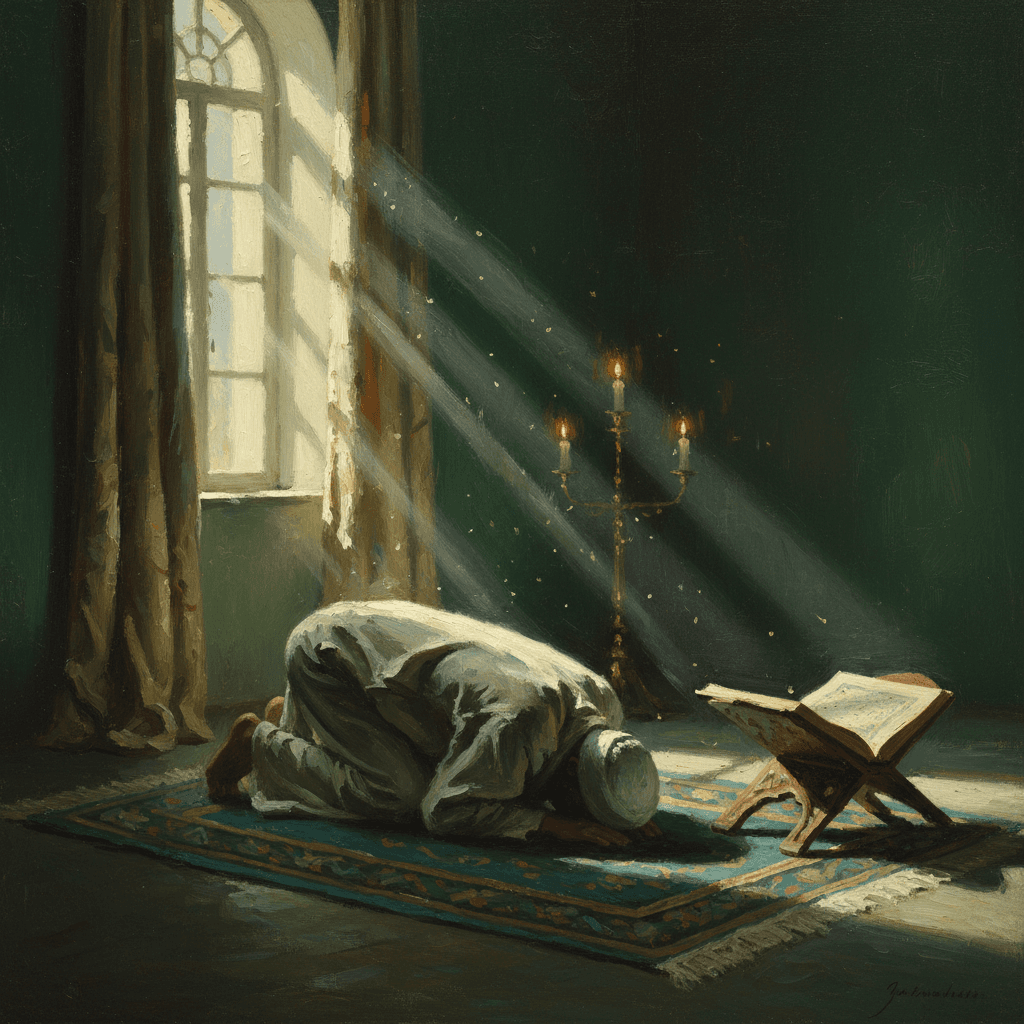
Every Muslim has access to the same daily practice. The Prophet ﷺ taught it in detail. The companions practiced it. It has been preserved in the hadith literature with remarkable specificity.
And yet most Muslims live entire years without a consistent daily dhikr practice.
This is not because they are bad Muslims. It is because nobody gave them a clear, practical system. The dhikr literature can feel overwhelming — dozens of phrases, different counts, different times. Where do you start?
This article gives you the core. Not everything. The things that matter most, in a sequence that works for real life.
The Core Daily Dhikr
After every salah — post-salah tasbih (2-3 minutes per prayer):
سُبْحَانَ اللَّهِ (×33) — الْحَمْدُ لِلَّهِ (×33) — اللَّهُ أَكْبَرُ (×33)
SubhanAllah 33 times — Alhamdulillah 33 times — Allahu Akbar 33 times
Then: La ilaha illallahu wahdahu la sharika lah, lahul mulku wa lahul hamdu wa huwa ala kulli shay'in qadir — once.
— (Sahih Muslim 597)
Done five times a day, this is the backbone of your practice. Nothing else you can do in two minutes per prayer matches the weight of this sequence.
After Fajr — La ilaha illallah wahdahu 100 times (4 minutes):
لَا إِلَهَ إِلَّا اللَّهُ وَحْدَهُ لَا شَرِيكَ لَهُ، لَهُ الْمُلْكُ وَلَهُ الْحَمْدُ وَهُوَ عَلَى كُلِّ شَيْءٍ قَدِيرٌ
La ilaha illallahu wahdahu la sharika lah, lahul mulku wa lahul hamdu, wa huwa ala kulli shay'in qadir
— 100 times, best done after the post-Fajr tasbih, before leaving the prayer mat.
— (Sahih Bukhari 3293 — equal to freeing 10 slaves, 100 hasanat written, 100 sins erased, Shaytan protection for the day)
Throughout the day — SubhanAllah wa bihamdihi 100 times (3-5 minutes total):
سُبْحَانَ اللَّهِ وَبِحَمْدِهِ
SubhanAllah wa bihamdihi
— 100 times spread throughout the day. Sins forgiven even if like foam of the sea. (Sahih Bukhari 6405)
Throughout the day — Astaghfirullah 70-100 times:
أَسْتَغْفِرُ اللَّهَ
Astaghfirullah — "I seek forgiveness from Allah."
— The Prophet's personal daily practice. (Sahih Bukhari 6307)
Morning and evening — Sayyid al-Istighfar once each:
اللَّهُمَّ أَنْتَ رَبِّي لَا إِلَهَ إِلَّا أَنْتَ...
Sayyid al-Istighfar (the full forgiveness supplication) — once after Fajr, once after Maghrib. (Sahih Bukhari 6306 — whoever says it with conviction and dies that day is of the people of Jannah)
Morning and evening — Ayatul Kursi, 3 Quls (2-3 minutes each session):
Ayatul Kursi once, then Al-Ikhlas/Al-Falaq/An-Nas three times each. This forms the protection core of the morning and evening adhkar. (Sahih Bukhari 5010)
When: Morning session (after Fajr): 10 minutes. Evening session (after Maghrib): 5 minutes. Scattered through the day: 5-10 minutes of idle time converted to dhikr.
The Story Behind the Daily Practice
The Quran says: "Remember Allah much" (Quran 33:41). The Prophet was asked: "What is the best deed?" His answer varied by context, but consistently returned to zikr — the remembrance of Allah.
Ibn al-Qayyim wrote in Al-Wabil al-Sayyib that dhikr is the heart's food. A body without food weakens and eventually dies. A heart without dhikr undergoes the same process — but spiritually. This is not metaphor. The lethargy, the spiritual emptiness, the feeling that worship is hollow: these are symptoms of a heart that is not being fed.
The structure of the daily dhikr practice in the Sunnah is not arbitrary. Morning adhkar functions like a shield before the day begins. Post-salah dhikr ensures regular touchpoints of remembrance throughout the day. Evening adhkar closes the day consciously. The scattered practices (Astaghfirullah, SubhanAllah wa bihamdihi) maintain baseline awareness between the structured sessions.
Together they create what scholars call dawam al-dhikr — the continuous state of remembrance that the Quran associates with the people of taqwa.
How to Build the Practice Gradually
Do not try to implement everything at once. The nafs and the schedule will both resist, and the whole thing collapses.
Week 1: Add post-salah tasbih after every prayer. Just the 33/33/33+1. Nothing else. This alone puts you ahead of most Muslims in their dhikr practice.
Week 2: Add Sayyid al-Istighfar once after Fajr. Twenty seconds. Memorize it over the weekend.
Week 3: Add the La ilaha illallah formula 100 times after Fajr. This is four minutes on the prayer mat before you stand up.
Week 4: Add the morning adhkar protection set (Ayatul Kursi + 3 Quls). Add SubhanAllah wa bihamdihi 100 times through the day.
Week 5+: Evening adhkar after Maghrib. At this point you have a complete daily practice.
Build Your Daily Dhikr Practice Week by Week
DeenBack tracks each element of your daily dhikr — post-salah tasbih, morning adhkar, evening adhkar, and your 100-times practice — so you can see your progress clearly.


Free download. Premium features available in-app.
Related Dhikr Resources
For specific areas of the practice, the articles on dhikr after salah and dhikr to say 100 times a day go deeper on those specific elements. For the morning routine specifically, how to do morning adhkar is a complete guide. If anxiety is your primary motivation for building a dhikr practice, best dhikr for anxiety addresses that directly.
For understanding the deeper significance of SubhanAllah specifically, benefits of saying subhanallah is a useful companion.
Common Questions
What if I miss a day? Start again the next day. Missing one day does not erase previous consistency, and it does not mean starting from zero. The streak is motivating but the practice is the goal. Miss a day; return the next.
Should I say dhikr silently or out loud? Both are narrated. Out loud can help focus; silently suits situations where speaking is not possible or would disturb others. The quality of attention matters more than volume.
Does dhikr during work count? Yes. Dhikr during routine work is explicitly mentioned in Islamic literature as valid and valuable. Some scholars describe it as one of the best uses of time — you are doing something necessary for dunya while simultaneously building your akhirah.
Am I just going through the motions if I do not feel anything? The feeling develops with practice. Start with the tongue. Be consistent. After several weeks of daily practice, most people describe a noticeable shift in how their day feels and how present they are during the dhikr. The feeling is the fruit; the practice is the tree.
The Practice That Builds the Heart
You cannot manufacture spiritual connection through willpower. But you can build the structure that lets connection develop.
The daily dhikr practice is that structure. It is not the destination — it is the daily turning of the heart toward the destination. Done consistently, it changes the baseline orientation of your inner life. You begin to think differently. You begin to respond differently. The world looks different when your heart is regularly returned to Allah throughout the day.
This is what the Prophet ﷺ was building with his personal dhikr practice — not just reward on the scales, but a heart permanently oriented toward its Lord.
Build it one week at a time.
Your Daily Dhikr Practice, All in One Place
DeenBack tracks your morning adhkar, evening adhkar, post-salah dhikr, and daily formulas — your complete Sunnah dhikr practice, visible and consistent.
Free download. Premium features available in-app.
Frequently Asked Questions
What is the best dhikr to say every day?
The most impactful daily dhikr include: Sayyid al-Istighfar once morning and evening, La ilaha illallah wahdahu la sharika lah 100x after Fajr, SubhanAllah wa bihamdihi 100x daily, and the morning/evening adhkar set after Fajr and Maghrib. Together these cover forgiveness, reward, protection, and gratitude.
How much time does a complete daily dhikr practice take?
A core practice takes about 15-20 minutes per day total: 10 minutes for morning adhkar after Fajr, 5 minutes for evening adhkar after Maghrib, plus scattered dhikr throughout the day (in the car, walking, waiting). The full practice including 100-time formulas is under 30 minutes per day.
What did the Prophet say every single day?
The Prophet consistently said: Sayyid al-Istighfar morning and evening, post-salah dhikr after each prayer (33/33/34), Ayatul Kursi morning and evening, the 3 Quls three times morning and evening, and Astaghfirullah throughout the day (70-100 times). These form the core of the daily Sunnah dhikr practice.
Is it better to say a little dhikr consistently or a lot occasionally?
The Prophet was explicit: 'The most beloved deeds to Allah are the most consistent, even if they are small.' (Sahih Bukhari 6464). Ten dhikr every day for a year is worth more spiritually than 100 dhikr once a month. Consistency is the highest variable in the dhikr equation.
What is the single most important dhikr phrase to learn first?
If starting from zero, Astaghfirullah is the best entry point — it is short, universally understood, and teaches the foundational orientation of the servant toward Allah. From there, SubhanAllah wa bihamdihi 100 times is the next most impactful practice to add, given its extraordinary documented reward.