
- Published on
How to Make Dhikr a Daily Habit — A Practical Muslim Guide
- Authors

- Name
- Ahmad
- Role
- Senior Marketing Manager, Islamic education • Deen Back
بِسْمِ اللهِ الرَّحْمٰنِ الرَّحِيْمِ
In the name of God, the Most Gracious, the Most Merciful.
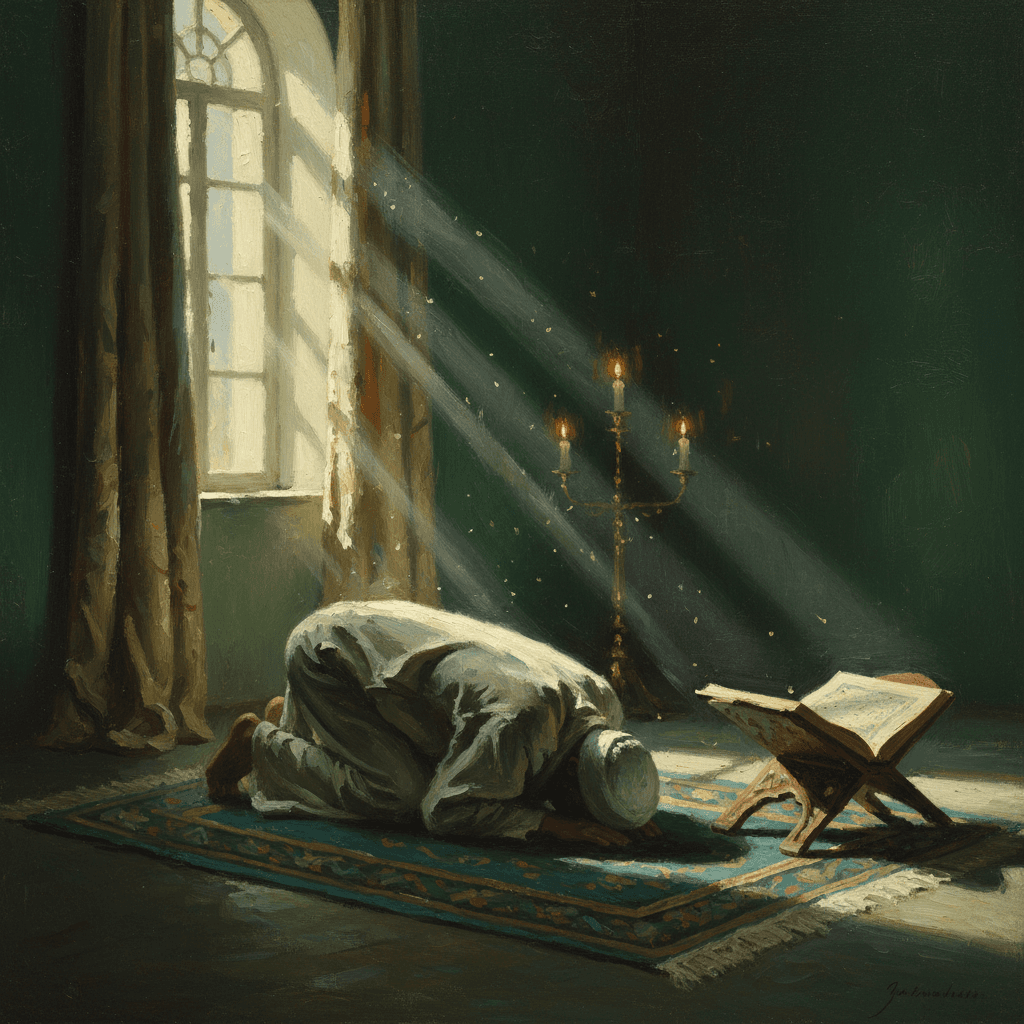
You know dhikr matters. You have felt it — those moments when the words actually land in the heart and something settles. SubhanAllah. Alhamdulillah. Allahu Akbar. Not as sounds but as meaning.
The problem is not knowing dhikr. The problem is that you do it occasionally, and you know it should be daily, and somehow the days keep passing with inconsistent practice.
This is the gap we are addressing. Not what dhikr is — you know that. How to make it actually happen, every day, regardless of how busy or spiritually empty you feel.
Why Consistent Dhikr Is the Foundational Habit
The Quran gives dhikr a status unlike any other act:
يَا أَيُّهَا الَّذِينَ آمَنُوا اذْكُرُوا اللَّهَ ذِكْرًا كَثِيرًا
Ya ayyuhal-ladhina amanu udh-kurul-laha dhikran kathira
"O you who believe, remember Allah with much remembrance."
— (Surah Al-Ahzab, 33:41)
Dhikran kathiran — much remembrance. Not occasional. Not when you feel spiritual. Much, and constant.
The Prophet ﷺ said:
"The example of the one who remembers his Lord and the one who does not remember his Lord is like the example of the living and the dead." — (Sahih Bukhari 6407, sunnah.com)
This is not hyperbole. A life without dhikr is described as spiritual death. A life with dhikr is spiritual life. Building a daily dhikr habit is building the foundation of everything else.
Step-by-Step Guide to Building the Dhikr Habit
Step 1: Anchor dhikr to your salah — do not invent new time slots. The most common reason dhikr remains inconsistent is that people try to add it as a separate schedule item. Instead, attach it to something you already do. The Prophet ﷺ taught specific dhikr after every salah. Start there.
After every salah:
- Say SubhanAllah 33 times
- Say Alhamdulillah 33 times
- Say Allahu Akbar 33 times (or 34 times)
- Then: La ilaha illallahu wahdahu la sharika lahu, lahul-mulku wa lahul-hamdu wa huwa 'ala kulli shayin qadir
This takes under three minutes and covers five sessions daily. You already have the trigger (salah). The dhikr is the new habit riding on it.
Step 2: Add morning adhkar as a five-minute post-Fajr ritual. Before your phone. Before the news. Before anything. Sit after Fajr and say:
- Ayatul Kursi (Surah Al-Baqarah, 2:255)
- Surah Al-Ikhlas, Al-Falaq, and An-Nas (three times each)
- Hasbiyallahu la ilaha illa huwa alayhi tawakkaltu (7 times) — for protection through the day
- Allahumma bika asbahna... — the morning dua
If you have a morning adhkar book, use it. If not, these core ones take five minutes and cover the essential Sunnah.
Step 3: Add evening adhkar after Maghrib. Mirror the morning routine after Maghrib. This creates the bookends that the Quran refers to — remembrance at morning and evening.
Step 4: Fill dead time with background dhikr. Car commute. Walking between buildings. Waiting for something to load. Washing dishes. These are all times when your mouth is free and your mind has spare capacity. Fill them with SubhanAllah wa bihamdihi, La ilaha illallah, or Astaghfirullah.
The Prophet ﷺ said:
"Whoever says 'SubhanAllahi wa bihamdihi' one hundred times in a day will have his sins removed even if they were like the foam of the sea." — (Sahih Bukhari 6405, sunnah.com)
A hundred times SubhanAllahi wa bihamdihi takes about three minutes. You likely have that scattered across your day already.
Step 5: Use a dhikr counter for accountability. The Companions used date stones. Some used their fingers. Modern Muslims use tasbih beads or apps. Whatever helps you track. Seeing "34/100 SubhanAllah" on a counter creates the accountability that invisible internal counting does not. Tracking is Sunnah — do not skip it.
Step 6: Add one extended dhikr session per week. On Friday or whenever your schedule permits, add a longer session of dhikr — fifteen to thirty minutes. This could be after Jummah, after Fajr on a day off, or in the evening. Extended sessions build depth and create peak spiritual experiences that sustain you through the week.
Making It Stick — The Habit Science
The Prophet ﷺ said consistent small deeds are more beloved to Allah than large occasional ones. This is not just spiritual wisdom — it is how habits work neurologically.
Three principles:
Habit stacking. Every dhikr session you have designed above is attached to an existing behavior — after salah, post-Fajr, post-Maghrib. This is the most reliable habit formation technique. You do not need to remember to do dhikr. You just need to remember to not rush away from salah.
Environmental design. Put a tasbih counter on your prayer mat. Keep a small copy of the morning adhkar next to your Quran. Reduce the friction between "I should do dhikr" and actually doing it.
Recovery plan. When you miss a session — and you will — the rule is simple: resume at the next opportunity. Did not do morning adhkar after Fajr? Do them when you remember. Skipped the evening? Resume tomorrow. Never let one miss become two.
Track Your Dhikr Streak Today
DeenBack includes built-in dhikr counters, morning and evening adhkar trackers, and daily streak logs — making the remembrance of Allah a measurable, growable daily habit.


Free download. Premium features available in-app.
Common Mistakes That Keep Dhikr Inconsistent
Saying dhikr without meaning. Mechanical repetition has some value, but when the words are pure motor habit with no engagement of the heart, the benefit is greatly diminished. Take one second before each phrase to touch the meaning. SubhanAllah — Allah is free from all imperfection. Feel that before you say it.
Starting with too much. You decide to do 300 SubhanAllah, 300 Alhamdulillah, 300 Allahu Akbar daily. By day three you have not done it and you feel like a failure. Start with the 33-33-33 after salah. Build from there.
Treating it as optional. Dhikr is not optional for a Muslim. The Quran commands much remembrance. The question is not whether to do it but when and how. Treat missing your dhikr with the same seriousness as missing a meal — not with guilt, but with the understanding that something important needs to happen.
Not tracking. An invisible habit dies. If you cannot tell whether you did your morning adhkar today or yesterday, your practice has no ground. Use any tracking method — paper, app, physical counter.
Common Questions
Is dhikr in the heart or on the tongue? Both are valid forms of dhikr. Verbal dhikr is generally considered more complete because it engages both the heart and the tongue. Silent dhikr (moving the lips without sound) is a middle option. Pure mental dhikr (no movement) also counts according to most scholars, especially in situations where speaking is not appropriate.
Can I do dhikr while doing other things? Yes — and this is one of dhikr's unique qualities. You can make dhikr while walking, driving (without endangering yourself), cooking, or doing any halal activity that does not require full mental concentration. The Sunnah encourages filling gaps of time with remembrance.
Do I have to be in wudu for dhikr? No. Dhikr does not require wudu. You can say dhikr at any time, in any state of physical purity. The only exception is that touching the Quran requires wudu, but reciting Quran from memory does not require it according to the majority view.
How do I know if my dhikr is sincere? Signs of sincere dhikr include: the words feel different than meaningless repetition; you find moments of genuine calm or connection; your behavior over time shifts toward more patience, gratitude, and tawakkul. Sincerity is not a feeling you manufacture — it grows through consistent practice. Keep going.
The One Practice That Changes Everything
There is no magic dhikr that fixes everything. But there is one practice that fundamentally changes your day when you protect it: the morning adhkar after Fajr.
Muslims who are consistent with this single practice — five minutes, every day, before the phone — report the most dramatic long-term changes in their spiritual state. The rest of the day feels different. The impulse to react to the world with anxiety or anger diminishes. The natural inclination to say "Alhamdulillah" and "SubhanAllah" through the day increases.
Start there. See how to do morning adhkar for the full routine, how to make istighfar a daily habit for a complementary practice, and how to build a daily ibadah routine to fit dhikr into the full structure of your day.
Your Daily Dhikr Habit Starts Now
DeenBack tracks your morning adhkar, tasbih counts, and daily dhikr streaks — giving the most important habit in your spiritual life the structure it deserves.
Free download. Premium features available in-app.
Frequently Asked Questions
How do I make dhikr a daily habit?
Attach dhikr to something you already do daily — specifically to your five prayers. Morning adhkar after Fajr, evening adhkar after Maghrib, tasbih after every salah. Start with just these three anchors and build from there. Consistency beats quantity.
What is the best dhikr to say daily?
The Prophet recommended SubhanAllah, Alhamdulillah, and Allahu Akbar (33 times each after every salah), plus Ayatul Kursi after each prayer. The morning and evening adhkar are also essential. For the heart, La ilaha illallah is described as the best dhikr in multiple hadith.
How many times should I do dhikr per day?
There is no fixed minimum beyond what the Sunnah specifies after salah (33 SubhanAllah, 33 Alhamdulillah, 33-34 Allahu Akbar). The principle is consistency. Ten minutes of focused dhikr daily is more valuable than an hour of dhikr once a week.
Can I do dhikr in my head or does it need to be spoken?
Both are valid. The Prophet sometimes did dhikr silently and sometimes aloud. Spoken dhikr involves the tongue and is generally considered more powerful. Silent dhikr (in the heart) is valid and counts as remembrance. The best approach is to start with verbal dhikr and let it become internal over time.
What time is best for dhikr?
The Quran specifies morning and evening as the primary dhikr times (Surah Al-Ahzab, 33:41-42). After each of the five prayers is another established time. The last third of the night is also particularly elevated. The practical answer: after Fajr and after Maghrib are the most sustainable starting points.