
- Published on
Signs of Allah's Love: How to Know Allah Loves You
- Authors

- Name
- Ahmad
- Role
- Senior Marketing Manager, Islamic education • Deen Back
بِسْمِ اللهِ الرَّحْمٰنِ الرَّحِيْمِ
In the name of God, the Most Gracious, the Most Merciful.
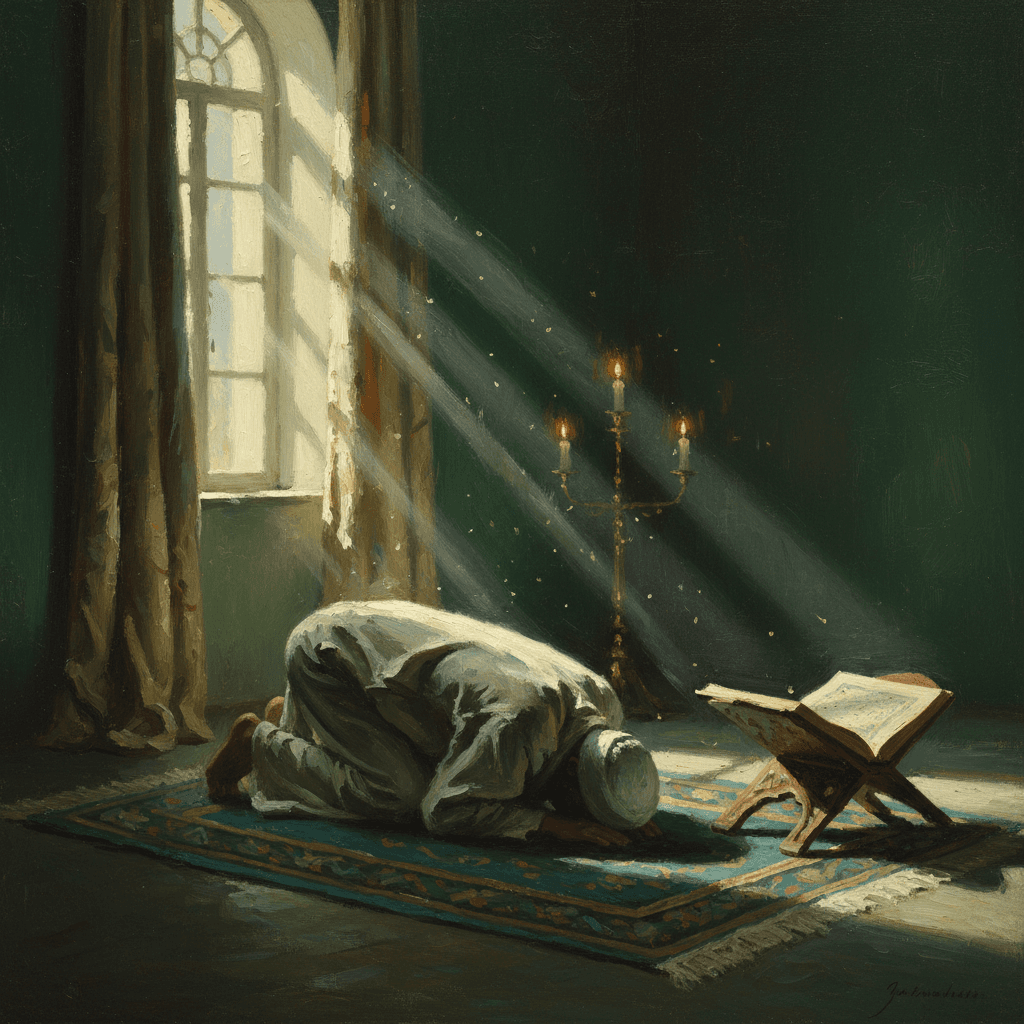
There are moments when you wonder, quietly and honestly: Does Allah actually love me?
Not in a crisis of faith, necessarily — just in the ordinary darkness of a Tuesday when your prayers feel rote, your struggles feel unseen, and you wonder whether any of this is landing.
The Quran and Sunnah do not leave this question unanswered. They give you signs. Not guarantees — only Allah knows the state of a soul — but real, recognisable indicators that He is near, that He cares, and that the relationship is real.
What It Actually Means for Allah to Love You
The Arabic word is mahabbah — love, affection, closeness. When the Quran and Sunnah speak of Allah loving a servant, it means He draws them near, elevates their status, covers their faults, and directs goodness toward them.
The foundational verse: "Say, if you love Allah, follow me, and Allah will love you and forgive your sins." (Surah Al-Imran, 3:31) This is the most direct statement in the Quran about the pathway to Allah's love. It is not about feelings or intensity of emotion — it is about following the Prophet ﷺ in practice.
The Quran also names specific attributes of those Allah loves:
- Those who are patient (as-sabirun) — (3:146)
- Those who are just (al-muqsitun) — (5:42)
- Those who trust in Allah (al-mutawakkilun) — (3:159)
- Those who purify themselves (al-mutatahhirun) — (9:108)
- Those who do good beautifully (al-muhsinun) — (2:195)
- Those who repent constantly (at-tawwabun) — (2:222)
These are not descriptions of perfect saints. They are descriptions of orientations — what a person is trying to do, even imperfectly. See what is taqwa and what is ikhlas for a deeper look at two of the key qualities.
Signs Allah May Love You
The Sunnah gives specific signs that scholars have compiled as indicators of divine love. These are not definitive verdicts — they are patterns the Prophet ﷺ and the righteous have identified.
You Are Being Tested
The most counterintuitive sign. The Prophet ﷺ said: "The greatest reward comes with the greatest trial. When Allah loves a people He tests them. Whoever accepts that (the trial) wins His pleasure, and whoever is upset loses His pleasure." (Ibn Majah 4031)
Difficulty is not rejection. It can be refinement. The believer who endures trials with patience and without abandoning their deen is often described in hadith as beloved to Allah.
Righteous People Feel Good Around You
The Prophet ﷺ said: "When Allah loves a servant, He calls Jibril and says: 'I love so-and-so, so love him.' And Jibril loves him. Then Jibril calls out in the heavens: 'Allah loves so-and-so, so love him.' So the inhabitants of the heavens love him. Then acceptance is placed for him in the earth." (Sahih Muslim 2637)
When you notice that people of good character are drawn to you — when righteous Muslims feel at ease around you — this is reported as a reflection of divine love being placed in the hearts of creation toward you.
You Find Ease in Worship
When salah feels like relief rather than obligation — when you wake for Tahajjud not out of guilt but out of genuine longing — this is a sign. The heart that loves Allah finds ease in His remembrance; the heart distant from Him finds it burdensome.
The Prophet ﷺ said: "The coolness of my eyes has been placed in salah." When prayer starts to feel like that for you — a place you want to be, not a task to complete — this is a sign of closeness.
You Return to Allah Quickly After Falling
Nobody maintains perfection. The question is what you do after you sin. The believer beloved to Allah does not spiral in guilt or give up — they return quickly. The speed of return, the lack of arrogance that would prevent tawbah, is itself a grace.
Why Modern Muslims Struggle to Feel This Love
Feeling loved by Allah is harder when:
You are transactional in your relationship with Him — praying only when you need something, disappearing when things are well. A relationship of convenience does not breed a sense of genuine love.
You are distracted constantly. The constant noise of social media, entertainment, and endless stimulation creates a layer of spiritual static between you and any genuine experience of divine closeness. Building khushu in salah is partly about clearing that static.
You have not yet forgiven yourself for something. Many Muslims feel unworthy of Allah's love because they cannot believe He has actually forgiven them. This is a misunderstanding of the nature of Allah's mercy. See how to feel close to Allah again for a direct path through this.
How to Cultivate Allah's Love in Daily Life
The path the Quran gives is following the Prophet ﷺ. That is the framework. In practice, this means:
Follow the Sunnah in small things deliberately. Not as performance, but as a daily act of love. Saying Bismillah before eating, greeting with Assalamu Alaikum, using the right hand — these are acts of following the Prophet, and the Quran directly links this to earning Allah's love.
Make tawbah consistently, not just in crisis. The Quran says Allah loves at-tawwabun — those who are perpetually repentant. Not because they sin constantly, but because they maintain a posture of constant turning back. Daily istighfar is not a sign of great sinfulness — it is a sign of this orientation.
Build a consistent worship routine and stick to it in small ways. The Prophet ﷺ said: "The most beloved deeds to Allah are those done consistently, even if small." (Sahih Bukhari 6465) A habit of daily dhikr, even ten minutes, practiced every day, demonstrates love more than occasional bursts of intense worship.
Give for the sake of Allah, not the thanks. Sadaqah done quietly, when no one will know, is one of the purest expressions of doing something for Allah alone. The Quran's description of those who give secretly is a description of people seeking only divine pleasure.
Build the Daily Habits That Draw You Closer
DeenBack tracks your daily worship, dhikr, and Quran so you can build the consistent, small acts of love that the Prophet ﷺ said Allah loves most.


Free download. Premium features available in-app.
Signs You Are Growing Closer to Allah
- You feel bothered by sin in a way you did not before — not crushed, but genuinely wanting better
- Worship feels lighter and more natural than it once did
- You catch yourself thinking of Allah during your day without deliberate effort
- Gratitude comes more naturally during ease, and patience comes more quickly during hardship
- You genuinely want what Allah has for you more than what you have planned for yourself
These are not dramatic mystical experiences. They are subtle shifts in orientation that build over months and years of consistent practice.
Common Questions
Can I love Allah without feeling emotional about it? Yes. Islamic scholars distinguish between the emotion of love and the choice of love. Many believers love Allah as an act of will — choosing Him consistently, following His commands — without experiencing intense emotional states. The emotion may come; but the love is real even without it.
What does it mean when I do not feel Allah's presence? It may mean your sensory experience of the divine is dulled — by sin, by distraction, or simply by the natural fluctuation of iman that every believer experiences. The Prophet's Companions experienced this too; they called it moments when iman goes up and down. The practice continues regardless of the feeling.
Is there a specific dua to ask for Allah's love? Yes. The Prophet ﷺ taught: "Allahumma inni as'aluka hubbak, wa hubba man yuhibbuk, wa hubb al-'amali alladhi yuballighuni hubbak" — "O Allah, I ask You for Your love, the love of those who love You, and love of deeds that bring me closer to Your love." (Tirmidhi 3490)
The Relationship Is Real
Allah's love is not a metaphor or a theological abstraction. The Quran describes it as something that moves through the heavens, reaches into the earth, and lands as acceptance in the hearts of people.
You do not earn it by being perfect. You approach it by following, by repenting, by returning, by persisting in the small consistent acts of a believer.
The signs are there. Look for them. Ask for the love by name. And build the daily habits that make the relationship real.
Make Your Love for Allah Something You Can See
DeenBack helps you build the daily worship habits that turn your love for Allah from intention into consistent practice — one streak at a time.
Free download. Premium features available in-app.
Frequently Asked Questions
How do I know if Allah loves me?
The Prophet ﷺ said that when Allah loves a servant, He tests them (Ibn Majah 4031). Other signs include: ease in performing acts of worship, love from righteous people, feeling drawn back to Allah after every sin, the ability to be patient in hardship, and genuine gratitude in times of blessing.
Does Allah love everyone?
Allah's mercy encompasses all of creation, but His specific love — the love that draws a person near to Him — is earned through following the Prophet ﷺ. 'Say, if you love Allah, follow me, and Allah will love you.' (Quran 3:31) This is the pathway the Quran gives.
What actions cause Allah's love?
The Quran and Sunnah mention: tawbah (sincere repentance), taharah (purification), tawakkul (trust in Allah), qist (justice and fairness), ihsan (doing good beautifully), and following the Sunnah of the Prophet ﷺ. Allah also loves consistency in small deeds.
Is a trial a sign that Allah hates me?
The opposite. The Prophet ﷺ said: 'The greatest reward comes with the greatest trial. When Allah loves a people He tests them.' (Ibn Majah 4031) A prolonged trial, met with patience, is more likely a sign of divine attention than divine rejection.