
- Published on
How to Feel Close to Allah Again When You Feel Spiritually Disconnected
- Authors

- Name
- Ahmad
- Role
- Senior Marketing Manager, Islamic education • Deen Back
بِسْمِ اللهِ الرَّحْمٰنِ الرَّحِيْمِ
In the name of God, the Most Gracious, the Most Merciful.
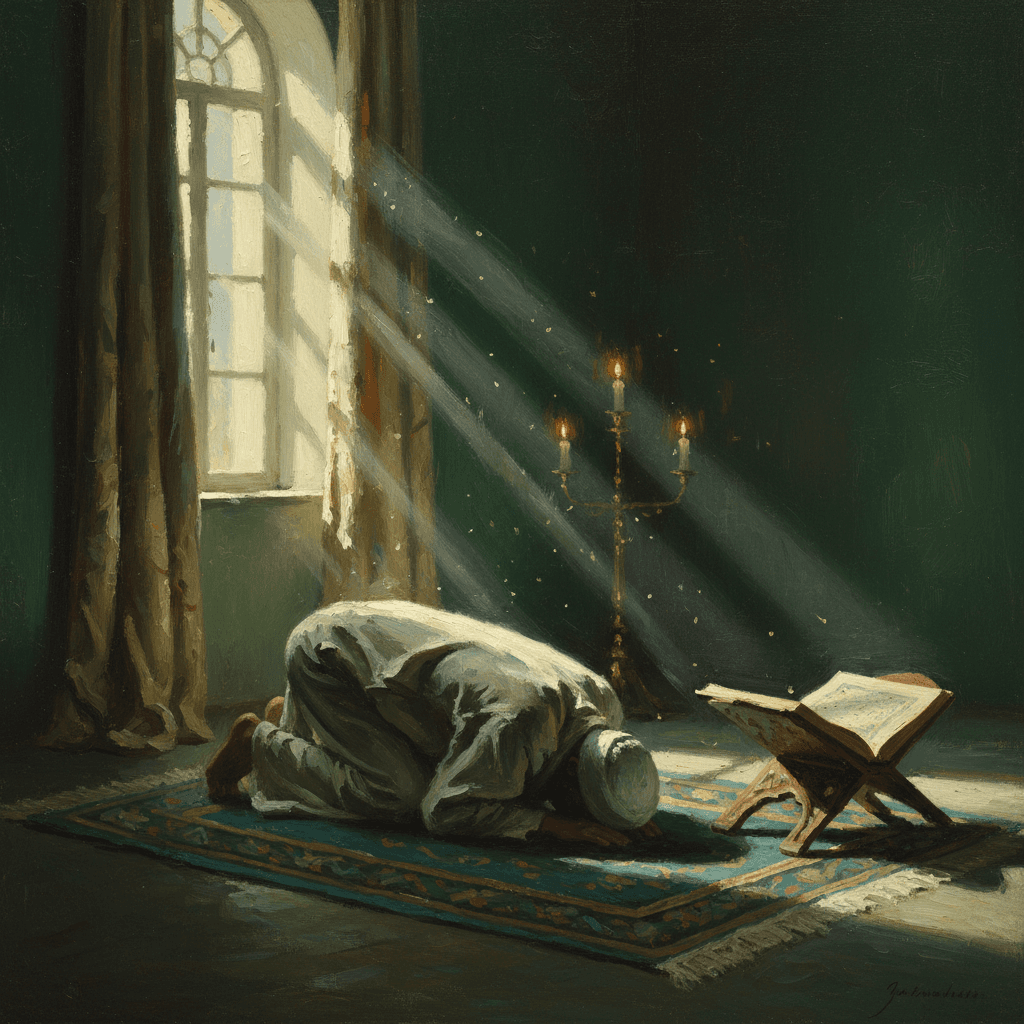
There is a specific kind of pain that comes when the Quran no longer moves you. When salah feels like a checkbox rather than a meeting. When you say Astaghfirullah and nothing inside responds. When you used to cry in prayer and now you cannot remember the last time you felt anything.
You have not lost your faith. But you have drifted. And the distance you feel is real.
The good news: this is one of the most commonly described spiritual experiences in Islamic tradition, and it has a known path back.
Why This Happens — Understanding the Gap
The gap between you and Allah is always on your side, never on His. The Prophet ﷺ said in a hadith qudsi:
مَنْ تَقَرَّبَ إِلَيَّ شِبْرًا تَقَرَّبْتُ إِلَيْهِ ذِرَاعًا وَمَنْ تَقَرَّبَ إِلَيَّ ذِرَاعًا تَقَرَّبْتُ إِلَيْهِ بَاعًا وَمَنْ أَتَانِي يَمْشِي أَتَيْتُهُ هَرْوَلَةً
"Whoever draws close to Me by a hand span, I draw close to him by a cubit. Whoever draws close to Me by a cubit, I draw close to him by an arm span. If he comes to Me walking, I come to him running."
— (Sahih Bukhari 7536, sunnah.com)
Allah runs. When you walk toward Him. The distance you feel is not evidence of His absence — it is evidence of a drift in your direction.
The drift happens through accumulation: missed prayers, small sins that became habits, social media that replaced dhikr, relationships that pulled away from Allah rather than toward Him, busyness that crowded out the spiritual. No single thing usually does it — it is the weight of many small things over time.
Ibn al-Qayyim described the heart as something that gets sick through sins the way a body gets sick through toxins — gradually, often without a precise moment you can point to.
Step 1: Name the Drift Without Shame
Before you can return, you need to see clearly what happened. Not to punish yourself — but to understand what needs to change.
Sit with honesty for five minutes. What has been different? When did the prayers start feeling empty? What habits have you built that you know are pulling you away? What have you stopped doing that used to keep you connected — Quran in the morning, dhikr after prayer, tahajjud?
This honest assessment is not self-flagellation. It is muhasabah (مُحَاسَبَة) — the prophetic practice of self-accounting. The person who does not diagnose cannot treat.
Step 2: Make the Turn Visible With a Single Act
The return to Allah does not require a dramatic overhaul. It requires one sincere act, done now, that makes the direction of movement clear — first to yourself, then to Allah.
The best single act: two rakats of sincere prayer, right now, wherever you are. Not tahajjud at 3am (though that comes later) — just two rakats of sincere salah that are not fard. Say in your heart before you stand: "Ya Allah, I am coming back. I am turning toward You. Please meet me." Then pray slowly, with as much presence as you can bring.
This is the beginning. The movement is everything. Allah said He runs toward those who walk toward Him — you do not need to sprint. You need to walk.
Step 3: Make Tawbah — and Mean It
Spiritual distance is almost always partially connected to unresolved sin — not necessarily major sins, but sin that has been sitting without sincere repentance. The Prophet ﷺ said:
إِنَّ الْعَبْدَ إِذَا أَخْطَأَ خَطِيئَةً نُكِتَتْ فِي قَلْبِهِ نُكْتَةٌ سَوْدَاءُ
"When a servant commits a sin, a black dot is placed on his heart."
— (Tirmidhi 3334, Ibn Majah 4244, sunnah.com)
The accumulated black dots are what you are feeling as distance. Sincere repentance removes them. See how to repent for major sins in Islam for the complete framework. The practical minimum: stop the sin you most need to stop, say the Sayyidul Istighfar with your heart present, and resolve not to return. Repeat daily.
Step 4: Rebuild the Quran Connection
The Prophet ﷺ said:
خَيْرُكُمْ مَنْ تَعَلَّمَ الْقُرْآنَ وَعَلَّمَهُ
"The best of you are those who learn the Quran and teach it."
— (Sahih Bukhari 5027, sunnah.com)
But for the spiritually disconnected person, the challenge with Quran is that it can feel like words without weight. The solution is not to read more — it is to read slower.
Take one short surah. Read it in Arabic. Read the translation. Sit with one verse. Ask: what does this mean for my life right now? This is tadabbur — reflection — and it is what makes Quran recitation into an experience rather than a recitation exercise.
Even five minutes of this daily does more for spiritual reconnection than thirty minutes of mechanical reading.
Step 5: Start Tahajjud — Even Once
Ibn al-Qayyim called tahajjud the fastest path to Allah. This is not hyperbole — it is based on both revelation and observation.
Allah says about those close to Him:
تَتَجَافَى جُنُوبُهُمْ عَنِ الْمَضَاجِعِ يَدْعُونَ رَبَّهُمْ خَوْفًا وَطَمَعًا
"Their sides forsake their beds, calling upon their Lord in fear and hope."
— (Surah As-Sajdah, 32:16)
You do not need to pray eight rakats. Start with two. Set an alarm for 20 minutes before Fajr. Stand up. Pray two rakats in the dark and the quiet. Make dua in your own words about your spiritual state. Do this once and see what it does to your Fajr.
The night prayer is where the intimacy with Allah lives. Those who taste it understand why scholars say it transforms everything else.
Rebuild Your Connection — Track Every Step Back to Allah
DeenBack helps you track tahajjud, daily istighfar, Quran reading, and dhikr — the exact practices that rebuild spiritual closeness with Allah. Start with one practice and build from there.


Free download. Premium features available in-app.
Step 6: Change the Environment That Created the Distance
The drift toward spiritual emptiness almost always has environmental contributors: what you consume (media, music, social media), who you spend time with, how you start and end your days. Returning to Allah requires not just adding new practices — it requires removing some of what replaced them.
This is where the nafs resists most. It is willing to add a few extra prayers. It is less willing to give up the habits that caused the drift. But lasting spiritual reconnection requires both.
Be honest about what has taken the place of Allah in your daily life and make one change — not ten, not a complete overhaul — just one change that makes space for more of Allah and less of what displaced Him.
Common Questions
What if I have been disconnected for years — is it too late?
No. The door of tawbah is open until the moment of death. People who have been spiritually absent for a decade and then return describe the reconnection as even sweeter than the original — there is something powerful about the prodigal return. The hadith about Allah running toward those who walk toward Him has no time limit.
I feel like a hypocrite performing prayers I do not feel — should I stop until I feel sincere?
No — this inverts the process. Sincerity is not a prerequisite for action; action cultivates sincerity. Start praying even when it feels hollow. Ask Allah in the prayer to give you khushu. Feeling follows action in the spiritual life; waiting for feeling before acting is a trap of the nafs.
Should I tell someone about my spiritual state?
Having an accountability partner or a friend who is further along in their spiritual life is a prophetic model. The Prophet emphasized community and righteous companions. However, you do not need to disclose your private sins or struggles. Saying "I've been disconnected and I'm trying to get back — can we do something together like Quran or attending a halaqah?" is sufficient.
The Promise That Makes This Possible
Allah says:
قُلْ يَا عِبَادِيَ الَّذِينَ أَسْرَفُوا عَلَى أَنفُسِهِمْ لَا تَقْنَطُوا مِن رَّحْمَةِ اللَّهِ إِنَّ اللَّهَ يَغْفِرُ الذُّنُوبَ جَمِيعًا
"Say: O My servants who have transgressed against themselves — do not despair of the mercy of Allah. Indeed, Allah forgives all sins."
— (Surah Az-Zumar, 39:53)
This verse was revealed, scholars note, specifically for the person who has sinned so much that they believe they are beyond mercy. The assurance is complete: all sins forgiven for the one who returns. The condition is the return.
You are already doing it. You asked the question. You are reading this. That is movement. Now make the movement visible with an act — two rakats, an Astaghfirullah said slowly, five minutes with the Quran — and watch what Allah does in response.
For context on the spiritual state of the nafs and how it works against you, see what is nafs in Islam. And for the complete astaghfirullah practice that will become your daily anchor, see astaghfirullah meaning.
Your Spiritual Comeback Starts Today — One Practice at a Time
DeenBack is built for exactly this moment — when you are coming back to Allah and need structure, reminders, and consistency to make it stick. Track your daily practices, build your dhikr habit, and let the closeness grow.
Free download. Premium features available in-app.
Frequently Asked Questions
What does it mean to feel distant from Allah?
Spiritual distance is described in Islamic tradition as a state where worship feels mechanical, the heart does not respond to Quran or dhikr, sins feel lighter, and the awareness of Allah recedes from daily consciousness. Scholars call the hardened heart 'qasawat al-qalb' — and it is considered a normal consequence of accumulating sins without repentance, or of prolonged spiritual neglect. It is not permanent and has known remedies.
Does feeling distant from Allah mean He has abandoned you?
No. The famous hadith qudsi states: 'If My servant comes closer to Me by a hand span, I come closer to him by a cubit. If he comes to Me by a cubit, I come to him by an arm span. If he comes to Me walking, I come to him running.' (Bukhari 7536) Allah never abandons. The distance is always on the human side — and the moment you turn, He responds. The feeling of distance is real; the theological reality is that the door is always open.
How long does it take to feel close to Allah again?
There is no fixed timeline. Some people feel a shift within days of sincere practice. For others who have been spiritually disconnected for years, the rebuilding takes longer. The key is starting — and not measuring progress by feeling alone. Feeling follows action in the spiritual life. Begin the practices consistently, and the feeling follows. Do not wait for the feeling to start the practice.
Can I feel close to Allah even if I am still sinning?
Closeness to Allah and ongoing sin can coexist in stages — the person in tawbah who is actively working to change is in a different position than the person with no awareness of their sin. The goal is movement: start returning even while still imperfect. Allah responds to the turning, not the perfection. Stop what you can stop, seek forgiveness for the rest, and keep moving.
What is the fastest way to feel close to Allah again?
Scholars often point to sincere dua — specifically supplicating to Allah about the disconnection itself, asking Him to soften your heart and draw you close. Ibn Kathir and Ibn al-Qayyim both identify prayer (tahajjud in particular) as the single most powerful practice for restoring spiritual intimacy with Allah. Combined with istighfar and Quran recitation with reflection, these three form the core of every documented spiritual revival.