
- Published on
What Is Fitnah in Islam? Understanding Trials and How to Navigate Them
- Authors

- Name
- Ahmad
- Role
- Senior Marketing Manager, Islamic education • Deen Back
بِسْمِ اللهِ الرَّحْمٰنِ الرَّحِيْمِ
In the name of God, the Most Gracious, the Most Merciful.
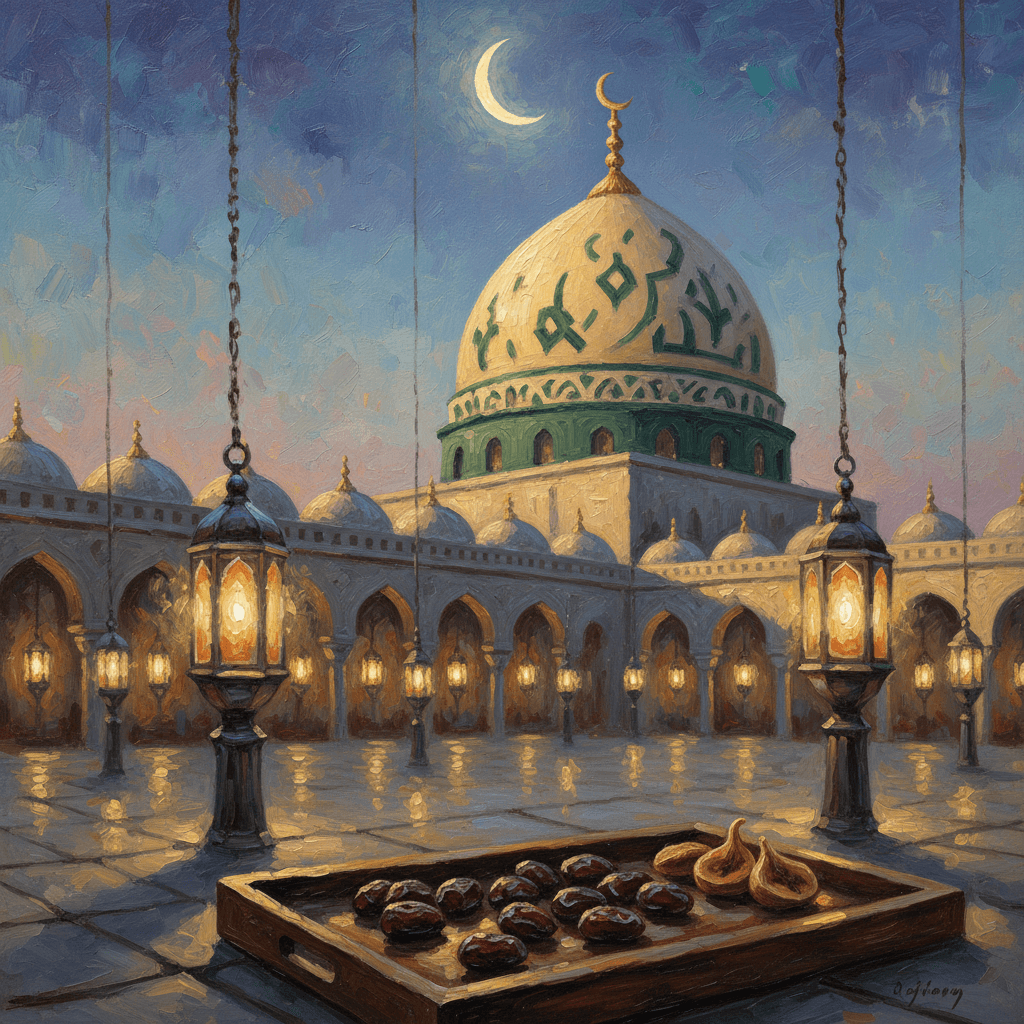
There is a moment most Muslims know well. Life is going reasonably well — you are praying, trying to stay on track — and then something shifts. A job loss. A relationship that falls apart. A temptation that keeps coming back no matter how many times you push it away.
That feeling of being tested, of being in the fire rather than beside it, is what the Quran calls fitnah.
Understanding what fitnah actually is changes how you respond to it. Instead of seeing it as a sign that Allah has abandoned you, you begin to see it as something else entirely.
What Fitnah Actually Means
The word fitnah (فِتْنَة) appears over sixty times in the Quran, and it carries several meanings depending on context. At its core, the Arabic root f-t-n refers to the process of burning gold in a furnace to test its purity. That is not a coincidence. Fitnah, at its heart, is a test that reveals what you are actually made of.
In the Quran, fitnah is used in three distinct ways:
Divine trials. Allah says: "We will surely test you with something of fear and hunger and a loss of wealth and lives and fruits, but give good tidings to the patient." (Surah Al-Baqarah, 2:155) Here fitnah means the unavoidable trials of this life — illness, loss, poverty, fear.
Internal temptation. "And know that your wealth and your children are but a fitnah and that Allah has with Him a great reward." (Surah Al-Anfal, 8:28) The things you love most are also your greatest tests.
Social and political strife. The Prophet ﷺ warned about end-times fitnah — civil conflict among Muslims, confusion about truth, and widespread moral chaos. He said: "There will be trials (fitan) like pieces of dark night." (Sahih Muslim 118)
What ties these together is the element of a test that demands a response. You do not get to be a bystander in your own fitnah.
Why Modern Muslims Struggle With Fitnah
The particular challenge of living in this era is that fitnah comes from every direction at once.
Social media is an engineered fitnah machine — designed to trigger envy (hasad), pride (kibr), and comparison. Every scroll is a soft test of whether you are content with what Allah gave you or quietly resentful.
Financial pressure is a fitnah too. When halal options seem limited and haram money flows easily, the nafs starts bargaining. "Just this once." "It does not really count." "Everyone else is doing it."
The sheer volume of information creates its own fitnah — confusion about what is actually true, what scholars actually say, and who to trust. The Prophet ﷺ described this as a time when "the truthful one is not believed and the liar is believed." (Musnad Ahmad)
None of this means you are uniquely weak for struggling. It means you are living in the time the Prophet warned about, which is precisely when sabr and tawakkul matter most.
How to Stand Firm in Fitnah
Navigating fitnah is not about finding a perfect strategy — it is about building the habits that hold you steady when the test arrives.
Anchor to the Quran daily. The Prophet ﷺ said: "Hold fast to the Quran — whoever holds to it is saved and whoever neglects it is lost." (Musnad Ahmad) This is not vague advice. Fifteen minutes of Quran after Fajr is a specific, repeatable act that builds spiritual resistance over time.
Make dua for a firm heart. One of the most important duas from the Sunnah is: Ya muqallibal qulub, thabbit qalbi 'ala dinik — "O Turner of hearts, keep my heart firm on Your deen." The Prophet ﷺ used to say this frequently, showing that even he (peace be upon him) was not exempt from needing this protection.
For a full collection of supplications for these moments, see dua for protection from fitna — these are the exact words the Sunnah offers for times of trial.
Guard your environment. You cannot fight fitnah alone. The Quran calls believers to "hold onto the rope of Allah together" (3:103). Practically, this means choosing your social circle deliberately. See how to stay consistent in your deen for specific community-building strategies.
Practice sabr as a skill, not just an attitude. True sabr is not passive waiting — it is active restraint of the tongue, emotions, and actions during hardship. The Quran links sabr to a specific reward: "Indeed, Allah is with the patient." (2:153) Understanding sabr deeply changes how you hold yourself during fitnah. See what is sabr in Islam for a practical breakdown.
Build taqwa as your filter. Taqwa — God-consciousness — functions like a spiritual immune system. When fitnah comes, a person with taqwa filters choices through "does this please Allah?" before the nafs can argue otherwise. See what is taqwa in Islam to understand how to build it actively.
Build Consistency Through Every Trial
DeenBack tracks your daily Quran, dhikr, and dua streaks — so that when fitnah hits, your habits are already strong enough to carry you through.


Free download. Premium features available in-app.
Signs You Are Growing Through Fitnah
Progress through a trial does not always look like peace. Sometimes it looks like:
- You still feel the temptation, but you choose differently than you would have six months ago
- You return to salah faster after a lapse, rather than abandoning it for weeks
- You notice the argument that the nafs is making and you name it, rather than just acting on it
- You seek forgiveness quickly after a mistake, rather than spiraling in shame
- You find yourself genuinely grateful for the trial, even while it is difficult
The gold does not enjoy the fire. But it emerges purer.
Common Questions About Fitnah
Does fitnah mean I did something wrong? Not at all. The Prophet ﷺ — the most righteous human who ever lived — experienced profound and sustained fitnah. The death of his children, the betrayal of allies, exile, and battle. Fitnah is not a punishment for the believer; it is a promotion.
What is the difference between fitnah and sin? A fitnah is a test — the trial itself. A sin is a wrong choice made during the trial. The fitnah itself is not sinful; how you respond to it can be. Being tempted by something is not the same as doing it.
How long does a fitnah last? The Quran does not give a timeline, because the purpose is not to outlast the trial but to be transformed by it. What the Quran does promise is relief: "With every hardship comes ease." (94:5) Not after — with. The ease is already present within the hardship.
What should I do when I feel like I am failing a trial? Make tawbah immediately and return to your daily practices. The Prophet ﷺ said: "All of the children of Adam sin, and the best of those who sin are those who repent." (Ibn Majah 4251) The ability to keep returning is itself a sign of a living faith.
The Fire That Purifies
Fitnah is not the end of your story. It is the part of the story that determines who you become.
Every prophet faced fitnah. Every companion faced fitnah. Every righteous person you have ever respected went through a furnace that tested whether their faith was gold or gilded.
You are in that furnace now. And the question fitnah is asking is the same question it has always asked: Do you believe? Not as an abstract idea — but when it costs something.
Stay Consistent When Trials Hit Hardest
DeenBack helps you maintain your daily worship habits through life's most difficult seasons — because those are exactly the moments when consistency matters most.
Free download. Premium features available in-app.
Frequently Asked Questions
What does fitnah mean in Islam?
Fitnah (فِتْنَة) means trial, temptation, or tribulation. In the Quran it describes divine tests, internal temptations, and social strife. The root meaning — burning gold in fire to test its purity — captures exactly how fitnah reveals and refines a person.
Is fitnah always a punishment?
No. The Prophet ﷺ said the greatest trials are given to the Prophets, then those nearest them in righteousness (Ibn Majah 4023). Fitnah endured with faith purifies and elevates the believer. It only becomes destructive when it pulls a person away from Allah.
How do I protect myself from fitnah?
Stay attached to daily prayer and Quran, limit exposure to environments that weaken your iman, maintain righteous company, and make consistent dua for steadfastness — particularly asking Allah for a firm heart during times of trial.
What is the fitnah of the dunya?
Wealth, children, status, and comfort can all distract you from Allah. The Quran (8:28) explicitly calls wealth and children a fitnah. The test is whether these blessings draw you toward gratitude or deeper heedlessness.