
- Published on
Signs of a Hypocrite in Islam: The Nifaq Muslims Fear in Themselves
- Authors

- Name
- Ahmad
- Role
- Senior Marketing Manager, Islamic education • Deen Back
بِسْمِ اللهِ الرَّحْمٰنِ الرَّحِيْمِ
In the name of God, the Most Gracious, the Most Merciful.
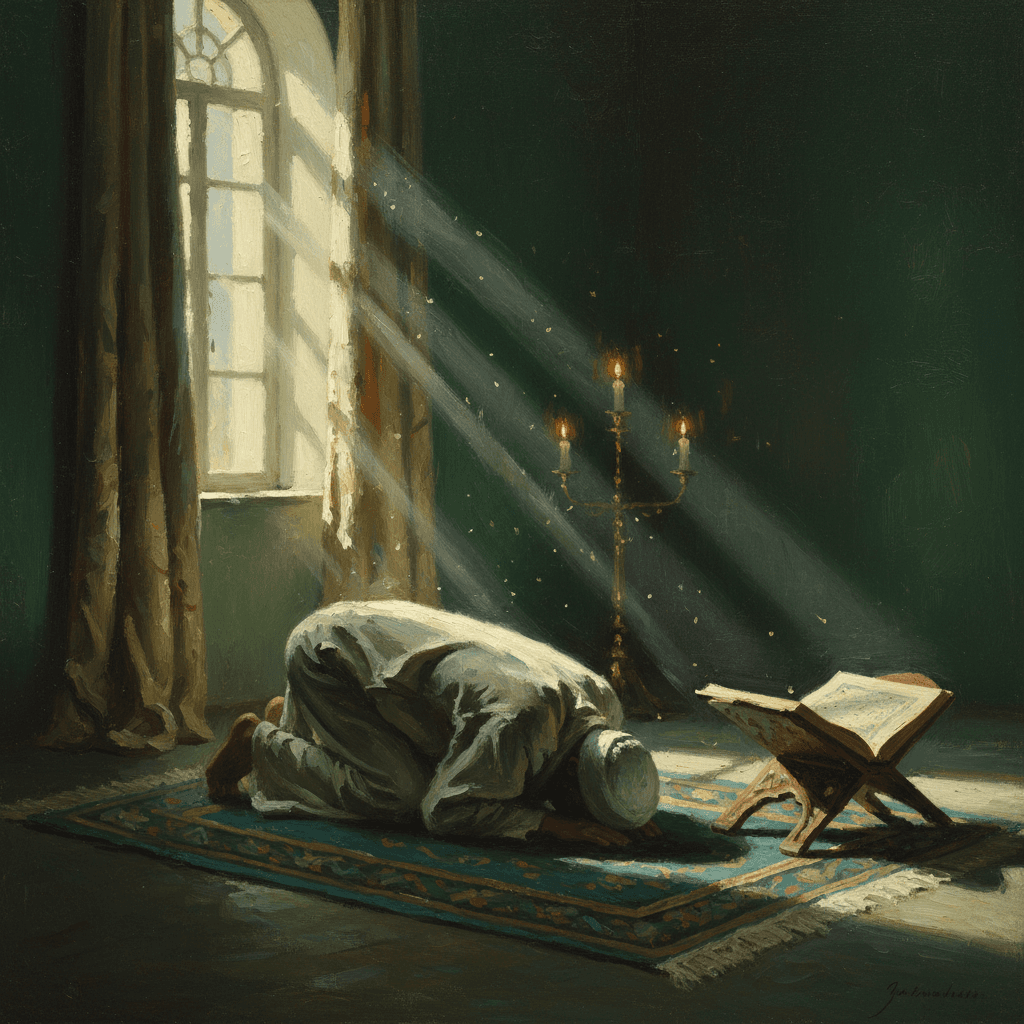
There is a fear that serious Muslims carry quietly: What if my faith is not real? What if I am performing belief without actually living it?
This fear has a name in Islamic tradition: the fear of nifaq — hypocrisy. And the remarkable thing is that this fear itself is a sign of genuine faith. A true hypocrite does not fear being a hypocrite; they are comfortable with the performance.
Understanding what the signs of hypocrisy actually are — and more importantly, how to audit your own heart — is one of the most important acts of self-improvement a Muslim can undertake.
What Nifaq Actually Means
Nifaq (نِفَاق) comes from the Arabic word for a tunnel with two openings — something that appears one way from the outside and is entirely different inside.
Islamic scholars distinguish between two levels:
Nifaq al-i'tiqadi — belief-level hypocrisy: concealing disbelief while appearing Muslim. This is the nifaq the Quran addresses extensively, particularly in Surah Al-Munafiqun. This level takes a person outside the fold of Islam entirely and is the most severe form.
Nifaq al-'amali — practical hypocrisy: having the beliefs of a Muslim but behaving in ways that the Prophet ﷺ associated with the hypocrites. This is a serious sin but does not take a person out of faith. It is also what most of us actually face in our daily lives.
The distinction matters enormously. When Muslims fear nifaq, they are usually confronting the second category — the gap between who they claim to be and how they actually behave. This is a gap that can be closed through sincere effort and tawbah.
The Three Signs From the Prophet
The most direct statement on the signs of hypocrisy in the Sunnah is unmistakable:
آيَةُ الْمُنَافِقِ ثَلَاثٌ إِذَا حَدَّثَ كَذَبَ وَإِذَا وَعَدَ أَخْلَفَ وَإِذَا اؤْتُمِنَ خَانَ
Ayatu-l-munafiq thalath: idha haddatha kadhab, wa idha wa'ada akhlaf, wa idha-tumina khan
"The signs of the hypocrite are three: when he speaks, he lies; when he makes a promise, he breaks it; and when he is trusted, he betrays that trust."
— (Sahih Bukhari 33, Sahih Muslim 59)
A second narration adds: "Even if he fasts and prays and claims to be a Muslim." (Sahih Muslim 59) This is the chilling line — that these behaviours can coexist with external worship. The ritual shell can be intact while the inside is hollow.
The three signs in practice:
Lying. Not just major lies — habitual, convenient, reflexive dishonesty. The person who routinely shades the truth, who exaggerates to impress, who withholds what others need to know. The nafs tells us "it is just a small lie." But patterns begin with small choices.
Breaking promises. Making commitments without intending to keep them, or consistently failing to follow through even when the intention was genuine. The person who says "I will be there" but never shows up, who says "I will stop" but never does. This destroys trust — and trust is the bedrock of every relationship.
Betraying trust. When someone trusts you with money, a secret, a responsibility, or a confidence — using that trust against them. This can be financial (mishandling what was entrusted) or relational (betraying a confidence, misrepresenting someone, failing in a duty).
Why This Is Hard to Look at Honestly
The nafs has a sophisticated defence system against self-examination.
When you lie, it reframes it as "simplifying the truth" or "not hurting someone's feelings." When you break promises, it says "circumstances changed" or "they understood." When you betray a trust, it says "I had good reasons."
The spiritual work of guarding against nifaq is the work of removing these rationalisations — of seeing your own behaviour with the same clarity you would apply to someone else's.
The Companions feared this greatly. Huzayfah ibn al-Yaman رضي الله عنه knew the names of the actual hypocrites from the time of the Prophet ﷺ — and he still feared nifaq for himself. If he feared it, the bar for our own complacency should be low.
How to Guard Your Heart Against Nifaq
Practice muhasabah — daily self-audit. Before sleeping, take five minutes to review: did I lie today? Did I break any promise? Did I betray any trust? Not to punish yourself, but to see clearly. What you cannot see, you cannot fix. For a deep exploration of this practice, see how to purify your heart in Islam and the full explanation of what nifaq is in Islam.
Cultivate ikhlas in small things before large ones. Ikhlas — sincerity — is the antidote to nifaq. If you practise doing small acts of worship genuinely, without any audience, the habit of sincerity builds. See what is ikhlas in Islam for a practical guide.
Take your promises seriously. If you are not sure you can keep something, do not say you will. "I will try" is more honest than "I will." The prophetic practice was to commit only to what was genuinely intended. This is a discipline the nafs resists because it wants flexibility — the freedom to escape commitments.
Address lying as a habit, not just a list of incidents. The person who lies reflexively usually does not think of themselves as a liar — each individual lie felt justified in context. Stopping requires noticing the pattern, not just regretting individual instances. Make truthfulness a value you protect even when it costs something.
Guard against riya (showing off) — the cousin of nifaq. Doing good deeds for human approval rather than Allah is a form of nifaq in action. See what is riya in Islam for how to identify and counter this tendency.
Build Sincerity Through Daily Consistent Practice
DeenBack tracks your private daily worship — the dhikr, the Quran, the dua that nobody sees. Building the unseen habit is the surest guard against nifaq and the clearest sign of ikhlas.


Free download. Premium features available in-app.
Signs You Are Moving Away From Nifaq
- You catch yourself about to lie and choose the harder truth instead
- When you make a commitment, you feel the weight of it — and you take steps to fulfil it
- You are disturbed by inconsistency between your private and public self
- Doing good things in secret feels more satisfying than doing them publicly
- You make tawbah quickly when you fall into one of the three patterns, rather than justifying it
None of these are perfection. They are direction.
Common Questions
Is it nifaq to act differently at the masjid than at home? Not automatically. Everyone code-switches between contexts. The question is whether the difference represents genuine integration or a performance. Being more formal in worship contexts and relaxed at home is normal. Hiding real beliefs and behaviours from the religious community while living an entirely different life is the concerning pattern.
What if I worry constantly that I am a hypocrite — is that itself nifaq? This kind of self-doubt is more likely a sign of genuine iman than of nifaq. A true hypocrite does not worry about being a hypocrite — they are at peace with their performance. The Companions who feared nifaq the most were also those most beloved to the Prophet ﷺ.
How do I repair a broken trust with someone? Acknowledge it clearly and without defensiveness, apologise sincerely, and then do the thing you said you would do. Repeated apologies without changed behaviour are not repair — they are a continuation of the pattern. How to make sincere tawbah includes the relational dimension of repair.
The Interior That Matches the Exterior
The goal is not to become someone who simply better conceals the gap — it is to close the gap.
The Prophet ﷺ said: "Allah does not look at your forms and appearances, but He looks at your hearts and your deeds." (Sahih Muslim 2564) The interior — the actual state of the heart — is what matters. The exterior should be its honest expression, not its mask.
Building ikhlas is daily work. The three signs the Prophet gave are a practical checklist: honest speech, kept promises, trusted conduct. Three behaviours. Three daily choices. A character built one interaction at a time.
Build a Character That Matches Your Faith
DeenBack helps you build the daily habits that make your private self and your public self one and the same — worship that is real, consistent, and unseen by anyone but Allah.
Free download. Premium features available in-app.
Frequently Asked Questions
What are the signs of a hypocrite in Islam?
The Prophet ﷺ said: 'The signs of the hypocrite are three: when he speaks, he lies; when he makes a promise, he breaks it; and when he is trusted, he betrays that trust.' (Sahih Bukhari 33, Sahih Muslim 59) A fourth sign in another narration: when he disputes, he is abusive.
Is every person who sometimes lies a hypocrite?
No. The scholars distinguish between nifaq al-'amali (practical hypocrisy — sinful behaviours) and nifaq al-i'tiqadi (belief-level hypocrisy — concealing disbelief while claiming Islam). The latter is the nifaq that takes a person outside of faith. Most people who struggle with lying, promise-breaking, or trust-betrayal are committing sins, not falling into the level of the munafiq that the Quran condemns.
Why did the Companions fear nifaq?
Because they understood what it meant to hide one thing and present another. Huzayfah ibn al-Yaman, who knew the names of the hypocrites from the Prophet ﷺ, feared nifaq deeply for himself despite being a senior Companion. The fear of nifaq is itself a sign of sincere faith — a hypocrite does not fear nifaq.
How do I protect myself from nifaq?
Regular muhasabah (self-audit) of your intentions: why are you praying, giving, or speaking? Daily istighfar. Cultivating ikhlas — sincerity — in small actions before large ones. And avoiding the habits the Prophet named: lying, breaking promises, and betraying trust, even in small things.