
- Published on
How to Purify Your Heart in Islam: 7 Steps for Tazkiyah al-Nafs
- Authors

- Name
- Ahmad
- Role
- Senior Marketing Manager, Islamic education • Deen Back
بِسْمِ اللهِ الرَّحْمٰنِ الرَّحِيْمِ
In the name of God, the Most Gracious, the Most Merciful.
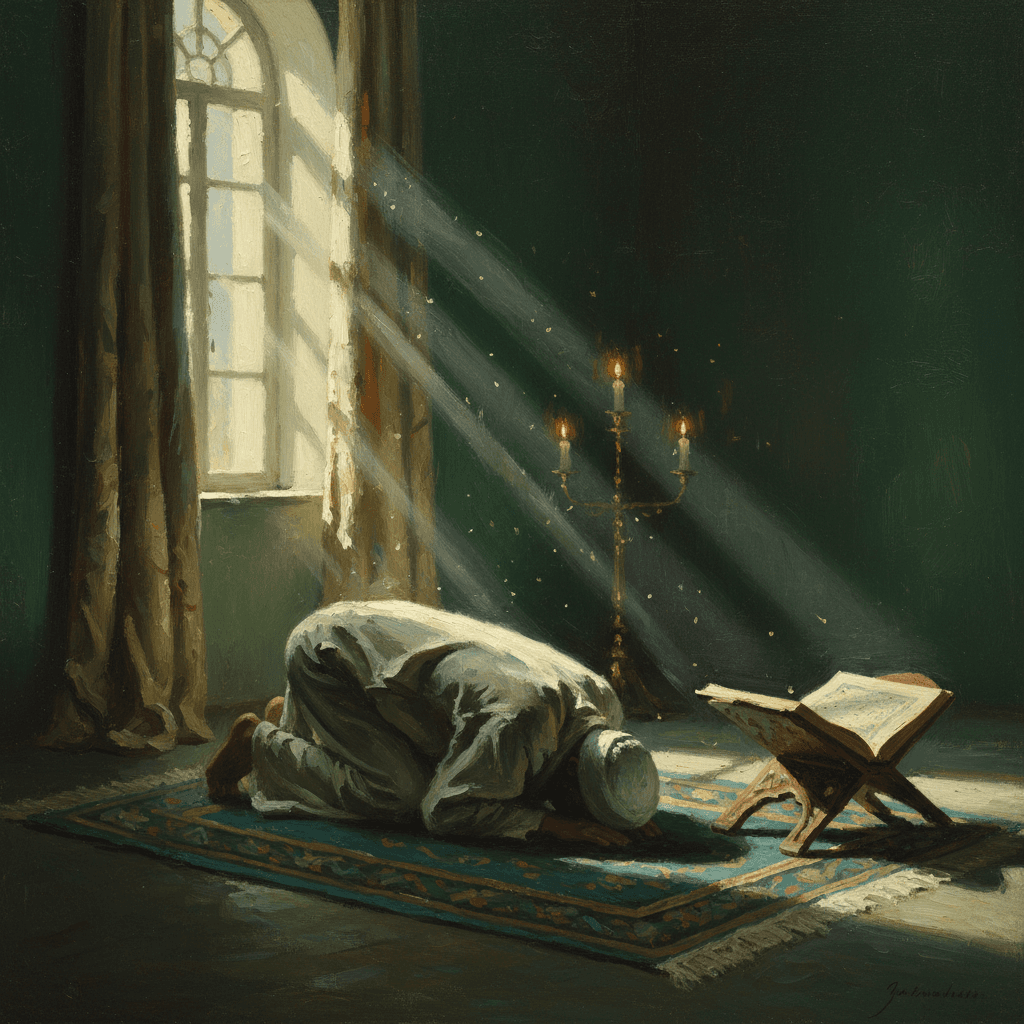
You probably already know what a clean heart feels like. Maybe you have experienced it — briefly, after a powerful khutbah, or at the end of Ramadan, or in a moment of sincere dua in the dark. Everything felt clear. Light. Connected.
And then life came back in, and that clarity dissolved.
The question is not whether you know what a clean heart feels like. It is how to actually build one — not just recover it for a moment, but build it piece by piece until it becomes the default.
Why This Matters
The Prophet ﷺ made the heart the center of everything:
"Truly in the body there is a morsel of flesh, if it be sound, all the body is sound, and if it is corrupted, all the body is corrupted. Truly, it is the heart."
— (Sahih Bukhari 52)
And on the Day of Judgment, the Quran says only one thing matters:
يَوْمَ لَا يَنفَعُ مَالٌ وَلَا بَنُونَ إِلَّا مَنْ أَتَى اللَّهَ بِقَلْبٍ سَلِيمٍ
"The Day when neither wealth nor children will benefit — only the one who comes to Allah with a sound heart."
— (Surah Ash-Shu'ara, 26:88-89)
A qalb salim (sound heart) is the final measure. Everything else — knowledge, deeds, reputation — either supports this goal or it does not.
Step-by-Step Guide to Purifying the Heart
Step 1: Begin With Sincere Tawbah
The heart that has been carrying sin for a long time is like a mirror covered in dust. Tawbah (sincere repentance) is the first cloth.
Tawbah has three conditions: genuine regret for the sin, stopping it immediately, and resolving not to return to it. For sins against other people, add a fourth: restoring what was taken or harmed.
Make this specific. Not a generic "I am sorry for all my sins" but a genuine reckoning with the particular things between you and Allah. See what is tawbah in Islam for the full practice.
Step 2: Build a Daily Muhasabah Practice
Muhasabah (self-accounting) is the practice of examining your day before you sleep. Umar ibn al-Khattab (may Allah be pleased with him) said: "Hold yourself to account before you are held to account."
This does not need to be long. Five minutes before bed:
- What brought me closer to Allah today?
- What took me further from Him?
- What is one specific thing I will do differently tomorrow?
Muhasabah is how you convert experience into growth. Without it, you repeat the same patterns indefinitely.
Step 3: Make Dhikr Your Constant Companion
The Quran makes a direct claim about dhikr and the heart:
أَلَا بِذِكْرِ اللَّهِ تَطْمَئِنُّ الْقُلُوبُ
"Verily, in the remembrance of Allah do hearts find rest."
— (Surah Ar-Ra'd, 13:28)
This is not metaphor. Hearts literally find rest through dhikr — not occasionally, but as a consistent mechanism. A heart that remembers Allah regularly has a different baseline texture than one that does not.
Start with the morning and evening adhkar (see how to do morning adhkar) as anchors, then work on filling the gaps between prayers with simple remembrance.
Step 4: Guard Your Eyes and Your Tongue
Two entry points for spiritual pollution. What you look at changes what you think about. What you say about others changes how you think about them — and about yourself.
The nafs is always looking for shortcuts into the heart. Media, gossip, idle scrolling — these are not neutral. Every piece of content you consume reshapes the landscape of what naturally occurs to you.
The Quran's solution: ghadd al-basar (lowering the gaze) protects the heart from desire. Controlling the tongue — no backbiting, no lying, no idle speech — protects it from corruption. Both are daily practices, not one-time decisions.
Step 5: Choose Your Company Deliberately
"A man is upon the religion of his closest friend, so let each of you look at whom he befriends."
— (Abu Dawud 4833)
The people around you constantly shape your heart without you noticing. Someone who makes you comfortable with sin is not a neutral presence — they are slowly recalibrating your internal standards. Someone who makes you want to be better does the opposite.
This is not about requiring perfection in others. It is about whether the overall influence of your circle is raising or lowering your relationship with Allah.
Step 6: Use Fasting to Discipline the Nafs
The Prophet ﷺ described voluntary fasting as protection:
"Fasting is a shield."
Beyond the physical, fasting breaks the authority of the nafs over the body. Every time your stomach asks and you say "not yet, for the sake of Allah," you are practicing the muscle of self-governance. That muscle transfers. A person who can deny themselves food in obedience to Allah can also deny themselves other things the nafs demands.
The Monday and Thursday fasts of the Sunnah are a sustainable starting point that many people find transformative within weeks.
Step 7: Increase in Salah — Especially at Night
The Prophet ﷺ said:
"The closest a servant comes to his Lord is during sujood (prostration), so increase your dua in it."
— (Sahih Muslim 482)
Tahajjud (night prayer) has a particular effect on the heart that daytime worship does not fully replicate. The stillness, the effort of waking, the directness of speaking to Allah in the dark — these create a depth of connection qualitatively different from obligatory prayers alone. Even two rak'ahs at 3am, done consistently, will change the texture of your heart over months.
Making It Stick — The Habit Science
The Prophet ﷺ said: "The most beloved deeds to Allah are the most consistent, even if small" (Sahih Bukhari 6465). This is not just religious wisdom — it is how habits actually form.
The brain changes through repetition, not intensity. A twenty-minute dhikr session once a month moves the needle less than three minutes of dhikr after every Fajr for a year.
Anchor your tazkiyah practices to existing habits:
- Muhasabah after Isha
- Dhikr during the commute
- Fasting on days you already eat lightly
- Night prayer attached to an existing early-morning routine
Track Your Heart Purification Habits Daily
DeenBack helps you track dhikr, fasting, and daily muhasabah — so your tazkiyah practice builds consistently over time, not just in good weeks.


Free download. Premium features available in-app.
Common Mistakes to Avoid
Trying to overhaul everything at once. Starting seven practices simultaneously, burning out in a week, going back to zero. Start with one practice. Let it stabilize before adding another.
Measuring by feelings. Tazkiyah is not always felt — sometimes the heart is being cleaned while it feels hard and dry. Feelings lag behind reality. Keep the practice regardless of how it feels on any given day.
Neglecting the exterior while chasing the interior. Some people believe they can purify the heart while maintaining haram habits — that internal sincerity compensates for external sin. It does not work this way. Sin leaves marks on the heart. Stopping the sin is part of the cleaning, not a separate concern.
Common Questions
Can I do tazkiyah on my own without a sheikh? Yes — the core practices (tawbah, dhikr, muhasabah, salah) are available to every Muslim without a teacher. Historically, scholars of tazkiyah provided accountability and corrected specific spiritual diseases. If you have access to a trustworthy scholar, that relationship is valuable but not strictly required to begin.
Is tazkiyah related to Sufism? Tazkiyah al-nafs comes directly from the Quran and Sunnah and predates any school or movement. Sufi traditions developed particular methods for tazkiyah, some of which are well-supported by evidence and some of which are not. Stick to practices clearly established in Quran and authentic Sunnah.
What is the sign that the heart is becoming purer? Decreasing attachment to sin, increasing ease in worship, genuine joy in prayer rather than just obligation, caring more about Allah's pleasure than people's opinions, and feeling genuinely grateful for what you have.
Sound Heart, Sound Life
The heart is the organ of spiritual perception. When it is clean, you see clearly — what matters and what does not, what to hold and what to release. When it is clouded, even the right choices feel hard to find.
You already know what you need to do. Now the question is whether you will do it — consistently, humbly, one day at a time. That is tazkiyah. That is the whole project.
For support in building the self-control that tazkiyah requires, see what is nafs in Islam and how to stop sinning in Islam.
Your Heart Is Built One Day at a Time
DeenBack helps you build the daily habits that purify the heart — dhikr, reflection, fasting, prayer. Start wherever you are and stay consistent.
Free download. Premium features available in-app.
Frequently Asked Questions
What is tazkiyah al-nafs in Islam?
Tazkiyah al-nafs (تزكية النفس) means purification of the soul or self. It refers to the process of cleansing the heart from spiritual diseases — like arrogance, envy, and heedlessness — and cultivating positive qualities like tawakkul, gratitude, and sincerity. It is the inner dimension of every outer act of worship.
How do I know if my heart is spiritually sick?
Signs include: worship that feels empty or routine, a persistent sense of disconnection from Allah, struggle to feel gratitude, habitual sins that feel impossible to break, quick anger, and increasing attachment to dunya over akhirah. None of these are permanent — they are symptoms that respond to the right practices.
How long does it take to purify the heart in Islam?
Tazkiyah is a lifelong practice, not a one-time event. The Prophet ﷺ said the heart can change seven times in a day — it is always in motion. What matters is the direction: each day, is the heart becoming cleaner or more polluted? Small consistent actions compound over months and years.
Is tazkiyah different from being a good Muslim on the outside?
Yes — and this distinction is crucial. External actions (prayer, fasting, charity) are obligatory and important, but they are also the means to purify the heart. External compliance without internal transformation is incomplete. The goal of all outward worship is inward purity — a qalb salim (sound heart).