
- Published on
Is Playing Card Games Haram? What Islam Says About Cards
- Authors

- Name
- Ahmad
- Role
- Senior Marketing Manager, Islamic education • Deen Back
بِسْمِ اللهِ الرَّحْمٰنِ الرَّحِيْمِ
In the name of God, the Most Gracious, the Most Merciful.
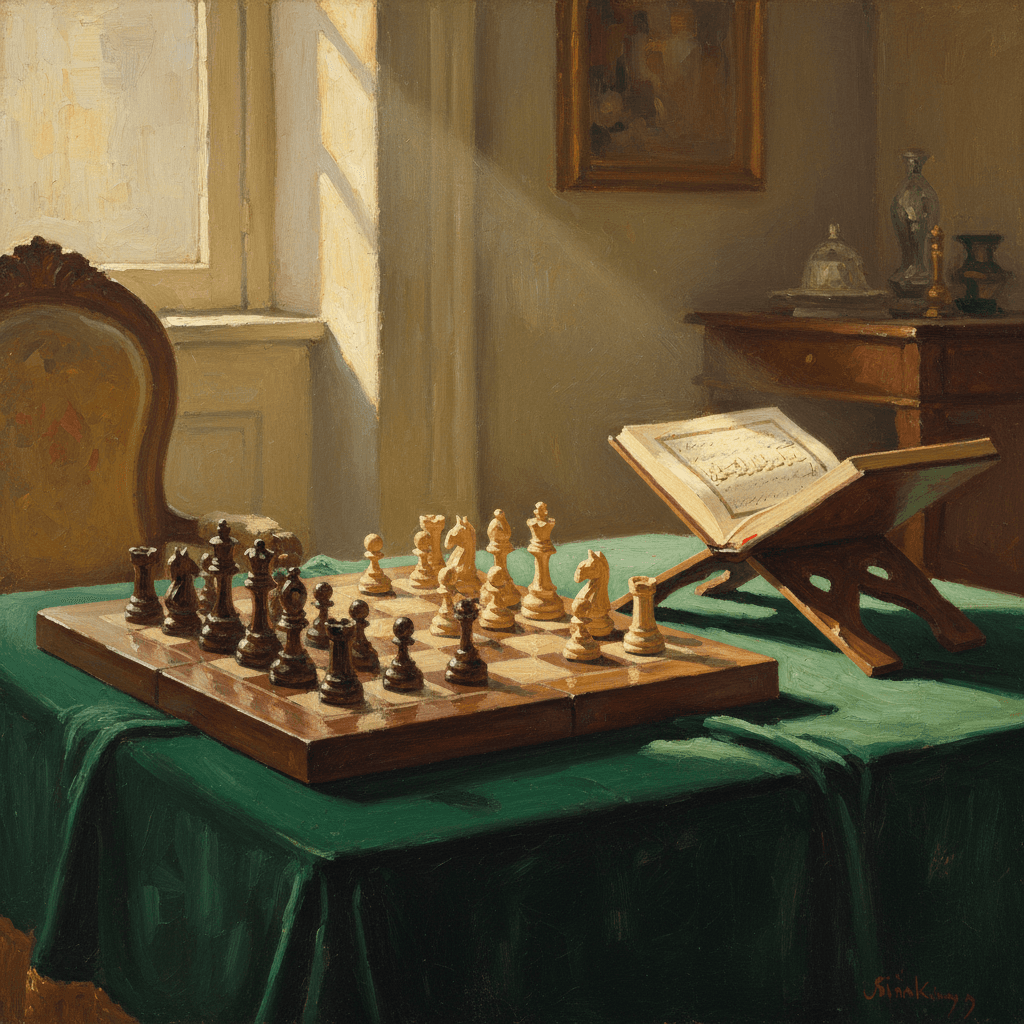
You are sitting with family or friends, someone pulls out a deck of cards, and suddenly you are wondering: is this okay? Maybe you have been playing for years and the question just occurred to you. Maybe someone at the table raised it. Either way, you want an honest answer — not a lecture, just the truth about what Islam actually says.
Card games are one of those topics where the ruling is more nuanced than the internet makes it sound. Some websites declare all card games haram. Others say everything is fine. The reality — as with most things in fiqh — is more careful than either extreme.
The Quick Answer
Card games played without gambling are generally permissible, according to the majority of scholars, with conditions. The prohibition in Islam targets maysir — gambling, games of chance involving wagering — not games or recreation in general.
يَا أَيُّهَا الَّذِينَ آمَنُوا إِنَّمَا الْخَمْرُ وَالْمَيْسِرُ وَالْأَنصَابُ وَالْأَزْلَامُ رِجْسٌ مِّنْ عَمَلِ الشَّيْطَانِ فَاجْتَنِبُوهُ
"O you who believe, indeed wine, gambling (maysir), stone altars, and divining arrows are but defilement from the work of Satan, so avoid them."
The word maysir refers specifically to wagering games of chance — not to all games involving cards or strategy. If your card game does not involve gambling, it does not fall under this verse's direct prohibition.
What the Quran and Sunnah Say
The Quran explicitly prohibits maysir alongside wine — and that pairing tells you how seriously Islam takes gambling. It causes enmity, wastes wealth, and distracts from the remembrance of Allah:
إِنَّمَا يُرِيدُ الشَّيْطَانُ أَن يُوقِعَ بَيْنَكُمُ الْعَدَاوَةَ وَالْبَغْضَاءَ فِي الْخَمْرِ وَالْمَيْسِرِ وَيَصُدَّكُمْ عَن ذِكْرِ اللَّهِ وَعَنِ الصَّلَاةِ
"Satan only wants to cause between you animosity and hatred through wine and gambling, and to avert you from the remembrance of Allah and from prayer."
Notice that the harm identified is twofold: material (enmity, wasted wealth) and spiritual (distraction from dhikr and salah). The test for any card game is whether it does either of these things.
Scholars who permit non-gambling card games point to the broader principle that recreation and play are allowed in Islam. The Prophet ﷺ approved of racing camels, wrestling, and other recreational activities. There is no hadith explicitly prohibiting card games as such — the prohibition targets gambling specifically.
However, some scholars take a more cautious position, particularly around games like poker that are structurally associated with gambling culture, even when played without stakes. The concern is sadd al-dhara'i — blocking the pathways to harm before they are traveled.
Why This Is Actually Hard
The nafs has a particular relationship with card games. Even without money, the competitive engagement, the highs of winning, the frustration of losing — these create a psychological pull that can quietly consume hours. You sit down for "a quick game" and two hours have passed. Fajr has been missed. The Quran has not been opened.
This is not a fiqh argument — it is an observation about how these games operate on attention. The prohibition against time-wasting (lahw) is less sharp than the prohibition against gambling, but it is real. Any recreation that consistently occupies time at the expense of your deen has crossed a line — even if the activity itself is technically permissible.
The challenge is that card games are deeply social. Family gatherings, friend groups, long travel — cards appear naturally. Saying "I do not play" can feel awkward or unnecessarily strict. The practical question is not usually "is this one game haram?" but "am I managing my relationship with this activity intentionally?"
What to Do About It — Practical Steps
Step 1: Apply the gambling test to every card game you play. Is money or anything of value being wagered? If yes, stop. Full stop. If no, you are in the permissible zone, subject to the time management concerns below.
Step 2: Be honest about games that are designed for gambling even without stakes. Poker is the obvious example. Playing poker "just for fun" builds the habits, strategies, and culture of gambling. The Islamic principle of blocking pathways to harm applies. You can play virtually any other card game — there is no shortage of options.
Step 3: Protect your salah regardless of the game. This is a hard rule. The moment a card game is competing with your prayer time, something has gone wrong. Set timers. Establish a household norm that prayer breaks the game — always. See how to build daily Islamic habits for practical strategies for keeping worship consistent even around social activities.
Step 4: Notice patterns over time, not just individual sessions. It is easy to justify any single session of card-playing. The more revealing question is: over the past month, has this activity been adding to your life or gradually displacing what matters more? Track it honestly.
Step 5: Replace excessive card games with alternatives that also build connection. The need being met — social bonding, competition, relaxation — is legitimate. Board games, sport, outdoor activities, Islamic quizzes with the family — many alternatives meet the same need with less spiritual risk.
For comparison on how scholars approach similar recreational questions, see is chess haram and is video games haram.
Protect Your Time With Daily Spiritual Habits
DeenBack helps you track your daily dhikr, dua, and worship streaks — building the consistent spiritual life that keeps even your free time grounded and intentional.


Free download. Premium features available in-app.
Dua for Protection of Time and Focus
رَبِّ اشْرَحْ لِي صَدْرِي وَيَسِّرْ لِي أَمْرِي
Rabbi ishrah li sadri wa yassir li amri
"My Lord, expand for me my chest and ease for me my task."
This dua, taught by Musa (AS), is powerful when you feel pulled toward distractions that crowd out your spiritual priorities.
Common Questions
What about card games that involve bluffing — does lying in a game make it haram?
Bluffing within an established game format is generally considered a known convention of the game rather than genuine deception — similar to faking a move in chess. Most scholars do not treat in-game bluffing as a violation of the prohibition on lying. However, if you find that game-based deception is making it easier to be dishonest in real life, that is a personal warning sign worth taking seriously.
We play cards for small prizes, not money — is that okay?
Small prizes can constitute gambling even if they are not cash. The key is whether participants wager something valuable on the outcome. If everyone contributes to a prize pool that one person wins, that is structurally gambling. If a host simply offers a gift to the winner as a gesture — without everyone contributing equally — scholars generally consider this permissible as a form of encouragement.
What if my family always plays cards together and banning it would cause conflict?
You are not obligated to ban cards from family life. You can participate in non-gambling card games. The question is whether you feel the need to set personal limits — like a time limit, or a rule that you personally do not play certain games. Establishing those limits without making it a judgment on others is entirely workable.
Is it haram to watch others play poker tournaments on TV?
Most scholars permit watching sports and games, including skill-based card competitions, without participating in gambling. The concern with watching is primarily whether it normalizes gambling culture in a way that weakens your own resistance to it.
For context on how Islam treats chance-based financial transactions, see is lottery haram and is online gambling haram.
The Bigger Picture Is Your Attention
Card games are not the spiritual danger point. What matters is whether your attention and time — your most non-renewable resources — are being spent in alignment with your priorities. A Muslim who plays cards for an hour a week while maintaining five daily prayers, regular Quran, and strong family relationships is in a very different position from one whose leisure time has gradually crowded out every form of worship.
Be intentional. Not paranoid — intentional. Know why you spend your time the way you do, and make sure the answer holds up to honest self-examination.
Make Your Free Time Count for the Akhirah Too
DeenBack helps you build streaks of daily worship and dhikr — so that even when you relax, you are doing so from a foundation of consistent Islamic practice.
Free download. Premium features available in-app.
Frequently Asked Questions
Is playing card games haram in Islam?
Playing card games without gambling is generally considered permissible by the majority of scholars, with certain conditions — it should not involve money wagering, should not lead to neglect of prayers or obligations, and should not involve excessive time-wasting. If the game involves gambling (maysir), it becomes prohibited regardless of the medium.
What makes card games haram?
Card games become haram when they involve gambling — wagering money or items of value on the outcome. Even without money, if a card game is specifically designed for gambling (like poker played for stakes), many scholars advise against it because of the association and the ease of transitioning to actual gambling.
Is playing poker haram even without money?
Most scholars advise against poker even without money because of its direct association with gambling culture, the habits it builds, and the ease with which it can transition to real wagering. The Islamic principle of blocking pathways to harm (sadd al-dhara'i) applies here.
Are children's card games like Uno permissible?
Yes — simple card games played recreationally without gambling elements are generally permissible. The key factors are: no wagering, no excessive time-wasting that leads to neglect of obligations, and no games built around prohibited themes.
How much time spent on card games is considered excessive?
There is no fixed limit, but Islamic guidance consistently emphasizes that entertainment should not crowd out obligatory worship, family responsibilities, or beneficial pursuits. If you notice prayers being missed, Quran abandoned, or family relationships suffering because of card games, that is the signal that the time investment has become problematic.