
- Published on
Is Chess Haram? What Muslims Need to Know Before They Play
- Authors

- Name
- Ahmad
- Role
- Senior Marketing Manager, Islamic education • Deen Back
بِسْمِ اللهِ الرَّحْمٰنِ الرَّحِيْمِ
In the name of God, the Most Gracious, the Most Merciful.
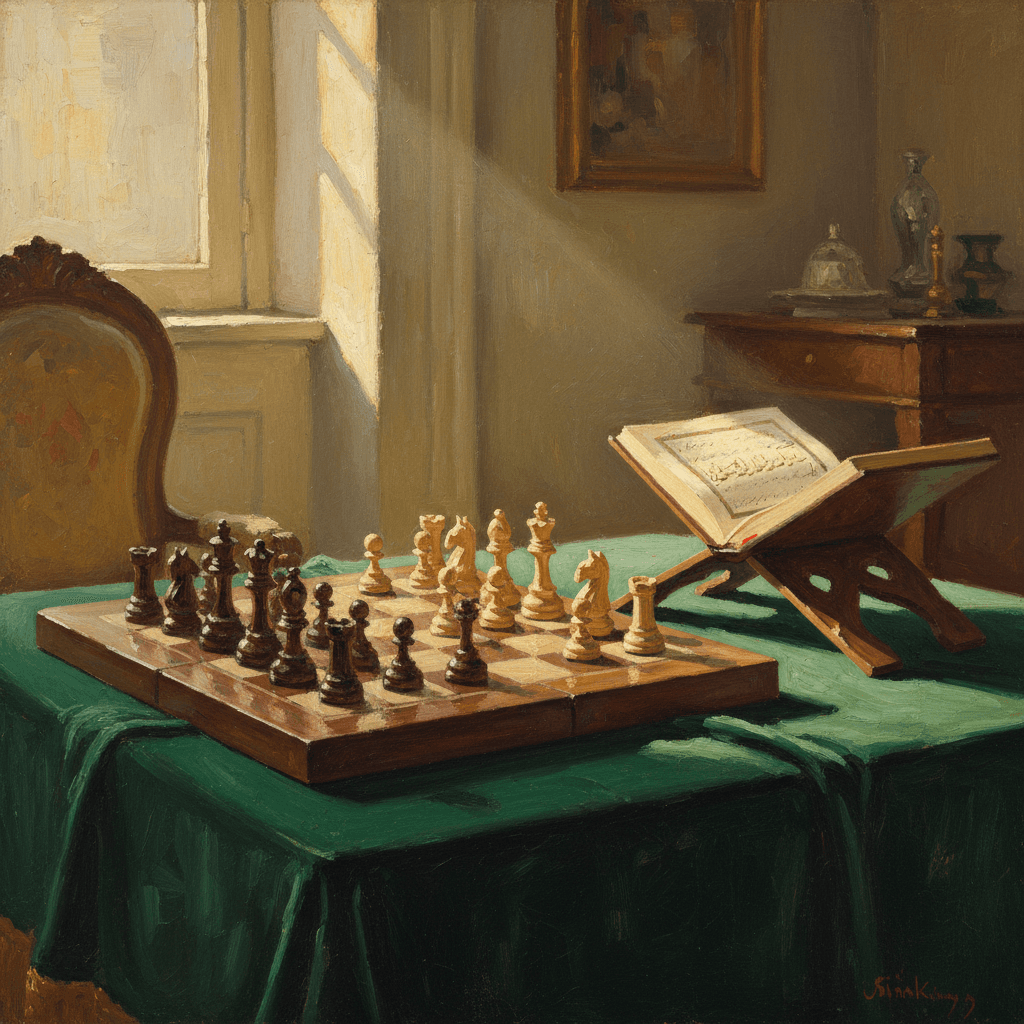
You are probably here because you enjoy chess — or someone told you it was haram and you want to know if that is actually true. The honest answer is: this is one of the genuinely disputed questions in Islamic jurisprudence, and scholars have disagreed for over a thousand years.
This article will give you the full picture and, more importantly, help you think about what your leisure time is actually doing for your soul.
The Short Answer — Scholars Genuinely Disagree
Unlike music or alcohol, chess does not have a single clear, unambiguous ruling. Here is where the schools stand:
Those who prohibit chess (haram):
- The Hanafi school (majority position) — based on hadiths condemning nard (backgammon) and similar games
- Most Maliki scholars
- Ibn Taymiyyah, Ibn al-Qayyim, and the Permanent Committee of Saudi Arabia
Those who permit it with conditions (mubah with restrictions):
- A significant portion of Shafi'i scholars, including Al-Nawawi
- Some Maliki scholars when conditions are met
The conditions for those who permit it are non-negotiable:
- No gambling — not even symbolic bets
- No neglect of salah — prayer times are not delayed or missed
- No foul speech — no swearing, mockery, or heated arguing
- Not excessively time-consuming — it does not dominate your life
The Prophet ﷺ gave a general principle that applies:
"Every game that a Muslim plays is batil (futile) except for training with his horse, shooting arrows, and playing with his wife." — (Tirmidhi 1637)
Ibn Umar رضي الله عنه said about chess:
"Chess is worse than backgammon."
While this is an athar (companion statement, not a hadith), it reflects the concern of the Companions about games that absorb time and attention.
What the Quran Says About Time and Leisure
The Quran does not mention chess by name. The relevant principle is from:
وَمِنَ النَّاسِ مَن يَشْتَرِي لَهْوَ الْحَدِيثِ
"And among the people is he who buys lahw al-hadith (idle amusement) to lead himself astray from the path of Allah." — (Surah Luqman, 31:6)
Lahw (لَهْو) — idle distraction — is the key concept. Any activity that distracts you from remembrance of Allah and beneficial pursuits carries this risk. Chess itself may or may not be lahw for you. But if you are honest with yourself, you know whether your chess habit is a harmless occasional game or a time-consuming obsession.
Why This Is Actually Hard
Here is the real DeenBack angle: even if chess is technically permissible under certain conditions, there is a more important question — what is your time worth?
The nafs loves permissible things. It will always push you toward the maximum of what is allowed. "Scholars say it's okay" becomes the justification for hours of chess every day. The same is true with Netflix, social media, or any entertainment that is "technically fine."
The concept here is mubah (permissible) versus mustahabb (recommended). Between the two lies a huge gap of time that most Muslims waste on things that are fine — when that time could be used for things that are excellent.
If your chess habit is displacing Quran, salah, dhikr, or family time — then even if the act itself is permissible, the pattern it has created in your life is not serving you. Your nafs will call this puritanism. But ask yourself honestly: would you rather meet Allah having mastered an opening theory, or having built a daily habit of remembrance?
What to Do — Practical Steps
Step 1: Assess Your Relationship With the Game
For one week, track how many minutes you spend on chess versus Quran or dhikr. Just the data. No judgment. Then decide if the balance reflects your stated priorities.
Step 2: Apply the Conditions If You Continue
If you are in the camp that finds chess permissible, commit to the conditions genuinely:
- Never delay a prayer for a game. Set an alarm.
- Never play for anything of value.
- Set a time limit before you start (30 minutes maximum).
Step 3: Find Better Mental Challenges
Many people are drawn to chess for the mental stimulation. Islam offers better alternatives for the same drive:
- Memorizing Quran requires intense concentration — and the reward is eternal
- Learning Arabic is a lifelong mental discipline
- Studying Islamic jurisprudence trains the analytical mind
Step 4: Replace Default Leisure With Dhikr Habits
The real question is what happens when you sit down and feel like doing something mindless. That moment — the default leisure moment — is where habits are built or broken. Use Deen Back to build daily Islamic habits that fill those moments with purpose.
Replace idle time with dhikr — track your daily remembrance streak
Deen Back helps you build daily habits of Quran, dhikr, and dua so your free time builds you instead of just passing time.


Free download. Premium features available in-app.
Dua for Using Time Wisely
اللَّهُمَّ إِنِّي أَعُوذُ بِكَ مِنَ الْعَجْزِ وَالْكَسَلِ وَالْجُبْنِ وَالْهَرَمِ وَالْبُخْلِ وَأَعُوذُ بِكَ مِنْ عَذَابِ الْقَبْرِ وَمِنْ فِتْنَةِ الْمَحْيَا وَالْمَمَاتِ
"O Allah, I seek refuge in You from incapacity, laziness, cowardice, old age, and miserliness, and I seek refuge in You from the punishment of the grave and the trials of life and death." — (Sahih al-Bukhari 6367)
Kasal — laziness — includes the laziness of spending time on low-value activities when high-value ones are available. This dua is a daily reminder to live intentionally.
Common Questions
If I follow the conditions, is chess completely fine?
For scholars who permit it, yes — within those conditions. But "completely fine" is the floor, not the ceiling. The question for someone serious about growth is not "what can I get away with?" but "what will serve me most?"
What about professional chess players or competitive tournaments?
Playing chess for prize money or financial gain is haram by scholarly consensus — this constitutes gambling. Competing in tournaments without financial prizes is a more nuanced question depending on the conditions.
My chess habit is genuinely mild — once a week, salah never missed. Am I overthinking this?
Probably yes, for your specific situation. The concern is for people whose chess has become a dominant use of time. Once a week, conditions met, salah intact — this is well within the bounds of what scholars who permit it would consider acceptable. Do not manufacture guilt where there is none.
What about other board games and video games?
The same framework applies. Understanding halal vs haram as principles — not just a list — helps you apply consistent judgment to any new situation. See also our post on are tattoos haram for another example of how context and intention affect Islamic rulings, or is anime haram for a similar discussion about screen-based entertainment that many Muslims debate.
Your Time Is Your Most Valuable Asset
The Prophet ﷺ warned us:
"There are two blessings which many people lose: health and free time." — (Sahih al-Bukhari 6412)
This is the chess question at its core. Not "is the game itself a sin?" but "what am I doing with the hours Allah gave me today?"
Play chess if you must, within the permitted conditions. But stay honest with yourself about what it is costing you in the currency that actually matters: time, focus, and connection with Allah.
Make your free time count — build a daily dhikr habit starting today
Deen Back tracks your daily habits and streaks so your leisure time builds your relationship with Allah, not just your Elo rating.
Free download. Premium features available in-app.
Frequently Asked Questions
Is chess haram in Islam?
Scholars are genuinely divided. The majority of classical scholars — particularly Hanafi, Maliki, and many Shafi'i scholars — declared chess haram, primarily citing hadiths condemning games of chance and the risk of it leading to neglect of salah. The Shafi'i school and some others permit it with conditions: no gambling, no neglect of salah, and no foul speech. Imam Ibn Taymiyyah was strictly against it.
What if I play chess as a mental exercise, not for fun?
The conditions permitting chess (where scholars allow it) apply regardless of purpose: no gambling, no neglect of salah, no foul speech. Mental exercise does not change the ruling, but it does reflect a healthier relationship with the game. However, if the game is consuming significant time that could go to more beneficial activities, even permissible things can become problematic.
Is online chess different from physical chess?
The medium does not change the ruling. The same conditions apply. However, online chess introduces additional risks: algorithm-driven addiction loops, time waste, and accessibility that makes it easier to neglect salah.
My kids want to play chess. Is it okay?
For educational purposes, with conditions (no gambling, time limits, salah is never delayed), many scholars who permit chess would have no objection for children. The concern is habit formation — ensure chess does not become a default way for children to fill all free time at the expense of Quran and worship.
What should I do with my leisure time instead?
Islam does not demand you never relax. But leisure has a hierarchy. Reading Islamic books, playing permissible physical sports, family time, and learning are all forms of rest that also build you. Using even 15 minutes of former game time for Quran or dhikr is a significant lifestyle upgrade.