
- Published on
Is Lottery Haram? Why Islam Says Don't Gamble With Your Rizq
- Authors

- Name
- Ahmad
- Role
- Senior Marketing Manager, Islamic education • Deen Back
بِسْمِ اللهِ الرَّحْمٰنِ الرَّحِيْمِ
In the name of God, the Most Gracious, the Most Merciful.
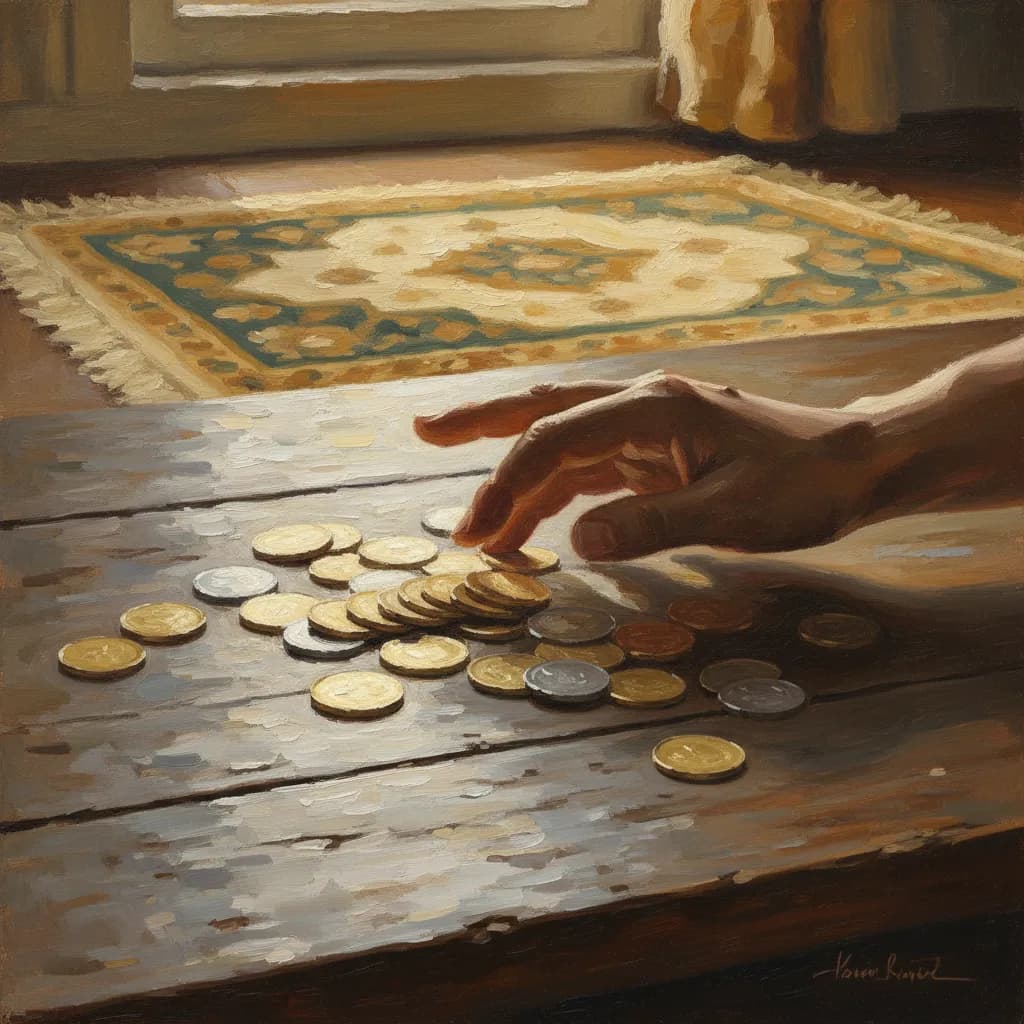
You have probably stood at a gas station counter, looked at the lottery tickets on display, and thought: "It is just a couple of dollars. What is the harm?" Maybe a coworker won a few hundred and you started wondering. Maybe you already buy tickets occasionally and the guilt has been building.
You are not alone in this. The lottery is designed to feel harmless — small cost, massive potential reward, no apparent victim. But Islam has something very specific to say about it, and it is worth hearing with an open heart.
The Quick Answer — Yes, Lottery Is Haram
The lottery is a form of maysir (gambling), and gambling is explicitly prohibited in the Quran. This is not a grey area or a matter of scholarly debate. The consensus across all four schools of Islamic jurisprudence is clear.
يَا أَيُّهَا الَّذِينَ آمَنُوا إِنَّمَا الْخَمْرُ وَالْمَيْسِرُ وَالْأَنصَابُ وَالْأَزْلَامُ رِجْسٌ مِّنْ عَمَلِ الشَّيْطَانِ فَاجْتَنِبُوهُ لَعَلَّكُمْ تُفْلِحُونَ
"O you who have believed, indeed intoxicants, gambling, stone altars, and divining arrows are but defilement from the work of Satan, so avoid it that you may be successful." — (Surah Al-Ma'idah, 5:90)
The word used is ijtanibuh — avoid it completely. Not "use it in moderation." Not "only if it becomes a problem." Avoid it.
What the Quran and Sunnah Say
The Quran addresses gambling in multiple places, and the progression is worth understanding. In the earlier revelation, Allah described it honestly:
يَسْأَلُونَكَ عَنِ الْخَمْرِ وَالْمَيْسِرِ ۖ قُلْ فِيهِمَا إِثْمٌ كَبِيرٌ وَمَنَافِعُ لِلنَّاسِ وَإِثْمُهُمَا أَكْبَرُ مِن نَّفْعِهِمَا
"They ask you about wine and gambling. Say: 'In both there is great sin and some benefit for people, but their sin is greater than their benefit.'" — (Surah Al-Baqarah, 2:219)
Allah acknowledged that gambling has a surface-level benefit — someone wins money. But the sin outweighs it overwhelmingly. Then in Surah Al-Ma'idah 5:90-91, the final, definitive prohibition came: gambling is from the work of Shaytan, and it breeds enmity and hatred and diverts you from the remembrance of Allah.
The Prophet ﷺ reinforced this with strict warnings:
"Whoever says to his companion: 'Come, let me gamble with you,' then let him give charity." — (Sahih al-Bukhari 6107)
Even the mere invitation to gamble requires kaffarah (expiation) in the form of charity. That is how seriously Islam treats this matter.
The lottery fits the definition of maysir precisely: you pay money, the outcome depends entirely on chance, and one party profits at the expense of many others. Whether it is a state lottery, scratch cards, or office pools — the mechanism is identical. For a deeper understanding of how Islam approaches financial rulings, see our guide on halal vs haram.
Why This Is Actually Hard
Let us be honest about what makes the lottery appealing. It is not greed — at least not always. For many people, it is hope.
When you are working long hours and bills keep piling up, a lottery ticket feels like a prayer you can buy for two dollars. Your nafs frames it as harmless optimism. "Everyone at work does it." "The money goes to education." "It is just once a week."
But here is what the lottery actually is: a tax on hope. The odds of winning a major jackpot are roughly 1 in 300 million. You are statistically more likely to be struck by lightning twice. The house always wins — and in the lottery, the house takes roughly 50% of all money collected.
This is why Allah prohibited it. Not because He wants to deprive you of joy, but because He knows your nafs will chase false promises instead of building real wealth through honest work and trusting His rizq. The same principle applies to why interest is haram — both systems exploit the vulnerable by offering something that looks like opportunity but is designed to extract.
What to Do About It — Practical Steps
Step 1: Calculate What You Have Spent
If you buy even one ticket a week at 104 a year. Over ten years, that is over $1,000 spent on an almost-zero probability. Write that number down. This is money that could have been sadaqah with guaranteed reward from Allah, instead of a gamble with near-certain loss.
Step 2: Redirect the Money to Sadaqah
Set up a recurring donation for the same amount you would have spent on lottery tickets. Even $2 a week to a local food bank, an orphan fund, or your masjid is sadaqah that compounds in your akhirah. The Prophet ﷺ said:
"Charity does not decrease wealth." — (Sahih Muslim 2588)
Unlike the lottery, sadaqah has a 100% return rate with Allah.
Step 3: Build Real Financial Discipline
The lottery mindset is the opposite of financial discipline. It whispers that wealth comes from luck, not effort. Islam teaches the opposite — that rizq comes through honest work, tawakkul, and asking Allah. If you want to grow your wealth, explore whether investing is permissible in Islam and learn about halal trading as legitimate alternatives.
Step 4: Address the Root — Trust in Allah's Rizq
The lottery exploits a specific weakness: the feeling that your current situation will not change through normal means. But Allah has already apportioned your rizq. Your job is to pursue it through halal means and trust His timing.
وَمَن يَتَّقِ اللَّهَ يَجْعَل لَّهُ مَخْرَجًا وَيَرْزُقْهُ مِنْ حَيْثُ لَا يَحْتَسِبُ
"And whoever fears Allah — He will make for him a way out. And will provide for him from where he does not expect." — (Surah At-Talaq, 65:2-3)
That verse is worth more than every lottery ticket ever printed.
Step 5: Track Your Progress With Deen Back
Leaving a habit — even a small one like buying lottery tickets — is easier when you replace it with something better. Use Deen Back to build daily habits of dhikr, dua, and sadaqah tracking so the space the lottery occupied gets filled with purpose.
Replace the lottery habit with daily sadaqah tracking
Deen Back helps you build consistent habits of charity, dhikr, and dua — real investments that never lose value.


Free download. Premium features available in-app.
Dua for Contentment and Halal Provision
اللَّهُمَّ اكْفِنِي بِحَلَالِكَ عَنْ حَرَامِكَ وَأَغْنِنِي بِفَضْلِكَ عَمَّنْ سِوَاكَ
"O Allah, suffice me with what You have made halal so that I have no need for what You have made haram, and make me independent of all others besides You through Your bounty." — (Tirmidhi 3563)
This is the dua of someone who has decided to stop chasing false promises and start trusting the One who actually controls provision.
Common Questions
What about office lottery pools — is it haram to chip in just to be social?
Yes. Social pressure does not change the ruling. If your coworkers pool money for lottery tickets, you are not obligated to join. You can politely decline. If it helps, frame it as a personal financial choice rather than a religious lecture. "I don't gamble" is a complete sentence.
Is it haram to keep money I already won from the lottery?
Scholars from IslamQA advise that past winnings should be given to charity rather than kept for personal use. You should make tawbah and not return to the habit. If returning the money to its source is not possible, distributing it to the poor is the recommended course.
My country uses lottery revenue for public services — does that make it permissible?
No. The end does not justify the means in Islamic law. If the government funds schools through lottery revenue, that is the government's choice. Your obligation is to avoid participating in the gambling mechanism itself. You can support public services through taxes, which are a separate matter, and through direct charitable giving.
Is interest worse than lottery, or are they the same?
Both are haram, but they operate differently. Interest (riba) is a systemic financial sin embedded in lending; lottery is maysir (gambling). The Quran prohibits both explicitly. Comparing severity is less useful than avoiding both — and building a financial life on halal foundations instead.
Your Rizq Is Already Written — Stop Gambling With It
The lottery sells a fantasy: that your life will change with one lucky number. But your life actually changes with consistent, daily effort — in your deen, your finances, and your relationship with Allah.
Every dollar you redirect from a lottery ticket to sadaqah is a guaranteed investment. Every moment you spend making dua instead of checking numbers is a moment spent with the One who actually controls outcomes.
You do not need luck. You need tawakkul, discipline, and a plan. Start today.
Build a financial life rooted in barakah, not luck
Deen Back helps you replace harmful habits with daily dhikr, dua, and intentional living — the real path to Allah's provision.
Free download. Premium features available in-app.
Frequently Asked Questions
Is buying a lottery ticket haram in Islam?
Yes. The scholarly consensus is that lottery is haram because it is a form of maysir (gambling), which the Quran explicitly forbids in Surah Al-Ma'idah 5:90. It does not matter if the ticket costs very little or if the lottery is run by the government — the mechanism of paying money for a chance at a prize based purely on luck is gambling by definition.
What if the lottery is for charity?
The charitable purpose does not change the ruling. Islam prohibits the means (gambling) regardless of the end. If you want to support charity, give sadaqah directly. The Prophet (peace be upon him) never endorsed gambling as a fundraising method, and scholars unanimously agree that charitable lotteries remain haram.
Is it haram to accept lottery winnings someone gives me as a gift?
Scholars differ on this. Some say you should refuse it because the source is haram. Others say if you did not participate in the gambling yourself, you may accept it and give it to charity rather than let it go to waste. The safest position is to avoid it entirely and not benefit from gambling proceeds.
What about scratch cards or raffles — are those haram too?
Yes. Scratch cards, raffles where you pay to enter, and any game where you pay money for a chance to win a prize based on luck fall under the definition of maysir. The format does not change the ruling — only the packaging changes.
Is it haram to play the lottery if I don't expect to win?
Yes. Your intention or expectation does not change the nature of the act. Paying money for a chance outcome is maysir whether you expect to win or not. The prohibition is on the act itself, not on your mindset while doing it.