
- Published on
How to Do Itikaf — A Step-by-Step Guide to Mosque Retreat
- Authors

- Name
- Ahmad
- Role
- Senior Marketing Manager, Islamic education • Deen Back
بِسْمِ اللهِ الرَّحْمٰنِ الرَّحِيْمِ
In the name of God, the Most Gracious, the Most Merciful.
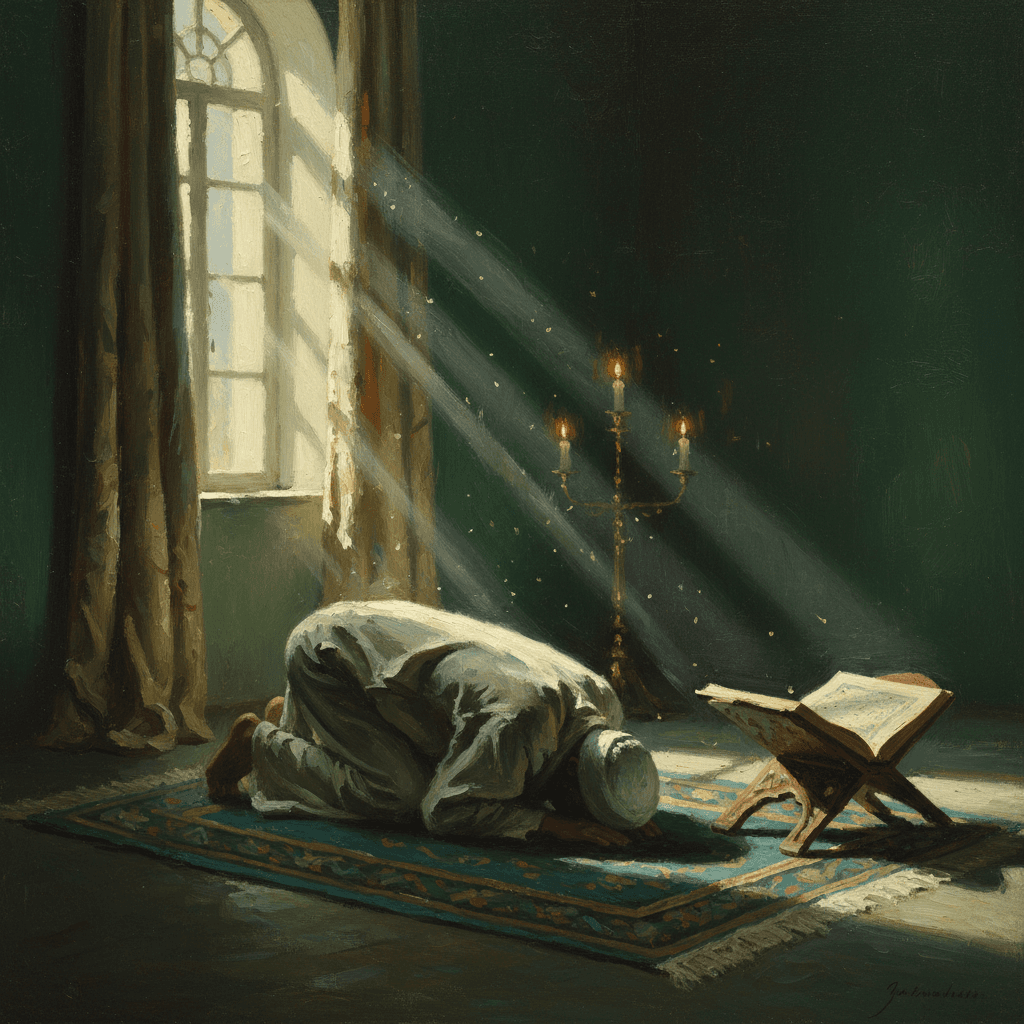
You have tried to be more consistent in your worship. You manage a few days, then life gets busy, then you are back to where you started.
What if you could remove yourself from life entirely — your phone, your responsibilities, the constant noise — and spend ten days doing nothing but worshipping Allah?
That is itikaf. And it is one of the most powerful tools for spiritual transformation that most Muslims never use.
Why This Matters
We live in the most distracted age in human history. Your attention is pulled by notifications, deadlines, social media, and a hundred other things before you even get to your morning salah.
The nafs thrives in distraction. It cannot argue when you are actually sitting in front of Allah, praying, and reciting Quran. So it keeps you busy. Always.
Itikaf is the intentional counter-move. You remove the distractions not by effort of willpower, but by changing your physical environment entirely. You go to the mosque. You stay. You worship. Everything else waits.
The Prophet (peace be upon him) practiced this every single year without exception until the end of his life. He understood something most of us have forgotten: sustained spiritual transformation requires periods of intense focus, not just daily five-minute windows.
What Itikaf Is — and What It Is Not
Itikaf (اعتكاف) literally means "to remain in a place" — specifically, to remain in the mosque in a state of worship. You are not there to socialize, sleep in, or run from life's problems. You are there to be with Allah.
The Prophet (peace be upon him) said: "Whoever does itikaf in faith and seeking reward, all his previous sins will be forgiven." (Ibn Majah 1781)
He also specifically sought the Night of Power (Laylat al-Qadr) through itikaf: "I used to do itikaf in the first ten days seeking Laylat al-Qadr, then the middle ten, then I was told it is in the last ten — so whoever among you wants to do itikaf, let them do it." (Sahih al-Bukhari 2027)
The last ten nights of Ramadan is when Laylat al-Qadr falls — the night better than a thousand months (Surah Al-Qadr, 97:3). Itikaf is how you maximize your chances of catching it.
Step 1: Making the Intention and Preparation
Before entering itikaf:
- Perform ghusl and wear clean, modest clothing.
- Make the intention (niyyah) for itikaf: "I intend to perform itikaf in this mosque for the sake of Allah."
- Inform your family and employer well in advance. Sort out any necessary responsibilities beforehand.
- Bring what you need: clean clothes, toiletries, basic food (if the mosque does not provide), Quran, books of dhikr and dua.
What to leave behind:
- Your phone (or keep it for emergencies only, with social media deleted or logged out)
- Unnecessary books and entertainment
- Work items
- Anything that will pull your mind toward the dunya
When to enter: For Ramadan itikaf, enter the mosque after Fajr on the 20th or 21st of Ramadan (scholars differ), or before Maghrib on the 20th. The Prophet entered "when the sun had not yet risen" — i.e., in the morning of the 21st day.
Step 2: Your Daily Structure Inside Itikaf
Itikaf is not a free-form spiritual holiday. It works best when you give it structure:
After Fajr: Recite the morning adhkar. Read Quran or make dhikr until sunrise. Pray Ishraq if you can (two rakats after sunrise).
Morning: Read Quran. Study hadith. Make dua. Take short rest if needed.
Dhuhr: Pray and follow with dhikr.
Afternoon: Continue Quran, dua, or nawafil (voluntary) prayers. This is a good time for personal muhasabah (self-accounting) — reflect on your habits, your sins, what you want to change.
Asr: Pray and continue worship.
Maghrib/Isha (in Ramadan): Break fast with the congregation, pray Tarawih fully.
Last third of the night: This is the most important time. Wake for Tahajjud, pray as many rakats as you can, and make intensive dua. Ask for Laylat al-Qadr. Ask for everything.
For a broader guide to nighttime worship: How to Make Tahajjud a Habit.
Step 3: What Is Permitted During Itikaf
Permitted:
- Sleeping in the mosque (to the extent needed)
- Eating and drinking in the mosque (outside of fasting hours in Ramadan)
- Speaking with family members who visit briefly — outside or at the mosque door
- Exiting to use the bathroom and perform ghusl
- Scholarly discussion and teaching
- Listening to Islamic lectures
Not permitted:
- Leaving the mosque without necessity
- Sexual relations
- Buying and selling (even from within the mosque, according to most scholars)
- Excessive talking and socializing that takes you away from worship
Build the Habits That Prepare You for Itikaf
Itikaf is the most intensive form of worship — but it is most powerful when it accelerates habits you have already been building. Use DeenBack to build your daily worship routine before Ramadan arrives.


Free download. Premium features available in-app.
Making It Stick — The Habit Science of Itikaf
Itikaf works on a principle most productivity experts rediscovered thousands of years after the Prophet taught it: environment design is more powerful than willpower.
When your environment is a mosque, and you have no phone notifications pulling you away, and everyone around you is worshipping — worshipping becomes the path of least resistance. The nafs simply has fewer escape routes.
The key is to not waste the first two or three days adjusting. Go in with a clear plan: how much Quran you will read each day, which specific duas you will focus on, what you want to change about yourself when you leave.
Common mistakes to avoid:
- Spending half the time sleeping (rest is fine; excess sleep is waste)
- Treating it as a social gathering with other mu'takifeen (those doing itikaf)
- Going without a plan for the last ten nights specifically
- Returning home and abandoning all the progress within a week
After itikaf: The real test is the month after. Pick one or two habits that came alive in itikaf — perhaps Tahajjud, perhaps a consistent Quran routine — and hold them into Shawwal and beyond. For continuing this: How to Stay Consistent in Deen.
Common Questions
Can I do itikaf for just one day or a few days? Yes. Voluntary itikaf has no minimum duration. Even entering the mosque with the explicit intention of itikaf for an hour — to pray, make dua, and recite Quran — has merit. The narrated sunnah for Ramadan is ten days, but any itikaf, any amount, is rewarded.
What if my mosque does not accommodate itikaf? Not all mosques have the facilities for overnight itikaf. In this case, consult your local scholars for guidance. Some communities arrange group itikaf in larger mosques. Women may have the option of doing itikaf in a designated home prayer area according to the Hanafi school.
Do I need to pray all five prayers in the mosque to validate itikaf? All five prayers should be prayed in the mosque during itikaf — this is the condition that makes the itikaf continuous and valid. If you have to exit the mosque and miss a congregational prayer, your itikaf is not automatically broken, but unnecessary exits undermine its purpose.
What is the best dua to make during itikaf? The Prophet taught a specific dua for Laylat al-Qadr — which falls within the itikaf period: "Allahumma innaka 'afuwwun, tuhibbu al-'afwa, fa'fu 'anni" (O Allah, You are the Pardoner, You love to pardon, so pardon me). See: Dua for Laylat al-Qadr.
Is itikaf valid if I break it midway? If you break it unintentionally (forgetting you are in itikaf and exiting, for example), most scholars say you should make it up (qada). If you leave intentionally, the itikaf ends but there is no expiation required. Simply begin again when you re-enter with intention.
For a deeper understanding of itikaf in the Ramadan context, see: What Is Itikaf and Last 10 Nights of Ramadan.
Start Building the Habits That Make Itikaf Transformative
DeenBack helps you build daily Quran, dhikr, and prayer habits before Ramadan — so when you enter itikaf, you are not starting from zero. Start your streak today.
Free download. Premium features available in-app.
Frequently Asked Questions
What is itikaf?
Itikaf (اعتكاف) is the practice of secluding oneself in a mosque for the purpose of worship — specifically prayer, Quran recitation, dhikr, and dua. It is a sunnah of the Prophet (peace be upon him), most commonly performed in the last ten days of Ramadan. The word means 'to remain in a place' and captures the spirit: you cut yourself off from worldly distractions to focus entirely on Allah.
Is itikaf obligatory?
Itikaf is a confirmed sunnah (sunnah muakkadah), not obligatory, according to the majority of scholars. The Prophet (peace be upon him) performed it consistently in the last ten days of Ramadan every year. If an entire community abandons it, some scholars say it becomes a communal sin. It is also valid as a voluntary (nafl) practice outside of Ramadan.
What breaks itikaf?
Leaving the mosque without necessity breaks itikaf. Other things that break it include sexual relations, losing one's sanity, and — for women — the onset of menstruation. Necessary exits (using the bathroom, required medical care, if the mosque cannot accommodate necessities) do not break itikaf. Brief, unavoidable exits for basic needs are permitted.
Can women do itikaf?
Yes — women can perform itikaf. The Prophet's wives (may Allah be pleased with them) performed itikaf. The scholars differ on whether women should do itikaf in the masjid or may do it in a designated area of their home used for prayer. The Hanafi school traditionally holds that women do itikaf in their home prayer area; other schools allow the masjid with appropriate arrangements.
How long does itikaf have to be?
There is no minimum time for voluntary (nafl) itikaf — even a short period in the mosque with the intention of itikaf counts. For the sunnah itikaf in Ramadan, the Prophet stayed for the last ten days (entering on the 20th after Fajr, leaving after the moon of Eid is sighted). A person can perform itikaf for fewer days if they cannot manage the full ten.