
- Published on
How to Perform Umrah Step by Step — A Practical Muslim Guide
- Authors

- Name
- Ahmad
- Role
- Senior Marketing Manager, Islamic education • Deen Back
بِسْمِ اللهِ الرَّحْمٰنِ الرَّحِيْمِ
In the name of God, the Most Gracious, the Most Merciful.
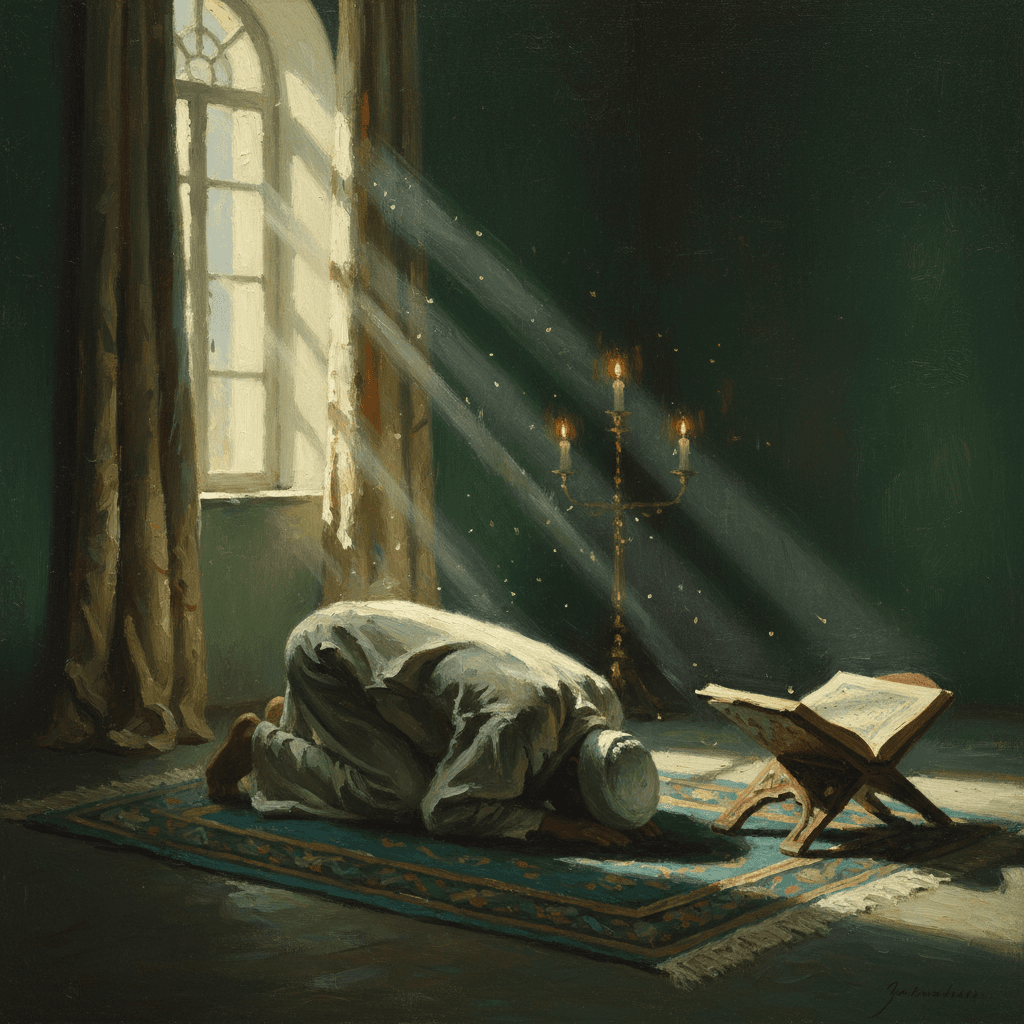
There is a moment, usually somewhere between the airplane and the first sight of the Kaaba, when a Muslim realizes that everything they planned for this trip is not enough preparation for what they are actually feeling.
Umrah changes people. But the change comes from understanding what you are doing and why — not from blindly following a checklist.
This guide gives you the steps. It also gives you the meaning behind them so that your umrah is an act of transformation, not just an itinerary.
The Gap Between Knowing and Going
Most Muslims know, in theory, what umrah involves. Ihram, tawaf, sa'i, halq. They have heard the words. But when you are standing at the miqat — the boundary you cannot pass without entering the sacred state — your mind goes blank.
Write this guide down. Review it before you travel. Review it the night before you enter ihram. And then when the moment comes, let your preparation carry you through.
Why Umrah Matters
Umrah is called the "minor pilgrimage" not because it is less important, but because it has fewer rites than Hajj. Its reward is immense:
الْعُمْرَةُ إِلَى الْعُمْرَةِ كَفَّارَةٌ لِمَا بَيْنَهُمَا
Al-'umratu ila al-'umrati kaffaratun lima baynahoma.
"Umrah to umrah is expiation for what falls between them." — (Sahih al-Bukhari 1773)
And for umrah in Ramadan: "Umrah in Ramadan is equivalent in reward to Hajj — or Hajj with me (the Prophet)." (Sahih al-Bukhari 1782)
This is not a small trip. It is a journey to the house of Allah where every step has meaning and every dua is heard.
Step 1: The Intention and Ihram at the Miqat
Where: At the miqat — the designated entry boundary for Mecca. Each direction has its own miqat point. Pilgrims coming by air typically put on ihram on the plane before passing over the miqat, or at Jeddah airport if they are travelling from within the boundary.
What to do:
- Perform ghusl (full purification bath) if possible before entering ihram.
- Trim nails, remove pubic and underarm hair (these cannot be done in ihram).
- Men: wear the two white ihram cloths (izar and rida). Women: wear modest covering in any color (no niqab or gloves during ihram, but face and hands are uncovered).
- Apply perfume to your body — NOT to the ihram garments. This is the last time perfume is permitted until after halq.
- Make the intention (niyyah) for umrah: "Allahumma labbayka 'umratan" (O Allah, I respond to Your call for umrah).
- Begin the talbiyah — say it aloud (men) or quietly (women):
لَبَّيْكَ اللَّهُمَّ لَبَّيْكَ لَبَّيْكَ لَا شَرِيكَ لَكَ لَبَّيْكَ إِنَّ الْحَمْدَ وَالنِّعْمَةَ لَكَ وَالْمُلْكَ لَا شَرِيكَ لَكَ
Labbayk Allahumma labbayk, labbayk la sharika laka labbayk. Inna al-hamda wa al-ni'mata laka wa al-mulk, la sharika lak.
"Here I am, O Allah, here I am. Here I am — You have no partner — here I am. Indeed, all praise and blessing belong to You, and all sovereignty. You have no partner."
Continue saying the talbiyah throughout the journey until you begin tawaf.
Step 2: Entering Mecca and the Masjid al-Haram
Enter the mosque from the Bab al-Salam (Gate of Peace) if possible — the right foot first. Say the dua for entering the masjid. Your first sight of the Kaaba is a moment of answered dua — make your most important requests now, with full presence of heart.
Stop the talbiyah when you reach the Kaaba and begin tawaf.
Step 3: Tawaf — Seven Circuits of the Kaaba
Direction: Counterclockwise, keeping the Kaaba on your left.
Starting point: The Black Stone (Hajr al-Aswad). Touch it if you can, or kiss it if you can reach. If the crowd is too large (it usually is), point toward it with your right hand and say "Bismillahi Allahu Akbar." Each circuit begins and ends here.
Seven circuits: Complete seven full circuits. After the fourth circuit, if you feel tired, there is no shame in pausing to rest briefly — tawaf can be performed slowly.
Dua during tawaf: There is no fixed dua for each circuit. Use the time to make sincere, heartfelt personal dua in any language. Between the Yemeni Corner and the Black Stone, say:
رَبَّنَا آتِنَا فِي الدُّنْيَا حَسَنَةً وَفِي الْآخِرَةِ حَسَنَةً وَقِنَا عَذَابَ النَّارِ
Rabbana atina fi al-dunya hasanatan wa fi al-akhirati hasanatan wa qina 'adhab al-nar.
"Our Lord, grant us good in this world and good in the hereafter, and protect us from the punishment of the Hellfire." — (Surah Al-Baqarah, 2:201)
Step 4: Two Rakats at Maqam Ibrahim
After completing tawaf, pray two rakats close to Maqam Ibrahim (the station of Ibrahim, peace be upon him) if possible — or anywhere in the mosque. The Prophet (peace be upon him) recited Surah Al-Kafiroon in the first rakat and Surah Al-Ikhlas in the second.
After the prayer, drink zamzam water. Make dua. The Prophet said: "Zamzam water is for what it is drunk for." Drink with an intention — for health, for knowledge, for ease, for whatever you most need.
For more on the blessed water and its sunnah: Sunnah of Drinking Zamzam Water.
Prepare Your Heart for Umrah With Daily Worship
DeenBack helps you build the consistent prayer, dhikr, and dua habits that prepare your heart before the journey — so your umrah is the culmination of a life of worship, not a one-time reset.


Free download. Premium features available in-app.
Step 5: Sa'i — Between Safa and Marwa
Sa'i (سَعْي) means to walk briskly between the two hills of Safa and Marwa seven times, commemorating Hajar's search for water for her son Ismail (peace be upon him).
Starting point: Safa. Begin by facing the Kaaba and making dua. Say "Allahu Akbar" three times.
Seven laps: Safa to Marwa is one lap, Marwa to Safa is the second, and so on. End on Marwa (7th lap). Men should walk quickly (harwala) between the two green markers; women walk at a normal pace.
Between the hills: Make dua, recite dhikr, or recite Quran. Sa'i does not require wudu, though it is recommended.
After completing seven laps, make dua at Marwa facing the Kaaba.
Step 6: Halq or Taqsir — End of Ihram
Halq (حَلْق): Shaving the entire head. This is preferred for men — it signifies complete submission and a fresh beginning.
Taqsir (تَقْصِير): Cutting a portion of hair — for women (required, cutting a fingertip-length from all around), and for men who do not wish to shave completely.
After halq or taqsir, all ihram restrictions are lifted. You may change clothes, use perfume, and return to normal life. Your umrah is complete.
Making It Stick — Beyond the Checklist
Umrah is a physical act, but its purpose is internal transformation. The Prophet (peace be upon him) set out from Mecca to Madinah — the hijrah — and was changed forever. Every pilgrim arrives at the Kaaba with a personal hijrah — leaving behind the person they were.
How do you hold onto that? By building habits before and after the journey that keep you connected to what you felt in front of the Kaaba.
Before umrah: Increase your salah, your reading of Quran, your istighfar. Don't arrive at the Kaaba cold — warm your heart through daily worship in the weeks before.
After umrah: The danger is returning home and letting the old patterns resume. The scholars used to say: the sign of an accepted umrah is that you return better than you left. Build one new consistent habit in the month after your return: How to Build a Daily Ibadah Routine.
Common Questions
Can I perform umrah while menstruating? A woman in her period cannot perform tawaf (tawaf requires purity). If she arrives at her period unexpectedly, she should wait until she is pure before performing tawaf. She can remain in ihram in the meantime and perform all other elements of umrah once she is pure. Some scholars advise informing the travel organizer in advance in case the trip timeline needs to be adjusted.
How long does umrah take? Without the crowds, a Muslim familiar with the rites can complete umrah in 2-3 hours. With typical Masjid al-Haram crowds, expect 4-6 hours from ihram to halq. During Ramadan and peak seasons, it can take significantly longer.
Can I make dua for others during umrah? Absolutely — this is highly encouraged. The accepted dua of a pilgrim is considered especially powerful. Make dua for your family, your community, the sick, and the entire ummah. See: Dua for the Ummah.
Is it valid to perform umrah on behalf of a deceased person? Yes. This is called performing umrah niyabatan (by proxy). You first complete your own obligatory umrah, then you may perform additional umrahs for deceased relatives. Make the intention clearly: "Allahumma labbayka 'umratan 'an [name]."
What should I do between umrah and leaving Mecca? Spend time in the masjid making dua, reciting Quran, and performing nawafil prayers. The prayer in Masjid al-Haram is worth 100,000 prayers elsewhere. Do not waste this time. And if you can, pray tahajjud in front of the Kaaba — it is one of the most powerful experiences available to a Muslim. See: What Is Tahajjud.
Come Back From Umrah and Actually Stay Changed
DeenBack helps you maintain the spiritual momentum of umrah — with daily habit tracking, dua reminders, and dhikr streaks that keep you connected to the person who stood before the Kaaba.
Free download. Premium features available in-app.
Frequently Asked Questions
What are the steps of umrah?
Umrah has four main steps: (1) Enter the state of ihram at the miqat, making the intention and saying the talbiyah. (2) Perform tawaf — seven circuits around the Kaaba counterclockwise. (3) Pray two rakats at Maqam Ibrahim. (4) Perform sa'i — seven laps between Safa and Marwa. (5) End with halq (shaving the head, for men) or taqsir (cutting a portion of hair, for women and men who prefer). After halq/taqsir, the ihram restrictions are lifted.
Is umrah obligatory?
Scholars differ. The Shafi'i and Hanbali schools consider umrah obligatory once in a lifetime, like Hajj. The Hanafi and Maliki schools consider it a confirmed sunnah (highly recommended) rather than obligatory. Regardless of which view you follow, performing umrah when you have the means is a profound act of worship with immense spiritual reward.
Can I perform umrah at any time of year?
Yes — unlike Hajj, which has a specific window (Dhul Hijjah), umrah can be performed at any time of the year. However, umrah during Ramadan has a special reward — the Prophet (peace be upon him) said umrah in Ramadan is equivalent in reward to Hajj. Outside Ramadan, the busiest periods are Rajab and the months leading up to Hajj season.
What is the ihram and what are its restrictions?
Ihram is the sacred state entered before umrah or Hajj. For men, it means wearing two white seamless cloths — one around the waist, one over the shoulder. For women, it means covering the body (except face and hands) in modest, non-form-fitting clothing. Restrictions during ihram include: no cutting hair or nails, no use of perfume, no sexual relations, no hunting, and for men no head covering. These lift after halq/taqsir.
What dua should I say during tawaf?
There is no single prescribed dua for each circuit of tawaf. The Prophet (peace be upon him) said at the Yemeni Corner (Rukn al-Yamani) to the Black Stone: 'Rabbana atina fi al-dunya hasanatan wa fi al-akhirati hasanatan wa qina 'adhab al-nar.' (Our Lord, grant us good in this world and good in the hereafter, and protect us from the punishment of the Hellfire.) You may also make personal dua in any language during tawaf.