
- Published on
What Is Itikaf in Islam — and How to Actually Do It
- Authors

- Name
- Ahmad
- Role
- Senior Marketing Manager, Islamic education • Deen Back
بِسْمِ اللهِ الرَّحْمٰنِ الرَّحِيْمِ
In the name of God, the Most Gracious, the Most Merciful.
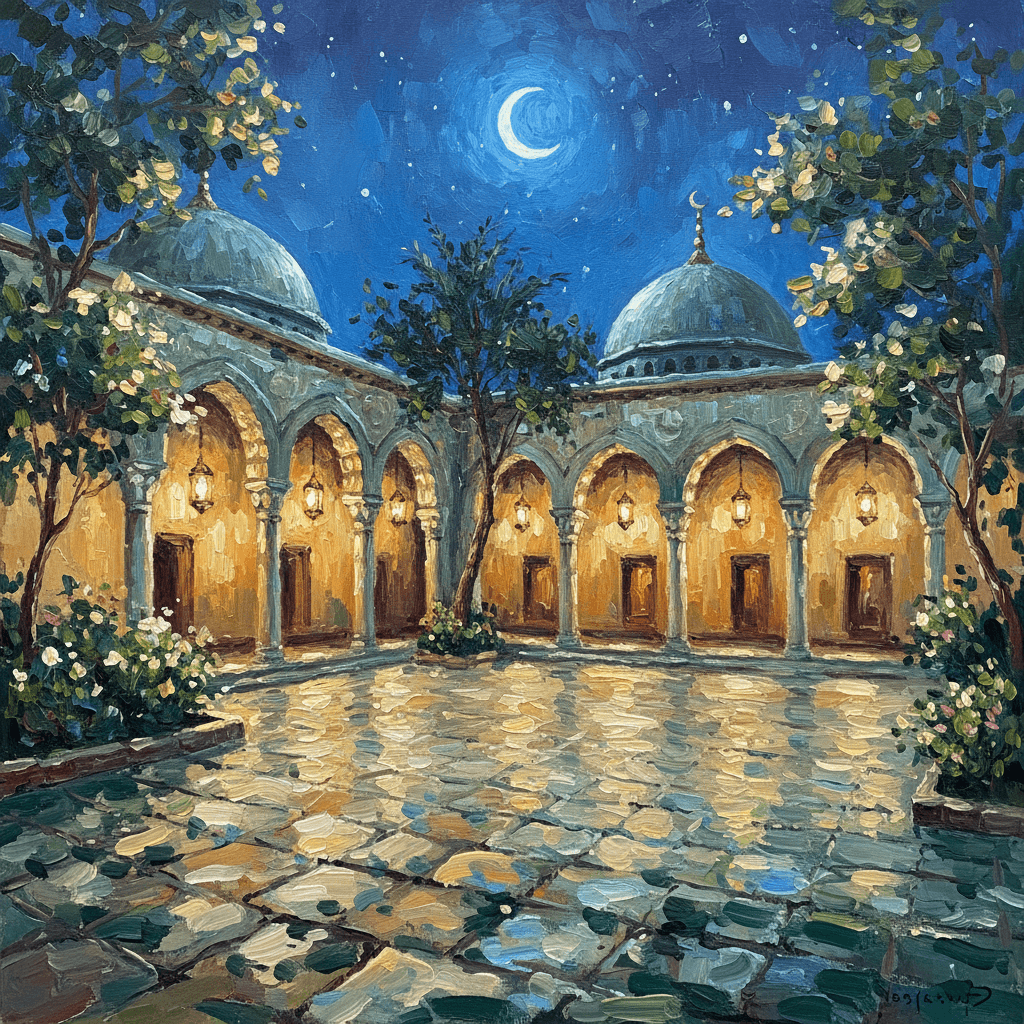
Imagine 10 days where your only job is to worship Allah. No commute. No office. No social obligations. Just you, the masjid, the Quran, and night prayer.
This is itikaf — and for the people who have done it, it is often the most spiritually transformative experience of their lives.
What Itikaf Actually Is
Itikaf (اعتكاف) literally means "to seclude oneself" or "to remain with something." Islamically, it means withdrawing from normal life to remain in the masjid with the exclusive purpose of worshipping Allah.
The full Sunnah itikaf begins on the evening of the 20th night of Ramadan — just as the last 10 nights begin — and continues until the sighting of the Eid moon. The person in itikaf remains in the masjid, sleeping and eating there, leaving only for unavoidable necessities such as using the bathroom.
The Prophet ﷺ performed itikaf every Ramadan without exception: "The Prophet ﷺ used to seclude himself during the last ten days of Ramadan until Allah took his soul, then his wives continued this practice after him." (Bukhari 2026)
When the Prophet once missed itikaf due to travel, he made it up with 10 days in Shawwal. He considered it that important.
Why Itikaf Changes People
Here is why people who do itikaf describe it as transformative: it removes the world.
Normally, your worship is squeezed between everything else — the job, the family, the errands, the phone. Your prayer happens in the gaps. Your Quran reading is interrupted. Your dua is compressed into a few minutes before sleep.
In itikaf, those proportions reverse. Worship is the primary activity. Everything else is squeezed into the gaps.
For 10 days, you experience — perhaps for the first time — what it actually means to live for Allah, not merely try to fit Allah into your life.
The nafs resists this. It protests the loss of comfort, of distraction, of control. And then, somewhere in the third or fourth day, something shifts. The silence stops feeling empty and starts feeling full.
How to Perform Itikaf
The basics
- Location: A masjid where congregational prayers are held. Women in the Hanafi school may perform itikaf in a designated prayer space at home.
- Duration: The full Sunnah itikaf is the last 10 nights of Ramadan. Shorter itikaf (for any duration) is permitted in the Shafi'i and Hanbali schools.
- Intention: Make the niyyah (intention) for itikaf before entering. "I intend itikaf for the sake of Allah."
- What you may do: Pray, recite Quran, make dhikr, sleep, eat (food brought to you or from the masjid kitchen), consult someone briefly about unavoidable needs.
- What invalidates it: Leaving the masjid for non-essential reasons, marital relations.
What to do with your time
There is no fixed schedule prescribed — which is itself a form of freedom. Common practices:
- Night prayer: Tahajjud after midnight is the centerpiece. Pray as many rak'ats as you are able, with full presence.
- Quran recitation: Aim to complete a significant portion. Prioritize reflection (tadabbur) over speed.
- Dua: Use sujood especially. The last third of the night — when Allah descends to the lowest heaven and asks "Who is calling upon Me?" — is the prime time.
- Dhikr: Fill waiting times with SubhanAllah, Alhamdulillah, Allahu Akbar, and the dua of Laylatul Qadr.
- Sleep: Rest so your night worship is productive. Short naps during the day are the Prophet's method.
For the dua specifically prescribed for Laylatul Qadr, see dua for laylatul qadr. For understanding what Laylatul Qadr is, see what is laylatul qadr. And for building the Tahajjud habit that makes itikaf nights productive, see how to make tahajjud a habit.
Build the Habits That Make Itikaf Transformative
DeenBack helps you track the night prayer, dhikr, and Quran habits that itikaf intensifies — building the foundation before and continuing after Ramadan ends.


Free download. Premium features available in-app.
Itikaf in Modern Life — Practical Adjustments
Most Muslims cannot disappear for 10 days. Work exists. Children exist. The hospital does not care that it is Ramadan.
Here is the honest advice: do what you can.
Option 1 — Full 10-night itikaf. Take leave from work, arrange childcare, and commit fully. This is the complete Sunnah. If it is possible, do it.
Option 2 — Weekend or partial itikaf. Some scholars permit itikaf for any duration. Spend a Friday night and Saturday in the masjid. This is not the full Sunnah, but it is better than nothing and carries its own reward.
Option 3 — Itikaf spirit at home. If the masjid is not accessible or circumstances prevent it entirely, apply the spirit of itikaf at home: clear your schedule for odd nights, turn off social media, and devote those hours exclusively to worship. This is not true itikaf, but it is a sincere effort that Allah honors.
Signs of Progress
You will know itikaf is working when:
- The masjid begins to feel more comfortable than the world outside
- Your dua stops feeling like recitation and starts feeling like conversation
- You leave the 10 nights genuinely reluctant for it to end
- The Ramadan high you used to lose after Eid begins to persist into the rest of the year
Common Questions
What if I need to work during the day — can I leave for work? Leaving the masjid for work invalidates itikaf in the majority view. If you cannot take leave, consider a shorter itikaf during days off, or the "itikaf spirit" option above.
Can I use my phone during itikaf? There is no explicit prohibition on phones, but the spirit of itikaf is to minimize worldly engagement. Most scholars who have addressed this advise strictly limiting phone use to genuine emergencies. The point of itikaf is to remove distractions — bringing full social media access defeats the purpose.
What breaks itikaf? Leaving the masjid for non-essential purposes and marital relations are the two things all schools agree break itikaf. Some add: apostasy (obviously), losing consciousness, and menses for women.
Can I eat and sleep in the masjid during itikaf? Yes. Eating and sleeping in the masjid for the purpose of itikaf is permitted, even in mosques that otherwise discourage sleeping inside.
The Gift of Withdrawal
We live in an age of permanent availability. Your phone pings. Your boss emails. Your family expects responses. The world demands constant presence.
Itikaf is a radical act of saying: for these nights, I belong to Allah.
The Prophet ﷺ spent these nights each year in itikaf — the most responsible person in the entire Ummah, shepherd of a community, husband, and messenger. And yet he withdrew. Because even the Prophet ﷺ needed — chose — to create space where nothing existed except worship.
You need it too. Consider making it happen this Ramadan.
Prepare Your Spiritual Habits Before Ramadan Arrives
DeenBack helps you build the daily prayer, Quran, and dhikr habits that make itikaf productive instead of a cold start — start building now so you are ready.
Free download. Premium features available in-app.
Frequently Asked Questions
What is itikaf in Islam?
Itikaf (اعتكاف) is the act of secluding oneself in the masjid for the purpose of worship, minimizing engagement with the worldly life. The full Sunnah itikaf is performed in the last 10 nights of Ramadan, from the eve of the 20th day until Eid is sighted. The Prophet performed itikaf every Ramadan of his life in Madinah.
Is itikaf obligatory or sunnah?
Itikaf in the last 10 nights of Ramadan is Sunnah muakkadah — an emphasized Sunnah. It is not obligatory (fard), but it is among the strong Sunnah practices that the Prophet never abandoned. If you vow to perform itikaf, however, it becomes obligatory to complete.
Can women do itikaf?
Yes. The Prophet's wives performed itikaf with him. The Maliki and Hanbali schools permit women to perform itikaf in a masjid. The Hanafi school permits women to perform itikaf in a designated space in their own home. Check the position of your local scholars and your masjid's facilities.
What is not allowed during itikaf?
During itikaf: you may not leave the masjid except for unavoidable needs (bathroom, wudu). You may not engage in marital relations. You should minimize worldly conversations, phone use, and business dealings. Leaving the masjid for non-essential reasons invalidates the itikaf in the majority view.
Can I do partial itikaf — just for a few hours?
Some scholars permit a shorter form of itikaf — entering the masjid with the intention of itikaf and staying for any duration. The Shafi'i and Hanbali schools allow itikaf for any period. The Maliki and Hanafi schools require a minimum duration. Even sitting in the masjid with the intention of worship carries reward, though it differs from the full Sunnah itikaf.