
- Published on
Dua of Prophet Ibrahim: Supplications of the Friend of Allah
- Authors

- Name
- Ahmad
- Role
- Senior Marketing Manager, Islamic education • Deen Back
بِسْمِ اللهِ الرَّحْمٰنِ الرَّحِيْمِ
In the name of God, the Most Gracious, the Most Merciful.
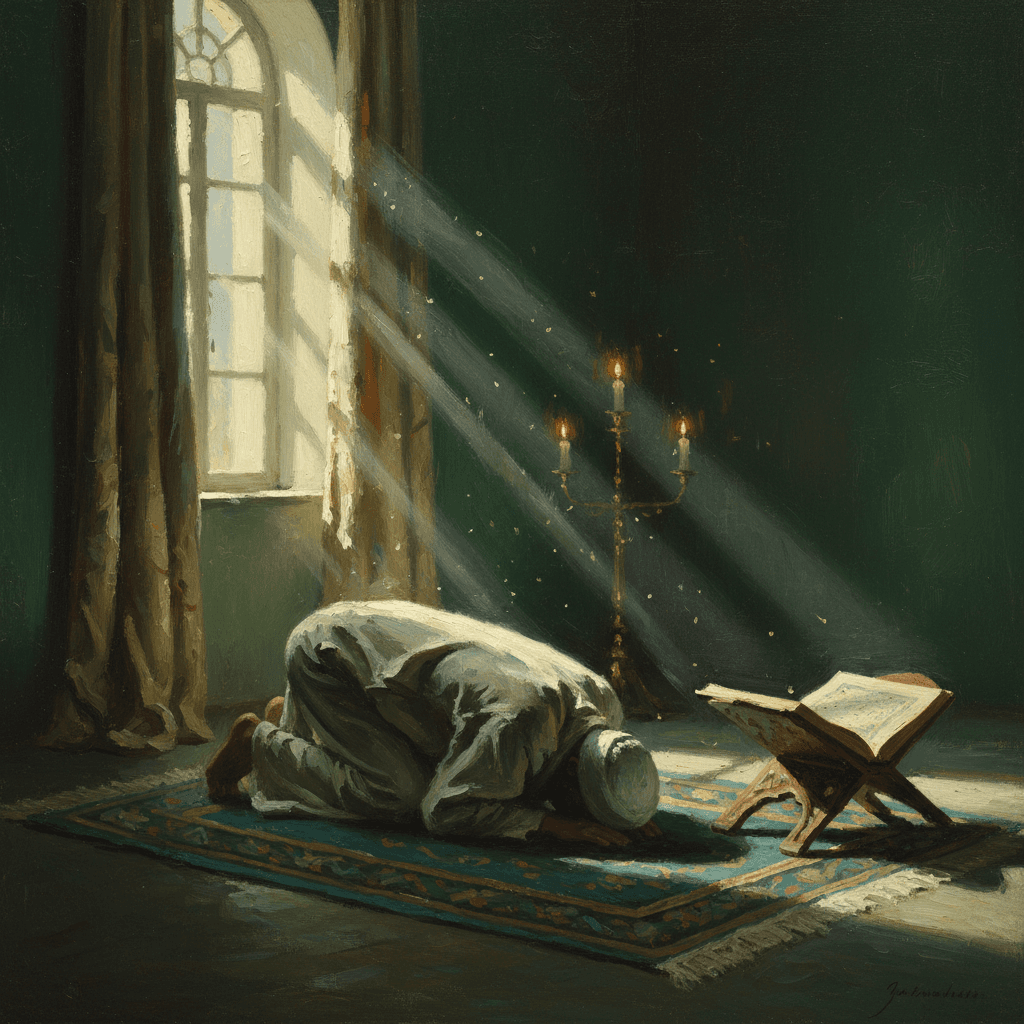
When you stand in prayer and turn toward Mecca, you are turning toward something that Ibrahim ﷺ built with his own hands. When you make dua, you are following the practice of the man Allah chose as His Khalil — His intimate friend. When you ask Allah for a righteous family, a consistent prayer life, and forgiveness, you are using the same words Ibrahim used thousands of years ago.
His duas are recorded in the Quran not as historical footnotes but as living supplications for every Muslim until the Day of Judgment.
Ibrahim ﷺ faced what might be the most demanding spiritual biography of any human in history. He was raised in a house of idol-worshippers and chose tawhid alone. He was thrown into a fire. He left his wife Hajar and infant son Isma'il in a barren valley with nothing but water and dates, and walked away at Allah's command. He was then told to slaughter that same son.
At every stage, his response was the same: supplication, trust, and action.
The duas of Ibrahim are the prayers of someone who was tested beyond anything most of us will ever experience — and who emerged as the closest friend Allah ever named.
The Duas of Prophet Ibrahim
While building the Ka'bah — the most famous dua for acceptance:
رَبَّنَا تَقَبَّلْ مِنَّا إِنَّكَ أَنتَ السَّمِيعُ الْعَلِيمُ
Rabbana taqabbal minna innaka anta as-sami'ul 'alim.
"Our Lord, accept from us. Indeed, You are the All-Hearing, the All-Knowing." — (Quran 2:127)
Asking for a righteous son — before Isma'il was born:
رَبِّ هَبْ لِي مِنَ الصَّالِحِينَ
Rabbi hab li minas-salihin.
"My Lord, grant me from among the righteous." — (Quran 37:100)
Asking to be an establisher of prayer, and for his descendants:
رَبِّ اجْعَلْنِي مُقِيمَ الصَّلَاةِ وَمِن ذُرِّيَّتِي رَبَّنَا وَتَقَبَّلْ دُعَاءِ
Rabbi-j'alni muqimas-salati wa min dhurriyyati rabbana wa taqabbal du'a.
"My Lord, make me an establisher of prayer, and from my descendants. Our Lord, and accept my supplication." — (Quran 14:40)
Asking for forgiveness for himself, his parents, and all believers:
رَبَّنَا اغْفِرْ لِي وَلِوَالِدَيَّ وَلِلْمُؤْمِنِينَ يَوْمَ يَقُومُ الْحِسَابُ
Rabbana-ghfir li wa liwalidayya wa lil-mu'minina yawma yaqumul hisab.
"Our Lord, forgive me and my parents and the believers the Day the account is established." — (Quran 14:41)
The Story Behind It
Each of these duas came from a real moment in Ibrahim's life.
He said Rabbana taqabbal minna while physically lifting stones to build the Ka'bah with Isma'il. They were doing something extraordinary — building the first House of Allah on earth at His command — and their first concern was not pride but acceptance. The greatest act of worship in Islamic geography was accompanied by the fear that it might not be enough. That combination of effort and humility is the mark of Ibrahim's entire life.
He said Rabbi hab li minas-salihin when he was old, childless, and had been making dua for a righteous son for years. He did not give up. He did not become bitter. He asked. And Allah gave him Isma'il, and then Ishaq, and described both as prophets in His Quran.
He said Rabbi-j'alni muqimas-salati not for himself alone but for his descendants — showing that Ibrahim's concern was not just his own standing but the spiritual legacy he would leave behind. He wanted his children, grandchildren, and generations after them to be people of prayer.
And he said the forgiveness dua — Rabbana-ghfir li wa liwalidayya — even for parents who had rejected him, maintaining love for family even across disagreement.
How to Use the Duas of Ibrahim Daily
Say Rabbana taqabbal minna after every act of worship. Ibrahim said it during the greatest act of worship in Islamic history. The habit of asking for acceptance after your smaller deeds — prayer, sadaqah, fasting, dhikr — is how you bring Ibrahim's humility into your daily life. It takes three seconds and transforms your relationship with worship.
Make Rabbi hab li minas-salihin your dua for family. If you are making dua for a righteous spouse, for children who will be people of faith, for your family to come back to Islam, or for your own righteousness — this is your dua. Ibrahim waited for years. The dua was answered completely. Your situation may take time. Say it consistently.
Say Rabbi-j'alni muqimas-salati when your prayer practice feels weak. This is a dua for prayer from the man who built the house that all prayers face. When you are struggling with consistency — missing prayers, feeling disconnected in Salah — this is the supplication that addresses the root. You are asking Allah to make you a person of prayer, which is a higher request than just asking yourself to pray more.
Include others in your dua for forgiveness. Ibrahim's forgiveness dua was comprehensive — himself, his parents, and all believers. When you make dua at the end of Salah or in your morning practice, include the same expansion: forgive me, forgive my family, forgive all the believers. This generosity in dua is itself a form of worship.
Use these duas in your regular morning adhkar. The duas of the Quran are the most reliable supplications in the tradition. Adding one of Ibrahim's duas to your morning practice connects you to the lineage of prophets and to the spiritual vocabulary that Allah Himself recorded as worthy of preservation.
Pray With the Words of the Friend of Allah
Add Ibrahim's duas to your daily practice. DeenBack helps you track your morning adhkar and dua habits so these powerful supplications become part of every day.


Free to download. A paid plan is required to use the app’s tools.
Related Duas
Dua for acceptance of deeds: The dua for acceptance of deeds builds directly on Rabbana taqabbal minna and covers how to make this supplication a consistent post-worship habit.
Dua for guidance: Ibrahim's entire life was an act of following divine guidance against all social and family pressure. The dua for guidance covers the Prophetic supplications for staying on the straight path.
Dua for forgiveness: Ibrahim's intercession for his people shows the scope of his concern for others. The dua for forgiveness covers the most powerful supplications for seeking Allah's pardon — for yourself and those you love.
Common Questions
Can I use the duas of Ibrahim even if my situation is different from his?
Yes. The Quran records these duas as preserved guidance for every Muslim until the end of time. They are not situational references — they are timeless expressions of the right relationship between a human being and Allah. Use Rabbana taqabbal minna after your daily Salah. Use Rabbi hab li minas-salihin when making dua for family. The circumstances are different; the relationship with Allah is the same.
Ibrahim was tested in extreme ways — does his example apply to ordinary life?
The Prophet ﷺ said the most severely tested people are the Prophets. But the principles Ibrahim demonstrated — dua in difficulty, patience in waiting, trust in Allah's plan, concern for family — apply directly to ordinary hardships. You do not need to be thrown into fire for tawakkul to be relevant. The small tests of daily life are where these principles are practiced.
What is the significance of Ibrahim being called Khalilullah?
Khalil means the friend whose love has penetrated every part of you. Ibrahim earned this title through complete submission — he sacrificed his son, his homeland, his social ties, his safety, and his comfort for Allah. The relationship was reciprocal: Allah named him His intimate friend. The lesson for us is that depth of relationship with Allah is proportional to depth of submission. The duas Ibrahim made were from the position of someone who had given everything and trusted Allah completely. That is the inner state from which these words carry their weight.
Closing
Ibrahim ﷺ built the Ka'bah with his own hands and asked Allah to accept it. He waited decades for a son and asked with patience. He raised his hands in dua in the valley of Mecca and asked Allah to provide for his family in a land without crops.
Allah answered every one of his duas.
Not because Ibrahim was perfect — the Quran records moments of his own acknowledgment of wrongdoing. But because he asked consistently, with sincerity, with full dependence on Allah, and without stopping.
His duas are in the Quran for you. Use them.
Build a Daily Practice With the Duas of the Prophets
The duas of Ibrahim, Yunus, and the Prophet ﷺ are available to every Muslim every day. DeenBack helps you make them part of your daily habit.
Free to download. A paid plan is required to use the app’s tools.
Frequently Asked Questions
What are the duas of Prophet Ibrahim in the Quran?
Ibrahim ﷺ made many duas recorded in the Quran: Rabbana taqabbal minna — Our Lord, accept from us (2:127); Rabbi hab li minas-salihin — My Lord, grant me from among the righteous (37:100); Rabbi-j'alni muqimas-salati wa min dhurriyyati — My Lord, make me an establisher of prayer and from my descendants (14:40); and Rabbana-ghfir li wa liwalidayya — Our Lord, forgive me and my parents (14:41).
Why is Prophet Ibrahim called Khalilullah?
Ibrahim ﷺ is called Khalilullah — the Friend of Allah — because of the depth of his love for and reliance on Allah. The word khalil implies an intimate, complete friendship — one whose love has penetrated every part of a person. Ibrahim demonstrated this through his absolute willingness to sacrifice everything: his homeland, his family's comfort, and his son — all because Allah asked. His duas reflect this deep relationship.
What is the most famous dua of Ibrahim?
The most widely recited dua of Ibrahim is Rabbana taqabbal minna innaka anta as-sami'ul 'alim — Our Lord, accept from us. Indeed, You are the All-Hearing, the All-Knowing. (Quran 2:127). It was said while building the Ka'bah with his son Isma'il — an act of worship so significant that we still face its direction in every prayer. Their fear of non-acceptance even then is one of the most humbling moments in the Quran.
Did Ibrahim make dua for his father who rejected Islam?
Yes. Ibrahim made dua for forgiveness for his father Azar, who was a disbeliever, because of a promise Ibrahim had made to him. (Quran 9:114). When it became clear to Ibrahim that his father would die as a disbeliever, he withdrew from making dua for him. This is a lesson in the proper limits of intercession — and also a testimony to Ibrahim's loyalty and love even toward those who opposed him.
How can I use the duas of Ibrahim in my daily life?
The duas of Ibrahim cover the most important areas of life: spiritual standing (prayer, righteousness), family (children who pray, righteous offspring), provision and belonging (Quran 14:35-37), and forgiveness. Say Rabbana taqabbal minna after every act of worship. Say Rabbi hab li minas-salihin when making dua for a righteous spouse or children. Say Rabbi-j'alni muqimas-salati when asking Allah to keep you consistent in prayer.