
- Published on
Dua for Waking Up at Night: The Prophetic Supplication for Night Hours
- Authors

- Name
- Ahmad
- Role
- Senior Marketing Manager, Islamic education • Deen Back
بِسْمِ اللهِ الرَّحْمٰنِ الرَّحِيْمِ
In the name of God, the Most Gracious, the Most Merciful.
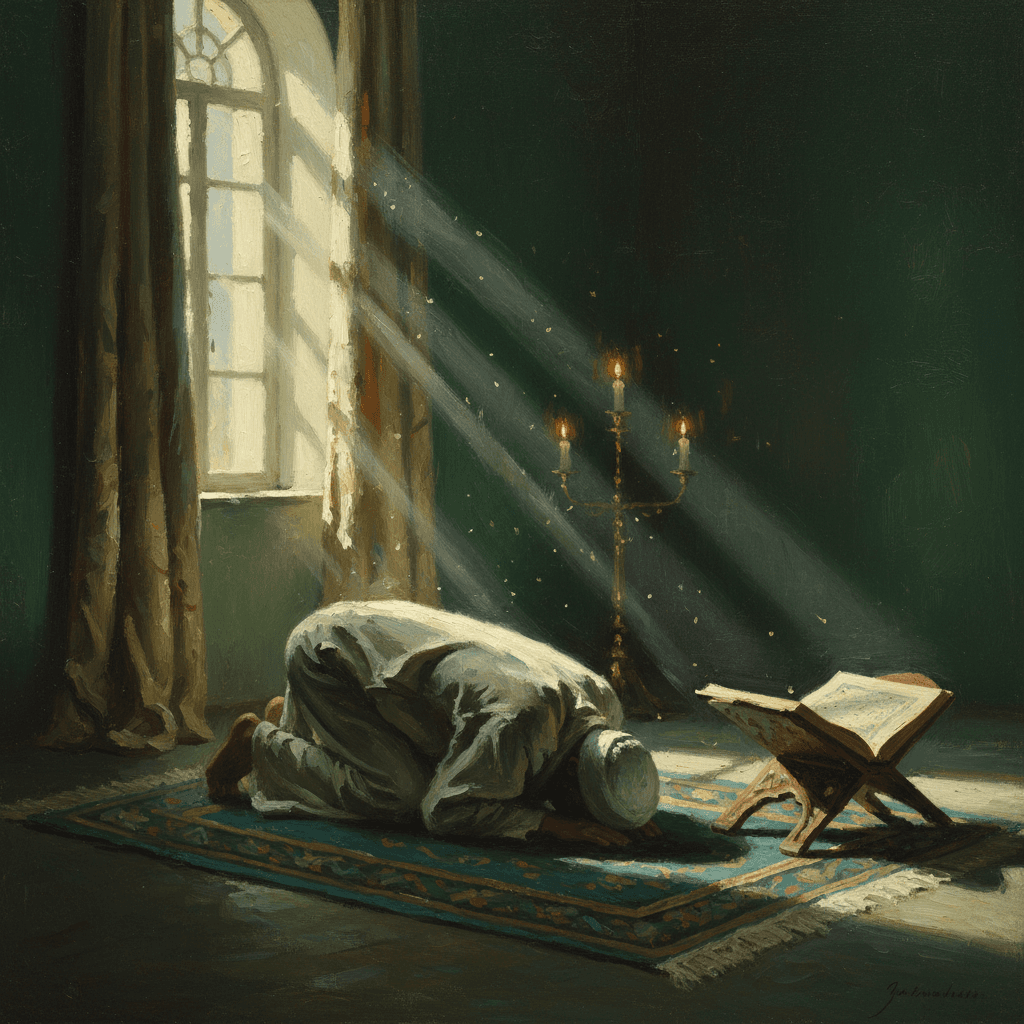
It is 3am. You are awake. You do not know why.
Maybe it was a sound. Maybe it was a dream you cannot quite remember. Maybe your mind just decided, for its own reasons, that it was done sleeping.
Most people lie there staring at the ceiling, frustrated, trying to force themselves back to sleep. Or they reach for the phone.
The Prophet (peace be upon him) had a different instruction for exactly this moment. He taught that waking in the night — for any reason — is an opportunity that has its own special dua, its own promise from Allah, and its own unique potential for the dua to be answered.
That 3am waking is not a problem. It might be the most significant moment of your day.
The Dua for Waking Up at Night
When you wake during the night, say:
لَا إِلَهَ إِلَّا اللَّهُ وَحْدَهُ لَا شَرِيكَ لَهُ، لَهُ الْمُلْكُ وَلَهُ الْحَمْدُ وَهُوَ عَلَى كُلِّ شَيْءٍ قَدِيرٌ، سُبْحَانَ اللَّهِ، وَالْحَمْدُ لِلَّهِ، وَلَا إِلَهَ إِلَّا اللَّهُ، وَاللَّهُ أَكْبَرُ، وَلَا حَوْلَ وَلَا قُوَّةَ إِلَّا بِاللَّهِ
La ilaha illallahu wahdahu la shareeka lahu, lahul-mulku wa lahul-hamdu wa huwa ala kulli shay'in qadir. Subhanallah, walhamdulillah, wa la ilaha illallah, wallahu akbar, wa la hawla wa la quwwata illa billah.
"There is no god but Allah, alone, without partner. His is the dominion and His is the praise, and He is over all things capable. Glory be to Allah. Praise be to Allah. There is no god but Allah. Allah is the Greatest. There is no power or strength except with Allah." — (Bukhari 1154)
The promise: The Prophet (peace be upon him) said: "Whoever says this and then makes dua, it will be answered." (Bukhari 1154)
When to say it: The moment you wake up at night — before checking your phone, before thinking about why you woke, before doing anything else. Eyes open. Dua first.
The Story Behind It
The Prophet (peace be upon him) was describing what happens in the spiritual realm during the night hours when he said: "Our Lord descends to the lowest heaven every night, during the last third of the night, and says: 'Is there anyone calling upon Me, so I may answer them? Is there anyone asking of Me, so I may give to them? Is there anyone seeking My forgiveness, so I may forgive them?'" (Bukhari 1145)
The night is different. The world is quiet. The distractions are gone. The nafs is resting. In that quiet, a sincerely raised hand reaches Allah in a way that the noise of the day sometimes cannot.
The Prophet (peace be upon him) himself used to wake regularly during the night. Aisha (may Allah be pleased with her) described that he would wake at night, say glorifications of Allah, and perform prayer — and she noted that his feet would sometimes swell from the length of his standing. When asked why he prayed so much when Allah had already forgiven all his sins, he replied: "Shall I not then be a grateful servant?" (Bukhari 4837)
The night was not when the Prophet escaped from worship. It was when he went deepest into it.
How to Make This Dua Part of Your Daily Life
You cannot always control when you wake at night. But you can control what you do when it happens. Here is how to build the habit:
Make it the first action. Before you move, before you reach for the phone, before you check the time — say the dua. The habitual response to night waking must be set in advance, or the default will always be the phone or frustration. Decide now: eyes open at night means dua first.
Memorize it in parts. The dua is longer than most. Break it into three sections and learn them separately. Section one is the tawhid declaration. Section two is the tasbeeh sequence. Section three is the hawqala. Each section is memorizable in minutes.
Have a personal dua ready. The promise of the hadith is that what follows the glorification is answered. This means you need something to ask. Before you sleep, decide what your current most pressing need is. When you wake in the night, the glorification launches you straight into that personal dua with a prepared heart.
If you wake in the last third, try to pray. The last third of the night — roughly the hour and a half before Fajr — is the most blessed time for prayer. If you find yourself awake during this time, performing even two rakaat of tahajjud is among the most powerful things you can do. See dua for tahajjud and dua for qiyam ul layl for the complete practice.
Do not fight the waking. When you accept that night wakings are opportunities rather than problems, your entire relationship with interrupted sleep changes. You stop being frustrated and start being ready.
Make the Night Work for Your Deen
Track your tahajjud nights, set reminders for pre-Fajr worship, and build the night habits that the Prophet considered among the most powerful. Download Deen Back.


Free download. Premium features available in-app.
Related Duas
Dua for sleeping (before you close your eyes):
The night begins with intention. See dua for sleeping for the Sunnah supplications that prepare you spiritually for sleep and prime you for any night waking.
Dua for tahajjud prayer:
If you wake in time to pray, see dua for tahajjud for the opening dua of the night prayer that the Prophet (peace be upon him) used.
Dua for the last third of night:
For the most blessed portion of the night, see dua for last third of night for specific supplications to make during this exceptional time.
Dua when you wake up:
For the dua said upon waking up in the morning, see dua for waking up — the companion practice to this one.
Common Questions
What if I am groggy when I wake up and cannot focus on the dua?
Say it anyway. Even groggy, habitual words carry weight when the habit is established. Allah knows your state. A sincere heart saying words while half-awake is still a heart turning toward Allah. Start with just the first line — la ilaha illallahu wahdahu — and build from there as the habit strengthens.
How do I know if I am waking in the last third of the night?
The last third begins at roughly two-thirds of the way through the night. If Fajr is at 5am and Isha was at 9pm, the night is eight hours. The last third starts around 2:20am. A quick calculation gives you a reference. Many Muslim prayer apps show this time.
Is this dua different from the regular morning waking dua?
Yes. This dua is specifically for nocturnal waking — during the sleep period, before Fajr. The morning waking dua (said upon rising for the day) is different in wording and context. Both are from authentic hadith; each serves its specific moment.
What if I wake up needing to use the bathroom — should I say the dua first?
The dua is said upon waking. If you need to use the bathroom urgently, handle that first, then say the dua afterward while returning to bed or while you are still awake. The spirit of the practice is to orient your waking moments toward Allah.
The Night Is Yours
While the world sleeps and the noise stops, there are people awake making dua. The Prophet (peace be upon him) described Allah calling out: "Is there anyone asking?"
That calling happens every single night. Right now, as you read this, sometime in the last third of every night, that invitation goes out.
The next time you wake at night, you have a choice: frustration and a phone screen, or the dua the Prophet taught — followed by the most personally urgent request of your heart.
Say the dua. Make your request. Go back to sleep knowing that you were heard.
Every Night Is a New Opportunity
Deen Back helps you build the night worship habits that transform your relationship with Allah — from tahajjud tracking to pre-Fajr reminders. Start your 30-day streak tonight.
Free download. Premium features available in-app.
Frequently Asked Questions
What is the dua for waking up at night in Islam?
The Prophet (peace be upon him) said: 'Whoever wakes up at night and says: La ilaha illallahu wahdahu la shareeka lahu, lahul-mulku wa lahul-hamdu wa huwa ala kulli shay'in qadir... and then makes dua, it will be answered.' (Bukhari 1154). This dua of glorification followed by personal supplication is the Prophetic framework for waking in the night.
What does the dua for waking up at night mean?
The dua translates as: 'There is no god but Allah, alone, without partner. His is the dominion and His is the praise, and He is over all things capable. Glory be to Allah. Praise be to Allah. There is no god but Allah. Allah is the Greatest. There is no power or strength except with Allah.' This comprehensive glorification covers Allah's oneness, power, and transcendence — making it a complete act of worship in itself.
Is this dua only for tahajjud prayer or for any night awakening?
The hadith applies to any waking during the night — not specifically for tahajjud. If you wake at 2am for water, or wake briefly and cannot sleep, this dua is appropriate. It transforms any nocturnal waking into a potential prayer answered. The opportunity is in the waking itself, whatever its cause.
What should I do after saying the dua for waking up at night?
The hadith says to follow the glorification with personal dua — asking Allah for whatever you need. If you are able, following with wudu and two rakat of prayer (tahajjud) is the full Sunnah practice. But even if you only say the glorification and personal dua without prayer, the promise of the hadith applies.
Why is the last third of the night so special in Islam?
Allah descends to the lowest heaven in the last third of every night and calls out: 'Is there anyone asking, so I may give? Is there anyone seeking forgiveness, so I may forgive?' (Bukhari 1145). The night hours — especially the last third before Fajr — are uniquely responsive to dua. Waking during these hours, intentionally or not, is an opportunity that most of the sleeping world is missing.