
- Published on
Dua for Protecting Faith: Guard Your Iman in a Distracting World
- Authors

- Name
- Ahmad
- Role
- Senior Marketing Manager, Islamic education • Deen Back
بِسْمِ اللهِ الرَّحْمٰنِ الرَّحِيْمِ
In the name of God, the Most Gracious, the Most Merciful.
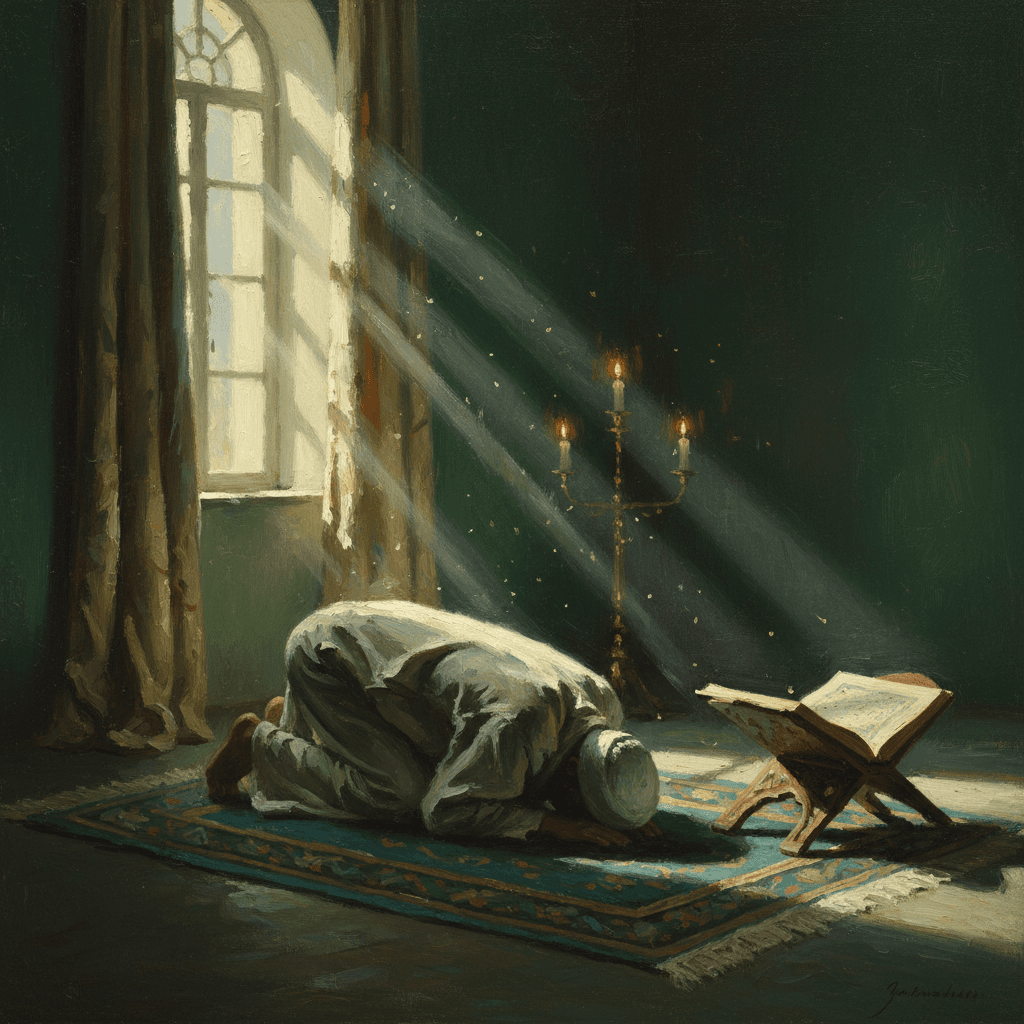
Faith does not usually collapse all at once. It drifts. Slowly, gradually, almost imperceptibly — prayer becomes routine, dhikr gets dropped, the Quran sits unopened more days than not, and at some point you look up and realize: something important has gone quiet inside.
You did not decide to drift. The drift happens through a thousand small choices that all pointed away from Allah, accumulating quietly until the distance became noticeable. And then the question becomes: how do I find my way back? And more importantly — how do I stop this from happening again?
The Dua for Protecting Faith
يَا مُقَلِّبَ الْقُلُوبِ ثَبِّتْ قَلْبِي عَلَى دِينِكَ
Ya Muqallibal-qulub, thabbit qalbi 'ala dinik
"O Turner of hearts, keep my heart firm upon Your religion."
— (Tirmidhi 3522 — hasan sahih)
When to say it: As part of your daily morning adhkar. During salah, after the tasleem. Whenever you feel the pull toward heedlessness (ghaflah), when temptation is strong, or when you notice your heart growing heavy with distance from Allah. Make it a brief anchor point throughout the day.
This dua names Allah as "Al-Muqallib al-Qulub" — the Turner of hearts. This is not a metaphor. It is a declaration of the reality that hearts are in Allah's hands, constantly moving, constantly susceptible to influence. The one who knows this asks Allah to keep the heart turned toward His religion.
The Story Behind This Supplication
Umm Salamah (may Allah be pleased with her), wife of the Prophet ﷺ, noticed that this was one of the duas he said most frequently. She asked him about it: "O Messenger of Allah, why do you make this dua so often?"
He ﷺ replied: "O Umm Salamah, there is no human being except that his heart is between two of the fingers of Ar-Rahman — if He wills, He keeps it firm; if He wills, He causes it to deviate. So we ask Allah to keep our hearts firm in His obedience, and we seek refuge in Him lest our hearts deviate after He has guided us." (Tirmidhi 3522)
This is a stunning piece of teaching. The Prophet ﷺ — the one whose character was described as "the walking Quran" — was making this dua because he understood the nature of hearts. Not from weakness, but from tawadu' (humility) and genuine understanding of what it means to be a created being whose heart is held by the Creator.
The Quran adds another layer: "Our Lord, do not cause our hearts to deviate after You have guided us, and grant us from Yourself mercy. Indeed, You are the Bestower." (Al-Imran, 3:8) The early Muslims considered this one of the most important duas in the Quran — a recognition that guidance is a gift that requires asking to be maintained.
How to Build Daily Faith Protection
Protecting faith requires both the dua and the habits that support what the dua is asking for:
Say this dua every morning without exception. The consistency is the point. You are not saying it because your faith is currently in crisis. You are saying it because protection is preventive, not reactive. A soldier does not put on armor after the battle — he puts it on before leaving the base.
Audit your daily inputs. What are you consuming most? If your social media feed, your entertainment choices, and your social circles are all pointing away from Allah, the drift becomes almost inevitable. This dua asks Allah to keep your heart firm — and you are called to make your environment support rather than fight that request.
Return to the Quran daily — even briefly. Even five minutes of Quran recitation with intention is a direct act of protecting faith. The Prophet ﷺ said: "The hearts rust just as iron rusts when water touches it." The companions asked: "What polishes them?" He said: "Remembrance of death and recitation of the Quran." (Bayhaqi)
Use salah as a daily anchor, not just an obligation. The five prayers are the structure Allah gave us to interrupt the drift every few hours. A prayer said with even minimal presence — a conscious acknowledgment before you stand that you are standing before Allah — is a renewal of connection, not just a checked box.
Track your consistency. The nafs will tell you that missing a day or two does not matter. Tracking shows you the truth. When you can see your streak of morning adhkar, the broken streak is visible and motivating in a way that vague intention is not.
Build the Daily Habits That Keep Iman Strong
DeenBack tracks your dhikr, adhkar, and dua habits — so protecting your faith becomes a daily practice, not something you only think about when you feel it slipping.


Free download. Premium features available in-app.
Related Duas for Firmness in Faith
Dua for steadfastness on the straight path:
رَبَّنَا لَا تُزِغْ قُلُوبَنَا بَعْدَ إِذْ هَدَيْتَنَا وَهَبْ لَنَا مِن لَّدُنكَ رَحْمَةً
Rabbana la tuzigh qulubana ba'da idh hadaytana wa hab lana min ladunka rahmah
"Our Lord, do not let our hearts deviate after You have guided us. And grant us from Yourself mercy." — (Quran, Al-Imran, 3:8)
Dua for strength in faith:
اللَّهُمَّ إِنِّي أَسْأَلُكَ الثَّبَاتَ فِي الْأَمْرِ وَالْعَزِيمَةَ عَلَى الرُّشْدِ
Allahumma inni as'aluka ath-thabata fil-amri wal-'azimata 'alar-rushd
"O Allah, I ask You for firmness in this matter and resolve upon right guidance." — (An-Nasa'i 1305 — authenticated)
For building the broader habit of maintaining faith, see how to increase iman and dua for increase in iman. When faith is already wavering, dua for steadfastness addresses the specific need of holding firm under pressure. The dua for ikhlas is a related companion — asking for sincerity, which is the internal quality that keeps faith authentic rather than performative.
Common Questions
Is it normal for iman to fluctuate? Completely normal — and expected. The companions of the Prophet ﷺ used to say "iman increases and decreases," and this was recorded as theological fact rather than weakness. Ibn Mas'ud reported that they would say to each other: "Come, let us believe for a while" — meaning, let us gather, remember Allah, and renew our faith. Fluctuation is built into the human experience; the response to it is consistent return.
Does making this dua mean I don't trust my own faith? It means you understand the nature of faith correctly. You are not doubting that you believe — you are acknowledging that belief is a living thing that needs to be nourished and protected. The Prophet ﷺ made this dua from profound understanding, not from insecurity.
What are the biggest threats to faith today? Endless distraction, normalization of haram in entertainment and social environments, the privatization of religion ("between me and Allah, no one else"), and the replacement of community with digital isolation. These are not unique to this generation, but their scale is. The protection is the same as it has always been: dhikr, Quran, prayer, community, and the consistent asking of Allah to keep the heart firm.
The Heart That Keeps Asking
Every time you say this dua, you are doing something profound: you are acknowledging that your faith is not something you own but something you hold — and the Hand that can keep it firm is far stronger and more reliable than yours.
This is not weakness. This is the exact relationship with Allah that the deen asks for: humble, consistent, and always returning.
Say it this morning. Say it after every prayer. Make it the dua that anchors every other habit of faith.
Keep Your Iman Strong — One Day at a Time
DeenBack helps you build the consistent daily practices that protect and strengthen faith — dhikr tracking, habit streaks, and morning adhkar — because iman is a living thing that needs daily care.
Free download. Premium features available in-app.
Frequently Asked Questions
What is the best dua for protecting your faith (iman)?
The Prophet ﷺ frequently made the dua: 'Ya Muqallibal-qulub, thabbit qalbi 'ala dinik' — 'O Turner of hearts, keep my heart firm upon Your religion.' (Tirmidhi 3522) He made this dua so often that Umm Salamah asked him about it, and he explained that the hearts of the children of Adam are between the fingers of Ar-Rahman who turns them as He wills.
Why did the Prophet ﷺ make dua to protect his own faith?
Because even the best of hearts needs to ask Allah for firmness. This dua teaches a fundamental principle: faith is not self-sustaining. It grows through connection with Allah and can weaken without it. If the Prophet ﷺ — the most complete believer — made this dua regularly, it tells us something important about the nature of iman and how it is protected.
How do I know if my faith is weakening?
Signs of weakening iman include: prayers becoming a burden rather than a relief, decreased sensitivity to what is haram, difficulty concentrating in worship, the Quran feeling distant or dry, and a general heaviness or disconnection from Allah. These are signals from the fitrah, not condemnations. They call for increased dhikr, dua, and reconnection — not guilt.
Is it possible to lose faith permanently?
Allah says in the Quran: 'Do not despair of the mercy of Allah.' (Az-Zumar, 39:53) The door of tawbah (repentance) remains open as long as a person is alive and the soul has not reached the throat. Even a person who has wandered far from Islam can return. Making this dua is itself an act of protecting faith — it keeps the rope between you and Allah taut.