
- Published on
Dua for Reconnecting with Allah: When You Feel Spiritually Distant
- Authors

- Name
- Ahmad
- Role
- Senior Marketing Manager, Islamic education • Deen Back
بِسْمِ اللهِ الرَّحْمٰنِ الرَّحِيْمِ
In the name of God, the Most Gracious, the Most Merciful.
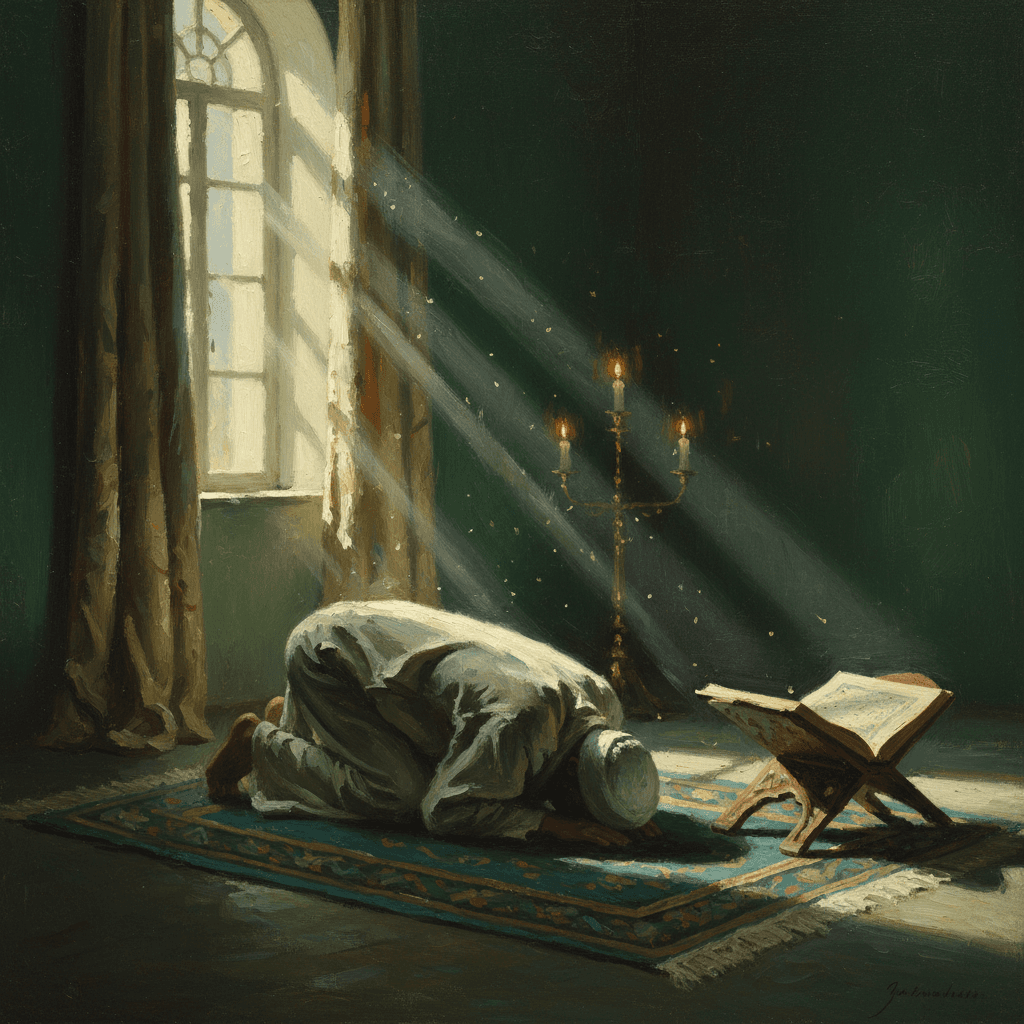
There is a specific kind of spiritual loneliness that comes not from being alone but from feeling far from Allah even while going through the motions of your deen. You are praying. You are fasting when you should. And yet something feels closed. The words don't land the way they used to. The connection feels thin.
This is not abandonment — it is distance. And distance can be closed.
The Prophet ﷺ left us a dua for exactly this state: not just asking for forgiveness for having drifted, but asking for the love that makes you want to return. Because reconnection is not primarily about discipline — it is about desire. And desire for Allah can be asked for, just like anything else.
The Dua for Reconnecting with Allah
اللَّهُمَّ إِنِّي أَسْأَلُكَ حُبَّكَ وَحُبَّ مَنْ يُحِبُّكَ وَحُبَّ عَمَلٍ يُقَرِّبُنِي إِلَى حُبِّكَ
Allahumma inni as'aluka hubbak, wa hubba man yuhibbuk, wa hubba 'amalin yuqarribuni ila hubbik
"O Allah, I ask You for Your love, the love of those who love You, and the love of deeds that bring me closer to Your love."
— (Tirmidhi 3490 — sahih)
When to say it: In the morning adhkar as a daily orientation of the heart. After every prayer, especially when the prayer felt distant or mechanical. When you notice you have been going through religious routines without feeling. When you miss the closeness you used to feel with Allah. This is the dua you say not when you are in crisis, but when you want to actively build the bridge back.
Notice what it asks for: love. Not compliance. Not discipline. Not just correcting behavior. The dua asks for a felt, real experience of being drawn toward Allah — and then asks for the secondary form of that love: love for the people whose love of Allah reflects it back to you, and love for the actions that the path toward Allah is made of.
The Story Behind This Supplication
Mu'adh ibn Jabal (may Allah be pleased with him) reported that the Prophet ﷺ took him by the hand and said: "O Mu'adh, by Allah, I love you." Then he said: "O Mu'adh, I advise you: do not miss saying at the end of every prayer: 'Allahumma a'inni 'ala dhikrika wa shukrika wa husni 'ibadatik' — O Allah, help me to remember You, to thank You, and to worship You well." (Abu Dawud 1522)
That context — the Prophet ﷺ expressing love and then immediately giving a tool for maintaining connection — is the heart of what reconnection looks like in practice. The tool for reconnection is always given in love, not in obligation.
The companion dua for reconnecting with Allah appears in the advice of the Prophet ﷺ to his companions regularly. He ﷺ taught them to ask for Allah's love because he knew that love — not fear, not habit, not social pressure — is the most powerful and most sustainable motivator for the spiritual life. When you love Allah, you do not need to force yourself toward His remembrance. You want to be there.
How to Actually Reconnect — Not Just Ask
Dua is the foundation, but reconnection also requires the actions that create conditions for feeling:
Slow down your salah intentionally. If prayer feels like a box to check, change the pace. Take one extra second before the opening takbir. Understand the translation of Al-Fatiha line by line before you begin. Let one rakat be slower and more deliberate than it usually is. You cannot feel connection at full speed.
Return to the Quran without an agenda. Not for memorization, not for a specific amount — just open it and read slowly. Five minutes of genuine engagement with the words of Allah, with attention and reflection, creates more reconnection than thirty minutes of fast recitation done out of obligation.
Spend time with people who love Allah. The dua specifically asks for "the love of those who love You." The Companions understood this — they would gather intentionally to renew faith together. Find or build a circle, even a small one, where the conversation turns toward Allah naturally.
Identify what created the distance. Usually there was a specific season, choice, or habit that started the drift. Not to punish yourself for it, but to understand the mechanism. If it was excessive screen time, social media, or a particular environment — address that while rebuilding the connection. Ask for dua for consistency in worship to support the rebuild.
Use the app as scaffolding, not a substitute. Habit tracking tools work best as support structures during the rebuilding phase. Use them to rebuild the daily adhkar practice, track the dua habit, and create a streak that gives your nafs a visible reason to keep going.
Rebuild Your Connection with Allah — One Daily Habit at a Time
DeenBack helps you track morning duas, rebuild consistent adhkar habits, and create the daily practice that turns the desire to reconnect with Allah into something you actually do every day.


Free download. Premium features available in-app.
Related Duas for Spiritual Reconnection
Dua for help in remembering Allah:
اللَّهُمَّ أَعِنِّي عَلَى ذِكْرِكَ وَشُكْرِكَ وَحُسْنِ عِبَادَتِكَ
Allahumma a'inni 'ala dhikrika wa shukrika wa husni 'ibadatik
"O Allah, help me to remember You, thank You, and worship You well." — (Abu Dawud 1522, Ahmad — sahih)
Dua for sincerity in worship:
اللَّهُمَّ إِنِّي أَعُوذُ بِكَ أَنْ أُشْرِكَ بِكَ وَأَنَا أَعْلَمُ وَأَسْتَغْفِرُكَ لِمَا لَا أَعْلَمُ
Allahumma inni a'udhu bika an ushrika bika wa ana a'lamu wa astaghfiruka lima la a'lam
"O Allah, I seek refuge in You from associating anything with You knowingly, and I ask Your forgiveness for what I do not know." — (Ahmad 19606 — sahih by Albani)
For the path from distance back to closeness, see dua for spiritual growth and dua for ikhlas. For rebuilding iman from the ground up, how to increase iman provides a practical framework. When the distance has been long, dua for repentance addresses the step of returning before rebuilding.
Common Questions
What if making dua for reconnection does not make me feel anything? Feeling is not the measure of the dua's acceptance. Say it anyway. The spiritual state you are asking for is built through consistent asking and consistent action — not through a single emotional breakthrough. Many of the great scholars of Islam experienced long periods of spiritual dryness during which they maintained their practice without feeling, and reported that the feeling returned, deeper than before, after sustained patience.
How do I know if I am reconnecting or just going through motions again? Signs of genuine reconnection: prayers begin to feel less like obligations and more like conversation; the Quran feels alive rather than foreign; you begin to notice small blessings and feel gratitude without effort; the thought of Allah enters the mind in ordinary moments rather than only in designated worship times. These come gradually, then suddenly.
Is reconnecting with Allah the same as tawbah (repentance)? Related but not identical. Tawbah is specifically returning from a sin — stopping it, regretting it, resolving not to return. Reconnection is broader: it is the general reorientation of the heart toward Allah after a period of heedlessness that may not have involved any specific major sin. Both require sincere turning back; reconnection focuses more on rebuilding proximity while tawbah focuses on repairing what was damaged.
Love Is the Path Back
You cannot force yourself to feel close to Allah. But you can ask for the love that creates closeness, and you can do the small acts that love builds on.
Say this dua today. Say it after every prayer for the next week. And while you say it, let yourself mean it — not as a religious obligation but as a genuine reaching: Ya Allah, I want to love You. I want to be near You. Help me find my way back.
That reaching is already the beginning of the return.
Ask for the Love That Brings You Back to Allah
DeenBack supports your daily practice of dua, dhikr, and worship — helping you rebuild consistent habits that make spiritual reconnection not just a feeling but a daily way of living.
Free download. Premium features available in-app.
Frequently Asked Questions
What is the best dua for reconnecting with Allah?
The Prophet ﷺ taught a supplication that translates to: 'O Allah, I ask You for Your love, the love of those who love You, and the love of deeds that bring me closer to Your love.' (Tirmidhi 3490) This dua asks for the love of Allah — which is the root of all spiritual reconnection — and for the love of the actions and people that bring you closer to Him.
Why do I feel disconnected from Allah even when I am praying?
Disconnection during prayer — or despite prayer — usually comes from ghaflah (heedlessness): going through the motions without the heart being present. The antidote is not to pray more but to pray with more presence. Slow down. Understand what you are saying. Begin each prayer with one moment of conscious intention. The quality of a few prayers done with presence exceeds the quantity of many done automatically.
How long does it take to reconnect with Allah after a period of distance?
There is no fixed timeline. The reconnection begins the moment you turn back with sincerity — that first genuine dua, that first prayer said with actual attention. The feeling of reconnection builds over days and weeks as habits are rebuilt. The Prophet ﷺ said that Allah rushes to the servant who walks toward Him — He comes running. The turning is yours; the meeting is His to give.
Is it normal to go through periods of feeling distant from Allah?
Yes. The Companions themselves described periods of spiritual heaviness and distance. Ibn Mas'ud reported that they would say: 'Come, let us believe for a while' — actively gathering to renew faith together. Spiritual distance is not a failure of faith but a natural fluctuation that calls for intentional return, not guilt.