
- Published on
Dua for Increase in Iman: How to Ask Allah to Strengthen Your Faith
- Authors

- Name
- Ahmad
- Role
- Senior Marketing Manager, Islamic education • Deen Back
بِسْمِ اللهِ الرَّحْمٰنِ الرَّحِيْمِ
In the name of God, the Most Gracious, the Most Merciful.
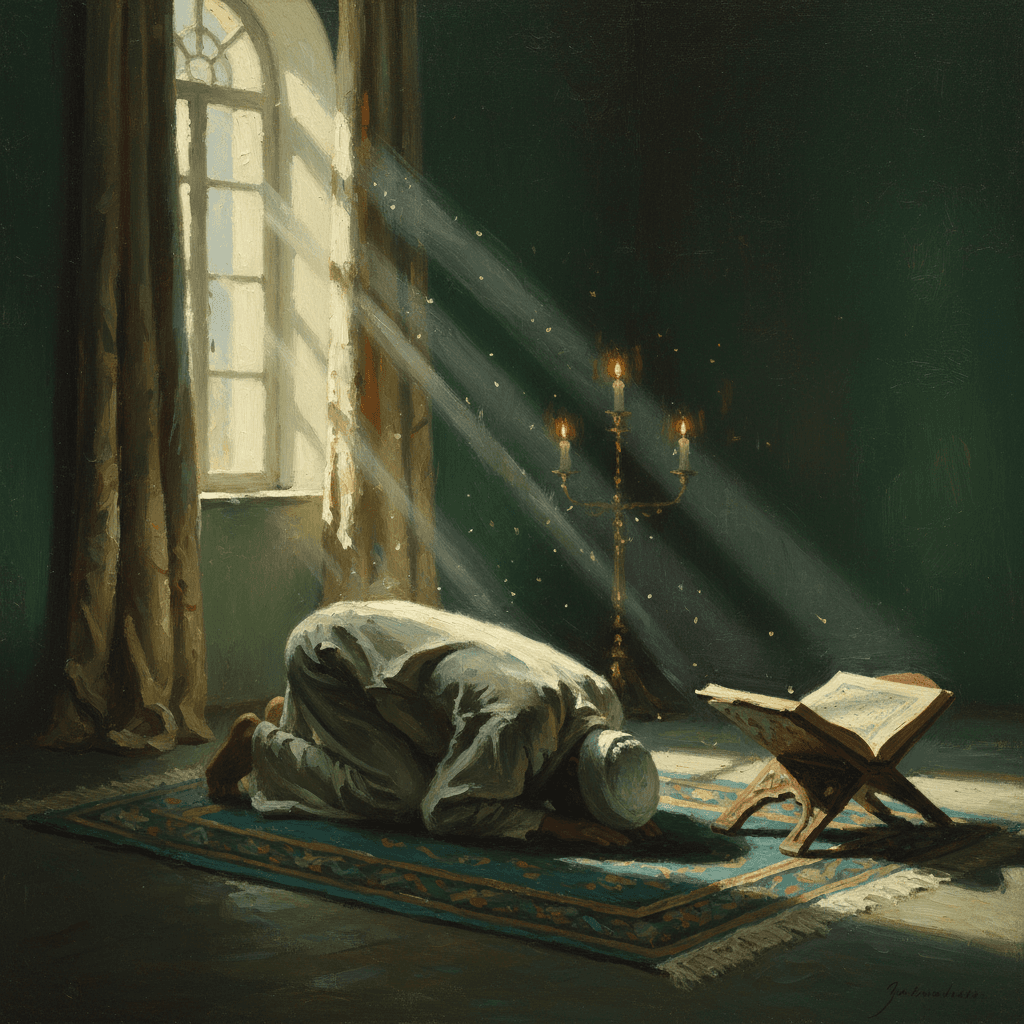
There is a specific kind of spiritual low that is hard to describe but immediately recognizable. Prayer feels mechanical. The Quran does not land the way it used to. You know all the same things you always knew about Islam, but the knowledge sits in your head without touching your heart. You are going through the motions, and you know it.
This is not apostasy. It is not hypocrisy. It is the fluctuation of iman that every sincere Muslim experiences.
Hanzalah al-Usaidi, one of the Companions, came to Abu Bakr in distress once and said: "Hanzalah has become a hypocrite." Abu Bakr was alarmed. Hanzalah explained: "When we are with the Messenger of Allah, he reminds us of Hellfire and Paradise and it feels as if we can see them. But when we leave him and return to our families and our concerns, we forget much of that." Abu Bakr said he experienced the same.
They went together to the Prophet ﷺ. He said: "If you were to remain as you are when you are with me, the angels would shake hands with you in your homes and on your roads. But Hanzalah, there is a time for this and a time for that." (Muslim 2750)
Iman fluctuates. The Prophet ﷺ said so. The question is what you do when it is low.
The Duas for Increase in Iman
The dua the Prophet ﷺ said frequently — for firmness of heart:
يَا مُقَلِّبَ الْقُلُوبِ ثَبِّتْ قَلْبِي عَلَى دِينِكَ
Ya Muqallib al-qulub, thabbit qalbi 'ala dinik.
"O Turner of hearts, keep my heart firm upon Your religion." — (Tirmidhi 3522)
The Quranic dua — asking for steadfastness after guidance:
رَبَّنَا لَا تُزِغْ قُلُوبَنَا بَعْدَ إِذْ هَدَيْتَنَا وَهَبْ لَنَا مِن لَّدُنكَ رَحْمَةً إِنَّكَ أَنتَ الْوَهَّابُ
Rabbana la tuzigh qulubana ba'da idh hadaytana wa hab lana min ladunka rahmatan innaka anta al-Wahhab.
"Our Lord, do not let our hearts deviate after You have guided us, and grant us from Your mercy. Indeed, You are the Bestower." — (Quran 3:8)
The first dua asks for firmness. The second asks for protection from deviation. Used together, they cover the two main threats to iman: the heart that is unstable and needs steadying, and the heart that has been guided and needs protecting.
The Story Behind It
The Companions noticed that the Prophet ﷺ said Ya Muqallib al-qulub often. Umm Salamah (may Allah be pleased with her) asked him about it. He explained: "O Umm Salamah, there is not a human being except that his heart is between two of the Fingers of the Most Merciful. Whoever He wills, He keeps firm, and whoever He wills, He causes to deviate." (Tirmidhi 3522)
Consider what this hadith contains. The Prophet ﷺ — the best of creation, guaranteed Jannah, the one whose character was described as the Quran itself — said this dua frequently. Not because he doubted his own faith, but because he understood something deep about the nature of the heart.
The heart is not yours to control completely. It is held by Allah. The appropriate response to that reality is not anxiety — it is consistent, sincere dua. Not desperate dua, but the calm, regular dua of someone who understands their dependence.
This is the model for increasing iman: not willpower alone, but the combination of sincere dua and deliberate daily action.
How to Make This Dua Part of Your Daily Practice
Say Ya Muqallib al-qulub in your morning adhkar. This dua is short, powerful, and fits naturally in the post-Fajr adhkar sequence. Saying it every morning before your day begins sets a spiritual orientation: you are asking Allah to keep you firm before the day's distractions and tests begin.
Say it when iman feels particularly low. This dua is not only for normal maintenance. In the moments when faith feels most distant — after a sin, after a period of heedlessness, after a difficult event that shook you — saying Ya Muqallib al-qulub, thabbit qalbi is an act of turning back. You are addressing the One who holds your heart directly.
Pair the dua with one iman-building action. Dua without action is incomplete. After you say the dua for iman, choose one small act: read one page of Quran, complete the morning adhkar, pray two rakaat of voluntary prayer. The combination of dua and action is what the Prophet ﷺ modeled. He said the dua, and he was also the most consistent of all humans in worship.
Make the Quranic dua (3:8) a regular recitation. Rabbana la tuzigh qulubana is a dua that acknowledges a fear: deviation after guidance. It is the dua of someone who knows they have been guided and is afraid of losing it. This awareness — held lightly, not anxiously — is a healthy spiritual state.
Seek the company of people whose iman you admire. The Prophet ﷺ said a person follows the religion of their close friends (Abu Dawud 4833). The environment is not everything, but it is significant. Hanzalah noticed his iman dropped when he left the Prophet's company. That is not weakness — that is information. Protect your circle.
Build the Daily Habits That Keep Your Iman Growing
Morning adhkar, consistent dua, daily Quran — DeenBack helps you track the small actions that compound into strong iman over time. Start your streak today.


Free to download. A paid plan is required to use the app’s tools.
Related Duas
Dua for guidance: Dua for guidance covers the supplications for staying on the straight path — the ongoing guidance that iman requires to remain strong.
Dua for repentance: When iman has dropped because of sins, the dua for repentance is the direct path back. Tawbah clears what sins have obscured and allows iman to recover.
Dua for morning: The morning duas are among the most effective iman-boosting practices in the Sunnah. Starting the day with them sets a baseline that makes the rest of the day spiritually healthier.
Common Questions
How do I know if my iman is increasing or decreasing?
Signs of increasing iman: worship feels less effortful and more natural; you notice discomfort when approaching sins rather than comfort; good deeds multiply (one good deed makes the next easier); you think about Allah more naturally in daily life; your gratitude is more instinctive. Signs of decreasing iman: the opposite. Use these as a practical self-assessment, not as a basis for despair — awareness of decrease is itself a mercy.
Does committing a major sin destroy iman?
A major sin weakens iman significantly but does not exit a person from Islam (except for shirk). The Prophet ﷺ said that the zina-committer is not a believer at the time of committing it, but this means in complete faith, not in the basic sense of being Muslim. The path back is tawbah — immediate, sincere, with a commitment to change. Iman can recover from major sins when followed by genuine repentance.
Is it possible to have iman that never decreases?
The Prophet ﷺ described the fluctuating nature of iman as inherent to the human condition. The goal is not flatline iman but overall upward trajectory — and a recovery reflex. The sign of a serious Muslim is not that their iman never dips, but that they never stay in the low without actively working to climb back.
Closing
Your iman will fluctuate. That is not a flaw in your faith — it is a feature of being human. What matters is the direction you choose when it is low.
The Prophet ﷺ turned to Allah with Ya Muqallib al-qulub — and he did it before the dip came, as prevention, not only as cure. Make that dua your daily practice. The heart that regularly asks Allah to keep it firm is far more resilient than the heart that only cries out in the moments of crisis.
Ask now. Build now. Trust that the One who holds your heart will keep it firm when you sincerely ask Him to.
Protect Your Iman With Daily Consistency
A daily practice of dhikr, dua, and Quran is the best protection against spiritual decline. DeenBack helps you build and track that practice every day.
Free to download. A paid plan is required to use the app’s tools.
Frequently Asked Questions
What is the dua for increase in iman?
The Prophet ﷺ said frequently: Ya Muqallib al-qulub, thabbit qalbi 'ala dinik — O Turner of hearts, keep my heart firm upon Your religion. (Tirmidhi 3522). Also from the Quran: Rabbana la tuzigh qulubana ba'da idh hadaytana wa hab lana min ladunka rahmatan innaka anta al-Wahhab — Our Lord, do not let our hearts deviate after You have guided us, and grant us from Your mercy. (Quran 3:8)
Why does iman go up and down?
Iman is not a fixed state — it rises with acts of worship, good deeds, and remembrance of Allah, and it decreases with sins, heedlessness, and distance from worship. This is well-established in Islamic theology: the Companions themselves described experiencing this fluctuation. The solution is not to find a static state but to actively manage the factors that raise and lower iman.
What increases iman the most?
The strongest iman-boosters are: consistent prayer (especially at their appointed times), recitation of the Quran with reflection, voluntary fasting, dhikr and morning adhkar, being in the company of righteous people, contemplating Allah's creation, and giving charity. The Prophet ﷺ said the Quran was revealed to increase iman: 'And when His verses are recited to them, they increase in faith.' (Quran 8:2)
Is a period of low iman a sin?
No. The Companions experienced periods of low iman and came to the Prophet ﷺ distressed about it. He did not rebuke them — he explained that iman fluctuates and told them to renew it with remembrance of Allah and reflecting on death. (Muslim 2750). Low iman becomes a problem if it is accompanied by abandoning obligations or becoming comfortable with sins. But the fluctuation itself is a normal human experience.
How long does it take for iman to increase after a low period?
There is no fixed timeline. What matters is the direction of movement. Even small daily acts — one page of Quran, morning adhkar, a few rakaat of Salah beyond the obligatory — begin to turn the direction. Iman is sensitive to consistent small inputs. A week of morning dhikr and a page of Quran daily will produce a noticeable difference in how your heart feels.