
- Published on
Dua for Good Character: The Supplication the Prophet Said in Every Prayer
- Authors

- Name
- Ahmad
- Role
- Senior Marketing Manager, Islamic education • Deen Back
بِسْمِ اللهِ الرَّحْمٰنِ الرَّحِيْمِ
In the name of God, the Most Gracious, the Most Merciful.
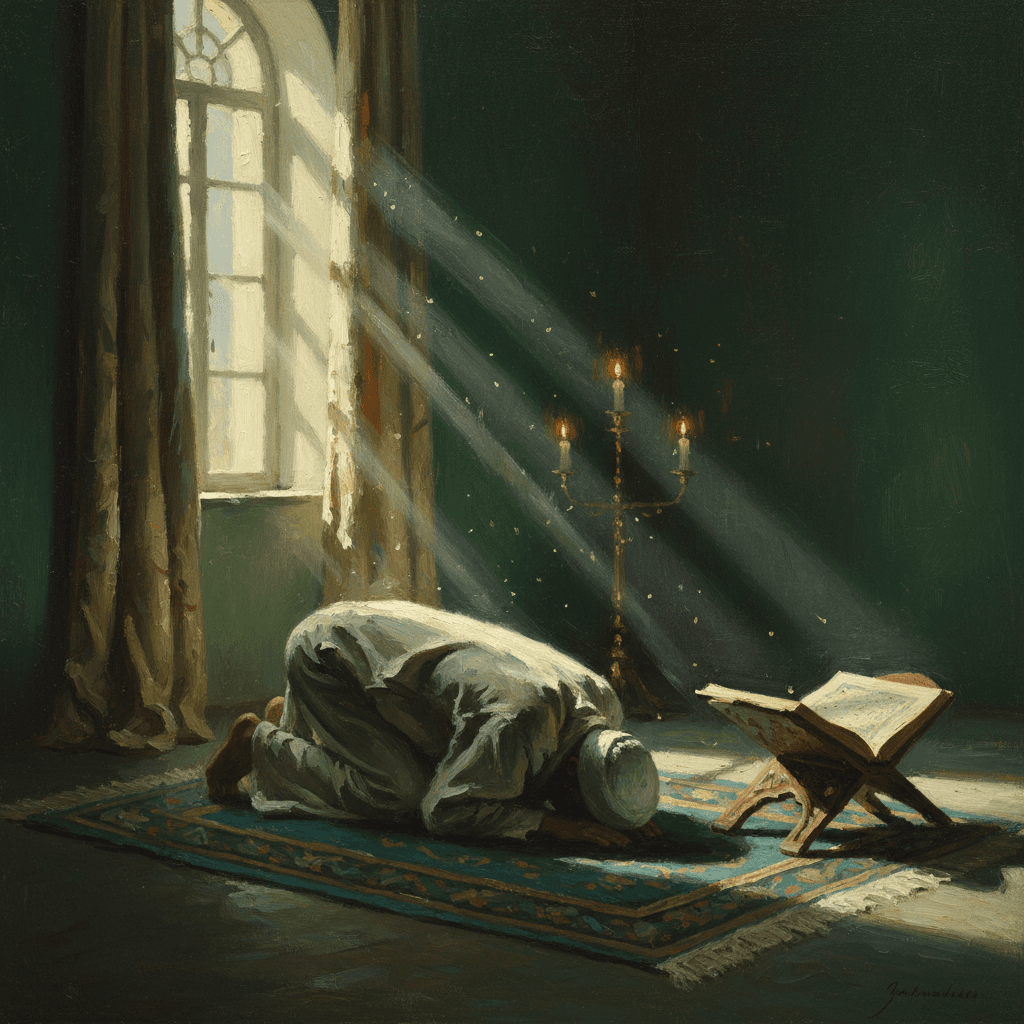
Every Muslim knows the hadith: the Prophet ﷺ said he was sent to perfect noble character. Most people hear it as a statement about Islam's values. It is also a practical instruction about what we should be working on.
Akhlaq (أَخْلَاق) — character, manners, conduct — is not peripheral to the deen. It is central. The Prophet ﷺ said the heaviest thing on the Scale of Deeds on the Day of Judgment would be good character. (Tirmidhi 2002). A person who prays and fasts but has terrible akhlaq is outweighed on the scales by someone whose character is genuinely excellent.
This should change how you prioritize your spiritual development. Not less prayer. Not less fasting. But a serious investment in the question: who am I to the people around me?
The Prophet ﷺ understood this so deeply that he included the dua for good character in his opening supplication in Salah. Every prayer he began with a direct request to Allah to guide him to the best of character and turn away the worst of it. If he needed this dua, so do you.
The Dua for Good Character
The opening supplication of the Prophet ﷺ — said at the start of Salah:
اللَّهُمَّ اهْدِنِي لِأَحْسَنِ الْأَخْلَاقِ لَا يَهْدِي لِأَحْسَنِهَا إِلَّا أَنْتَ وَاصْرِفْ عَنِّي سَيِّئَهَا لَا يَصْرِفُ عَنِّي سَيِّئَهَا إِلَّا أَنْتَ
Allahumma ihdini li-ahsanil-akhlaq, la yahdi li-ahsaniha illa ant, wasrif 'anni sayyi'aha, la yasrifu 'anni sayyi'aha illa ant.
"O Allah, guide me to the best of character, for none can guide to the best of it but You, and turn away from me the worst of character, for none can turn the worst of it away from me but You." — (Muslim 771)
Two requests in one dua: guide me toward the best, and turn away the worst. The first is active attraction toward virtue. The second is active protection from vice. Both are asked of Allah, because both are beyond what the nafs can accomplish alone.
The phrase la yahdi li-ahsaniha illa ant — none can guide to the best of it but You — is a declaration of complete dependence. You are not asking for motivational advice. You are acknowledging that genuine improvement of character requires divine guidance, not just willpower.
The Story Behind It
'Ali ibn Abi Talib (may Allah be pleased with him) narrated this dua directly from the Prophet ﷺ, describing how he would begin his prayer. (Muslim 771)
The fact that this dua was the Prophet's opening supplication — said before the recitation of Al-Fatiha, before the main body of Salah — is significant. He began his conversation with Allah by immediately asking for character. Before everything else, fix my character. Guide me to the best of it. Protect me from the worst of it.
The Prophet ﷺ also said: "I was only sent to perfect noble character." (Ahmad 8952). This was not a secondary mission after the transmission of rulings and rituals. It was the stated purpose. The entire structure of Islamic practice — prayer, fasting, charity, pilgrimage — exists to produce human beings of excellent character. Salah five times a day is training for patience, punctuality, and submission. Fasting is training for self-control and empathy. Zakat is training for generosity and detachment. The rituals are the method; character is the goal.
When you make this dua, you are aligning yourself with that purpose.
How to Build Good Character with This Dua
Character is not changed by a single resolution. It is built through small choices, consistently made, over months and years. The dua supports that process by keeping Allah involved in it.
Add this dua to your Salah opening. The prescribed opening dua (isti'ftah) varies — many Muslims use the more common "Subhanakallahumma wa bihamdik." Adding or alternating with the Prophet's character dua is a beautiful practice. Even if you do not say it in every prayer, saying it in at least one prayer per day keeps the intention alive.
Use it before difficult interactions. The situations that test character most are specific and predictable: dealing with someone who irritates you, having a disagreement, receiving criticism, facing a situation where anger is the easiest response. Say the dua before you walk into those situations. Ask for guidance to the best character in this specific moment.
Identify one character flaw to work on at a time. The nafs has many bad traits. Trying to fix all of them simultaneously leads to burnout. Pick one — perhaps anger, or harsh speech, or impatience — and make it your focus for a month. Pair the general dua with a specific intention: "O Allah, guide me to the best character specifically in how I speak to the people I love."
Track the gap between private and public conduct. Good character is not how you behave when people are watching. It is how you treat the people who have no power over you — your family at home, service workers, people who cannot reward or punish you. Ikhlas and good character are deeply connected: the Muslim whose private conduct matches their public conduct is making real progress.
Connect character to the dua for guidance. The Prophet said in the same prayer sequence: guide me to the straight path, and guide me to the best of character. These are not separate requests. Character is the lived expression of guidance.
Work on Your Character One Day at a Time
DeenBack helps you track daily habits that build character — dhikr, patience, consistency, gratitude. Build the streak that shapes who you become.


Free to download. A paid plan is required to use the app’s tools.
Related Duas
Dua for guidance: Dua for guidance covers the four-part supplication the Prophet said regularly — guidance, piety, chastity, self-sufficiency. Good character requires all four.
Dua for anger: When anger is the specific character flaw you are working on, the dua for anger provides the Prophetic supplications and practical steps for one of the most common struggles with akhlaq.
Dua for patience: Patience (sabr) is the foundation of most good character. The dua for patience covers the Quranic and Prophetic supplications specifically for developing this essential virtue.
Common Questions
What if I make dua for good character but still respond badly in difficult situations?
Then make the dua again. Character development is not linear. The Prophet ﷺ said whoever tries to be patient, Allah makes them patient — man tazabbar. The verb implies effort that is sometimes imperfect. You do not become patient by succeeding every time. You become patient by returning to the intention after every failure. The same applies to all character virtues.
Is it too late to change my character as an adult?
No. The Prophet ﷺ himself said we can be made patient through effort and trying. He did not put an age limit on this. Classical scholars who wrote about character — Ibn al-Qayyim, Imam al-Ghazali, Ibn Hazm — all wrote for adult readers who were mid-journey, not children at the starting line. Character change in adulthood is harder and slower, but it is real and it is achievable.
How do I know my character is actually improving?
Look for these signs: your first instinct in a difficult situation changes. You notice bad patterns before they complete, not only in hindsight. People around you — especially those closest to you, who cannot be fooled — treat you differently. And most importantly: you become more honest with yourself about your own flaws, rather than more defensive about them. Growing self-awareness is itself a sign of improving character.
Closing
The Prophet ﷺ said he was sent to perfect noble character. He also made dua for his own character in every prayer.
You do not need to be perfect. You need to be in motion — asking for guidance toward the best, protection from the worst, and taking the small daily steps that turn intention into conduct.
This dua is the starting point for that journey. Say it in your prayer. Mean it. Then watch how it begins to change the small moments that, accumulated over months, become who you are.
Build the Daily Habits of Good Character
Every good character trait is built through consistent practice. DeenBack tracks your daily dhikr, dua, and habits — the building blocks of who you are becoming.
Free to download. A paid plan is required to use the app’s tools.
Frequently Asked Questions
What is the dua for good character in Islam?
The Prophet ﷺ said as part of his opening supplication in Salah: Allahumma ihdini li-ahsanil-akhlaq, la yahdi li-ahsaniha illa ant, wasrif 'anni sayyi'aha, la yasrifu 'anni sayyi'aha illa ant — O Allah, guide me to the best of character, for none can guide to the best of it but You, and turn away from me the worst of character, for none can turn it away but You. (Muslim 771)
What does the Prophet say about good character?
The Prophet ﷺ said he was sent to perfect noble character: Innama bu'ithtu li-utammima makarimal-akhlaq. (Ahmad 8952). He also said the best of you is he who has the best character (Tirmidhi 1162), and that the heaviest thing on the Scale of Deeds on the Day of Judgment is good character. (Tirmidhi 2002)
Can character actually change through dua and effort?
Yes. The Prophet ﷺ said: Whoever tries to be patient, Allah will make him patient. (Bukhari 1469). Character is not fixed — it is built through consistent effort, dua, and the environments you choose. The very fact that the Prophet ﷺ made dua for good character shows that character development requires both personal effort and divine help.
What is the worst character trait in Islam?
Kibr (arrogance) is consistently identified as the most dangerous character flaw. The Prophet ﷺ said no one with even a mustard seed's weight of kibr in their heart will enter Jannah. (Muslim 91). Hasad (envy), nifaq (hypocrisy), and riya (showing off) are also severe. The dua for good character specifically asks Allah to turn away bad traits — making it a direct request for help against these.
How long does it take to change character?
The Prophet ﷺ said habits form through effort sustained over time: man tazabbar yasbirhu Allah — whoever tries to be patient, Allah makes them patient. (Bukhari 1469). Modern understanding of habit formation aligns with this: character changes through repeated small choices over weeks and months, not dramatic single decisions. The dua for character is what you say while doing the daily work.