
- Published on
Dua for Barakah: Inviting Divine Blessing Into Your Daily Life
- Authors

- Name
- Ahmad
- Role
- Senior Marketing Manager, Islamic education • Deen Back
بِسْمِ اللهِ الرَّحْمٰنِ الرَّحِيْمِ
In the name of God, the Most Gracious, the Most Merciful.
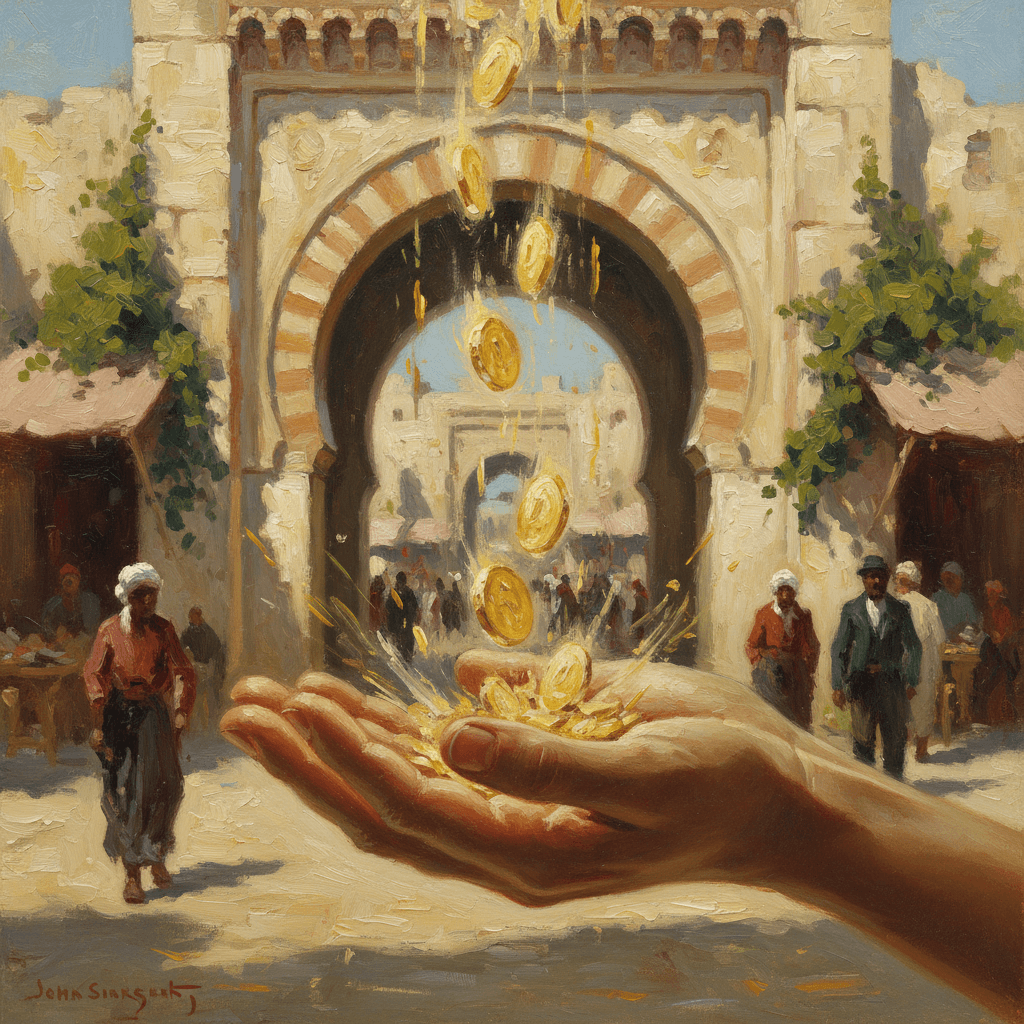
You can have two people with identical incomes. One always feels like there is never enough. The other lives comfortably and still manages to give. The difference is not their bank balance. It is barakah.
Barakah (بَرَكَة) is the divine blessing Allah places in things — the quality that causes time, money, health, and relationships to go further than their apparent worth. When barakah is in your day, an hour accomplishes what should take three. When it is absent, you feel like you are always running short, always behind, always scrambling.
This is why asking for barakah is not just about provision. It is about inviting Allah into the substance of your life. The Prophet ﷺ taught his Companions specific duas for barakah in food, in marriage, in wealth, and in time. These were not incidental words. They were a recognition that every blessing is hollow without Allah's name in it.
The Dua for Barakah
The Prophet's dua for his hosts — said when eating at someone's home:
اللَّهُمَّ بَارِكْ لَهُمْ فِيمَا رَزَقْتَهُمْ وَاغْفِرْ لَهُمْ وَارْحَمْهُمْ
Allahumma barik lahum fima razaqtahum waghfir lahum warhamhum.
"O Allah, bless them in what You have provided for them, forgive them and have mercy on them." — (Muslim 2042)
The Prophet's dua when given milk or food:
اللَّهُمَّ بَارِكْ لَنَا فِيهِ وَزِدْنَا مِنْهُ
Allahumma barik lana fihi wa zidna minhu.
"O Allah, bless us in it and give us more of it." — (Tirmidhi 3455)
The dua for barakah in marriage:
بَارَكَ اللَّهُ لَكَ وَبَارَكَ عَلَيْكَ وَجَمَعَ بَيْنَكُمَا فِي خَيْرٍ
Baraka Allahu laka wa baraka 'alayka wa jama'a baynakuma fi khayr.
"May Allah bless you and bless upon you, and join you together in good." — (Abu Dawud 2130)
These duas are active invitations. You are not passively hoping for blessing — you are calling on the One who controls all benefit to place His blessing in specific things.
The Story Behind It
One of the most striking moments in the hadith literature about barakah is when the Companions watched the Prophet ﷺ eat. They noticed that whenever he said Bismillah before eating, whenever he made dua over food, the meal seemed to go further than it should have. Multiple people would eat from what should have been barely enough.
The most famous example is the story of Abu Huraira and the bowl of milk. When the Prophet ﷺ directed him to serve all the people of the Suffa — the poor Companions who lived in the mosque — from a single bowl, Abu Huraira was certain it was not enough. But he served everyone. Everyone drank until they were full. And the bowl was still not empty. (Bukhari 6452)
The Prophet ﷺ was demonstrating something real: barakah is not a myth or a metaphor. It is a genuine property that Allah places in things when His name is remembered. The dua for barakah is how you specifically ask Him to place that property in what you have.
This is also why the Prophet ﷺ taught specific duas for food, for milk, for marriage, for entering a home. He knew that barakah needs to be invited. It is not automatic. It comes when you consciously turn to Allah and ask.
How to Make the Dua for Barakah Part of Your Daily Life
The beauty of these duas is that they attach naturally to things you already do every day.
At every meal. Before you eat, say Bismillah. After you eat, say Alhamdulillah. These two words bracket your meal in the remembrance of Allah and invite barakah into your provision. If you are eating as a guest at someone's home, make the Prophet's dua for your hosts before you leave: Allahumma barik lahum fima razaqtahum.
When you receive anything good. Whether it is food, a gift, or good news — make the short dua: Allahumma barik lana fihi wa zidna minhu. You are acknowledging the source of the blessing and asking for it to continue. This takes three seconds and transforms the moment from passive receiving to active gratitude.
At the start of each day. One of the most powerful practices for barakah in time is completing your morning adhkar consistently. The Prophet ﷺ made dua for barakah in his Ummah's mornings (Abu Dawud 2606). Starting your day with dhikr and morning duas is the most direct way to invite barakah into your hours before the day begins.
Through consistent charity. The Prophet ﷺ said that charity does not decrease wealth (Muslim 2588). This is a statement about barakah — what you give for Allah's sake comes back multiplied. Sadaqah is one of the most reliable means of inviting barakah into your rizq.
Through family ties. The Prophet ﷺ said that maintaining family ties increases provision and extends life (Bukhari 5986). Barakah flows through connections. Cutting them cuts it off.
Tracking these practices consistently — remembering to say Bismillah, completing morning adhkar, giving regularly — is where consistency makes the difference. A habit of two weeks will not transform your life. A habit maintained for months will.
Build Your Daily Barakah Practice
DeenBack helps you track your morning adhkar, dua habits, and daily consistency. Build the streak that invites barakah into every part of your day.


Free to download. A paid plan is required to use the app’s tools.
Related Duas
Dua for rizq: Barakah and rizq (provision) are closely linked. The dua for rizq covers the Prophet's supplications for provision and how to make seeking halal sustenance a daily spiritual practice.
Dua for morning: The morning duas from the Sunnah are among the most powerful tools for inviting barakah into your day. Completing them before the day begins sets a spiritual foundation that the rest of the day builds on.
Dua for success: Barakah is the inner quality of success. The dua for success covers the broader concept of falah — flourishing in both this life and the next.
Common Questions
Why does barakah disappear from my life?
Scholars identify several causes: persistent sin (especially dishonesty in dealings), cutting family ties, neglecting the name of Allah in daily activities (not saying Bismillah), and heedlessness in general. The nafs tricks you into thinking these are small matters. But barakah is sensitive to spiritual state. Regular istighfar, reconnecting with family, and returning to consistent dhikr are the practical steps back.
Is barakah only about money and provision?
No. Barakah appears in time (feeling like your day is long enough), in health (healing faster, maintaining energy), in relationships (feeling genuinely close to people), in knowledge (small amounts of reading that produce deep understanding), and in deeds (small acts of worship that carry heavy weight). The dua is for all of these, not just finances.
How do I know if barakah has entered something?
The signs are subtle but real: a small amount of money going further than expected, a short period of time accomplishing more than usual, a conversation that solves a problem you had been carrying for weeks. Barakah is not usually dramatic. It is quiet, steady, and unmistakable in hindsight. The more you name it and give thanks for it, the more it tends to continue.
Can non-Muslims have barakah?
In the general sense, all of Allah's creation receives His generosity (rizq). But the specific barakah that comes from conscious remembrance of Allah — from saying Bismillah, from dua, from consistent worship — is a specific gift. The Muslim who practices these things is actively inviting it. Others may receive provision, but not this particular quality of divine blessing.
Closing
Barakah is not magic. It is not a reward for perfect behavior. It is what happens when you orient your life toward Allah — when you remember Him in your eating and your gratitude, in your giving and your transactions, in your morning and your plans.
The duas above are short. Some take five seconds. But the intention behind them is enormous: you are acknowledging that every good thing in your life comes from Allah, and you are specifically inviting His blessing into it. That orientation, practised daily, changes how you experience your life.
Start with Bismillah. Add one dua. Build from there.
Track Your Barakah Habits Every Day
Small daily practices — morning adhkar, consistent dua, grateful remembrance — are what invite barakah in. DeenBack helps you make them real with streaks and reminders.
Free to download. A paid plan is required to use the app’s tools.
Frequently Asked Questions
What is the dua for barakah in Islam?
A powerful dua for barakah is said when hosting guests: Allahumma barik lahum fima razaqtahum waghfir lahum warhamhum — O Allah, bless them in what You have provided for them, forgive them and have mercy on them. (Muslim 2042). Another short dua from the Prophet when given food is: Allahumma barik lana fihi wa zidna minhu — O Allah, bless us in it and give us more of it. (Tirmidhi 3455)
What is barakah in Islam?
Barakah (بَرَكَة) means divine blessing — the quality Allah places in something that causes it to exceed its apparent worth. A small meal with barakah feeds many. A short hour with barakah accomplishes much. It is not about the quantity of what you have, but about Allah's blessing being in it.
How do I get more barakah in my life?
Key ways to invite barakah include: beginning every action with Bismillah, consistent morning adhkar, giving charity, maintaining family ties, and regularly making dua for barakah. Sins and heedlessness are among the main things that remove barakah from provision and time.
Can I make dua for barakah for someone else?
Yes. The Prophet ﷺ used to make dua for barakah over his hosts: Allahumma barik lahum fima razaqtahum waghfir lahum warhamhum. (Muslim 2042). Making dua for another person's barakah is an act of love and is itself a form of sadaqah.
Is there a dua for barakah in marriage?
Yes. The Prophet ﷺ instructed Muslims to say to newlyweds: Baraka Allahu laka wa baraka 'alayka wa jama'a baynakuma fi khayr — May Allah bless you and bless upon you, and join you together in good. (Abu Dawud 2130)