
- Published on
Benefits of Saying Alhamdulillah: Why This Word Changes Everything
- Authors

- Name
- Ahmad
- Role
- Senior Marketing Manager, Islamic education • Deen Back
بِسْمِ اللهِ الرَّحْمٰنِ الرَّحِيْمِ
In the name of God, the Most Gracious, the Most Merciful.
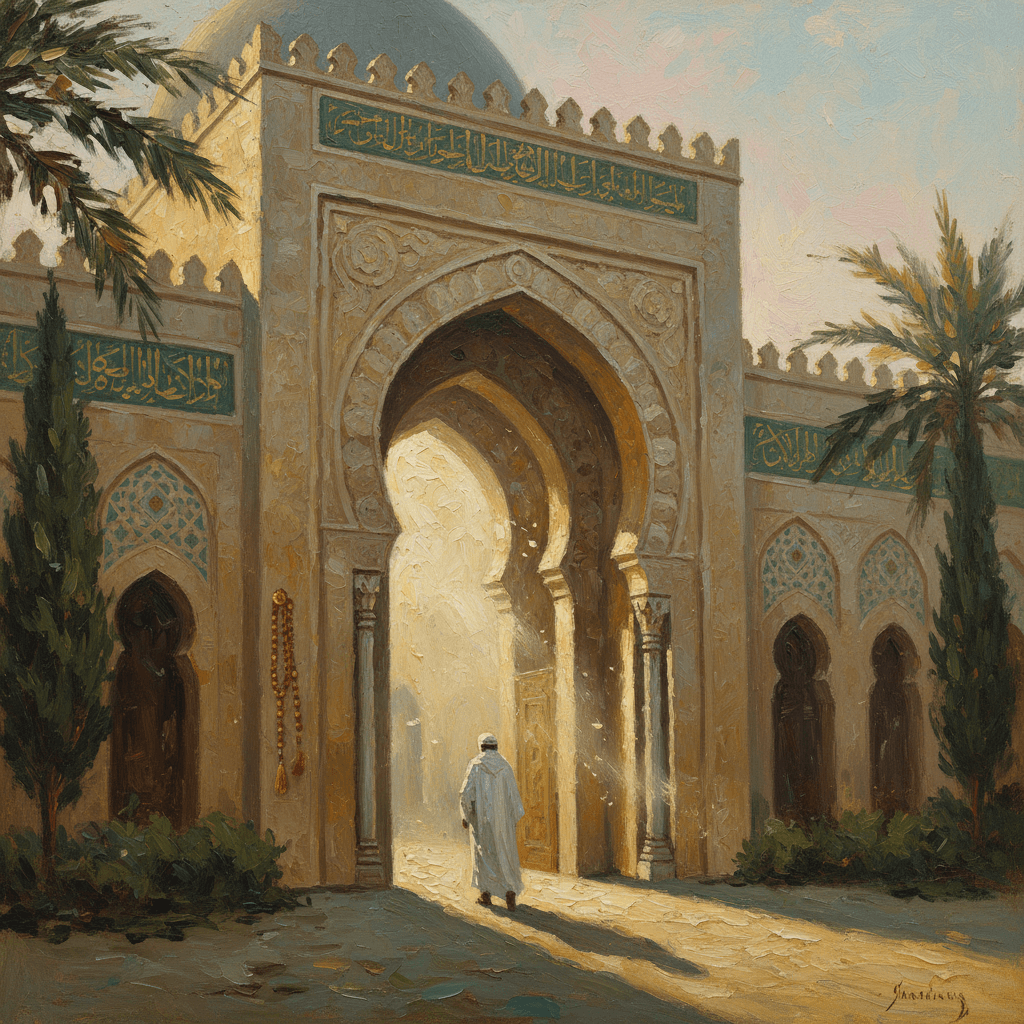
You say it dozens of times a day. After meals. When someone asks how you are. When something goes well. When something goes badly and you are trying to find the spiritual response.
But when did you last say it and actually feel it?
Alhamdulillah is not a filler word. It is not the Islamic version of "okay" or "fine." It is one of the most compact, powerful statements of reality available to the human tongue — and understanding what it contains changes how you say it forever.
What Alhamdulillah Actually Means
اَلْحَمْدُ لِلَّهِ
Alhamdulillah
Three Arabic words compressed into one expression:
Al — the definite article. Not "some praise" or "my personal praise." The praise. All praise. Every form of it.
Hamd — this word is often translated as "thanks" but it is richer than that. Hamd is praise that includes love, acknowledgment, and gratitude — not just polite thanks to someone who did you a favor, but deep appreciation arising from recognizing someone's intrinsic worth and goodness.
Lillah — "to/for Allah." Not divided between Allah and anything else. All of that praise, in its completeness, belongs to Him.
So when you say alhamdulillah, you are not saying "thanks, Allah." You are saying: "All praise — every form of it, completely and without exception — belongs to Allah."
That is a very different statement.
To go deeper on alhamdulillah meaning, this understanding is what separates the phrase as a verbal habit from the phrase as a spiritual reality.
What the Quran and Hadith Say About It
The first words of Surah Al-Fatiha — the surah every Muslim recites at minimum 17 times every single day — begin with: "Alhamdulillahi Rabbil 'Alamin." All praise is for Allah, Lord of all the worlds. The fact that Allah chose this as the opening of the surah every Muslim must recite reveals its central importance.
The Prophet ﷺ said: "The best dhikr is la ilaha illallah, and the best dua is alhamdulillah." (Tirmidhi 3383)
He also said: "Cleanliness is half of faith. Alhamdulillah fills the scale. SubhanAllah and alhamdulillah fill — or fill up — what is between the heavens and the earth." (Sahih Muslim 223)
Fills the scale. On the Day when every atom-weight of good matters, alhamdulillah — said consistently with presence — is one of the fastest scales to fill.
The Quran also describes the people of jannah: "Their call therein will be subhanakAllahumma, and their greeting therein will be salam, and the last of their call will be alhamdulillahirabbil'alamin." (Surah Yunus, 10:10). The people of paradise will spontaneously praise Allah — it will be their natural, internal state. Saying alhamdulillah in this world is practicing for what the people of jannah will be.
Why Modern Muslims Struggle to Feel It
The challenge is not that alhamdulillah is said too much. It is that it is said too automatically.
Automatic gratitude is still gratitude. The scholars of dhikr note that consistent habit builds a floor even before presence arrives. But the gap between saying alhamdulillah as a reflex and experiencing what it contains is significant — and that gap is maintained by something specific: the assumption that we deserve what we have.
The nafs has a default mode of entitlement. Health, safety, food, relationships — the nafs treats these as baseline expectations rather than gifts. When expectations are met, the nafs does not feel gratitude — it feels neutrality. Gratitude only triggers when something exceeds expectations.
This is the problem how to be more grateful islamically addresses at its root. Islam does not see provision as deserved — it is ni'mah, gift. Every heartbeat is a gift. Every morning is a gift. Understanding what is shukr in Islam — genuine gratitude — reframes your baseline entirely.
How to Make Alhamdulillah a Practice That Changes Your State
Say it after sneezing and mean it. The sneezing sunnah is: you sneeze, say alhamdulillah out loud, and the person next to you says yarhamukallah. This is one of the most frequent organic opportunities to say alhamdulillah. Instead of treating it as a social exchange, use the moment. Your lungs work. Your body cleared an irritant. Alhamdulillah.
Build post-salah tasbeeh as a physical practice. Saying alhamdulillah 33 times after each prayer, as part of the post-salah dhikr, is a direct prophetic practice. Use a tasbih or your fingers. Count slowly. Do not move your fingers until you have at least briefly thought the meaning. This is a different experience than rushing through 33 while planning the next task.
Three alhamdulillahs before sleep. Each night, name three specific things you are genuinely grateful for and say alhamdulillah for each one. Not generic items — specific moments from that day. "Alhamdulillah that the meeting went well. Alhamdulillah that I had the energy for Maghrib. Alhamdulillah for that conversation." This moves the phrase from abstraction to lived reality.
Say it in hardship — out loud. This is the advanced practice, and it is the one with the most transformative effect. When something goes wrong — a failure, a loss, a disappointment — deliberately say alhamdulillah before you respond to the emotion. Not to bypass the emotion, but to place the situation in context first. This is not denial. It is the believer's deepest orientation.
The Prophet ﷺ said: "The [state] of a believer is extraordinary — all of it is good. If something good comes to him, he is grateful, and that is good for him. If something bad comes to him, he is patient, and that is good for him." (Sahih Muslim 2999). Alhamdulillah is the first word of that response.
Link it to how to make dhikr a daily habit. Alhamdulillah does not stand alone — it works best as part of a daily dhikr ecosystem where you are consistently practicing the remembrance of Allah. When the total baseline of dhikr rises, each individual phrase carries more weight.
Turn Alhamdulillah into a Daily Habit That Shifts Your Mindset
DeenBack tracks your post-salah tasbeeh, morning adhkar, and evening gratitude practice — so alhamdulillah becomes the rhythm of your day, not just a reflex.


Free download. Premium features available in-app.
Signs That Alhamdulillah Is Taking Root
You know the phrase is beginning to change you when:
Small things genuinely move you. The coffee is hot. The sun is out. Your child laughed. These used to feel neutral — now they feel like gifts, and the word comes naturally.
Difficult things do not spiral. When something goes wrong, your first internal movement is not panic or bitterness — it is a kind of trust. Not happiness about the situation, but groundedness in Who holds it.
You find yourself saying alhamdulillah before you consciously decide to. The praise has become a first response rather than a considered one.
Gratitude and contentment become your general state rather than occasional visitors.
Common Questions
Does saying alhamdulillah when asked "how are you?" count as dhikr?
Yes. If said with consciousness of its meaning, it counts as dhikr and carries reward. The Prophet ﷺ himself was known to respond to "how are you" with alhamdulillah. Even if said habitually, it still carries some reward — the habit forms the foundation; presence builds on top of it.
Is there a specific time alhamdulillah is most powerful?
The post-salah dhikr, morning adhkar, and before sleeping are the established times with specific prophetic recommendations. But beyond those specific windows, the most powerful time is whenever you say it with presence — a single sincere alhamdulillah can outweigh a hundred automatic ones.
What about saying alhamdulillah for things that seem bad?
This is the concept of shukr 'alal bala — gratitude in trial. The scholars hold that this is the highest form of gratitude because it requires the deepest trust in Allah's wisdom. You are not thanking Allah for the harm — you are thanking Him for being the one who holds the situation. The benefits of saying subhanallah article explores the companion practice of declaring Allah's perfection, which works alongside alhamdulillah in difficult moments.
Closing
All praise belongs to Allah. Not some of it, not your share of it — all of it.
That is what you have been saying. Now say it like you mean it.
Build the habit, start with the post-salah tasbeeh, and grow from there. The transformation is real — it has been described by everyone who has taken dhikr seriously. The practice is the door. Walk through it.
Say Alhamdulillah — and Mean It — Every Day
DeenBack's daily dhikr and gratitude tracking system helps you build a consistent alhamdulillah practice that gradually changes how you see your life and your Lord.
Free download. Premium features available in-app.
Frequently Asked Questions
What are the spiritual benefits of saying alhamdulillah?
The Prophet ﷺ said that alhamdulillah fills the scale of good deeds (Sahih Muslim 223). It is the best statement (Tirmidhi 3383), it was the first word spoken in paradise (the blessed inhabitants will praise Allah spontaneously), and it is the dua of the people of jannah (Quran 10:10). Saying it consistently builds a gratitude mindset that Islam teaches is a direct path to increase in blessing.
When should I say alhamdulillah?
After every blessing — food, drink, health, waking up safely. After sneezing (sunnah). At the end of a good experience. After prayer as part of post-salah adhkar (33 times). When asked how you are. When receiving good news. When completing any task or goal. The Prophet ﷺ praised Allah at the beginning and end of almost everything he did.
What is the difference between alhamdulillah and subhanAllah?
Both are dhikr — remembrance of Allah. SubhanAllah declares Allah's perfection and freedom from all imperfection (tasbih). Alhamdulillah praises and thanks Allah for His blessings and attributes (tahmid). They complement each other and are often said together, along with Allahu Akbar, as the post-salah tasbeeh.
Does saying alhamdulillah in hardship help?
Yes, and this is one of the deepest applications of the phrase. The Prophet ﷺ praised Allah in every condition — in ease and in hardship. Saying alhamdulillah in difficulty is not denying the pain; it is acknowledging that even in difficulty, there is a Lord who is worthy of praise, and that this situation is in His perfect knowledge and will.