
- Published on
How to Be More Grateful Islamically — Building Shukr Into Daily Life
- Authors

- Name
- Ahmad
- Role
- Senior Marketing Manager, Islamic education • Deen Back
بِسْمِ اللهِ الرَّحْمٰنِ الرَّحِيْمِ
In the name of God, the Most Gracious, the Most Merciful.
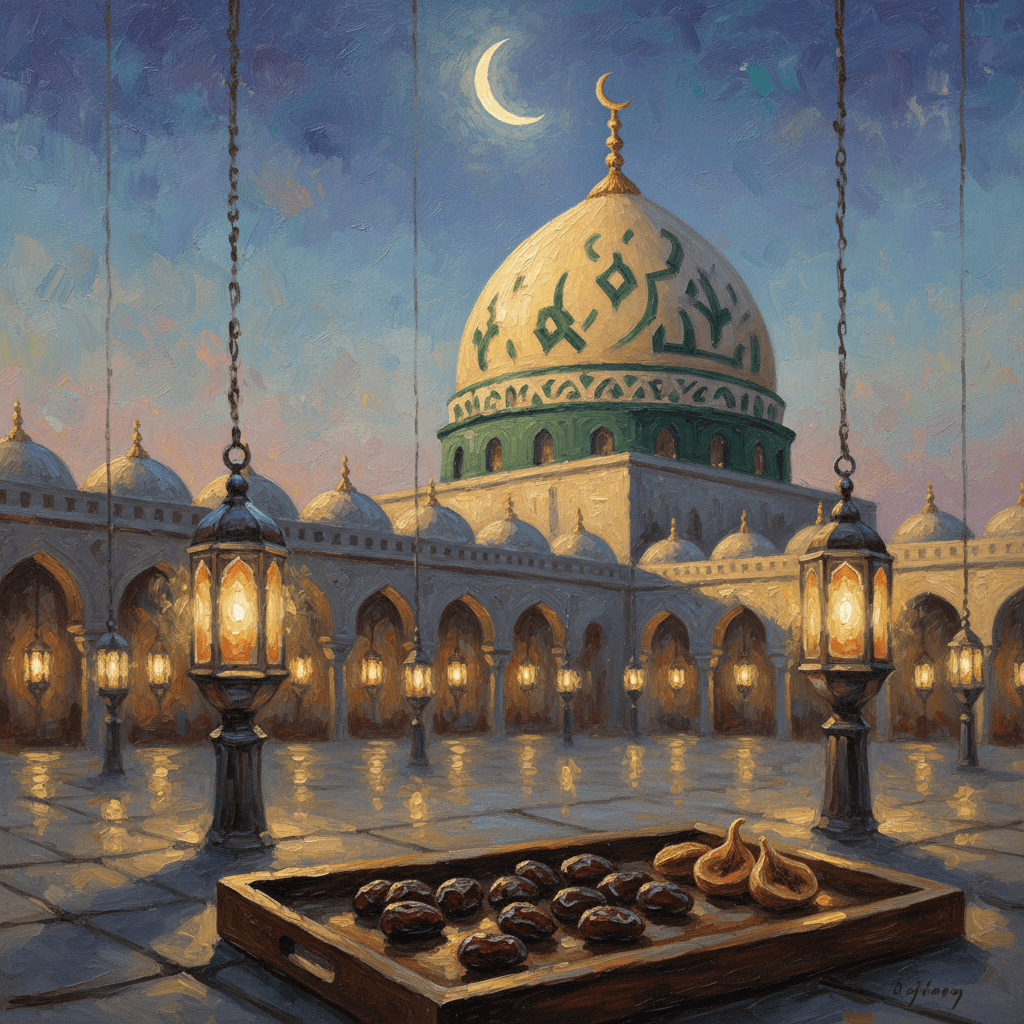
You have probably said Alhamdulillah thousands of times in your life. As a reflex, as a closing to a sentence, as something that comes automatically when something good happens. But how often has it been a real act — a moment when you actually stopped, felt the weight of what Allah gave you, and said it from that place?
That gap — between saying the words and living the meaning — is what this guide is about. Shukr is not a feeling that happens to you. It is a practice you build, deliberately, until it reshapes how you experience everything.
Why This Matters
Allah says in the Quran:
لَئِن شَكَرْتُمْ لَأَزِيدَنَّكُمْ وَلَئِن كَفَرْتُمْ إِنَّ عَذَابِي لَشَدِيدٌ
La-in shakartum la-azidannakum wa la-in kafartum inna 'adhabi la-shadid
"If you are grateful, I will surely increase you; but if you deny My favor — indeed, My punishment is severe."
— (Surah Ibrahim, 14:7)
This is a direct promise from Allah, not a conditional suggestion. Shukr — real gratitude — is a mechanism that opens the flow of blessings. Ingratitude (kufr al-ni'mah) closes it. The relationship between your inner state of gratitude and the quality of your outer life is not coincidental in Islam — it is built into the design.
The Prophet ﷺ also tied shukr to salah: he would pray voluntary prayers until his feet were swollen, and when A'isha (may Allah be pleased with her) asked why he exerted himself so much when his sins were already forgiven, he said: "Should I not be a grateful servant?" (Sahih Bukhari 4837)
Gratitude drives worship. Worship deepens gratitude. This is the virtuous cycle Islam offers.
Step-by-Step Guide to Building Gratitude as a Muslim
Step 1 — Start With the Gratitude Dua After Every Salah
The most foundational Islamic gratitude practice is this dua, which the Prophet ﷺ specifically taught Muadh ibn Jabal and urged him never to neglect after every salah:
اللَّهُمَّ أَعِنِّي عَلَى ذِكْرِكَ وَشُكْرِكَ وَحُسْنِ عِبَادَتِكَ
Allahumma a'inni 'ala dhikrika wa shukrika wa husni 'ibadatika
"O Allah, help me to remember You, to be grateful to You, and to worship You well."
The genius of this dua is that it asks Allah for the ability to be grateful — recognizing that shukr itself is not something you manufacture alone but something Allah enables. Say this after every salah, replacing the mechanical post-prayer formula with this specific request.
See dua for thanks to Allah for additional expressions of gratitude from the Sunnah.
Step 2 — Keep a Specific Gratitude Record
"Count your blessings" is vague advice. "Write three specific blessings before sleep" is a practice. The specificity is what makes it work:
- Not: "I am grateful for my family" — this is an abstraction
- Yes: "My daughter called me today and I heard her laugh" — this is real
For three weeks, write three specific blessings before sleeping. They do not need to be big. A hot shower. A meal you enjoyed. A difficulty that did not get worse. The practice of finding three specific things each day trains your mind to look for blessings by default — which is a neurological rewiring that takes exactly as long as the habit suggests.
Step 3 — Say Alhamdulillah Intentionally, Not Reflexively
Before your next Alhamdulillah, pause for one breath. Let the word carry its meaning: all praise — every form, every kind, everything — belongs to Allah. Then say it.
This is harder than it sounds. The nafs has made Alhamdulillah a reflex, which strips it of its weight. Bringing intention back to it is a practice — some Muslims find it helpful to pause before any dhikr formula and consciously choose it rather than say it automatically.
Step 4 — Connect Gratitude to Physical Sensations
When you eat, notice the taste. When you see, pause to recognize that sight is a gift many people do not have. When you wake up, lie still for ten seconds and acknowledge that you were returned to the world that you could not guarantee. These micro-moments of sensory gratitude — brief, specific, connected to the body — are among the most effective ways to cultivate shukr without needing dedicated sitting time.
The Prophet ﷺ would express gratitude to Allah at every moment — entering the bathroom, finishing a meal, waking from sleep. Every transition was a dua opportunity. See dua for morning for the specific morning gratitude supplication.
Step 5 — Use Comparison Downward, Not Upward
The nafs naturally compares upward — to those with more wealth, better health, more successful careers. Islam explicitly instructs the opposite: look at those with less in worldly matters, and those with more in spiritual ones.
The Prophet ﷺ said:
انْظُرُوا إِلَى مَنْ أَسْفَلَ مِنْكُمْ وَلَا تَنْظُرُوا إِلَى مَنْ هُوَ فَوْقَكُمْ
Unzuru ila man asfala minkum wa la tanzuru ila man huwa fawqakum
"Look at those below you and do not look at those above you — that is more suitable so that you do not belittle Allah's favor upon you."
This is not about lowering ambition — it is about not using comparison as a tool that erases gratitude. Practically: when the nafs says "I wish I had what they have," redirect to someone with less, and notice the gratitude that emerges.
Build Your Gratitude Practice — Track Your Daily Shukr With DeenBack
DeenBack helps you build the daily Islamic gratitude habits that transform your inner life — dhikr streaks, dua reminders, and consistent practice that make Alhamdulillah more than a reflex.


Free download. Premium features available in-app.
Making It Stick — The Habit Science
Shukr is a cognitive habit before it is an emotional state. The emotion of gratitude follows the practice of looking for blessings — not the other way around. Many people wait until they feel grateful before practicing gratitude, which is backward. Build the practice first, and the feeling deepens with time.
Anchor your gratitude practice to existing habits: the dua after salah, the morning adhkar, the three blessings before sleep. Each anchor creates a moment where your attention is deliberately turned toward what Allah has given rather than what you wish you had.
Common Mistakes to Avoid
Gratitude only for big things. Most blessings are small and constant — oxygen, eyesight, functioning joints. Gratitude that only responds to dramatic events misses 99% of what Allah is giving you every moment.
Treating hardship as the enemy of gratitude. The Prophet ﷺ said the believer's entire affair is good: gratitude in ease and patience in hardship, and both are good for him. (Sahih Muslim 2999) Hardship is not the opposite of blessing — often it is the most refined form of it.
Gratitude without action. Islamic shukr is not just verbal — it is using what Allah gave you in His obedience. The shukr of wealth is giving sadaqah. The shukr of knowledge is teaching it. The shukr of health is using it for worship. Check whether your gratitude is changing your behavior, not just your words.
Common Questions
What if I genuinely cannot find things to be grateful for?
Start with existence itself — that you are conscious, that you are reading these words, that you have been given another moment. These are not small things. If you are in severe distress, the dua for ease and guidance are starting points for reconnecting.
Is gratitude to Allah the same as gratitude to people?
Islam teaches both. The Prophet ﷺ said whoever is not grateful to people is not grateful to Allah. (Sunan Abi Dawud 4811) Express sincere thanks to people who help you — this is part of Islamic gratitude, not separate from it.
A World Soaked in Blessings
The Quran says that if you tried to count Allah's blessings, you could not number them. (Surah Ibrahim, 14:34.) This is not hyperbole — it is a description of reality that most of us experience only glimpses of.
The practice of shukr is the practice of learning to see what is already there. Not manufacturing positivity, not ignoring pain, but training the eyes to see the layers of blessing underneath every experience.
Start with the dua after your next salah. Then write three specific things before you sleep tonight. Small, deliberate, consistent. The world will not change — but how you see it will.
Make Gratitude a Daily Habit — Let Allah's Blessings Become Visible
DeenBack helps you build the shukr habit through daily dua reminders, dhikr streaks, and tools that keep the practice of Islamic gratitude alive every single day.
Free download. Premium features available in-app.
Frequently Asked Questions
What is the difference between shukr and Alhamdulillah?
Alhamdulillah (all praise is due to Allah) is one expression of shukr, but shukr itself is broader. Islamic scholars define shukr as gratitude with the heart (recognizing Allah's blessings), the tongue (expressing praise and thanks), and the limbs (using blessings in ways that please Allah). Saying Alhamdulillah is the verbal component; living shukr means using everything Allah gave you in His obedience.
How can I be grateful when I am going through hardship?
The Prophet ﷺ described the believer's situation as uniquely fortunate: if good comes, they are grateful; if hardship comes, they are patient — and both are good for them. Gratitude during hardship is not denial of pain — it is the recognition that Allah's wisdom is at work even when you cannot see the outcome. Start by listing what you still have, not what you have lost.
Is there a specific dua for shukr (gratitude)?
Yes — the Prophet ﷺ taught Muadh ibn Jabal to say after every prayer: 'Allahumma a'inni 'ala dhikrika wa shukrika wa husni 'ibadatika' (O Allah, help me to remember You, to be grateful to You, and to worship You well). This dua specifically asks Allah for the ability to be grateful — recognizing that shukr itself is a gift from Allah.
Does gratitude increase blessings in Islam?
Yes — Allah explicitly promises this in the Quran: 'If you are grateful, I will surely increase you.' (Surah Ibrahim, 14:7). This is not a metaphor. Scholars explain that gratitude increases blessings in three ways: by making the existing blessing more barakah-filled, by attracting new blessings, and by protecting against ingratitude which is warned against as something that can cause blessings to be removed.
How do I practice gratitude without it feeling forced or fake?
Start with the physical — things you can see and touch. Your eyesight, the fact that you woke up, food you ate today. Forced or fake gratitude happens when we try to be grateful for abstract concepts we cannot connect to emotionally. Ground the practice in specific, concrete blessings and it becomes natural. Over time, the habit of looking for blessings reshapes how the mind processes experience.