
- Published on
Benefits of Saying Subhanallah: More Than a Reflex
- Authors

- Name
- Ahmad
- Role
- Senior Marketing Manager, Islamic education • Deen Back
بِسْمِ اللهِ الرَّحْمٰنِ الرَّحِيْمِ
In the name of God, the Most Gracious, the Most Merciful.
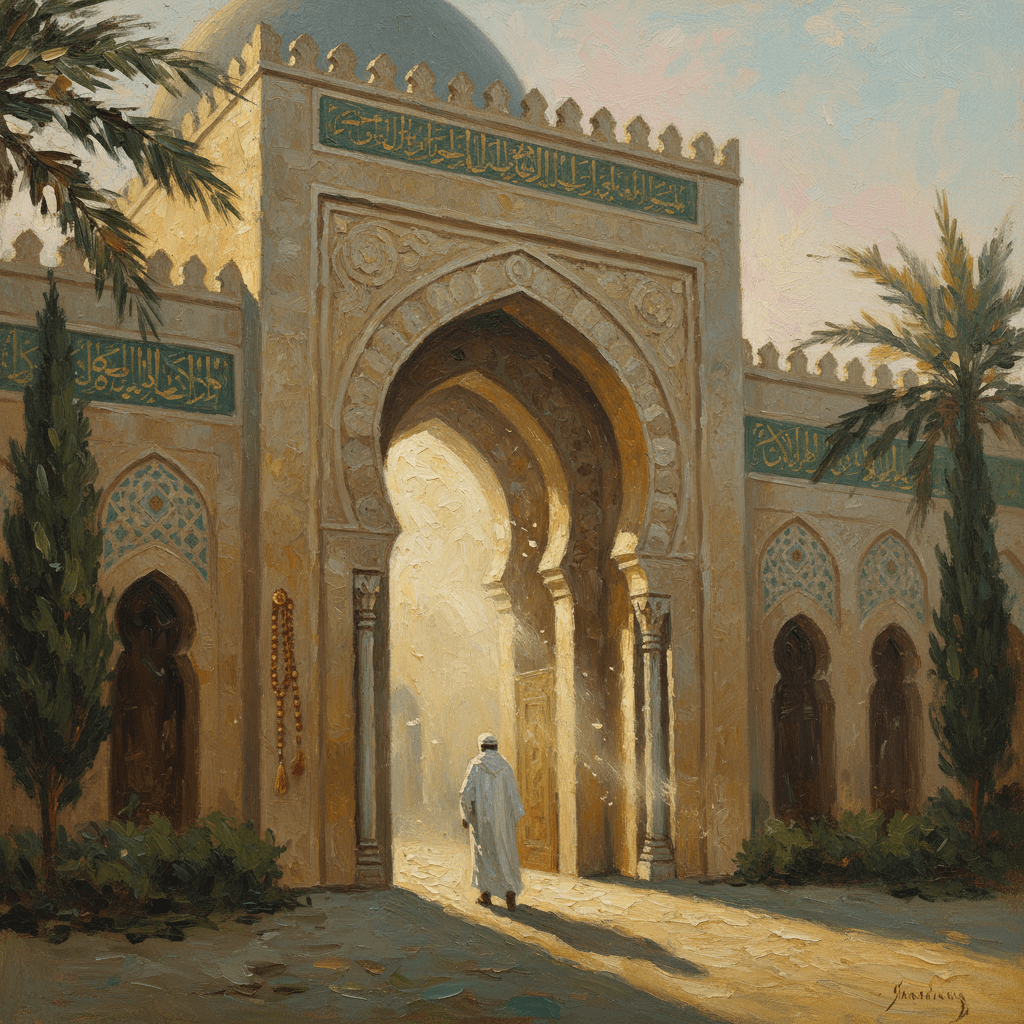
Most of us say it as a reflex. Something surprising happens and it slips out: subhanAllah. A beautiful sunset. An unexpected blessing. A moment of shock. And then life moves on.
The word is there, but we barely feel it. We have turned one of the most powerful phrases in existence into an auditory filler.
That is not a criticism — it is an opportunity. Because the more you understand what you are actually saying when you say subhanAllah, the harder it becomes to say it casually. And when it stops being casual, something shifts.
What SubhanAllah Actually Means
سُبْحَانَ اللَّهِ
SubhanAllah
The Arabic word comes from the root s-b-h, which carries the meaning of swimming, of gliding — a continuous, effortless movement. When applied to Allah, tasbih means declaring that He is completely free of any imperfection, any limitation, any need. He is exalted beyond everything that could diminish Him.
This is not just a compliment. It is a worldview.
When you say subhanAllah, you are stating that the universe has an origin that is flawless. That whatever confusion, injustice, or pain exists in the world is not evidence of a flaw in its Creator. You are reorienting yourself to the fundamental Islamic conviction that Allah is perfect — and that reality, as strange and painful as it sometimes is, is in His hands.
The Prophet ﷺ said: "Two phrases are light on the tongue, heavy on the scale, and beloved to the Most Merciful: subhanAllah wa bihamdihi, subhanAllah al-'Azeem." (Sahih Bukhari 6682, Sahih Muslim 2694)
Heavy on the scale. The word used is thaqeelatan — weighty, substantial. On the Day when every atom-weight of good matters, these phrases that cost almost nothing to say are being loaded onto your scale.
The related phrase subhanAllah wa bihamdihi extends this meaning further — adding praise alongside the declaration of perfection. Together they form a complete statement of glory.
Why We Struggle to Make It Meaningful
Modern life trains you to optimize for output. Say the phrase, log the good deed, move on. The tongue moves but the heart is already somewhere else — planning the next thing, processing the last thing, scrolling through a mental feed.
This is what scholars call ghafla — heedlessness. It is not wickedness. It is the low-grade spiritual fog that settles over anyone who is not actively fighting it. And it is the reason how to make dhikr a daily habit is so much harder than it sounds.
The nafs prefers the motion of worship to the weight of it. It is easier to say subhanAllah thirty-three times after salah while your mind wanders than to say it ten times while actually present to what you are saying.
This matters because dhikr said with heart awareness is qualitatively different from dhikr said on autopilot. Both are rewarded. But one plants a seed and one plants a tree.
How to Build a SubhanAllah Practice That Actually Lands
Start with the post-salah tasbeeh — and count slowly. The Prophet ﷺ recommended saying subhanAllah 33 times after each prayer (along with alhamdulillah 33 times and Allahu Akbar 34 times). If you do this on an abacus or your fingers, do it slowly. Each one is a declaration. Let the meaning arrive with the word.
Attach it to moments of beauty. Every time you see something that stops you — a view, a kindness, a child laughing, an unexpected kindness — say subhanAllah deliberately. Let beauty be a trigger. Over time, your noticing of beauty and your dhikr become the same act.
Pair it with gratitude triggers. When you say alhamdulillah for something good, follow it immediately with subhanAllah. Glory and gratitude together. One acknowledges what you have received; the other acknowledges who sent it.
Use it in your morning adhkar. The Prophet ﷺ said: "Whoever says subhanAllah 100 times in the morning and 100 times in the evening, no one will come on the Day of Judgment with something better, unless they said the same or more." (Sahih Muslim 2691) That is 200 utterances — a small number of minutes, an immense spiritual investment.
Counter negative thoughts with it. When you feel anxiety, frustration, or confusion rising, saying subhanAllah is not a platitude. It is a reality check. It reminds you that the situation you are facing is in the hands of the One who is perfect. This is not denial — it is orientation.
Track Your Daily Tasbeeh Habit
DeenBack helps you build and track daily dhikr habits — including your post-salah tasbeeh, morning adhkar, and evening remembrance. Start your streak today.


Free download. Premium features available in-app.
Signs That the Practice Is Taking Root
You will know subhanAllah is becoming more than a reflex when:
You catch yourself saying it before the situation fully processes — the word is already out before you have consciously decided to say it, because your baseline awareness of Allah's perfection has become more automatic.
Beauty starts to feel like a reminder rather than just an experience. A sunset is not just pleasant — it points somewhere.
When things go wrong, your first internal movement is not panic but a quiet sense that this too is held by a perfect Creator. Not passivity — just rootedness.
You begin to feel the difference between days when you have said it with presence and days when you have not. Something is subtly calmer in the first kind of day.
Common Questions
Does saying subhanAllah while distracted still count?
Yes, it is still rewarded. The Prophet ﷺ did not condition the benefit of dhikr on perfect concentration. But presence of heart elevates the reward significantly. Think of it like this: the habit builds the container; presence fills it. Build the habit first, then work on filling it.
Can subhanAllah be said in English as "Glory be to Allah"?
Yes. Dhikr has no Arabic-only requirement except for what must be in Arabic by ruling (like salah). However, Arabic preserves the sound of the words the Prophet ﷺ himself said and used — there is a specific blessing in repeating his exact phrases. Most scholars recommend learning the Arabic for commonly used phrases like these.
Is there a relationship between saying subhanAllah and having inner peace?
The Quran says: "Verily, in the remembrance of Allah do hearts find rest." (Surah Ar-Ra'd, 13:28). SubhanAllah is dhikr — remembrance. The research from lived Islamic experience, confirmed across centuries of spiritual tradition, is that consistent tasbih genuinely settles the anxious heart. Not by making problems disappear, but by reorienting the person saying it.
What is the difference between tasbeeh and tahmeed?
Tasbeeh is saying subhanAllah — declaring Allah's perfection. Tahmeed is saying alhamdulillah — praising and thanking Allah. Takbeer is saying Allahu Akbar — affirming His greatness. All three are taught together after salah because they cover different aspects of acknowledging Allah. And astaghfirullah — seeking forgiveness — rounds out the four pillars of foundational dhikr.
Closing
SubhanAllah is weightless to say and heavy in its reward. That combination is a gift that most of us leave mostly unopened.
Start small: say it with presence once today, then twice tomorrow. Build the habit of daily dhikr the way you build any other habit — not through inspiration but through repetition until the repetition starts to mean something.
One sincere subhanAllah on the scale is worth more than a thousand absent ones. Start saying it like you mean it.
Build the Dhikr Habit That Changes Your Days
Morning adhkar, post-salah tasbeeh, evening remembrance — DeenBack helps you track each one and build a streak that keeps your heart connected to Allah.
Free download. Premium features available in-app.
Frequently Asked Questions
How many times should I say subhanAllah each day?
The Prophet taught saying subhanAllah 33 times after each prayer as the minimum baseline. Beyond that, he said saying it 100 times in the morning and evening plants a palm tree in paradise for you. But even one sincere utterance is rewarded — start where you are.
Is there a difference between subhanAllah and subhanAllah wa bihamdihi?
Yes. SubhanAllah means 'Glory be to Allah' alone. SubhanAllah wa bihamdihi adds 'and with His praise,' which the Prophet described as two phrases that are light on the tongue, heavy on the scale, and beloved to Allah. Both count as tasbeeh — the second is simply more complete.
Can I say subhanAllah at any time or are there restricted times?
You can say it at any time. There are no restrictions. Some times are specifically recommended — after each prayer, in the morning and evening adhkar, during ruku and sujood in salah — but the door is always open.
Does saying subhanAllah on autopilot still count?
Scholars distinguish between dhikr that is automatic (the tongue moves without presence of heart) and dhikr with awareness. Both carry reward, but dhikr with heart awareness multiplies the benefit. The goal is to gradually move from habit to presence — let the habit build the floor, then work on raising the ceiling.