
- Published on
When to Say Mashallah: The Right Times and Why It Matters
- Authors

- Name
- Ahmad
- Role
- Senior Marketing Manager, Islamic education • Deen Back
بِسْمِ اللهِ الرَّحْمٰنِ الرَّحِيْمِ
In the name of God, the Most Gracious, the Most Merciful.
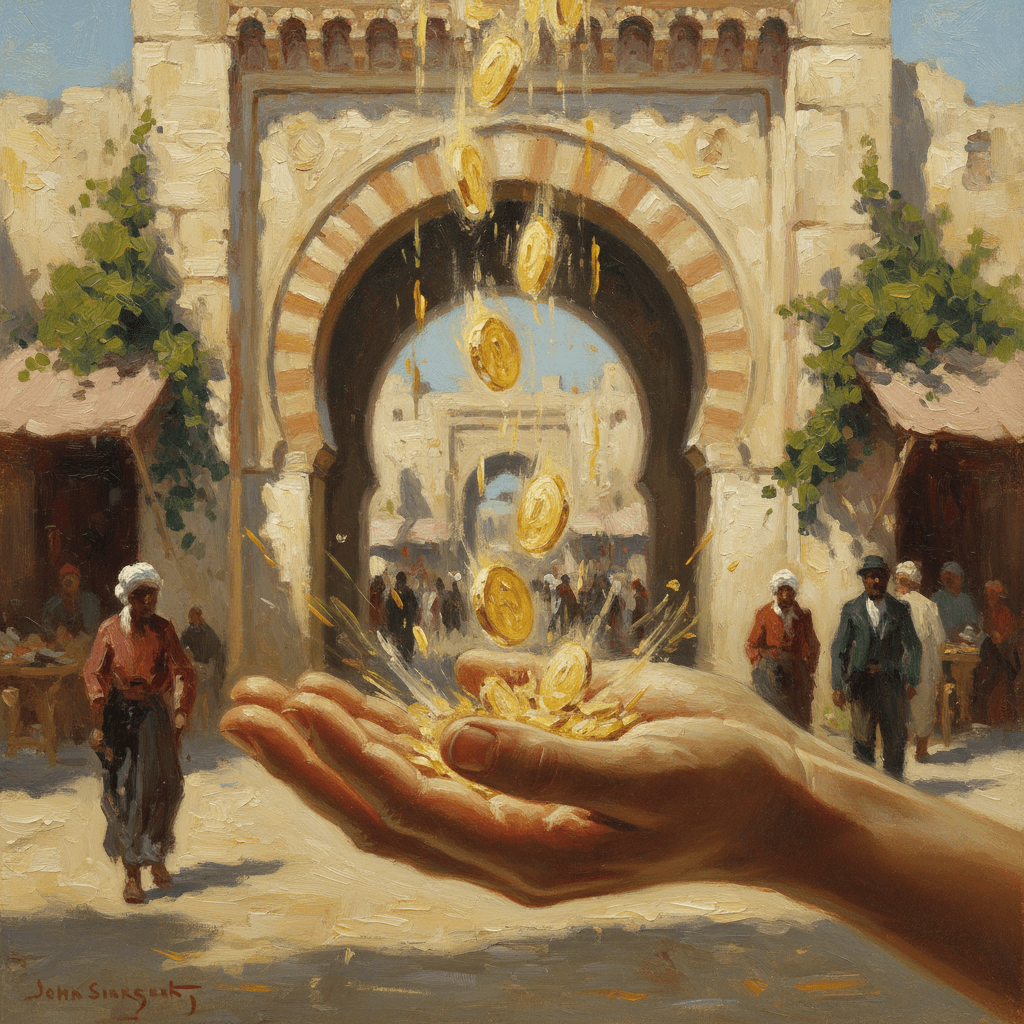
Most Muslims know mashallah. They have heard it their whole lives. They say it sometimes when they see something beautiful, sometimes when someone compliments them, sometimes almost automatically.
But the word is not a filler or a cultural reflex. It is a statement about who is in control of every good thing you have ever seen.
Knowing when to say it — and meaning it — is a small daily practice that changes how you relate to the blessings around you.
What Mashallah Actually Means
Mashallah (مَا شَاءَ اللَّهُ) translates literally as "what Allah has willed." It is a statement that the good you are seeing — whether in yourself, in another person, or in a situation — exists because Allah willed it to exist.
This is not just politeness. It is a theological statement. When you say mashallah looking at a beautiful child, a successful project, or a friend's new home, you are declaring: "This belongs to Allah's plan. This came from Him. I recognize that."
The Quran uses a version of this phrase in Surah Al-Kahf: "And why did you not, when you entered your garden, say: Mashallah, la quwwata illa billah — What Allah has willed, there is no power except with Allah?" (18:39). This verse is the clearest Quranic endorsement of the phrase and its intent: a reminder that everything good comes by divine will.
When to Say Mashallah
When You See Something That Pleases You
Anytime you see something beautiful, impressive, or good — in another person or in yourself — say mashallah. A friend's newborn. A colleague's achievement. Your child's growth. Someone's lovely home. Your own health on a good day.
The phrase redirects the gaze from the object to its Source. It keeps admiration spiritually grounded.
When Someone Compliments You or Something of Yours
When someone admires your child, your work, your car, your home, or your health — say mashallah. This has two effects: it acknowledges that the blessing came from Allah, not your own merit, and it keeps your heart from the quiet slip into ujub (self-admiration) that can follow a compliment.
When You Have Achieved Something
After completing an exam, finishing a project, making a good decision — mashallah is appropriate. It prevents the nafs from taking full credit for outcomes that required divine permission to happen. See how to be more grateful islamically for the wider practice of which mashallah is a part.
Specifically When the Evil Eye Is a Concern
The evil eye (al-ayn) is real and mentioned in both the Quran and authentic hadith. The Prophet ﷺ said: "The evil eye is real, and if anything were to overpower the divine decree, it would be the evil eye." (Sahih Muslim 2188)
When someone admires something without saying mashallah, or when admiration becomes intense fascination, Islamic tradition teaches that the evil eye can follow. Saying mashallah is a simple, recognized protection — it channels the admiration through acknowledgment of Allah's will rather than leaving it as a directed human gaze.
For the complete toolkit of protection against the evil eye, see surah for evil eye.
Why Mashallah Is a Spiritual Habit Worth Building
The value of mashallah is not in the syllables. It is in what the phrase does to your relationship with blessings.
When blessings are mentally attributed to yourself, your effort, your intelligence, or your luck — they become things you own. And things you own can be lost, stolen, or taken away. That perception breeds anxiety.
When blessings are mentally attributed to Allah — which is what mashallah does — they become things entrusted to you. And trust relationships feel different from ownership. The anxiety about losing them is partially replaced by gratitude for having them now.
This is not a trick. It is a reorientation of perception that Islam trains through language. The phrases Muslims are encouraged to say daily — mashallah, alhamdulillah, astaghfirullah, inshallah — are each doing specific work on the heart's relationship with reality. See alhamdulillah meaning and inshallah meaning for how these phrases form a complete system.
Build the Daily Islamic Phrases as Real Habits
DeenBack helps you track your daily dhikr and Islamic remembrance so phrases like mashallah become genuine heart-habits, not just words.


Free download. Premium features available in-app.
The Common Confusion Around Mashallah
Saying it only about other people's things. Some people say mashallah reflexively about others' children or homes but forget to say it about their own good health, their own answered prayers, their own moments of ease. The phrase applies everywhere good exists.
Using it as a compliment filler. If mashallah is said the same way as "nice!" — automatically, without any thought of Allah — it becomes cultural noise rather than dhikr. The habit is worth having only if the meaning occasionally passes through the mind.
Adding it only when prompted. In some Muslim cultures, saying mashallah is a social protocol that happens when someone specifically asks for it. But the Sunnah suggests it should arise naturally whenever genuine admiration is present — not as a magic phrase to be summoned on request.
Signs of Progress
When mashallah is becoming a genuine spiritual habit rather than a social reflex:
- You notice the phrase arising naturally before someone else reminds you
- You begin to pause, even briefly, at the actual meaning when you say it
- You say it about your own good moments more often — not just others' blessings
- You notice that it subtly reduces envy, because attributing good things to Allah's will makes them feel less like something taken from you
Common Questions
Should I say Mashallah when something bad happens?
No. Mashallah specifically acknowledges something good or pleasing. For difficult news or misfortune, the appropriate phrase is Inna lillahi wa inna ilayhi raji'un (To Allah we belong and to Him we return), expressing acceptance of Allah's decree. See inna lillahi meaning for the full context.
What if I forget to say Mashallah and then feel guilty about potentially causing harm?
Say it now, along with Allahumma barik (O Allah, bless it). Islamic teaching does not encourage retroactive guilt about forgetting — it encourages correction and moving forward. The evil eye comes from a specific intense gaze, not from accidentally omitting a phrase.
Is Mashallah the same as Tabarakallah?
They are related but different. Mashallah (what Allah has willed) acknowledges divine will behind the blessing. Tabarakallah (may Allah bless it, or blessed is Allah) is an invocation of blessing. The phrase masha Allah tabarakallah combines both — acknowledging Allah's will and invoking His blessing together. See masha allah tabarakallah meaning for the full explanation.
Closing — A Small Word With a Large Job
Mashallah is one syllable-group in a language that has dozens of similar short phrases. Each one is doing specific theological and psychological work. Each one is redirecting the heart's default tendencies — toward pride, envy, anxiety, or taking credit — and pointing it back toward Allah.
Used honestly, this phrase is an act of worship that takes no extra time. It simply changes the mental frame through which you see every good thing in your life.
And that frame, practiced consistently, changes you.
Make Islamic Remembrance a Real Daily Habit
DeenBack tracks your daily dhikr and Islamic phrases so your tongue — and your heart — stay genuinely connected to what you are saying.
Free download. Premium features available in-app.
Frequently Asked Questions
When should you say Mashallah?
Say Mashallah whenever you see something that pleases you — whether it belongs to you or someone else. This includes someone's beauty, health, success, children, home, or any blessing. It expresses that what you see is by Allah's will alone and invites His protection over it.
Does saying Mashallah protect against the evil eye?
Yes. The evil eye (ayn) is real and mentioned in the Quran and authentic hadith. Saying Mashallah when admiring something is a recognized Sunnah protection against it. The Prophet ﷺ said: 'The evil eye is real.' (Sahih Muslim 2188). Acknowledging Allah's will over the blessing redirects the admiration correctly.
What is the difference between Mashallah and Subhanallah?
Mashallah (what Allah has willed) is said when you see something pleasing or admirable — it acknowledges that the good you see is from Allah. Subhanallah (glory be to Allah) is said in response to something amazing or wonderful, or as a general glorification. Both express appreciation for Allah's work, but in different registers.
Can you say Mashallah about your own achievements?
Yes. When you complete something successfully, receive a blessing, or notice good in your own life, saying Mashallah is an acknowledgment that Allah facilitated it, not just your own effort. It protects against pride (kibr) by redirecting the credit to its source.
Is Mashallah a dua or a statement?
It is a statement of acknowledgment and a light form of praise. It does not function as a dua (supplication) in the technical sense, though it carries spiritual benefit. For an active supplication of protection after admiring something, many scholars recommend adding: 'Allahumma barik' (O Allah, bless it).