
- Published on
Masha Allah Tabarakallah: Meaning, When to Say It, and Why It Matters
- Authors

- Name
- Ahmad
- Role
- Senior Marketing Manager, Islamic education • Deen Back
بِسْمِ اللهِ الرَّحْمٰنِ الرَّحِيْمِ
In the name of God, the Most Gracious, the Most Merciful.
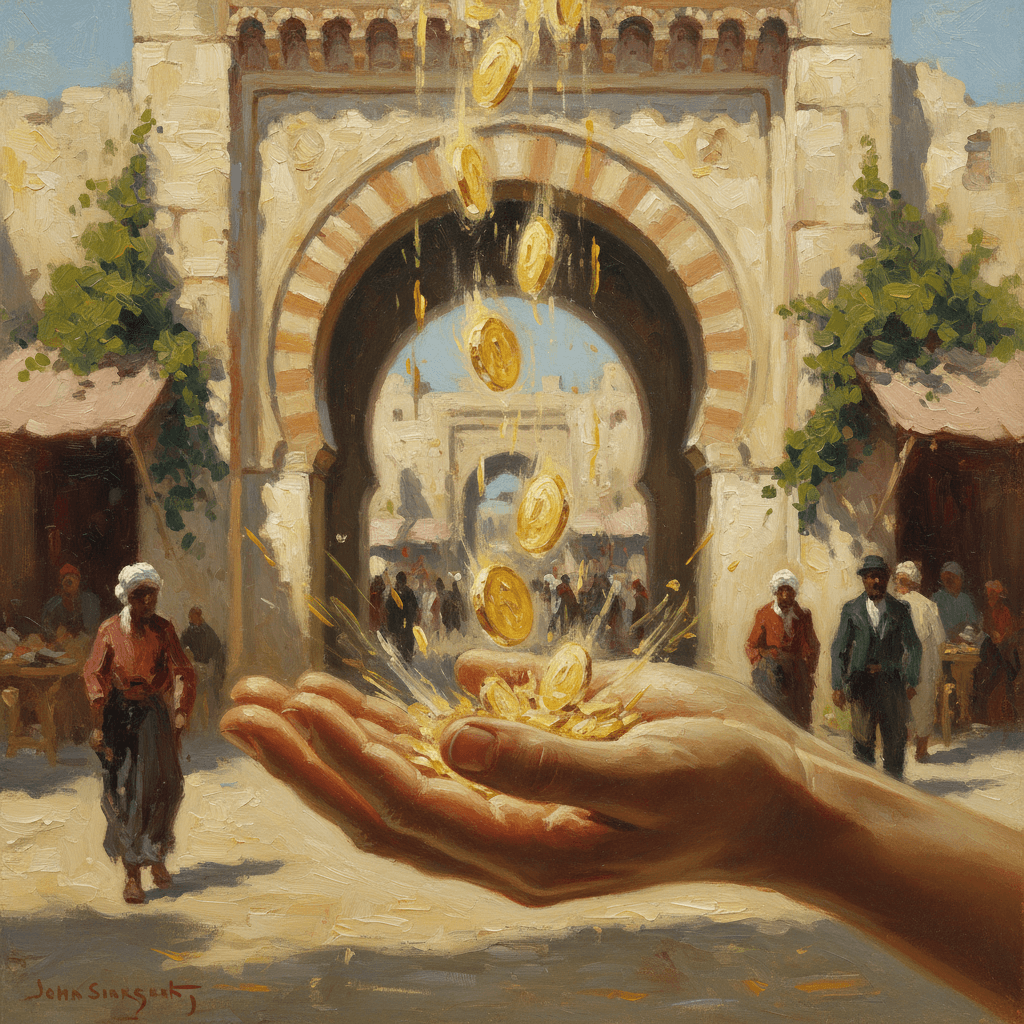
Someone shows you a photo of their newborn. Your friend gets accepted into medical school. You pass by a beautiful garden. Your colleague closes a big deal.
What do you say?
If you were raised in a Muslim household, someone probably drilled this phrase into you: Masha Allah Tabarakallah. Say it. Say it every time. Don't just think it.
But many Muslims say it automatically, without understanding what the words actually mean — or why they were taught to say it in the first place. When you understand the meaning, the phrase stops being a reflex and becomes a genuine spiritual act.
What Masha Allah Actually Means
Masha Allah — ما شاء الله — is Arabic for "What Allah has willed." A more complete rendering would be: "This is what Allah has willed to be."
It is an acknowledgment of divine sovereignty. When you see something good — a healthy child, a flourishing garden, someone's intelligence or beauty — you are looking at something that exists because Allah willed it to exist. Your admiration is real. But the source of what you admire is not the person, not luck, not genetics. It is Allah's will.
Saying Masha Allah is a way of keeping that truth in view. You are not diminishing the person. You are locating the credit correctly.
What Tabarakallah Adds
Tabarakallah — تبارك الله — means "Blessed is Allah" or "May Allah be blessed." The word barakah carries a richness that is difficult to fully translate: it means abundant blessing, divine increase, goodness that overflows from its source.
When you say Tabarakallah, you are making a statement about who Allah is. Not just that He willed something good to exist — but that He Himself is the source of all barakah. All the goodness you see anywhere, in anyone, in any situation, traces back to Him.
Together, Masha Allah Tabarakallah says: "This beauty exists because Allah willed it, and Allah is the source of all such beauty." It is a complete theological statement in four words.
The Quranic Foundation — The Man and His Garden
The strongest Quranic reference for saying Masha Allah comes from Surah Al-Kahf — the surah recommended for Friday recitation:
وَلَوْلَا إِذْ دَخَلْتَ جَنَّتَكَ قُلْتَ مَا شَاءَ اللَّهُ لَا قُوَّةَ إِلَّا بِاللَّهِ
Wa law la idh dakhalta jannataka qulta ma sha'a Allahu la quwwata illa billah
"It was better for you to say, upon entering your garden: What Allah willed [has occurred]; there is no power except in Allah."
— (Surah Al-Kahf, 18:39)
The context is powerful. Two men: one with abundant gardens, the other with less. The wealthy man enters his garden boasting, attributing his success to himself, dismissing the idea of Judgment Day. His companion warns him. The wealthy man does not listen. Shortly after, his garden is destroyed.
The lesson is not merely "be humble." It is more specific: when you enter into something you have been blessed with — your home, your business, your relationships, your health — acknowledge that it came from Allah. Say it. The failure to say it was presented as an error that preceded the loss.
For more on protecting blessings, see what is barakah in Islam and what is hasad in Islam.
Why We Say It for Others — The Evil Eye
The evil eye (al-ayn, العين) is real. This is not superstition — the Prophet ﷺ explicitly confirmed it:
"The evil eye is real, and if anything could outrun destiny, it would be the evil eye."
When you look at something with intense admiration — especially a person, a child, or something valuable — without consciously attributing it to Allah, that concentrated admiration can cause harm. This is not about malicious intent. It can happen from a well-meaning person who simply forgot.
Saying Masha Allah Tabarakallah is a verbal acknowledgment that what you admire belongs to Allah, not to your admiration. It reorients the moment spiritually.
Scholars recommend saying it specifically when:
- Admiring someone's beauty or physique
- Complimenting a child
- Praising someone's work or achievement
- Seeing something impressive in nature or in creation
Build the Habit of Meaningful Dhikr With DeenBack
DeenBack helps you track daily dhikr — including the phrases that protect you and others, like Masha Allah Tabarakallah — turning conscious speech into a consistent daily practice.


Free download. Premium features available in-app.
How to Make This Part of Daily Life
The challenge with phrases like Masha Allah Tabarakallah is that they can become automatic without becoming meaningful. Here is how to make them real:
Pause before you speak. When you see something impressive, train yourself to pause one moment before speaking. Let the thought form: "This exists because Allah willed it." Then say the phrase from that place, not reflexively.
Say it when alone. You can say Masha Allah to yourself when you are impressed by your own progress, your child's milestone, something beautiful in nature. It does not require an audience. It is between you and Allah.
Teach it to children with meaning. When a child says Masha Allah, explain it once: "We're saying this because everything good comes from Allah." A child who understands the meaning will carry it differently than one who learned it as a formula.
Use it when entering your own blessings. Following the Surah Al-Kahf model: when you arrive home, when you begin a meal, when you open something that was given to you. Acknowledge it before you use it.
Signs You Have Internalized This Practice
You are internalizing Masha Allah Tabarakallah when:
- You instinctively feel gratitude toward Allah (not just envy or comparison) when you see others' blessings
- The phrase emerges from a genuine thought, not a reflex
- You notice yourself saying it in private, not just socially
- When blessings in your own life are reduced or taken away, you still remember: it was always His to give and take
For more on the spiritual dimensions of protecting blessings and avoiding envy, see how to be more grateful Islamically and how to control your nafs in Islam.
Common Questions
Is it wrong to admire something without saying Masha Allah? The omission is not a sin in the fiqh sense. But given the Quranic lesson of the man and his garden, and the Prophet's confirmation of the evil eye, it is strongly recommended — especially when admiring a person or complimenting someone's child or appearance.
What if I forget to say it? Say it when you remember. There is no "too late." If you saw something hours ago and forgot, say Masha Allah Tabarakallah now. The acknowledgment is the point, not the timing.
Is Tabarakallah specifically for admiring others, or is it different from Masha Allah? You can say Tabarakallah independently when glorifying Allah for any blessing or beauty. It is used sometimes as an expression of praise similar to Subhanallah. When combined with Masha Allah, it specifically anchors the admiration in Allah's blessed nature. See also subhanallah meaning and allahu akbar meaning for the broader family of phrases.
From Reflex to Meaning — Track Your Daily Dhikr
DeenBack turns Islamic phrases into conscious daily habits. Track how often you remember Allah through meaningful speech — and build the spiritual mindfulness that changes how you move through each day.
Free download. Premium features available in-app.
Frequently Asked Questions
What does Masha Allah Tabarakallah mean?
Masha Allah (ما شاء الله) means 'What Allah has willed' — an acknowledgment that whatever blessing or beauty you see exists because Allah willed it. Tabarakallah (تبارك الله) means 'Blessed is Allah' — a statement that the source of all goodness and blessing is Allah Himself. Together they form a powerful expression of gratitude and protection.
When should you say Masha Allah Tabarakallah?
Say it when you see something that impresses or pleases you in another person — their beauty, their child, their success, their work. It is also appropriate when you admire something in nature or in your own life. The primary purpose is to ward off the evil eye (hasad) and acknowledge that Allah is the source of all good.
Is there a difference between Masha Allah and Tabarakallah?
Yes. Masha Allah acknowledges that something exists by Allah's will — it is an expression of submission to divine decree. Tabarakallah is a statement about Allah's nature as the source of all blessing. They are often used together but carry distinct meanings. Masha Allah is more commonly said when seeing something impressive; Tabarakallah adds a layer of glorification.
Does saying Masha Allah protect from the evil eye?
According to Islamic teaching, yes. The evil eye (hasad or ayn) is real — the Prophet ﷺ confirmed it in authentic hadith (Sahih Muslim 2188). Saying Masha Allah when you admire something acknowledges that the blessing belongs to Allah, not to chance, and is considered protective. Scholars cite the Quranic story where the man who didn't say Masha Allah in his garden lost everything (18:39).
Is Masha Allah Tabarakallah specifically in the Quran?
The phrase as a combined expression is not quoted verbatim as a single prophetic instruction, but the individual components appear in the Quran. Surah Al-Kahf (18:39) says: 'It was better for you to say: What Allah willed [has occurred]; there is no power except in Allah' — this verse is the scriptural foundation for saying Masha Allah when admiring something.