
- Published on
Inshallah Meaning — What You Are Really Saying (And How to Mean It)
- Authors

- Name
- Ahmad
- Role
- Senior Marketing Manager, Islamic education • Deen Back
بِسْمِ اللهِ الرَّحْمٰنِ الرَّحِيْمِ
In the name of God, the Most Gracious, the Most Merciful.
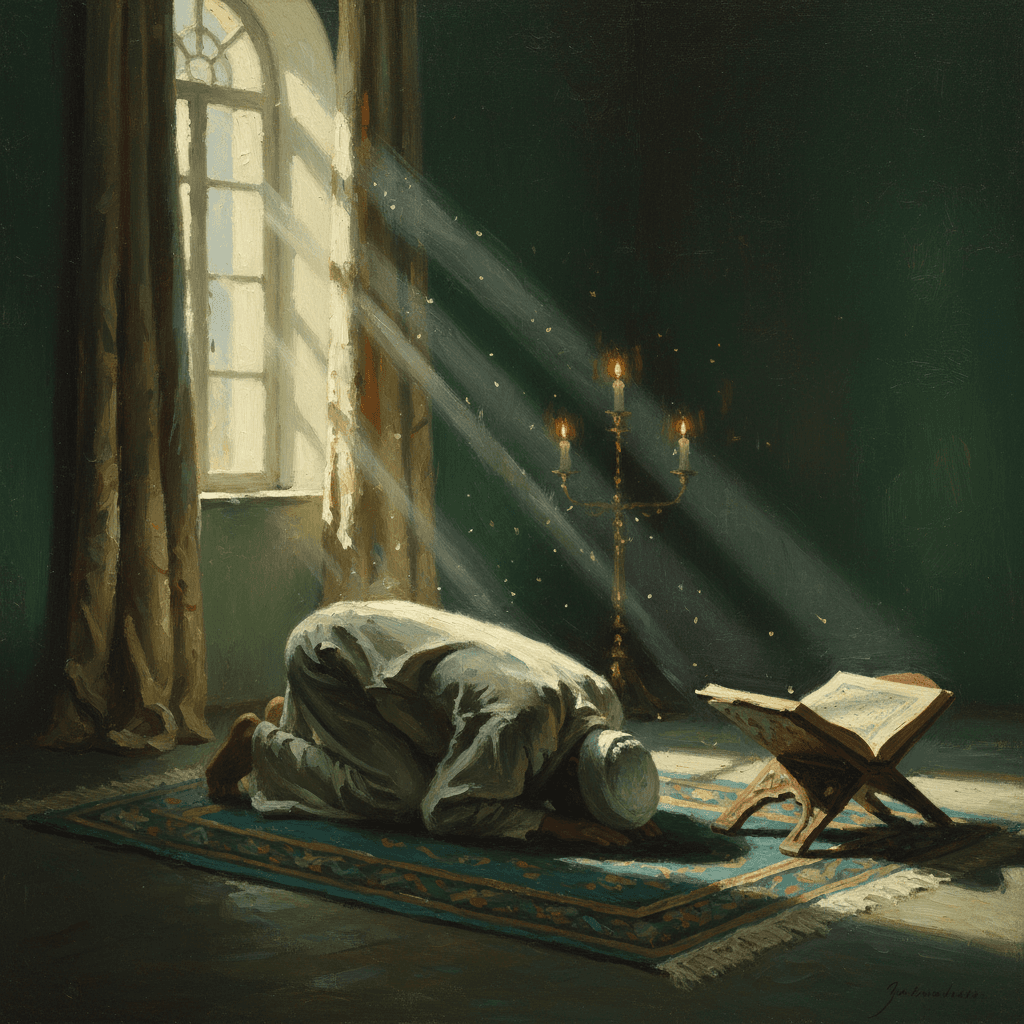
Every Muslim culture has it. Inshallah. The kid asking to go to the park: inshallah. The business deal that might close: inshallah. The wedding date still being decided: inshallah. The word is everywhere — and often used with a tone that signals uncertainty or polite evasion rather than submission to Allah's will.
That gap between how inshallah is often said and what it actually means is worth closing. Because what you are saying — what you should be saying — is one of the most theologically significant phrases in the Muslim vocabulary.
What Inshallah Actually Means
In sha Allah (إن شاء الله) is a conditional phrase: "if Allah wills." It is a declaration that anything you intend to do in the future exists only as a plan — and whether that plan becomes reality depends entirely on Allah's permission and will, not on your own capability or determination.
The Quran makes saying it not a cultural preference but a direct command:
وَلَا تَقُولَنَّ لِشَيْءٍ إِنِّي فَاعِلٌ ذَلِكَ غَدًا إِلَّا أَن يَشَاءَ اللَّهُ
"And never say of anything, 'Indeed, I will do that tomorrow,' except [when adding], 'If Allah wills.'"
— (Surah Al-Kahf, 18:23-24)
This verse is specific and clear. When you talk about what you are going to do — in the future — you must attach inshallah. This is not optional. It is not cultural. It is a Quranic obligation.
The reason is equally clear: to say "I will do this tomorrow" without acknowledging Allah's will is to speak as though the future is yours to control. It is a small form of istikbar (arrogance) — the assumption that you own time and ability independently of Allah.
The Story Behind the Command
This verse comes immediately after the story in Surah Al-Kahf of the companions of the cave (Ashab al-Kahf) — young men who put their trust in Allah when the world around them demanded compromise, and who were preserved by divine will beyond anything they could have arranged themselves.
The connection is pointed: the people who truly understand that Allah controls all outcomes are the ones who say inshallah when they talk about the future. Those who forget this reality speak as though they hold the reins.
The Prophet ﷺ was once asked about not saying inshallah for something:
وَاذْكُر رَّبَّكَ إِذَا نَسِيتَ
"And remember your Lord when you forget."
— (Surah Al-Kahf, 18:24)
This extension of the command is a mercy: if you forget to say inshallah and remember later, say it then. The point is not to catch you in a technical violation; it is to train the heart in a habitual acknowledgment of divine sovereignty.
Why Modern Muslims Have Diluted This Word
The phrase has become, for many Muslims, a social filler rather than a theological statement. There are two main forms of dilution:
The dismissive Inshallah — Said without any real intention to do the thing, as a polite way of declining or stalling. "Can you come to the meeting?" "Inshallah." This corrupts the phrase from an act of submission to an act of evasion. It is also, in practical terms, a form of dishonesty — using a holy phrase to avoid a direct answer.
The reflexive Inshallah — Said automatically, as a verbal habit, without any actual engagement with its meaning. The tongue says "if Allah wills" while the heart is already planning as though the future were certain. This is the most common dilution — the words without the consciousness.
Both forms reduce inshallah to a verbal tic and strip it of its power to actually orient the heart.
How to Use Inshallah With Genuine Meaning
Pause before you say it. Not a long pause — just enough to let the meaning settle in. What you are about to say is: "I intend this, and I am placing the outcome in Allah's hands." That is a complete thought, not a filler.
Mean your intention. Inshallah is not a substitute for effort or commitment. It does not mean "maybe I will and maybe I will not." It means "I genuinely intend to do this, and I acknowledge that whether I succeed depends on Allah's will." The commitment comes first; the submission to Allah's will is added on top of it.
Let it change how you plan. A Muslim who truly internalizes inshallah does not panic when plans fall through. If you said "I will do this inshallah" and Allah's will did not allow it to happen, that is not a failure — it is the inshallah playing out. This reframe transforms disappointments from ego-injuries into moments of trust in Allah's wisdom.
Use the full phrase regularly. The full Arabic — in sha Allah — said clearly and consciously is more powerful as a habit than the English "God willing" or the rushed single-syllable inshallah. The Arabic connects you to the Quranic origin.
Connect it to tawakkul. Inshallah is the verbal expression of tawakkul — trusting Allah with outcomes while doing your part with effort. For the broader practice of trusting Allah in all things, read what is tawakkul in Islam.
Build the Habits of Genuine Submission — Not Just the Words
DeenBack helps you build the daily Islamic practices that move concepts like Inshallah from your mouth to your heart. Track your dhikr, your salah, and your consistency with Allah.


Free download. Premium features available in-app.
Signs That Inshallah Is Working in Your Life
You will know inshallah has moved from reflex to reality when:
- Saying it feels like something you are genuinely doing, not just reciting
- When plans fall through, your first response is acceptance rather than frustration
- You notice when you are about to make a future statement without it and naturally add it
- You no longer use it as a polite way to decline without honesty — when you mean no, you say no; when you say inshallah, you mean it
The transformation of inshallah from a cultural phrase to a living practice is one of the markers of growing spiritual maturity. It is the acknowledgment that your life is genuinely not fully in your hands — and that is not frightening. It is freeing.
Common Questions
Is it wrong to make firm plans without saying Inshallah?
Saying inshallah does not mean refusing to plan or commit. It means acknowledging the limits of your control over outcomes. You can plan precisely, commit fully, and work hard — and still say inshallah, because you understand that ultimate outcomes belong to Allah. The Islamic approach is: work as though everything depends on your effort; trust as though everything depends on Allah's will.
What if I say Inshallah but then do not do the thing?
Inshallah does not exempt you from your commitments. If you say "I will help you move, inshallah" and then do not help without a legitimate reason, you have broken a commitment. Inshallah is about acknowledging divine control over the future — not about giving yourself an escape from your word. If circumstances genuinely prevented you, that is the inshallah in effect. If you simply did not want to go, that is dishonesty.
Can I say Inshallah about things that have already happened?
No. Inshallah refers to future intentions. For things that have already happened, the appropriate phrase is Mashallah (what Allah has willed has come to pass) for blessings, or alhamdulillah (all praise is Allah's) for gratitude.
What if someone gets offended when I say Inshallah?
Non-Muslims sometimes interpret inshallah as evasion, particularly if they have encountered the dismissive version. In professional or cross-cultural contexts, you can say both: "I plan to have this done by Friday, inshallah" — making your intention clear while maintaining the Islamic acknowledgment. You do not need to hide the phrase; you may need to explain its meaning.
A Phrase That Carries a Worldview
Every time you say inshallah with awareness, you are doing something profound: you are placing a future moment into Allah's hands and releasing your grip on it. You are acknowledging that you are a planner and a doer, but not a controller. You are practicing the submission that the word Islam itself expresses.
Said mindlessly, it is noise. Said with awareness, it is one of the most consistent acts of worship woven through an ordinary day.
For the related practices that build genuine submission in your daily life, read what is sabr in Islam and dua for guidance.
Live Inshallah — Build a Daily Practice of Submission and Trust
DeenBack helps you build the daily habits of a Muslim who genuinely submits to Allah's will. Track your dhikr, your prayers, and your consistency — and let each day be a living Inshallah.
Free download. Premium features available in-app.
Frequently Asked Questions
What does Inshallah mean in English?
Inshallah (إن شاء الله) means 'if Allah wills' or 'God willing.' It is a declaration that any future event depends entirely on Allah's will — not on our own plans, intentions, or ability. It is a Quranic command found in Surah Al-Kahf (18:23-24).
Is Inshallah in the Quran?
Yes. Allah commands it directly: 'And never say of anything, I will do that tomorrow, except [when adding] If Allah wills.' (Surah Al-Kahf, 18:23-24) This makes saying Inshallah when referring to future actions an obligation, not just a cultural tradition.
Is it rude to say Inshallah?
No. Inshallah is an honest acknowledgment that the future is in Allah's hands. The perception that it is a dismissive non-answer comes from cultural usage where it is said without genuine intention. When said sincerely — meaning 'I intend to do this, and I submit the outcome to Allah's will' — it is one of the most meaningful things a Muslim can say.
Do I have to say Inshallah for everything in the future?
The Quran commands it for intentions about future actions — things you plan to do. You do not need to say Inshallah for every descriptive statement about the future (like 'the sun will rise tomorrow'). The command applies to your own intentions and plans.
What is the difference between Inshallah and Mashallah?
Inshallah (if Allah wills) refers to future intentions and plans — what you hope or intend to do. Mashallah (what Allah has willed) refers to something good that has already happened — acknowledging that an existing blessing came from Allah's will. One looks forward; the other acknowledges the present or past.