
- Published on
What Is the Dunya in Islam? The World That Tests You
- Authors

- Name
- Ahmad
- Role
- Senior Marketing Manager, Islamic education • Deen Back
بِسْمِ اللهِ الرَّحْمٰنِ الرَّحِيْمِ
In the name of God, the Most Gracious, the Most Merciful.
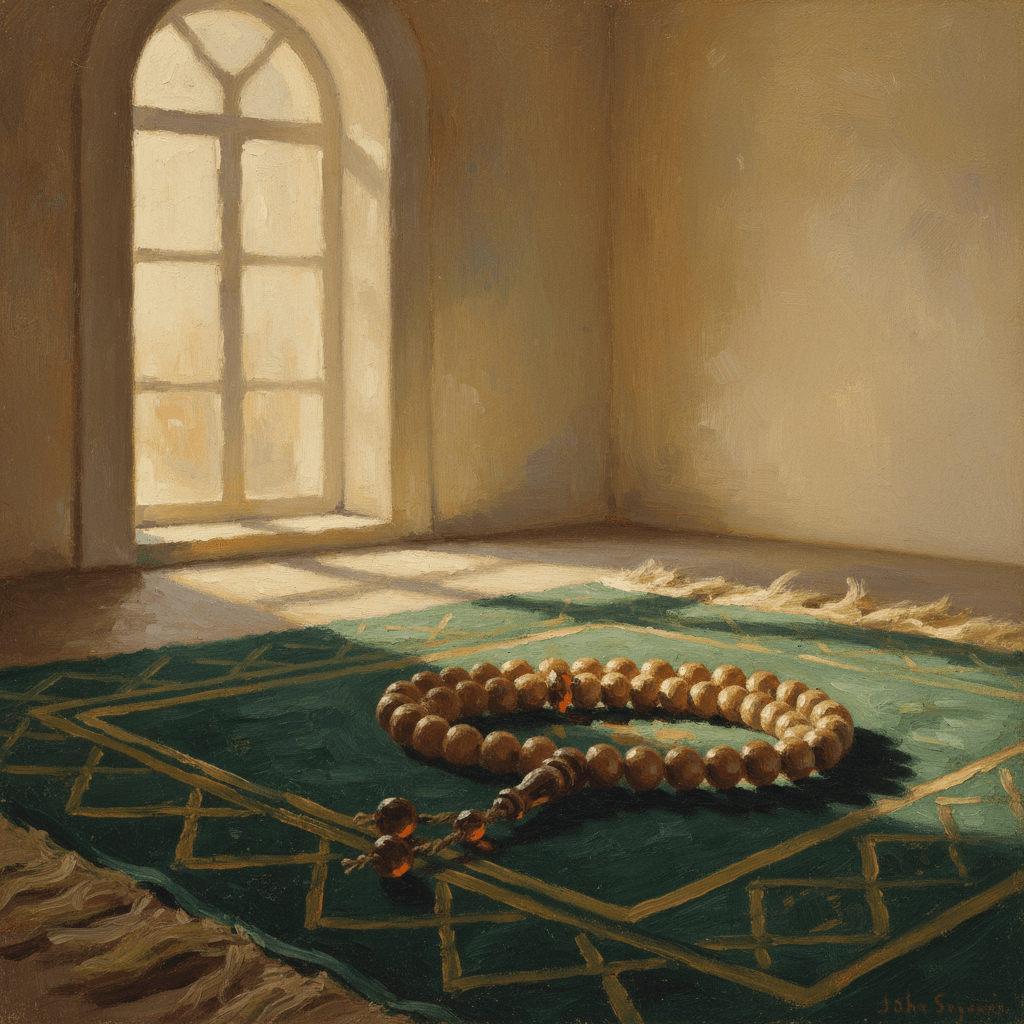
There is a particular kind of exhaustion that hits when you have worked hard, achieved something real — and then found yourself thinking: is this all there is?
Or the reverse: you are deep in the struggle, watching others succeed, and you feel the pull to chase everything they have by any means necessary.
Both experiences are pointing to the same underlying question: what is this world actually for?
Islam has a specific answer, and understanding it does not require you to become an ascetic who abandons worldly life. It just requires you to hold the world correctly — with an open hand rather than a clenched fist.
What the Dunya Actually Is
The word dunya (دُنْيَا) comes from an Arabic root meaning near or lower. It refers to this present world — the visible, material, temporary life before the akhira (the hereafter). The name itself is a clue: this world is close and it is lower. It is not the destination.
The Quran describes the dunya with striking clarity: "Know that the life of this world is only play and amusement, pomp and mutual boasting among you, and rivalry in respect of wealth and children. It is like the rain whose growth of vegetation pleases the tillers, but then it dries up and you see it turning yellow, then it becomes straw." (Surah Al-Hadid, 57:20)
This is not a condemnation of the world — it is a description of its nature. Beautiful, temporary, and ultimately passing.
The Prophet ﷺ framed it as a matter of proportion: "The example of this world compared to the akhira is like the example of one of you dipping his finger in the ocean — let him see how much he brings back." (Sahih Muslim 2858) The ocean is the akhira. The drop on your finger is the dunya.
Understanding this scale is not meant to make you depressed. It is meant to free you.
Why Modern Muslims Struggle With This
The dunya has never been louder or more seductive than it is right now.
Social media turns the dunya into a constant competition. Everyone else's wealth, travel, relationships, and achievements are on permanent display. The nafs — your lower self — sees this and starts comparing. Why do they have that? Why not me? What am I missing?
Consumerism is built on the premise that you are not yet complete — that the next purchase, the next experience, the next milestone will finally satisfy. The Prophet warned against this exact trap: "The son of Adam grows old, but two things grow young with him: love of wealth and love of long life." (Sahih Bukhari 6420) The craving does not decrease as you acquire more. It expands.
The deeper challenge is that pursuing the dunya is not obviously wrong — it feels productive, responsible, even virtuous. "I am providing for my family." "I am building something." These are good things. But the nafs knows that the line between provision and obsession is a slow drift, not a clear step.
How to Hold the Dunya Correctly
The Islamic concept for this is zuhd — detachment. It does not mean poverty or withdrawal from the world. It means the dunya lives in your hand, not in your heart.
Keep the akhira as your frame for major decisions. Before a major career choice, financial commitment, or relationship decision, ask: in five years at the latest (when I am in my grave), will I be glad I chose this? That is not morbidity — it is clarity.
Practice sadaqah as the antidote to dunya-attachment. The Prophet ﷺ said: "Charity does not decrease wealth." (Sahih Muslim 2588) Giving regularly — even small amounts — restructures your relationship with money from ownership to stewardship. For practical guidance, see how to be content with what Allah gave you and what is zuhd in Islam.
Remember death deliberately. The Prophet ﷺ said: "Remember frequently the destroyer of pleasures — death." (Tirmidhi 2307) This is not a counsel of despair. It is the most clarifying practice available. When you hold death as a reality, the dunya naturally shrinks to its actual size.
Measure success by taqwa, not possessions. The Quran tells us: "The most honoured of you in the sight of Allah is the most righteous of you." (Surah Al-Hujurat, 49:13) Building taqwa as your primary metric recalibrates every other ambition.
Build ibadah into the rhythm of your day. When the five prayers structure your time, the dunya naturally takes its place between them rather than swallowing everything. See how to stay consistent in your deen for practical habit-building strategies.
Put the Akhira Back at the Centre
DeenBack tracks your daily worship streaks and dhikr, helping you build the consistent habits that keep the dunya in its proper place — your hand, not your heart.


Free download. Premium features available in-app.
Signs You Are Getting This Right
Getting your relationship with the dunya right is a gradual process, not a single breakthrough moment. Signs of progress include:
- You feel grateful for blessings without being shattered when they are removed
- You can give something away without the nafs screaming
- Major decisions feel clearer when you run them through the akhira filter
- The comparison spiral on social media has less grip on your mood
- You notice when you are chasing dunya for its own sake — and you can pause
None of these are permanent achievements. They are practices. Some days you hold the world lightly. Other days it has you in a stranglehold. The mark of the believer is the direction of travel, not the destination reached.
Common Questions
Is earning money and success haram? Absolutely not. The Quran praises those who seek legitimate provision and do not become a burden. The Companions were merchants, farmers, and craftspeople. The issue is not earning but the orientation of the heart during the earning.
Does Islam say I should be poor? No. The Prophet ﷺ said: "If the son of Adam had two valleys of gold, he would wish for a third." (Sahih Bukhari 6437) This describes a tendency to observe, not to encourage. Islam wants you to earn halal wealth, control it, and use it well — not to reject it.
How do I balance dunya and deen when they seem to conflict? They rarely conflict as much as the nafs claims they do. Most of the time, "I cannot pray because of work" means "I have not decided to prioritise prayer." Scheduling salah as a non-negotiable reframes the conflict. The moments when they genuinely conflict — a job that requires haram — are the tests that reveal your actual priority.
What is the dua to not love the dunya too much? The Prophet ﷺ taught: Allahumma la taj'al id-dunya akbara hammina — "O Allah, do not make the dunya our greatest concern." (Tirmidhi 3502) Say it daily.
The World Is Not the Problem — Your Grip Is
The dunya is not your enemy. Allah created it and called it good. The problem is not the world — it is what the world does to your heart when you let it become the main event.
Use the dunya fully. Earn. Build. Enjoy its blessings. Just remember what it is: the corridor, not the destination. The test, not the result. The grain of sand, not the ocean.
Navigate the Dunya Without Losing the Akhira
DeenBack helps you build the daily habits that keep your heart anchored to what lasts — even when the world is pulling hard in every other direction.
Free download. Premium features available in-app.
Frequently Asked Questions
What does dunya mean in Islam?
Dunya (دُنْيَا) means the present, near, or lower world — the material life before the akhira (afterlife). The word comes from the Arabic root meaning 'near' or 'lower.' In Islamic teaching, the dunya is not evil in itself but is a temporary test designed to reveal where a person's true loyalties lie.
Is loving the dunya haram?
The Prophet ﷺ said: 'Love of the dunya is the root of every evil.' (Bayhaqi — widely cited). The problem is not enjoying the dunya's blessings but becoming attached to them to the degree that they distract you from your real purpose. Earning halal rizq, building a family, and contributing to the world are all honoured in Islam — the dunya is the arena where that happens.
What is the Islamic view on wealth and the dunya?
Wealth is described in the Quran as a fitnah (trial) and as a bounty. Both are true simultaneously. The problem arises when the pursuit of wealth becomes the primary goal of life rather than a means to worship Allah and serve His creation.
How do I stop being attached to the dunya?
Scholars recommend zuhd — detachment from the dunya in the heart rather than physical withdrawal from it. The practice looks like: remembering death daily, giving sadaqah regularly, limiting overconsumption, and keeping the akhira as the frame for every major decision.