
- Published on
What Is Zuhd in Islam — The Art of Not Being Owned by the World
- Authors

- Name
- Ahmad
- Role
- Senior Marketing Manager, Islamic education • Deen Back
بِسْمِ اللهِ الرَّحْمٰنِ الرَّحِيْمِ
In the name of God, the Most Gracious, the Most Merciful.
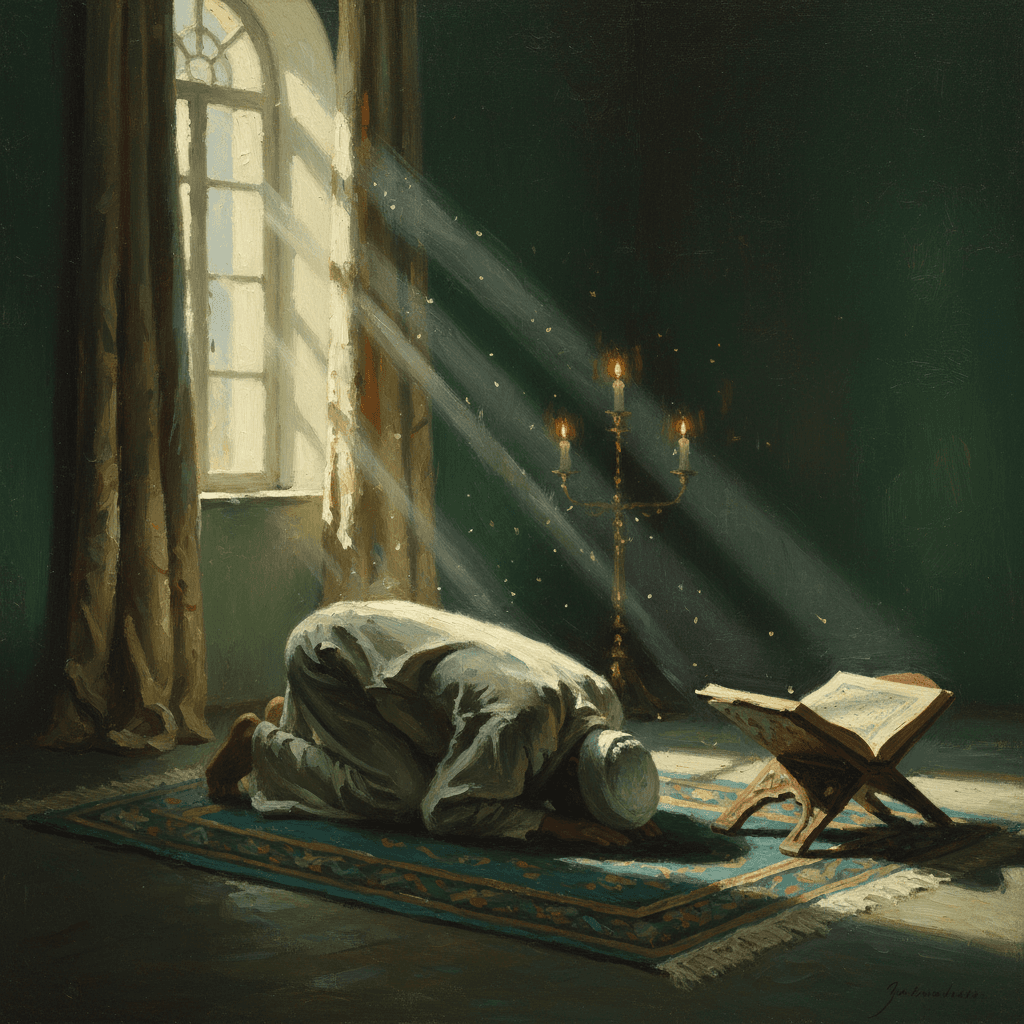
The Prophet ﷺ once said something that has stayed in the hearts of Muslims for 1,400 years:
"Be in this world as if you were a stranger or a traveler passing through."
A traveler does not decorate the hotel room. A stranger does not campaign to become the local mayor. They are present, they function, they engage — but they are not confused about what is permanent and what is temporary. That orientation is zuhd.
What Zuhd Actually Means
Zuhd (زهد) comes from the Arabic root meaning to be indifferent to, to turn away from. In Islamic spirituality, it refers to a state of the heart: genuine indifference to the world's pull — not hatred of the world, not rejection of its gifts, but freedom from being owned by it.
The scholars of the heart were precise about this definition. Imam Ahmad ibn Hanbal said: "Zuhd is of three types: abandoning the haram — this is the zuhd of the ordinary person; abandoning the excess of halal — this is the zuhd of the elite; and abandoning what distracts from Allah — this is the zuhd of the gnostics."
The most practical level for most Muslims is the middle: not necessarily abandoning all excess, but developing a genuine indifference to it — possessing without being possessed.
The Quran frames it exactly this way:
وَابْتَغِ فِيمَا آتَاكَ اللَّهُ الدَّارَ الْآخِرَةَ وَلَا تَنسَ نَصِيبَكَ مِنَ الدُّنْيَا
"Seek in what Allah has given you the Home of the Hereafter, and do not forget your share of this world."
— (Surah Al-Qasas, 28:77)
This verse refuses both extremes. It does not say "reject the world." It says "seek the akhira through what you have been given in this world — and do not forget your portion." Both parts matter. Zuhd is not withdrawal from the world; it is engaging the world without losing the akhira.
The Prophet ﷺ described it as:
الزُّهْدُ فِي الدُّنْيَا لَيْسَ بِتَحْرِيمِ الْحَلَالِ وَلَا إِضَاعَةِ الْمَالِ
"Zuhd in the world is not making the halal forbidden and not wasting wealth — it is that you trust in what is with Allah more than what is in your hands."
— (Sunan Ibn Majah 4100, sunnah.com)
Trust. In what is with Allah over what is in your hands. That is the heart of zuhd.
Why Modern Muslims Struggle With Zuhd
The modern economy is designed to generate attachment. Every layer of digital life is structured around comparison, desire, and the fear of missing out. The message everywhere is: you need more, you are not enough, your current situation is insufficient, and the next acquisition will fix it.
This is the exact opposite of zuhd. And because we swim in it daily, the pull toward worldly attachment is stronger than at any point in history — not because we are worse than previous generations, but because the tools for generating desire have never been more sophisticated.
There is also a theological misunderstanding that makes zuhd seem impossible: many Muslims think zuhd requires becoming poor, giving away everything, or abandoning career and family. This was never the teaching. Uthman ibn Affan, one of the wealthiest people in the early Muslim community, practiced zuhd. The Companions who built the Muslim state, led armies, and ran businesses practiced zuhd. Zuhd was their internal relationship with all of that — not rejection of it.
Read what is tawakkul in Islam for the closely related concept: trusting in Allah over trusting in your own accumulation. Tawakkul and zuhd grow together.
How to Practice Zuhd Daily
Practice Voluntary Simplicity Regularly
Even if you are not moving toward a minimalist lifestyle, regularly choosing the simpler option — when comfort pushes toward excess — trains the heart in zuhd. Eat a simpler meal. Wear less expensive clothes when more expensive ones are available. Decline a purchase you can afford but do not need. These small choices are not about poverty; they are about practicing the freedom from attachment that zuhd requires.
The Prophet ﷺ regularly chose simplicity even when abundance was available — sleeping on a straw mat, patching his own clothes, eating whatever was in the house. Not because he was forced to, but because his heart was genuinely indifferent to the luxury the world offered.
Check Your Distress Level at Imagined Loss
This is an honest exercise: imagine losing your job, your savings, your social status, your possessions. What rises in you? Some concern is natural and wise — practical planning is not dunya attachment. But panic, identity collapse, the sense that your life has ended — these reveal the degree to which the heart has been captured.
Use this exercise not to generate anxiety but as a muhasabah tool. What is muhasabah in Islam gives the framework for this kind of honest self-examination.
Increase Sadaqah — Give Regularly
Giving regularly — from what you have, not from your surplus alone — directly trains the nafs away from attachment. The person who gives freely and regularly discovers, over time, that their grip on possessions loosens. This is not naive; it is a practiced spiritual skill. The Prophet ﷺ said that generosity is one of the most reliable paths to freeing the heart from the world's grip.
Build the Daily Habits That Free Your Heart From the Dunya's Grip
Consistent dhikr, morning adhkar, and daily dua are the practices that keep your heart oriented toward the akhira. DeenBack helps you build these habits so the world stays in your hand — not in your heart.


Free download. Premium features available in-app.
The Dua of the Traveler
اللَّهُمَّ لَا تَجْعَلِ الدُّنْيَا أَكْبَرَ هَمِّنَا وَلَا مَبْلَغَ عِلْمِنَا
Allahumma la taj'al ad-dunya akbara hammina wa la mablagha 'ilmina
"O Allah, do not make this world our greatest concern or the extent of our knowledge."
— (Sunan At-Tirmidhi 3502, sunnah.com)
This dua asks for the most specific internal adjustment: not that the world be removed, but that it not become the greatest concern — the thing around which life is organized. Say this regularly and let it recalibrate where you are actually investing your heart.
Signs Your Zuhd Is Deepening
As the heart genuinely loosens from the world, you will notice:
- Decisions about purchases, career moves, and social comparisons become lighter — less charged
- Loss and setback are felt but do not shake the foundations of your life
- You find yourself genuinely happy for others who have more than you, without the sting of comparison
- Material things bring appropriate pleasure but not deep identity — you enjoy them while having them and release them without crisis when they are gone
- There is a growing orientation toward the akhira as the real measure of success — and it does not feel like giving up, it feels like coming home
Read how to be more grateful Islamically alongside the practice of zuhd — the two work together: zuhd loosens attachment to what you do not have; shukr deepens contentment with what you do have.
Common Questions
Can a rich person have zuhd?
Absolutely — and this is crucial. Uthman ibn Affan gave his entire wealth to equip an army for the sake of Allah. Abdul Rahman ibn Awf was enormously wealthy and a companion of the Prophet ﷺ known for his zuhd. The test is not how much you have but what your heart does with it. If you can give it away easily when the situation requires, if you are not defined by it, if losing it does not collapse your inner life — that is zuhd regardless of the amount.
Is zuhd sadness or giving up on life?
No — the Prophet ﷺ was not sad. He laughed, he loved, he engaged fully with life. The Companions who practiced zuhd were the most active, engaged, and impactful people of their time. Zuhd is freedom from anxiety about the world, not withdrawal from it. The traveler analogy is helpful again: a good traveler is fully present at each stop, enjoys the journey, and engages with everyone they meet — while never forgetting they are passing through.
The Stranger's Wisdom
The traveler passing through does not need the hotel to be permanent. They do not grieve leaving the city they visited. They are present, engaged, and grateful for the experience — and they keep their eyes on the destination. That is the life of zuhd: fully in the world, fully human, fully alive — but not confused about what is real and what is temporary. And in that clarity, there is a freedom that the person who has everything but cannot let go of any of it will never know.
Loosen the World's Grip on Your Heart — One Day of Consistent Practice at a Time
DeenBack helps you build the daily remembrance practices that keep your heart turned toward what is permanent — while you live fully in what is temporary.
Free download. Premium features available in-app.
Frequently Asked Questions
Does zuhd mean being poor or avoiding wealth?
No — some of the greatest practitioners of zuhd in Islamic history were wealthy people. Uthman ibn Affan was enormously wealthy and deeply practicing in zuhd. The distinction is internal: a person with zuhd possesses wealth without being possessed by it. They can give it away without grief and lose it without panic. A poor person who constantly thinks about wealth and is enslaved to the desire for it has no zuhd despite having no money. Zuhd is a state of the heart, not a financial condition.
Is it permissible to enjoy the good things of the dunya?
Yes — the Quran explicitly says: 'But seek in what Allah has given you the Home of the Hereafter, and do not forget your share of the world.' (28:77) The Prophet ﷺ ate, married, wore good clothes when available, and enjoyed the permissible pleasures of life. Zuhd is not the rejection of these things — it is not making them your ultimate concern, not building your identity and sense of worth around them, and not pursuing them at the cost of your akhira. The world is a halal gift to be enjoyed without being enslaved by it.
How does zuhd relate to minimalism or simple living?
There is an overlap but they are not the same. Minimalism is a lifestyle philosophy focused on simplifying possessions and reducing consumption. Zuhd is a spiritual orientation of the heart. A minimalist might own very little but be extremely attached to what they have and to the identity of being a minimalist. A person with zuhd might own many things but hold them lightly — able to give them away, lose them, or change their circumstances without the foundations of their inner life being shaken. Minimalism can be a helpful external expression of zuhd; it is not zuhd itself.
Was the Prophet poor, and is that the model for Muslims?
The Prophet ﷺ varied in his material circumstances throughout his life. At times he and his household had almost nothing — they would go without food for extended periods. At other times, the Muslim community prospered and provision came. The constant across both was his internal zuhd: whether wealthy or destitute, his heart was not enslaved to material circumstances. He chose simplicity even when abundance was available — which is the highest form of zuhd. The model is not necessarily poverty; it is the freedom from attachment that he maintained regardless of circumstances.
How do I know if I am attached to the dunya in unhealthy ways?
Ask yourself honestly: How would you feel if you lost your main source of income tomorrow? If your home? Your reputation? Your social status? The intensity of your imagined distress — beyond practical concern — reveals the degree of your attachment. This is not to create anxiety but to identify clearly what you have allowed to take root in your heart. The places where imagined loss produces the strongest fear are the places where the dunya has most taken hold.