
- Published on
How to Be Content with What Allah Gave You — Islamic Guide
- Authors

- Name
- Ahmad
- Role
- Senior Marketing Manager, Islamic education • Deen Back
بِسْمِ اللهِ الرَّحْمٰنِ الرَّحِيْمِ
In the name of God, the Most Gracious, the Most Merciful.
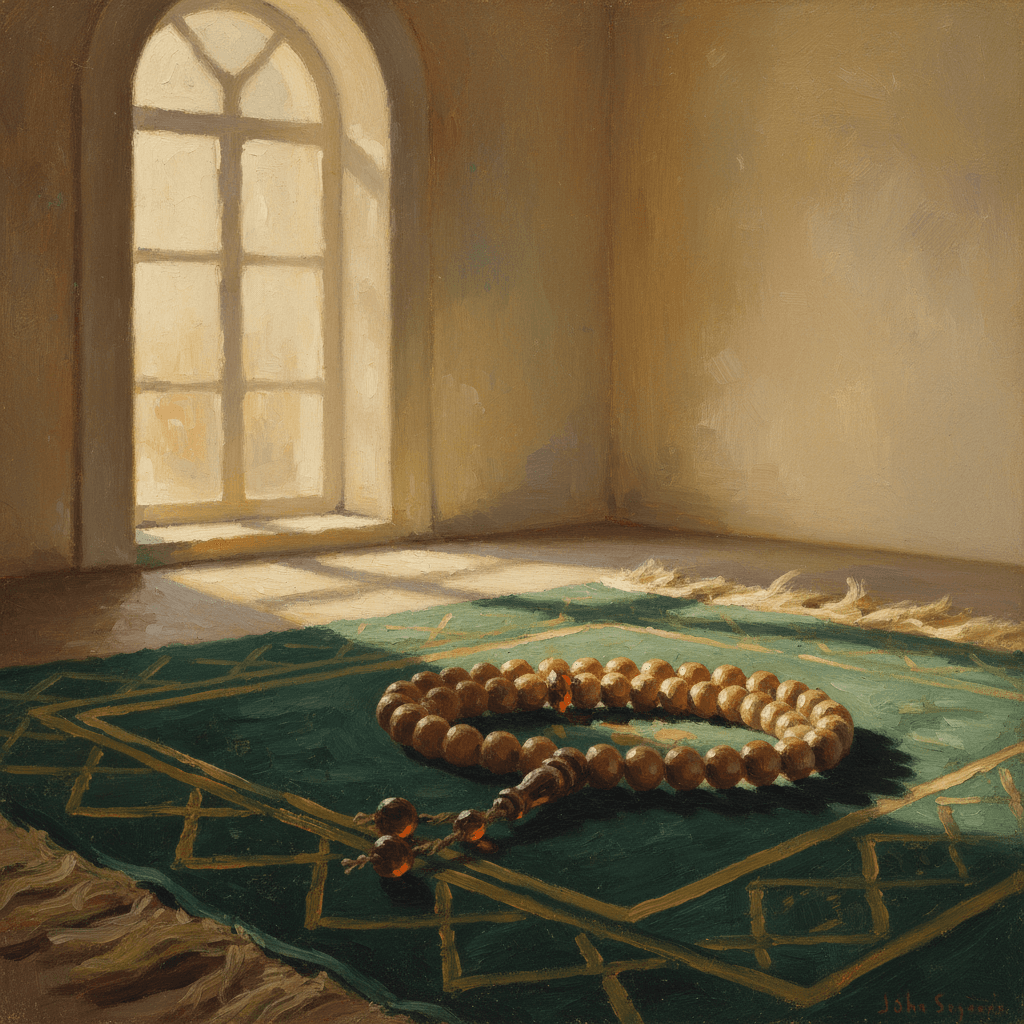
You are trying to practice gratitude. You know the ayahs about counting blessings. You know the Prophet said that true wealth is contentment of the soul.
And then you open your phone.
Someone from your school is buying a house. A former colleague is traveling again. A family member has what you have been making dua for, for years, and seems to not even notice how lucky they are. And the familiar ache returns — not quite envy, but close enough. A quiet question: why does everyone else seem to have what I need?
Learning how to be content with what Allah gave you is not a matter of switching off your desires. It is a practice — a daily training of the nafs — that this guide walks you through step by step.
Why This Matters — The Gap Between Knowing and Doing
Most Muslims know they are supposed to be grateful. Most Muslims know that comparison is toxic. Most Muslims have heard the hadith about true wealth.
The problem is not knowledge. The problem is that contentment has to be built — and the modern world is specifically designed to make it harder.
The Prophet ﷺ said:
"Whoever wakes up feeling secure in his home, healthy in his body, and having food for the day — it is as if the world in its entirety was gathered for him." — (Tirmidhi 2346)
By that measure, most of us are wealthy beyond imagination. But the nafs does not calibrate to the absolute. It calibrates to the relative — to what the person next to you has that you do not. And social media has made that "person next to you" a curated global highlight reel.
Understanding this is the first step. Acting on it is what this guide is about.
Step-by-Step Guide to Building Contentment
Step 1: Learn the concept of qana'ah
Qana'ah (قَنَاعَة) is the Islamic concept of contentment and sufficiency — not just tolerating what you have, but finding genuine sufficiency in it. The Prophet ﷺ described it this way:
"True wealth is not having many possessions. True wealth is the richness of the soul (ghina al-nafs)." — (Sahih al-Bukhari 6446)
Qana'ah is not resignation. It does not mean you stop working hard, stop making dua, or stop wanting a better life. It means your sense of sufficiency does not depend on achieving those things. You can strive from a place of fullness rather than scarcity.
This is a profound psychological shift. Most people strive from lack — "I will be okay when I have X." Qana'ah is striving from fullness — "I already have enough. And I will work toward more, trusting Allah's decree on the outcome."
Step 2: Practice the prophetic technique of downward comparison
The Prophet ﷺ gave a specific, actionable instruction:
"Look at those who are below you and do not look at those who are above you. This is better for you, so that you do not underestimate the blessings of Allah." — (Sahih al-Bukhari 6490)
This is not about dismissing ambition. It is about calibrating gratitude correctly. Every morning, deliberately think about someone with less than you — in health, in security, in family, in faith. Not to feel superior, but to feel the weight of what you have been given.
Step 3: Add specific daily shukr practice
Vague gratitude ("I am grateful") does not activate the heart. Specific gratitude does.
After Fajr, list three specific things you are grateful for with enough detail to actually feel them. Not "grateful for my family" but "grateful that my mother is alive and I can call her today." Not "grateful for health" but "grateful that I woke up this morning with no pain and two working eyes."
The more specific the gratitude, the more it cuts through the numbness of the nafs.
Step 4: Learn and recite the dua for contentment
The Prophet taught:
اللَّهُمَّ قَنِّعْنِي بِمَا رَزَقْتَنِي، وَبَارِكْ لِي فِيهِ
"Allahumma qanni'ni bima razaqtani wa barik li fih"
"O Allah, make me content with what You have provided for me, and bless me in it."
Say this after every Fajr and Maghrib. You are not asking to stop desiring more. You are asking Allah to soften the heart so that what you already have feels like enough while you seek more.
Step 5: Reduce the comparison triggers
The Prophet lived before social media, but his guidance directly addresses what social media does. Unfollow accounts that consistently trigger discontentment. Set time limits on your usage. Choose what you consume deliberately. The nafs that constantly sees others' highlights will constantly feel deficient. This is not about ignorance — it is about protecting your spiritual state.
Step 6: Connect contentment to rizq and trust in Allah
The deepest source of contentment is not psychological technique — it is theological truth. Allah is Ar-Razzaq (the Provider). Your rizq (provision) was decreed before you were born. No human being, no circumstance, and no missed opportunity can take from you what Allah has written for you. And no acquisition can exceed it.
مَا أَصَابَ مِن مُّصِيبَةٍ فِي الْأَرْضِ وَلَا فِي أَنفُسِكُمْ إِلَّا فِي كِتَابٍ مِّن قَبْلِ أَن نَّبْرَأَهَا
"No disaster strikes upon the earth or among yourselves except that it is in a register before We bring it into being." — (Surah Al-Hadid, 57:22)
When you deeply believe this, comparison loses most of its power. They are not winning something that belongs to you. Everything that belongs to you will reach you. See our guide on what is tawakkul in Islam for the theological foundation behind this.
Build your daily shukr and dhikr habit — and watch contentment follow
Deen Back helps you track your morning gratitude, daily duas, and dhikr so contentment becomes a discipline you practice, not just a feeling you hope for.


Free download. Premium features available in-app.
Making It Stick — The Habit Science
The Prophet ﷺ loved consistent small deeds. Contentment is built through consistent small practices — not a one-time decision.
Anchor your shukr to Fajr. Before you look at your phone, before you begin the day's anxieties, spend two minutes in specific gratitude. This is the highest-leverage moment because it sets the frame for the entire day.
Make a weekly audit. Every Friday — the day of Jummah — take five minutes to review the week. What specifically did Allah provide this week that you did not deserve? Seeing provision as an ongoing gift rather than an entitlement compounds gratitude over time.
Use sabr and shukr together. For the full picture of how to build contentment alongside patience, see our guides on what is sabr in Islam and what is shukr in Islam.
Common Mistakes to Avoid
Confusing contentment with passivity. Qana'ah does not mean you stop making dua for more, working hard, or seeking improvement. It means your sense of self-worth and stability does not depend on getting what you want. You can be content and ambitious at the same time.
Practicing gratitude only in comfortable moments. The Prophet said: "Wondrous is the affair of the believer — if good comes to him he gives thanks, and if harm comes to him he is patient." (Sahih Muslim 2999) Gratitude in difficulty is the advanced practice. Start it before you need it.
Expecting contentment to feel peaceful all the time. Contentment is not the absence of longing. It is the presence of sufficiency alongside longing. You can want more and still feel settled. That tension is normal and not a sign of failure.
Common Questions
Is it wrong to want more than I have?
No. Striving for more provision, more knowledge, more piety is encouraged in Islam. The difference is whether the striving comes from nafs-driven scarcity and comparison, or from a place of gratitude and genuine purpose. Wanting more becomes a problem when it breeds ingratitude, envy, or a sense that Allah has shortchanged you.
How do I deal with envy when it arises?
The prophetic practice is to make dua for the person you feel envious of — MashaAllah, barakAllah feehum. The act of sincerely praying for the person you envy is one of the most direct ways to dissolve the envy. See our guide on what is hasad in Islam for a deeper treatment of envy and its antidotes.
What if I genuinely have very little — is contentment still the right goal?
Yes — and this is where the prophetic tradition is most profound. Some of the companions had very little materially and yet were among the most content of human beings. Contentment is an internal state that can coexist with genuine material difficulty. It does not mean you stop seeking relief — it means you do not allow your circumstances to rob you of your inner stability.
Start Today, Not Tomorrow
How to be content with what Allah gave you is ultimately a daily practice, not a one-time insight. The steps are simple: learn qana'ah, practice downward comparison, add specific daily shukr, recite the dua for contentment, reduce comparison triggers, and anchor your contentment in Allah's divine decree.
For more on deepening your relationship with what Allah has provided, explore our guides on what is zuhd in Islam — the spiritual discipline of living lightly in relation to the world.
Build contentment through daily Islamic habits — one small step at a time
Deen Back helps you track your daily shukr, dhikr, and dua so contentment becomes a living practice rather than a distant ideal.
Free download. Premium features available in-app.
Frequently Asked Questions
What does Islam say about contentment with what you have?
Islam has a specific concept for contentment with what Allah has given: qana'ah (قَنَاعَة), meaning sufficiency and contentment with one's portion. The Prophet described it as true wealth: 'Wealth is not having many possessions, but wealth is contentment of the soul.' This is not passive resignation — it is an active spiritual discipline of finding sufficiency in what Allah has provided while still working and making dua for more.
What is the dua for contentment in Islam?
The Prophet taught: Allahumma qanni'ni bima razaqtani — O Allah, make me content with what You have provided me. He also said: whoever says in the morning and evening, 'O Allah, I am content with You as my Lord, with Islam as my religion, and with Muhammad as my Prophet,' this will be sufficient for him. Regular recitation of these duas trains the heart toward contentment.
How do I stop comparing myself to others as a Muslim?
The Prophet warned specifically against comparison: 'Look at those below you, not those above you — it is better for you to not belittle the blessings of Allah upon you.' This practice of downward comparison — noticing those with less — is the prophetic antidote to envy and discontentment. Pair it with daily shukr (gratitude) practice and a reduction in social media consumption, which algorithmically exposes you to the most exceptional cases.
What is the difference between sabr and qana'ah?
Sabr (patience) is the capacity to endure difficulty without complaint. Qana'ah (contentment) is the settled sense of sufficiency with what Allah has provided. Sabr is active endurance; qana'ah is active acceptance. You need sabr when facing hardship; you need qana'ah when facing envy or dissatisfaction with your rizq. They are complementary — a Muslim cultivates both.
How do I practice gratitude when life is difficult?
The Prophet gave a practical technique: count specific blessings rather than general ones. Not 'I am grateful for my health' but 'I can see, hear, speak, walk, eat.' Specific gratitude activates a different quality of shukr. In moments of difficulty, the prophetic practice is to say Alhamdulillah ala kulli hal — all praise to Allah in every state — while still making dua for change. Gratitude and dua are not in tension.