
- Published on
What Is Tahajjud? The Night Prayer That Changes Everything
- Authors

- Name
- Ahmad
- Role
- Senior Marketing Manager, Islamic education • Deen Back
بِسْمِ اللهِ الرَّحْمٰنِ الرَّحِيْمِ
In the name of God, the Most Gracious, the Most Merciful.
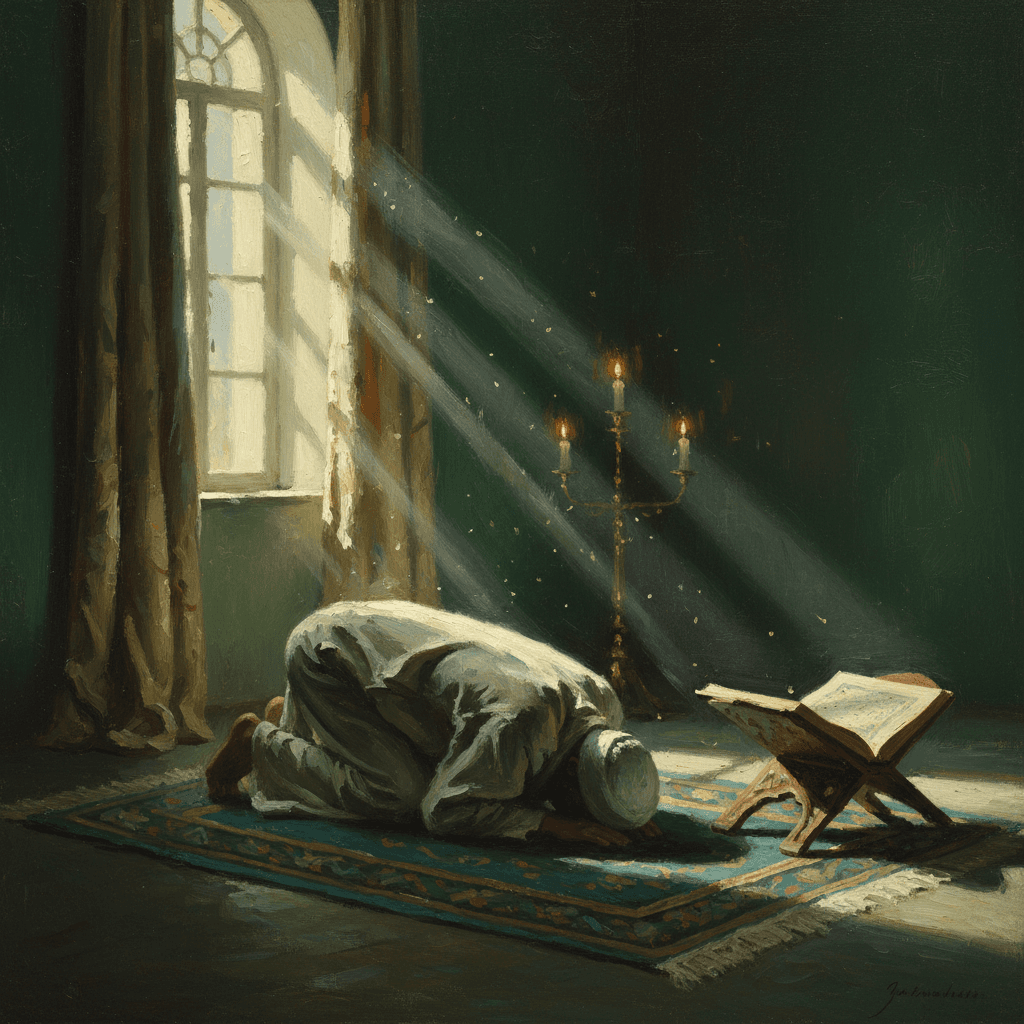
There is something about 3am.
The world has gone quiet. The demands of the day have dissolved. In that stillness, if you have ever woken and prayed — even two brief rakats — you know that it hits differently from any other prayer.
That is Tahajjud. And it is not just a religious practice. It is one of the most powerful tools for spiritual growth, self-discipline, and proximity to Allah that exists in the Islamic tradition.
What Tahajjud Actually Means
Tahajjud (تَهَجُّد) comes from the root hajada — to sleep and then wake. The literal meaning is "waking after sleep." It is not simply a night prayer; it specifically requires that you sleep first and then rise.
This distinction matters. The Prophet ﷺ — who had direct revelation and who Allah loved most — still chose to sleep first and then rise for prayer rather than simply staying awake. There is wisdom in that structure: the body rests, and then the awakened soul offers what the world is not seeing.
Allah says in the Quran:
وَمِنَ اللَّيْلِ فَتَهَجَّدْ بِهِ نَافِلَةً لَّكَ عَسَىٰ أَن يَبْعَثَكَ رَبُّكَ مَقَامًا مَّحْمُودًا
Wa minal-layli fatahajjad bihi nafilatan lak, asa an yab'athaka rabbuka maqaman mahmuda
"And rise for prayer during the night as an additional worship for you; perhaps your Lord will resurrect you to a praised station."
— (Surah Al-Isra, 17:79)
Maqaman mahmuda — the "praised station" — is the station of intercession on the Day of Judgment, according to the scholars. The connection between waking at night for prayer and this extraordinary status is not incidental. It is cause and effect.
The other name you will hear is Qiyam al-Layl (قيام الليل) — "standing in the night." While scholars differentiate slightly (Tahajjud requires sleep first; Qiyam al-Layl technically does not), in everyday usage they refer to the same act of voluntary night worship.
Why Modern Muslims Struggle With This
Knowing what Tahajjud is and actually praying it are two entirely different experiences.
The nafs is most comfortable when it has your full cooperation. And the nafs at 2am, when the alarm goes off and the bed is warm, is extremely persuasive. "You need sleep. You have work. You already prayed Isha. You are not a scholar."
There is also the all-or-nothing trap. People hear that the Prophet prayed 11 rakats of night prayer and feel like 2 rakats is not worth getting up for. That logic is precisely what keeps the habit from forming.
Modern life has added another layer: screens. Many Muslims are awake at 2am — but watching YouTube, not praying. The wakefulness is there; the direction is wrong.
The nafs exploits all of this. It tells you that Tahajjud is for exceptional people — scholars, sheikhs, the spiritually advanced. But the Quran describes the people of Tahajjud not as the exceptional but as the normal righteous: "They used to sleep only a little of the night." (Surah Adh-Dhariyat, 51:17)
How to Make Tahajjud Part of Your Daily Life
Start absurdly small. Two rakats. That is it. Not eight. Not eleven. Two. The goal in the first month is not spiritual transformation — it is proof to your nafs that getting up is survivable. Make it so small that the excuse does not work.
Fix a specific time. Vague intentions ("sometime in the last third of the night") do not produce habits. Set an alarm for a specific time — even 15 minutes before Fajr qualifies for Tahajjud. The last third of the night is ideal, but a consistent 2 rakats at 4:45am beats an occasional 8 rakats at 2am.
Sleep earlier. You cannot wake up for the last third of the night if you are going to bed at 1am. Tahajjud is downstream of when you sleep. The sunnah of sleeping — sleeping after Isha, with wudu, on your right side — makes early sleep natural and honorable rather than a retreat.
Make dua specific. The Prophet ﷺ said: "Our Lord descends to the lowest heaven every night in the last third of the night and says: Is there anyone calling upon Me so that I may respond? Is there anyone asking Me so that I may give? Is there anyone seeking forgiveness so that I may forgive?" (Sahih Bukhari 1145)
This is the window. Have your specific duas ready — written down if necessary — so the moment you wake, you know exactly what you are rising for.
Track it. Momentum is real. When you have a 5-day Tahajjud streak, breaking it feels costly. Building that streak starts with the first night, and then tracking it so the second night has something to protect.
Build Your Tahajjud Habit Starting Tonight
DeenBack helps you set Tahajjud alarms, track your night prayer streak, and log your personal duas — turning the most powerful voluntary prayer in Islam from occasional to consistent.


Free to download. A paid plan is required to use the app’s tools.
Related Practices That Deepen Tahajjud
Tahajjud does not exist in isolation. A few practices make it significantly more accessible:
The dua for Tahajjud. Before beginning the prayer, the Prophet would make a specific opening dua. The dua for tahajjud covers the exact Arabic text and how to incorporate it.
Making a sincere intention the night before. The Prophet taught that the person who intends to wake for night prayer but falls back into sleep through genuine inability still receives the reward. Intention matters.
The night prayer habit guide. If Tahajjud is brand new to you, how to make tahajjud a habit gives a more detailed 30-day framework for building it sustainably. And how to wake up for tahajjud addresses the practical side of overcoming the alarm.
Signs Tahajjud Is Changing You
Progress with night prayer is usually felt before it is understood:
- Your Fajr prayer feels different — like it has been preceded by something, not isolated
- You notice yourself thinking about your duas during the day, because you made them at night
- The things you worried about at 3am feel smaller in the morning light after you have handed them to Allah
- Your relationship with sleep changes — it becomes restorative rather than escapist
The Prophet's Companions noticed a visible difference in those who prayed Tahajjud. They carried light. Not metaphorically — literally a different quality of presence. That is what consistent standing before Allah in the stillness of the night produces.
Common Questions
What do I recite in Tahajjud? Any Quran you know. The Prophet would recite long portions of the Quran slowly and meditatively. But if you only know Al-Fatiha and Al-Ikhlas, those are enough for a valid prayer. The key is presence and sincerity, not length.
Can I pray Tahajjud every night? Yes — this is actually encouraged. The Prophet ﷺ prayed it consistently. The concern about burnout usually comes from starting too big. Start with 2 rakats and let it grow naturally over months.
Can I make dua after Tahajjud? Absolutely. In fact, the sujood (prostration) and the time after Tahajjud are among the most blessed moments for personal dua. The how to make dua that gets accepted post has specific guidance on the postures and moments of greatest acceptance.
What if I cannot wake up no matter how many alarms I set? The how to never miss fajr again guide deals with this practically. The same strategies apply to waking for Tahajjud — earlier sleep, phone away from the bed, accountability, and intention the night before.
The Night Belongs to Those Who Use It
The last third of the night is a window that opens every single day. Most people sleep through it. The Prophet ﷺ rose for it consistently for over twenty years, even after his feet swelled from long standing — and when asked why he worked so hard, he said: "Should I not be a grateful servant?"
Tahajjud is not an elite practice. It is the practice of the grateful — the person who wakes and says, before the world's demands begin: Ya Allah, here I am.
That is available to you tonight.
Start Your Tahajjud Streak Tonight
DeenBack makes it easy to set your Tahajjud alarm, track your night prayer streak, and build the most beloved voluntary prayer in Islam into a genuine daily habit.
Free to download. A paid plan is required to use the app’s tools.
Frequently Asked Questions
What is Tahajjud prayer in Islam?
Tahajjud (also called Qiyam al-Layl) is a voluntary night prayer performed after waking from sleep, ideally in the last third of the night. It was the Prophet's most beloved voluntary prayer and is described in the Quran as a distinguishing mark of the righteous. Minimum is 2 rakats; there is no fixed maximum.
What time is Tahajjud prayer?
Tahajjud begins after sleeping and waking — it cannot be performed before sleep. It ends at Fajr time. The best time is the last third of the night, roughly the 90 minutes before Fajr begins. However, any time after waking from sleep counts.
How many rakats is Tahajjud?
A minimum of 2 rakats. The Prophet typically prayed 8 or 11 rakats (including Witr) for his night prayer, but he also said any even number of rakats followed by Witr is acceptable. Start with 2 rakats — that is a complete and valid Tahajjud.
Is Tahajjud the same as Qiyam al-Layl?
Scholars differ slightly. Some say Tahajjud specifically requires waking from sleep, while Qiyam al-Layl can be performed without sleeping first. In common usage, the terms are used interchangeably for any voluntary night prayer. For practical purposes, both are the same act of worship.
Is Tahajjud obligatory?
Tahajjud was obligatory for the Prophet alone and is a confirmed Sunnah for the rest of the ummah — highly recommended but not fard. Missing it is not a sin, but the Prophet described those who regularly pray Tahajjud as the people of true distinction.