
- Published on
What Are the 5 Pillars of Islam — And How Do You Actually Live Them?
- Authors

- Name
- Ahmad
- Role
- Senior Marketing Manager, Islamic education • Deen Back
بِسْمِ اللهِ الرَّحْمٰنِ الرَّحِيْمِ
In the name of God, the Most Gracious, the Most Merciful.
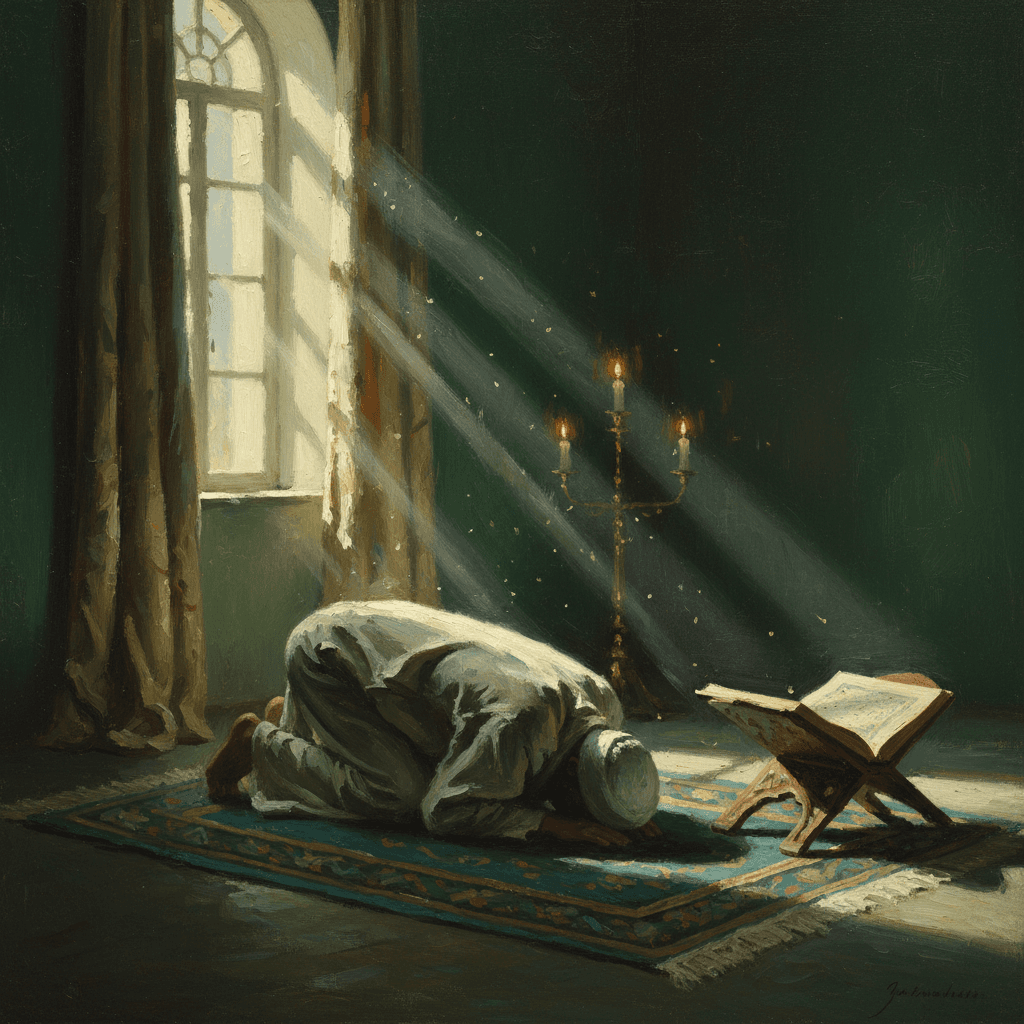
You Already Know the Pillars — But Are You Living Them?
Most Muslims can list the Five Pillars. Shahada. Salah. Zakat. Sawm. Hajj. It is one of the first things you learn.
What is harder is treating them as an interconnected daily practice rather than a checklist of religious obligations. A pillar is not decoration — it holds the building up. And right now, for many practising Muslims, one or more pillars is shaky, cracked, or completely missing.
This is not a lecture. It is an honest look at what the Five Pillars actually are, what they are designed to build in you, and how to live them consistently — not just know them.
What the Five Pillars Actually Are
The Prophet ﷺ defined the entire structure of Islam around five acts:
بُنِيَ الإِسْلاَمُ عَلَى خَمْسٍ: شَهَادَةِ أَنْ لاَ إِلَهَ إِلاَّ اللَّهُ وَأَنَّ مُحَمَّدًا رَسُولُ اللَّهِ، وَإِقَامِ الصَّلاَةِ، وَإِيتَاءِ الزَّكَاةِ، وَالْحَجِّ، وَصَوْمِ رَمَضَانَ
"Islam is built upon five: the testimony that there is no god but Allah and that Muhammad is the Messenger of Allah, establishing prayer, giving zakat, Hajj, and fasting Ramadan." — (Sahih Bukhari 8, sunnah.com)
These are not five separate religious traditions. They are five interconnected systems that — when practised together — produce a specific kind of person: disciplined, grateful, generous, self-controlled, and God-conscious.
The First Pillar: Shahada — The Foundation
الشَّهَادَة (Ash-Shahada)
أَشْهَدُ أَنْ لَا إِلَهَ إِلَّا اللَّهُ وَأَشْهَدُ أَنَّ مُحَمَّدًا رَسُولُ اللَّهِ
Ash-hadu an la ilaha illallah wa ash-hadu anna Muhammadan rasulullah
"I bear witness that there is no god but Allah and I bear witness that Muhammad is the Messenger of Allah."
The Shahada is more than an entry statement. It is an ongoing declaration of who you are and who you serve. Every time you say it with conviction, you are re-centering your entire existence.
The nafs constantly tries to set up alternative gods — your career, your reputation, your desires, other people's approval. The Shahada names Allah as the only authority. It is the correction your nafs needs to hear, regularly and deliberately.
The Second Pillar: Salah — The Spine
الصَّلاَة (As-Salah)
Five prayers. Five interruptions to the ordinary rhythm of your day. This is not accidental design.
Allah says in the Quran: "Indeed, prayer prohibits immorality and wrongdoing." (Surah Al-Ankabut, 29:45) Salah is not just communication with Allah — it is a structural intervention in your day that prevents your nafs from running unchecked for hours at a time.
Think of it this way: without Salah, you could go an entire day, week, or month without once properly redirecting your attention to what actually matters. The prayer is the system that forces you back.
For practical help building this: /blog/how-to-be-consistent-in-prayers and /blog/how-to-make-praying-5-times-a-day-a-habit.
The Third Pillar: Zakat — The Purifier
الزَّكَاة (Az-Zakat)
2.5% of accumulated wealth given annually to those who need it. This sounds small. Its effect on your character is profound.
Zakat is not charity — it is purification. The Arabic word zakat literally means to purify and to grow. Allah says: "Take from their wealth a charity by which you purify and increase them." (Surah At-Tawbah, 9:103)
Your wealth does not belong fully to you. Zakat is the acknowledgement that 2.5% of what you have accumulated is someone else's right — you are simply the temporary steward. Giving it prevents the nafs from letting wealth become an identity and a god.
Build All 5 Pillars Into Your Daily Routine
DeenBack helps you track Salah, dhikr, Quran, and spiritual goals — so the Five Pillars stop being intentions and start being consistent practice.


Free download. Premium features available in-app.
The Fourth Pillar: Sawm — The Training Camp
الصَّوم (As-Sawm)
One full month of fasting from dawn to sunset. No food, no water, no intimate relations during daylight hours.
What is the point? Taqwa — God-consciousness.
Allah says: "O you who have believed, decreed upon you is fasting as it was decreed upon those before you, that you may become righteous." (Surah Al-Baqarah, 2:183)
Ramadan is a 30-day intensive training programme for the nafs. Your nafs wants what it wants, when it wants it. Sawm teaches you — through daily practice — that you can override your nafs. That you are not a slave to hunger, thirst, or desire. That self-control is possible.
The discipline you build in Ramadan is meant to be carried into the other eleven months. Explore /blog/what-is-sawm for a deeper look at the spirituality of fasting.
The Fifth Pillar: Hajj — The Reset
الحَجّ (Al-Hajj)
Once in a lifetime, for those who are physically and financially able. Millions of Muslims gather in Mecca, dressed identically in white, stripped of all markers of status and wealth.
Hajj is the great equaliser. In that state of ihram, a CEO and a labourer are indistinguishable. No one's class, race, or wealth matters. Only their standing before Allah.
The experience is designed to completely reset your priorities. People return from Hajj changed — often with a clarity about what matters and what does not that takes years to fully process. See /blog/what-is-hajj for a detailed look at Hajj and its spiritual power.
Why Modern Muslims Struggle With the Pillars
The knowledge is there. The intention is usually there. What fails is the system.
- Salah becomes inconsistent because daily life has no built-in structure that supports five interruptions.
- Zakat becomes a Ramadan scramble because no annual hawl date is tracked.
- Sawm happens, but the spiritual gains evaporate by Shawwal because there is no follow-through plan.
- Shahada is said but not regularly felt and renewed with meaning.
- Hajj is postponed indefinitely because it feels distant and complicated.
The solution is not more guilt. It is better systems.
How to Start Living the Pillars Today
- Shahada — Begin each day by saying it once, slowly, with meaning. Let it set the intention for the day.
- Salah — Identify your weakest prayer and commit to protecting it for one week. Start there.
- Zakat — This week, find your hawl date. Calculate a rough estimate of what you would owe. Write it down.
- Sawm — Even outside Ramadan, fast one Monday or Thursday per month. Keep the discipline alive.
- Hajj — If you have not gone, start a dedicated savings account this week. Even £20 a month moves you closer.
Signs You Are Growing
- Salah feels less like a duty and more like a genuine reset
- You feel lighter after giving in charity, not stressed about what you "lost"
- Hunger and discomfort no longer control your decisions the way they once did
- You return to the Shahada in moments of stress, not just in salah
- Hajj feels like something you are genuinely building toward, not a distant dream
Common Questions
Are the Five Pillars mentioned explicitly in the Quran?
The Shahada concept is throughout the Quran. Salah and Zakat are paired in over 20 verses. Sawm is commanded in Al-Baqarah 2:183. Hajj is commanded in Al-Imran 3:97. The specific grouping as "five pillars" comes from the Prophet's hadith, which the Quran supports through its commands.
Can I do Hajj before completing all the other pillars?
Hajj does not require the other pillars to be "complete" first. However, if you can afford Hajj, you are likely obligated to give Zakat — and a pilgrim who withholds zakat is making a contradiction of their devotion.
What if I am a new Muslim — where do I start?
Start with Shahada and Salah. Learn the prayer first — it is the backbone of everything else. Use /blog/how-to-pray-salah-correctly as your foundation guide.
Closing
The Five Pillars are not a checklist. They are a structure — five carefully designed practices that, taken together, build a person who is self-aware, God-conscious, generous, disciplined, and connected to the global Muslim community.
You already know what they are. The question is whether you are building them into the fabric of your actual daily life, or leaving them as information that never quite becomes transformation.
Start with one pillar. Strengthen it. Let that discipline spill into the others.
From Knowledge to Consistent Practice
DeenBack is built for Muslims who know what they should do and need help making it stick. Track Salah, dhikr, Quran, and more — every single day.
Free download. Premium features available in-app.
Frequently Asked Questions
What are the 5 Pillars of Islam?
The Five Pillars are: 1) Shahada (testimony of faith), 2) Salah (five daily prayers), 3) Zakat (obligatory charity), 4) Sawm (fasting in Ramadan), and 5) Hajj (pilgrimage to Mecca, once in a lifetime if able).
Why are they called pillars?
The Arabic term is arkan (pillars or cornerstones). Just as a building collapses without its structural pillars, a Muslim's deen is structurally incomplete without these five foundational practices.
Which pillar is the most important?
The Shahada is the foundation — without it, no other pillar counts. Salah is described as the pillar of the deen itself. All five are obligatory and interconnected.
What happens if a Muslim does not fulfill the Five Pillars?
Neglecting an obligatory act is a sin, but scholars differentiate by severity. Denying the Shahada takes one outside Islam. Abandoning Salah is considered a major sin; some scholars hold it as invalidating one's Islam. Neglecting Zakat, Sawm, or Hajj without excuse is serious but does not necessarily negate one's Islam.
Can a new Muslim learn the Five Pillars gradually?
Yes. The Companions were gradually introduced to Islamic obligations. A new Muslim should start with the Shahada and learn to pray as soon as possible. Build the practice step by step — consistency matters more than perfection.