
- Published on
Al-Warith: The Inheritor — Meaning, Benefits, and Daily Practice
- Authors

- Name
- Ahmad
- Role
- Senior Marketing Manager, Islamic education • Deen Back
بِسْمِ اللهِ الرَّحْمٰنِ الرَّحِيْمِ
In the name of God, the Most Gracious, the Most Merciful.
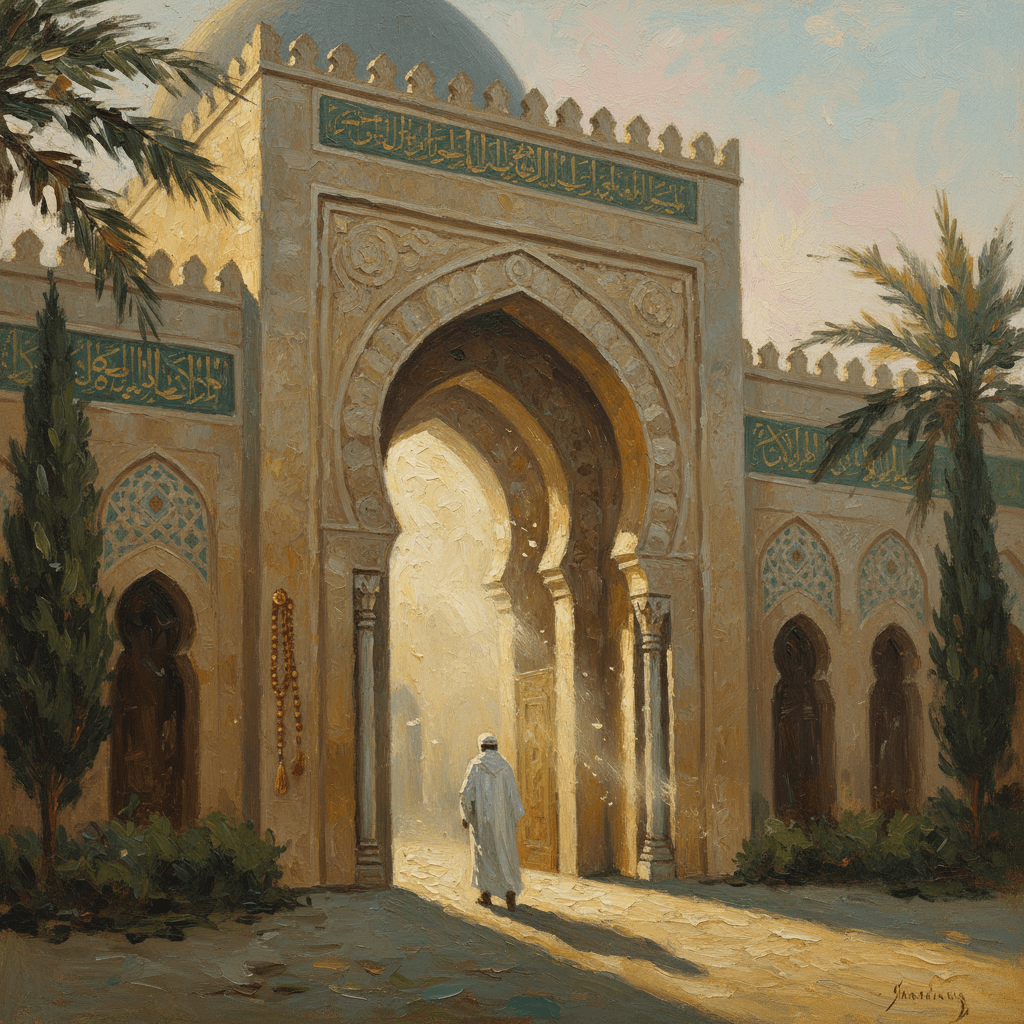
Why Al-Warith Hits Different When You Are Grieving
Have you ever held something you love — a person, a job, a stage of life — and felt it slipping away before you were ready?
That feeling is one of the most disorienting experiences a human being can have. We build our sense of security around things that were never designed to last forever. And when they go, we feel cheated.
Al-Warith — الوارث — is the name of Allah that speaks directly into that pain. It means The Inheritor, The Heir, the One who receives back everything that was ever His to begin with. Reflecting on this name does not just offer comfort; it fundamentally reshapes how you relate to everything you think you own.
What Al-Warith Actually Means
Al-Warith (الوارث) comes from the Arabic root w-r-th (ورث), which means to inherit, to receive something after the previous owner. Allah uses this name to assert the ultimate reality: He is the only one who truly owns anything, forever.
Everything in existence — your wealth, your health, your family, even your own breath — is on loan. When the loan period ends, it returns to the One who gave it.
Allah says in the Quran:
وَإِنَّا لَنَحْنُ نُحْيِـۦ وَنُمِيتُ وَنَحْنُ ٱلْوَٰرِثُونَ
"And indeed, it is We who give life and cause death, and We are the Inheritor." — (Surah Al-Hijr, 15:23)
And in Surah Al-Anbiya:
وَكَم مِّن قَرْيَةٍ أَهْلَكْنَٰهَا فَجَآءَهَا بَأْسُنَا بَيَٰتًا أَوْ هُمْ قَآئِلُونَ
Related: "To Allah belongs the inheritance of the heavens and the earth." — (Surah Al-Imran, 3:180)
Think about every civilisation that has ever risen and fallen. Every empire. Every dynasty. Every billionaire and beggar alike. All of them inherited from those before them, and all of them left it behind. Allah is the only constant Owner — before, during, and after all of it.
Why Modern Muslims Struggle to Internalise This
We live in a culture that is utterly obsessed with ownership. You are encouraged to build your brand, secure your bag, protect your assets, and plan for generational wealth. None of that is inherently wrong. The problem is when those things become the foundation of your identity and your security.
When that happens, any threat to what you "own" feels like a threat to your existence. Losing a job becomes a crisis. A relationship ending becomes catastrophic. An illness shaking your physical ability becomes existential terror.
Your nafs — your lower self — hates the idea of impermanence. It wants to cling. It bargains, it panics, it grasps. The nafs treats temporary loans as permanent property.
Al-Warith is the name that quietly dismantles that illusion.
The Attachment Trap
Attachment is not the same as love. You can deeply love something while holding it loosely, knowing it is Allah's to give and take back. But your nafs conflates love with grasping — "if I love this, I must own it; if I lose it, I lose part of myself."
Al-Warith teaches a different equation: love it while you have it, thank Allah for the loan, and trust that what He takes back was never yours to permanently hold.
How to Practice Al-Warith Daily
Knowing this name is one thing. Letting it change how you actually live is another.
Recite It When Facing Loss
When something is taken from you — a relationship, a possession, a role you valued — make this dhikr:
يَا وَارِثُ
Ya Warith — O Inheritor, O Heir
Say it slowly. Let it remind you that what just left did not disappear into nothing. It returned to its original Owner. The grief is real; the grasping does not have to be.
Reframe "My" and "Mine"
Start noticing how often you say "my house," "my money," "my time," "my kids." Begin mentally adding "which Allah entrusted to me." This is not a performance — it is a practice in accurate perception. You are not the owner. You are the steward.
Practise Zuhd in Small Ways
Zuhd (زهد) means detachment — not from the world entirely, but from letting the world own you. Start small: spend one day a week without buying anything unnecessary. Notice what comes up when you resist. That resistance is your nafs protesting the name Al-Warith.
Build Daily Dhikr Around the 99 Names
DeenBack's dhikr tracker helps you make reflecting on Asma ul Husna a daily habit — one name, one practice, one step closer to knowing your Lord.


Free download. Premium features available in-app.
Use It at the End of Each Day
Before you sleep, take 30 seconds to mentally return your blessings to Allah. "Ya Allah, You gave me today. You gave me this body, this family, this food. It is all Yours. I am grateful for the loan."
This sounds simple. Its effect over weeks is profound. Gratitude becomes the dominant response to your life, not anxiety about holding onto things that were never fully yours.
Link It to Your Inna Lillahi
When something bad happens, Muslims say Inna lillahi wa inna ilayhi raji'un — "Indeed, we belong to Allah and to Him we shall return." This phrase is the living recitation of Al-Warith. Next time you say it, feel the weight of what it actually means. It is not just condolence language. It is a theological statement about ultimate ownership. Visit the full breakdown at /blog/inna-lillahi-wa-inna-ilayhi-rajiun-meaning.
Signs You Are Growing in This Practice
- Losses hurt, but they don't destroy you
- You give in charity more easily because you feel less threatened by losing wealth
- Gratitude replaces entitlement as your default posture
- You stop treating your relationships as something you "have" and start treating them as gifts you tend
- The phrase "it belongs to Allah" moves from your head to your chest
These changes do not happen overnight. But they are real, and they are trackable if you are paying attention. See also /blog/benefits-of-reciting-99-names-of-allah for how the Names of Allah build character over time.
Common Questions
Can Al-Warith be used as a name for a person?
Scholars discourage using divine names that carry absolute meaning — like Al-Warith — for humans without the prefix "Abd" (servant of). So Abd al-Warith (servant of The Inheritor) is permissible. Al-Warith alone as a personal name is best avoided.
Does meditating on Al-Warith mean I should not plan for the future?
Absolutely not. Planning, saving, and building are acts of stewardship — they are Islamic duties. Al-Warith removes the anxious grasping, not the responsible action. You can work hard while knowing the outcome belongs to Allah.
What if I cannot let go of something I have lost?
Grief takes time. Al-Warith is not a name that demands you feel nothing. It is a name that gives you a framework when you are ready — a reminder that the One who took it is the same One who gave it, and that reality is not arbitrary cruelty but perfect wisdom.
For more on dealing with grief through an Islamic lens, see /blog/how-to-deal-with-grief-islamically.
How does Al-Warith connect to Akhirah?
Profoundly. When this world ends, everything "belonging" to anyone is revealed as having been Allah's all along. The concept of inheritance becomes absolute — there are no more heirs among creation. Only Al-Warith remains. This reality makes what we accumulate in this dunya look very different in light of what we are building for the akhirah.
Closing
Al-Warith is one of the most liberating names of Allah once it settles into your bones. It does not take away your love for life or the people in it. It does the opposite: it allows you to love freely, because you are no longer gripping in terror.
Hold your blessings gently. Work hard, care deeply, and plan wisely — but remember that the ultimate deed of ownership was never in your hand. It has always been, and will always be, with Al-Warith.
To go deeper on the 99 Names, explore /blog/99-names-of-allah-with-meaning and begin building your knowledge of who you are actually worshipping.
Track Your Asma ul Husna Journey
Use DeenBack to reflect on one Name of Allah each day. Small daily practice, deep long-term change — that is the DeenBack way.
Free download. Premium features available in-app.
Frequently Asked Questions
What does Al-Warith mean?
Al-Warith means The Inheritor or The Heir. It refers to Allah being the ultimate Owner of all things — everything returns to Him when the world and all its people have passed away.
How do I use Al-Warith in dhikr?
You can recite Ya Warith (O Inheritor) as part of your dhikr. Some scholars recommend it for those seeking solace in loss, or for anyone who wants to cultivate detachment from worldly possessions.
What is the lesson of Al-Warith for everyday life?
The lesson is that nothing you own is truly yours permanently. Everything you have is on loan from Allah. Internalising this name loosens the grip of greed and fear of loss.
Does Al-Warith appear in the Quran?
Yes. Allah says in Surah Al-Hijr (15:23): 'And indeed, it is We who give life and cause death, and We are the Inheritor.' This verse directly affirms Al-Warith as an attribute of Allah.
Is Al-Warith one of the 99 names of Allah?
Yes, Al-Warith is among the 99 names (Asma ul Husna). It captures the reality that Allah alone remains when all of creation has ended.